Applied and Developmental Research
Insulated Solar Electric Cooker (ISEC)
Department of Mechanical Engineering, Federal University of Technology Minna, Minna, Niger State, Nigeria
Published October 2026
Abstract
This project presents the design and fabrication of an insulated solar electric cooker (ISEC) which makes use of a 100 Ah/12 V battery for use during off-sunshine hours. A 30 A solar charge controller regulates how the battery is being charged by the 180 W solar panel. The panel could charge the battery to full capacity in 7 hours of uninterrupted sunlight. The deficiency of sunlight during some days, especially rainy season can delay charging and extend it to longer hours and even days. The system makes use of Nichrome 80 (Ni 80%, Cr 20%) wire of diameter 0.32 mm as heating element. Coiled in three different lengths, the element draws on average 20.4 A to run it. The cooking chamber was insulated with fiberglass to reduce loss of heat to the surrounding. The tests carried out show that the system is 33.1% efficient. The cooker was able to heat 1 liter of water from 31 °C to 92 °C in 50 minutes, with limited sunlight. The system is a good alternative to conventional cooking methods that depend solely on fossil fuels, especially for rural areas where the use of fuel wood is still prevalent. The findings from this study may be the solution to developing a better technology that utilizes only sunlight and is affordable to the poorest households, especially in Nigeria.
1Introduction
1.1Background of the study
Since 1950, the amount of energy used worldwide has increased by over four times, ten times, and nearly twenty times since 1850. This century-long historical expansion resulted in a notable shift in the range of energy sources. Among the primary materials utilized as conventional energy sources in the nineteenth century were wood, charcoal, and agricultural waste (Gokcol et al., 2009). "Energy is a fundamental entity of nature that is transferred between parts of a system in the production of physical change within the system and is usually regarded as the capacity for doing work," reads the Merriam-Webster Dictionary (Merriam-Webster, 2024). Given that a nation's standard of life is based on its per capita energy consumption, energy is just one of many metrics used to assess its growth and development. Renewable and nonrenewable energy sources are divided into two categories. The sources of nonrenewable energy run out or are not replaced throughout our lifetimes, or even over a very long period of time. Fossil fuels (natural gas, petroleum, and coal) make up the majority of nonrenewable energy sources. Fossil fuels are mostly composed of carbon. Because of this, the era when fossil fuels originated—roughly 360–300 million years ago— is known as the Carboniferous Era. Every fossil fuel forms in the same way. Prior to the Era of the Dinosaurs, the Earth's geography was different hundreds of millions of years ago. According to National Geographic Education (2024), it was covered in swampy forests and broad, shallow oceans. Being self-replenishing and natural, renewable energy often leaves little to no carbon traces. A few examples of these energy sources are wind, solar, hydroelectric, and tidal energy. Bioenergy is defined as organic stuff used for fuel, such as wood (National Grid, 2024). The amount that can be used with non-renewable energy sources is restricted. Since wood has been found to be the most straightforward energy source for residential heating and cooking, it is a fundamental energy source that is used worldwide. Issues like deforestation and pollution arise as a result of using wood as a material for energy generation. Over 77% of rural Indian homes were projected to rely on fuel wood and chips for cooking, according to a government survey. While only 9% used LPG, over 7% used dung cake. In urban regions, LPG was the primary energy source mostly used near about 62% (Ronge et al., 2016). According to Komolafe and Awogbemi (2010), due to availability, the majority of people in rural and urban regions still cook with firewood since the cost of cooking gas and fossil fuels has increased and because power supply in developing nations is sometimes unstable. Concerns regarding depleting energy supplies, the state of the environment, and the ozone layer's depletion have increased due to widespread and unsustainable energy use (Shuaibu et al., 2019). Due to industrial activity and changes in land use, humanity has seen a massive increase in atmospheric CO2 concentrations during the last 200 years. By year's conclusion, atmospheric carbon dioxide concentrations had reached 32.5 gigatons (GT), a noteworthy increase of 460 million tons (Mt) over pre-industrial levels. In line with this, the amount of carbon dioxide emissions linked to energy worldwide increased by 1.4% in the same year. Heat and energy generation is considered a major contributor of carbon dioxide emissions.
Fossil fuels, a major source of methane (CH4) emissions is responsible for over 60% of global anthropogenic methane production (IEA, 2017). Farmers' productivity, according to the recent researches in many parts of the world, can be increased significantly by applying technology in the Agricultural sector. In developing countries, renewable energy sources can be used to improve and mechanize farming which will help to eliminate hunger in developing nations (Inuwa et al., 2023). Renewable sources of energy, unlike fossil fuels can remain viable and available for a very long period and are equally replenished as they are being used. Also, it releases fewer pollutants. This is because it does not depend on combustion process to generate energy. The reductions of global CO2, NOx, and SO2 emissions by 38%, 13%, and 70%, respectively, came as a result of adoption of renewable sources of energy in 2012 (NRC, 2010; Novacheck & Johnson, 2015). Concerns about sustainability have arisen regarding energy use. Sustainable development is defined as preserving the amount of resources used by society for present needs at a level that will not deny future generations what they need (Ozturk and Acaravci, 2011). There are three aspects of sustainable development viz: economic, social, and environmental. The loss of our forests has had a significant negative impact on wildlife and ecosystem balance because it is difficult to sustain the felling of trees over time—some of which take a century to reach maturity. A common practice in developing nations, particularly in rural regions, is the use of fuel wood for cooking. According to Asefon and Adepoju (2024), 70% of homes in Nigeria rely on fuel wood for cooking, making it the country's most common energy source. Nigeria is expected to be losing 400,000 hectares of forest per year as a result of the consumption of fuel wood. Concerningly, Popoola (2000) noted that as of 1999, the nation's forest reserve— which was projected to make up 10% of the entire land area in 1970—had dropped to barely 5%.
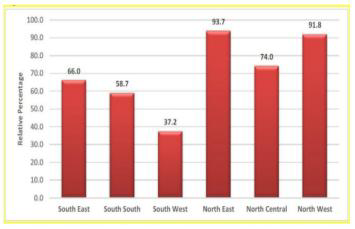
The percentage of households dependent on firewood for cooking in each region of Nigeria is shown in Figure 1 (Jack et al., 2018).
1.2Problem statement
The renewable sources of energy such as solar energy have proven to be a better alternative to the available energy sources which are non-renewable. Fossil fuels, which are the most common, non-renewable sources of energy globally, have constituted a lot of challenges such as environmental issues (Global warming, air and water pollution, land degradation, deforestation, oil spills and accidents, emission of methane gases, etc.) and health issues (such as asthma and other respiratory issues, cancer, cardiovascular disease, brain damage, genetic mutation leading to defects in children, heat-related illnesses, water borne illnesses, increase in death rate, etc.). The increase in some of the aforementioned challenges made it necessary for mankind to seek alternative sources that can mitigate and completely eradicate the use of fossil fuels. Interest in renewable energy sources has increased due to dangers posed by non-renewable energy sources.
1.3Justification
Many developing countries in Africa such as Nigeria face significant challenges as a result of energy access, environmental degradations, and socio-economic development. The use of fuels such as firewood, charcoal, and kerosene has severe implications for public health, the environment, and the economy. The inhalation of smoke from indoor cooking exposes the women and their children to respiratory diseases. This leads to a high burden of disease, increased healthcare costs, and decreased productivity. Women and girls spend a considerable amount of time collecting firewood, which limits their opportunities for education, employment, and other productive activities. This brings about gender inequality and hinders economic development of the nation. These women are also exposed to dangers such as rape, human and organ trafficking, etc. The environment is equally affected. These environmental impacts such as deforestation and loss of wildlife could have many consequences for ecosystems, agriculture, and water resources. In view of these challenges amidst others, this project aims to develop a system that utilizes solar energy to cook and unlike any other solar cookers, can be used off sunshine hours. This will provide an efficient, safe, and inexpensive means of cooking. Environmental pollution from cooking will be a thing of the past and dependence on fossil fuels for cooking will be completely eradicated. The energy demands in households across the country will be reduced by at least 50% to 60%. In the long run, it will conveniently beat the cost of other energy sources because the energy from the sun is completely free.
1.4Aims and objectives
This project aims to develop an insulated solar electric cooker with a battery to store electric charges for use during the night and on cloudy days or during low sunshine.
The objectives of this project are to:
- 1. design and fabricate an insulated solar electric cooker with DC storage (battery); and
- 2. carry out a performance evaluation of the insulated solar electric cooker.
1.5Scope of work
The scope of this project is to design, fabricate, and test the performance of an insulated solar electric cooker with a battery as storage for the electric charges received from the PV panel. This is to be used by households to reduce/eliminate the dependency on fossil fuels, to reduce domestic energy costs, and to conserve the environment in general.
2Materials and methods
2.1Materials
Several materials were employed in the construction of the insulated solar electric cooker. Among these are:
- 1. Photovoltaic cells or solar panels
- 2. Solar charge controller (SCC)
- 3. Battery
- 4. Ring connectors
- 5. Nichrome wire
- 6. Switch
- 7. Solar cables
- 8. Galvanized sheet
- 9. Pipe
- 10. Insulated wire
- 11. Stainless steel hinges
- 12. Fibreglass
- 13. Cabinet lock
- 14. Rubber sittings
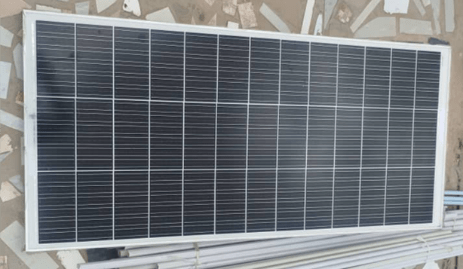
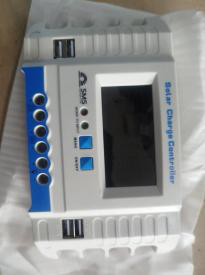
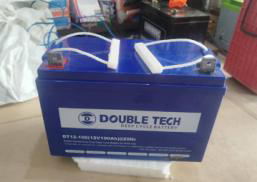
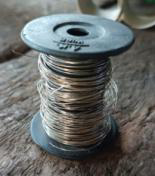
The main components are shown in Figure 2 (solar panel), Figure 3 (charge controller), Figure 4 (battery) and Figure 5 (heating element).
2.2Design analysis
2.2.1Energy to cook rice
The energy needed to cook one kilogram of rice was estimated from the properties of rice and water and the laws of thermodynamics, using the following parameters:
- Mass of rice: 1 kg;
- Initial temperature of rice and water: 25°C (room temperature);
- Final temperature of cooked rice: 100°C (boiling point);
- Water to rice ratio: 2:1 (i.e., 2 kg of water per 1 kg of rice);
- Specific heat capacity of water: 4.18 J/g°C;
- Specific heat capacity of rice: 1.42 J/g°C (estimated average for dry rice).
Energy to heat the water (from 25 °C to 100 °C). The energy required to heat the water is:
where mwater = 2000 g is the mass of water, cwater = 4.18 J/g °C is the specific heat capacity of water and ΔT = 100 − 25 = 75 °C is the temperature change. Hence:
Energy to heat the rice (from 25 °C to 100 °C). The energy required to heat the rice is:
where mrice = 1000 g is the mass of rice and crice = 1.42 J/g °C is the specific heat capacity of rice. Hence:
Total energy to cook the rice. The total energy required is the sum of the energy to heat the water and the energy to heat the rice:
Since 1 Wh = 3600 J, the energy required to cook 1 kg of rice is 733,500/3600 = 203.75 Wh.
2.2.2Battery energy rating
The battery used is a 100 Ah, 12 V lead-acid battery. Its stored energy is the product of its capacity and voltage:
2.2.3Size of solar panel
According to Climate Top, Minna has an average of 7 hours 18 minutes of sunlight daily; 7 hours of sunlight per day was assumed. To charge the 1200 Wh battery, the size of the solar panel is:
Hence, a panel of at least 180 W is capable of charging the battery.
2.2.4Solar panel power output
The solar panel has a capacity of 180 W. Assuming 7 hours of sunlight per day, the energy it can generate in a day is:
2.2.5Size of the solar charge controller
The size of the solar charge controller (SCC) is:
With a factor of safety of 1.2, ISCC = 15 × 1.2 = 18 A. The SCC used is rated 30 A for safety reasons.
2.2.6Nichrome wire power dissipation
The heating of the wire brings about power dissipation. The wire is Nichrome 80. The gauge is 28, with a diameter of 0.32 mm. It takes 1.24 A to heat to 205 °C. The power dissipated, P = IV = I2R, in a unit length of nichrome wire is:
2.2.7Total surface area of the heating chamber
With chamber height H = 257 mm = 0.257 m, breadth B = 380 mm = 0.38 m and length L = 0.402 m, the total surface area is:
2.2.8Total volume of the cooking chamber
2.2.9Battery runtime
Operating the 100 Ah battery at the load of 20.4 A continuously with no input to the battery, the runtime T is:
3Results and discussion
The constructed insulated solar electric cooker (ISEC) was first tested to be sure that the connections are correctly done and that the Nichrome wire heating element was functioning properly. This test was carried out on Friday 27 September 2024 at 5:00 pm WAT. The test was successful with 1 litre of water increasing temperature from 30 °C to 46 °C in 5 minutes.
3.1Experiment 1: Boiling of water
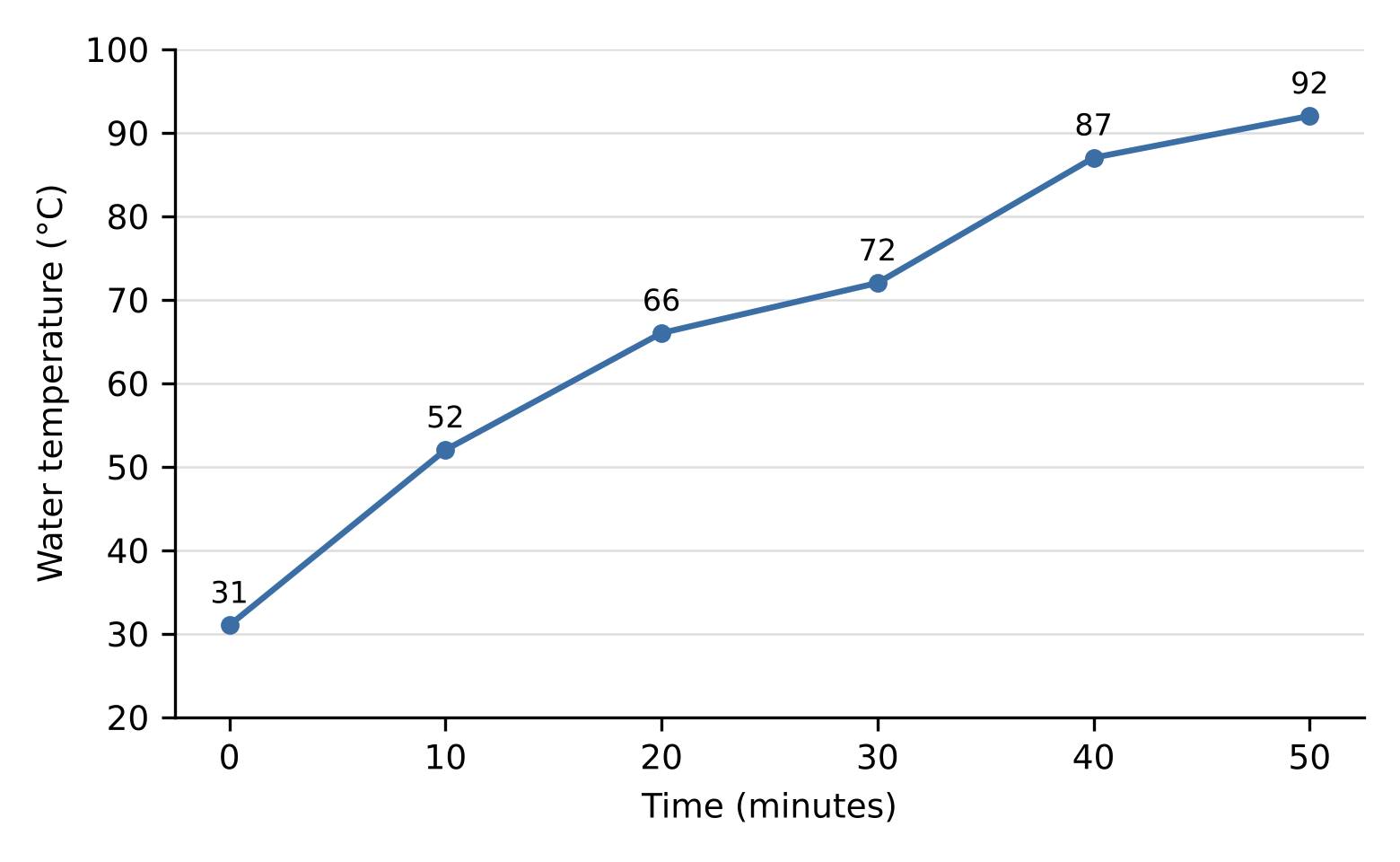
The water-boiling test was carried out on 28 September 2024 from 4:47 pm to 5:37 pm (WAT), at an ambient temperature of 30 °C. The results are given in Table 1 and Figure 6.
| S/N | Time (minutes) | Temperature (°C) |
|---|---|---|
| 1 | 0 | 31 |
| 2 | 10 | 52 |
| 3 | 20 | 66 |
| 4 | 30 | 72 |
| 5 | 40 | 87 |
| 6 | 50 | 92 |
3.2Performance evaluation of the ISEC
The power efficiency (η) of the cooker is the ratio of the energy output to the energy input:
where mw = 1 kg is the mass of water (1 litre), cp = 4186 J/kg °C is the specific heat capacity of water, Tf = 92 °C and Ti = 31 °C are the final and initial temperatures of the water, t = 50 min = 3000 s is the time taken to reach the final temperature and P = IV = 20.4 A × 12.6 V = 257.04 W is the power input. Hence:
Based on the result obtained, the insulated solar electric cooker was functional. The cooker generated heat upon testing.
It could heat up 1 kg of water to a temperature of 92 °C in 50 minutes, when the initial temperature of water is 31 °C.
The nichrome wire heating element was drawing 20.4 A on the average. The wire was heating continuously throughout the testing period.
The battery voltage kept dropping from 13.5 V to 12.0 V, where it stabilized. Because of low energy from the sun, the solar panel was supplying about 5 A at an average voltage of 14 V. On a sunny day, the solar panel could attain 24 V.
The power efficiency of the system was calculated and found to be 33.1%.
4Conclusions
The aim of this project is to design and fabricate an insulated solar electric cooker with DC storage (battery), to test and analyze the performance of the cooker with respect to the common types of foods consumed in Nigeria and to calculate the performance efficiency of the system. The cooker met most of its objectives, aims and design specifications. Hence, it stands a chance to solve the cooking problems in Nigeria. It will reduce electricity bills by making sure that cooking is only dependent on sunlight, which is abundant in all parts of the country.
The cooker will equally eliminate the dependency on fossil fuels and fuel wood thereby solving the problem of deforestation, environmental pollution and global warming. The cooker only requires an initial capital which seems huge but overtime, it will beat the cost of other means of cooking such as a gas cylinder and the need to refill it.
Acknowledgments
We wish to express our heartfelt gratitude to the Almighty God for His endless mercy throughout this journey and for enabling us accomplish this.
To our project supervisor, Engr. Prof. O. J. Okegbile, we sincerely appreciate your supervision and expert advice; completing this work would not have been possible without your help. We also wish to thank our lecturers, Prof. K. C. Bala, Engr. M. Oyebamiji, Prof. A. Nasir, Prof. O. Adedipe, Prof. I. C. Ugwuoke, Dr. A. A. Abdullahi, Prof. O. A. Olugboji, Prof. N. A. Ademoh, Dr. S. A. Ayo, Dr. Sodiq, Dr. S. S. Lawal, Engr. J. Y. Jiya, Engr. Dr. U. G. Okoro, Prof. M. S. Abolarin, Dr. A. B. Hassan, Dr. M. M. Muhammadu, Dr. I. Bori, Prof. N. A. Musa and Prof. S. A. Lawal, who have in several ways had an impact on our lives.
To our lovely parents, siblings and friends whom God has used extensively to provide and guide us from day one, we appreciate your efforts.
References
- [1]Gokcol C, Dursun B, Alboyaci B, Sunan E (2009). Importance of biomass energy as alternative to other sources in Turkey. Energy Policy, 37(2), 424–431.
- [2]Merriam-Webster (2024). Energy. https://www.merriam-webster.com/dictionary/energy
- [3]National Geographic Education (2024). Non-renewable energy. https://education.nationalgeographic.org/resource/non-renewable-energy/
- [4]National Grid (2024). What are the different types of renewable energy? https://www.nationalgrid.com/stories/energy-explained/what-are-different-types-renewable-energy
- [5]Ronge H, Niture V, Ghodake DS (2016). A review paper on utilization of solar energy for cooking. Imperial International Journal of Eco-friendly Technologies, 1(1), 121–124.
- [6]Komolafe C, Awogbemi O (2010). Fabrication and performance evaluation of an improved charcoal cooking stove. Pacific Journal of Science and Technology, 11, 51–58.
- [7]Shuaibu IM, Musa M, Nawawi HY, Uba A, Mohammad A, Adamu SS (2019). Design, construction and performance comparison of indoor and outdoor configuration of a solar powered evaporative air cooler. Global Scientific Journal, 7(6), 930–937.
- [8]International Energy Agency (IEA) (2017). Global energy and CO2 status report 2017. https://www.iea.org/publications/freepublications/publication/GECO2017.pdf
- [9]Inuwa J, Garba MM, Argungu GM, Mohammed ML, Usman A (2023). Construction and performance evaluation of an integrated solar cooking and drying system. FUDMA Journal of Sciences, 7(6), 171–179.
- [10]National Research Council (NRC) (2010). Hidden costs of energy: Unpriced consequences of energy production and use. National Academies Press, Washington, DC. https://doi.org/10.17226/12794
- [11]Novacheck J, Johnson JX (2015). The environmental and cost implications of solar energy preferences in Renewable Portfolio Standards. Energy Policy, 86, 250–261. https://doi.org/10.1016/j.enpol.2015.06.039
- [12]Ozturk I, Acaravci A (2011). Electricity consumption and real GDP causality nexus: Evidence from ARDL bounds testing approach for 11 MENA countries. Applied Energy, 88, 2885–2892.
- [13]Asefon TI, Adepoju K (2024). A review on fuel wood consumption and implications on the environment. ResearchGate. https://doi.org/10.13140/RG.2.2.18036.32643
- [14]Popoola SO (2000). Consumer health information needs and services in Nigeria. Library Review, 49(3), 129–134. https://doi.org/10.1108/00242530010317714
- [15]Jack JTCB, Ogbanga MM, Odubo TR (2018). Energy poverty and environmental sustainability. 10(1), 19–31.
- [16]Climate Top (2024). Minna climate & temperature. https://www.climate.top/nigeria/minna/index.php