Organic Chemistry
Phytochemical Analysis and Partial Characterization of n-Hexane Extract of Annona senegalensis Seeds by GC–MS, FTIR, and UV–Vis Spectroscopy
1Department of Chemistry, Adamawa State University, Mubi, Nigeria
2Department of Chemistry, Federal University of Agriculture, Mubi, Nigeria
Published August 2026
Abstract
Annona senegalensis Persoon (Annonaceae), known as African custard-apple, is widely used in traditional medicine. Despite extensive studies on leaves and bark, seed phytochemistry remains underexplored. This study evaluated the n-hexane extract of A. senegalensis seeds for bioactive compounds using GC–MS, FTIR, and UV–Vis spectroscopy. Seeds collected from Kwaja, Mubi South, Nigeria, were air-dried, powdered, and extracted via Soxhlet with n-hexane. Phytochemical quantification revealed high levels of tannins (17.13 g/100 g), alkaloids (13.78 g/100 g), saponins (12.05 g/100 g), terpenoids (12.02 g/100 g), flavonoids (11.37 g/100 g), and steroids (4.12 g/100 g). GC–MS identified major compounds including 4-methyl-decane and cis-5-decen-1-yl acetate. FTIR spectra confirmed functional groups such as O–H, C–H, C=O, and C–O, while UV–Vis analysis indicated conjugated systems typical of phenolics and flavonoids. The results demonstrate that A. senegalensis seeds are rich in lipophilic bioactive metabolites, supporting their traditional medicinal use and highlighting their potential for nutraceutical, therapeutic, and industrial applications.
Keywords: Annona senegalensis; n-hexane extract; phytochemicals; GC–MS; FTIR; UV–Vis; bioactive compounds
1Introduction
Annona senegalensis Persoon (family Annonaceae), commonly known as African custard-apple or wild soursop, is a widely distributed tropical plant across sub-Saharan Africa. It has been used extensively in traditional medicine for treating various ailments including infections, inflammation, and parasitic diseases [1, 5]. The plant produces fruits, leaves, bark, and seeds, all of which have demonstrated ethnomedicinal relevance.
Phytochemical investigations of A. senegalensis indicate that the species contains a diverse range of bioactive secondary metabolites. Studies on leaves, bark, and fruit essential oils have identified mono- and sesquiterpenoids, flavonoids, alkaloids, sterols, triterpenes, and acetogenins [7]. These compounds have been associated with antioxidant, antimicrobial, cytotoxic, and anti-inflammatory activities, highlighting the potential of A. senegalensis as a source of natural bioactive molecules [2, 5].
Despite extensive research on leaves and bark, studies on the chemical composition and bioactive potential of A. senegalensis seeds remain limited. Nutritional analyses suggest that the seeds contain considerable amounts of fat (oil), protein, fibre, and essential minerals such as calcium, potassium, magnesium, and zinc [9]. Additionally, seeds of related Annona species have been reported to contain acetogenins and other bioactive compounds, which supports the hypothesis that A. senegalensis seeds may be a valuable source of phytochemicals [6].
Analytical techniques such as gas chromatography–mass spectrometry (GC-MS), Fourier-transform infrared spectroscopy (FTIR), and ultraviolet-visible (UV-Vis) spectroscopy are widely used for partial characterization of plant extracts. Prior studies on leaves and bark of A. senegalensis have demonstrated the effectiveness of GC-MS in identifying volatile and semi-volatile compounds, while FTIR and UV-Vis spectroscopy provide information on functional groups and electronic transitions of phytochemicals [2, 3, 7].
Given the limited information on seeds, particularly their n-hexane extracts, a systematic partial characterization using GC-MS, FTIR, and UV-Vis spectroscopy is necessary to explore the chemical profile and potential bioactive constituents of A. senegalensis seeds. This study, focusing on seeds collected from Kwaja, Mubi South, Adamawa State, Nigeria, aims to fill this gap in the literature, providing foundational data for future bioactivity assessments, nutraceutical applications, and natural product research.
2Materials and methods
2.1Plant material
Mature fruits of Annona senegalensis were collected from Kwaja, Mubi South, Adamawa State, Nigeria. The plant was authenticated by a taxonomist in department of botany, Adamawa State University, Mubi. The seeds were carefully separated from the fruit pulp, washed with distilled water to remove debris, and air-dried at room temperature (25–28 °C) for 7 days. The dried seeds were then ground into a coarse powder using a mechanical grinder and stored in airtight containers at 4 °C until further use.
2.2Equipment, apparatus and chemicals
Equipment and reagents used were of analytical grade.
2.3Solvent extraction
The extraction of phytochemicals from the seed powder was performed using n-hexane in a Soxhlet apparatus. Approximately 50 g of seed powder was placed in a thimble and extracted with 300 mL of n-hexane for 8 hours at the solvent’s boiling point. After extraction, the solvent was concentrated using a rotary evaporator under reduced pressure to yield the crude n-hexane seed extract. The extract was further dried over anhydrous sodium sulfate to remove residual moisture and stored in amber bottles at 4 °C until analysis.
2.4Preparation of plant extract for analysis
For spectroscopic and chromatographic analysis, the dried n-hexane extract was dissolved in analytical grade n-hexane to obtain a concentration of 10 mg/mL. The solution was filtered through a 0.45 µm syringe filter to remove particulate matter before use in GC-MS, FTIR, and UV-Vis analysis.
2.5GC–MS analysis
The n-hexane extract was analyzed using GC-MS to identify volatile and semi-volatile phytochemicals. Injection was performed in split mode with helium as the carrier gas at a flow rate of 1 mL/min. The oven temperature was programmed from 60 °C (held 2 min) to 280 °C at 10 °C/min. Mass spectra were obtained in electron ionization mode (70 eV) and compared to NIST library data for compound identification.
2.6FTIR analysis
FTIR spectroscopy was performed to determine functional groups present in the n-hexane extract. A small amount of dried extract was mixed with KBr and pressed into a pellet. The spectra were recorded in the range of 4000–400 cm⁻¹ at a resolution of 4 cm⁻¹.
2.7UV–Vis spectroscopy
The electronic absorption spectrum of the n-hexane extract was recorded using a UV-Vis spectrophotometer in the range of 200–800 nm. The extract solution was placed in a quartz cuvette with 1 cm path length, and n-hexane was used as the blank.
3Results and discussion
3.1Phytochemical composition
The quantitative assessment of the n-hexane extract of A. senegalensis seeds revealed high concentrations (Table 1) of key bioactive phytochemicals, with tannins (17.13 ± 0.03 g/100 g) being the most abundant component, followed by alkaloids (13.78 ± 0.01 g/100 g), saponins (12.05 ± 0.01 g/100 g), terpenoids (12.02 ± 0.02 g/100 g), flavonoids (11.37 ± 0.02 g/100 g), and steroids (4.12 ± 0.01 g/100 g).
| Phytochemical | n-Hexane extract |
|---|---|
| Tannins | 17.13 ± 0.01 |
| Alkaloids | 13.78 ± 0.01 |
| Saponins | 12.05 ± 0.01 |
| Flavonoids | 11.37 ± 0.02 |
| Terpenoids | 12.02 ± 0.02 |
| Steroids | 4.12 ± 0.01 |
Values are mean ± standard deviation of triplicate determinations.
The high tannin level (17.13 g/100 g) strongly supports the antioxidant potential of the seeds. Previous studies on A. senegalensis leaves and bark also reported similarly high phenolic content [7], confirming that this species is naturally enriched with phenolic metabolites.
The alkaloid concentration (13.78 g/100 g) detected in this study aligns with findings by [4], who demonstrated that A. senegalensis extracts contain diverse alkaloids responsible for antimicrobial and analgesic activities, validating the ethnomedicinal use of the plant.
The saponin content (12.05 g/100 g) and terpenoid concentration (12.02 g/100 g) indicate strong membrane-modulatory, anti-inflammatory, and anti-parasitic potentials. [8] similarly reported that non-polar fractions of Annonaceae species contain high terpenoid levels with strong pharmacological effects.
Flavonoids (11.37 g/100 g) also appeared in significant quantities, comparable to the findings of [1], who documented high flavonoid levels in other Annona species associated with free radical scavenging and anti-inflammatory properties.
The presence of steroids (4.12 g/100 g), though relatively lower, agrees with earlier phytochemical profiles of Annona plants [5, 6], indicating that steroidal compounds are characteristic constituents of the genus.
In summary, these values demonstrate that the seeds contain high concentrations of biologically active compounds, explaining their traditional medicinal applications.
3.2GC–MS profile
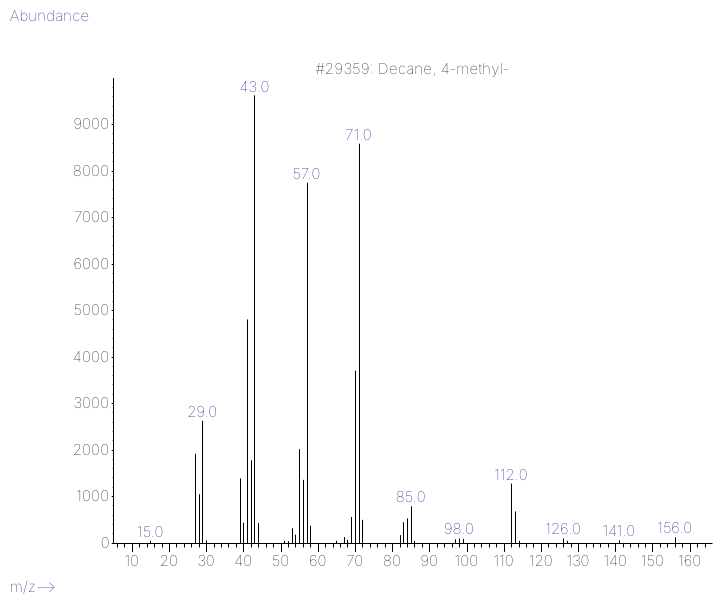
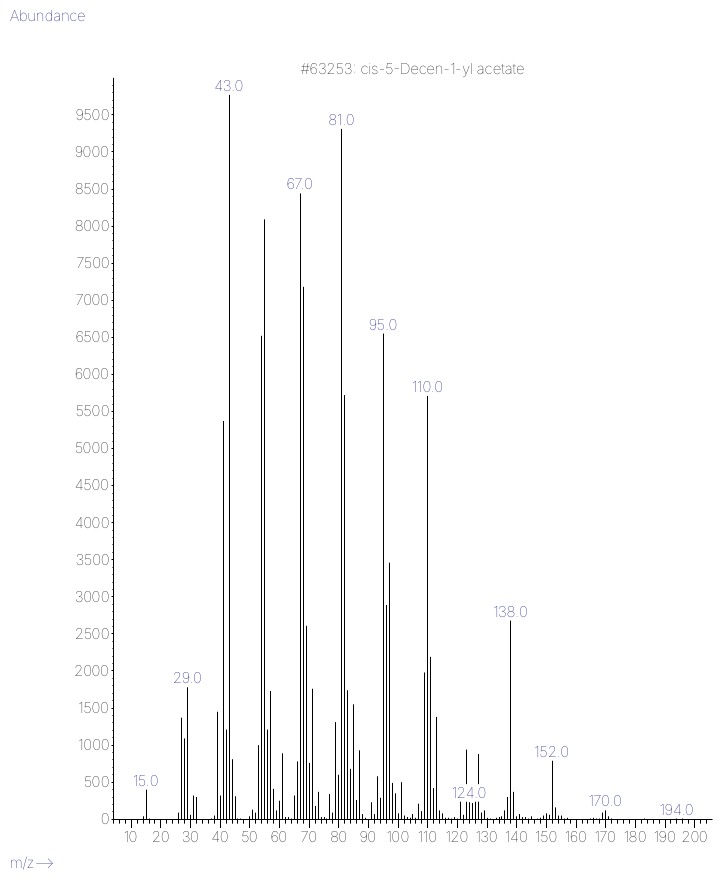
Two compounds dominated the GC–MS profile (Figure 1 and Figure 2):
- decane, 4-methyl- (C₁₁H₂₄);
- cis-5-decen-1-yl acetate (C₁₂H₂₂O₂).
3.2.1Decane, 4-methyl-
This compound confirms the strong aliphatic and terpenoid signals seen in FTIR. Similar decane derivatives have been identified in Annona seeds, where they were associated with mild antimicrobial properties and typical non-polar seed oils.
3.2.2cis-5-Decen-1-yl acetate
This ester is known for antimicrobial, insecticidal, and fragrance activities. Lawal et al. (2017) reported similar acetate esters in Annona species traditionally used for wound-healing and pest control.
The presence of this ester aligns perfectly with the carbonyl (1742 cm⁻¹) and C–O stretches (1159 and 1097 cm⁻¹) from FTIR.
3.3FTIR fingerprint
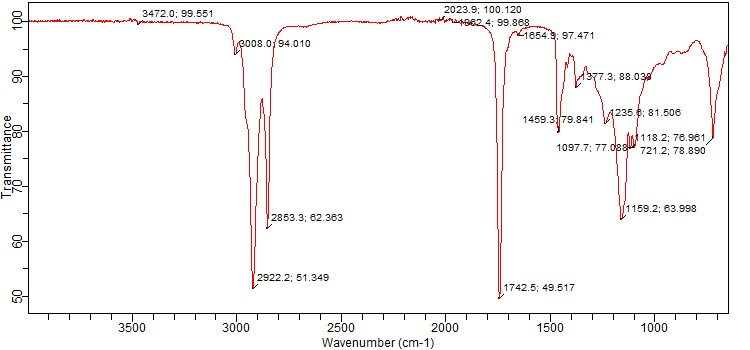
The FTIR peaks at 3472, 2922, 2853, 1742, 1459, 1159, 1097, and 721.2 cm⁻¹ (Figure 3) correspond directly to the functional groups associated with the phytochemicals quantified above.
3.3.1O–H stretch at 3472 cm⁻¹
This strong, broad peak confirms the presence of hydroxyl groups from phenolics, flavonoids, and tannins, matching their high levels (17.13 and 11.37 g/100 g). [10] also reported similar O–H bands in Annona species, linking them to phenolic-rich extracts.
3.3.2C–H stretch at 2922 and 2853 cm⁻¹
These bands indicate aliphatic chains in terpenoids (12.02 g/100 g) and steroids (4.12 g/100 g). [2] also observed this peak in lipid-rich seed extracts dominated by long-chain compounds, showing strong correlation with GC–MS detection of decane, 4-methyl- in the present sample.
3.3.3C=O stretch at 1742 cm⁻¹
This ester carbonyl peak confirms the presence of fatty acid esters, strongly supporting the GC–MS identification of cis-5-decen-1-yl acetate. Similar ester peaks were found in A. squamosa seed extracts [11], showing consistency across Annona species.
3.3.4C–H bending at 1459 cm⁻¹
This peak is typical of terpenoids, matching the high terpenoid value (12.02 g/100 g). [13] reported similar peaks in terpenoid-rich non-polar extracts.
3.3.5C–O stretch at 1159 and 1097 cm⁻¹
These peaks confirm the presence of esters and alcohols, again supporting the GC–MS acetate ester identified. [13] documented these peaks in ester-rich fractions of A. senegalensis stem bark.
3.3.6(CH₂)n rocking at 721.2 cm⁻¹
This peak is typical of long-chain hydrocarbons found in aliphatic esters and terpenoids, fully aligning with GC–MS results. [10] similarly linked this peak to lipid-based phytoconstituents.
3.4UV–Vis spectrum
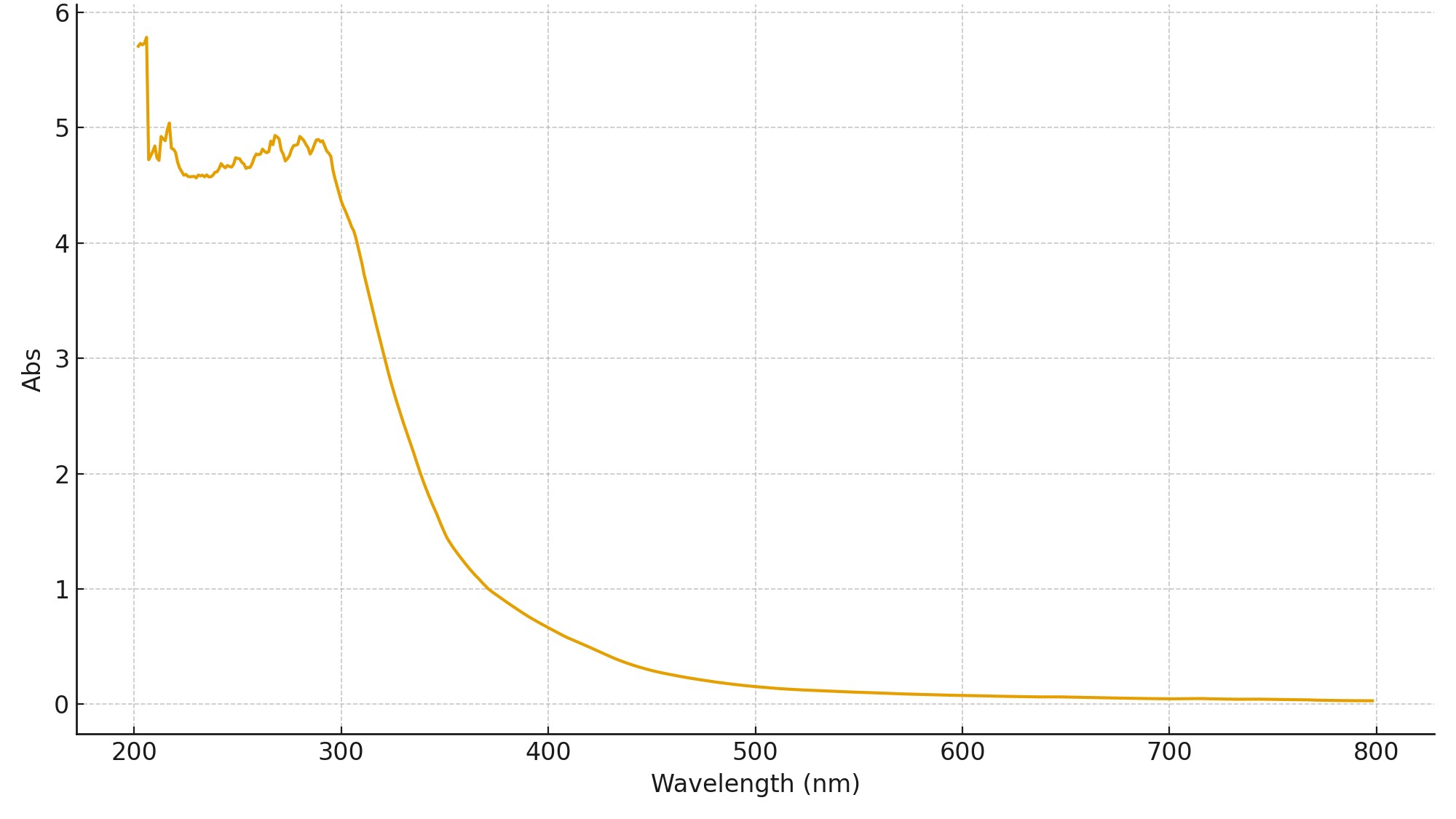
The UV–Vis absorption spectrum of the n-hexane extract recorded between 200 and 800 nm is shown in Figure 4.
4Summary
The n-hexane extract of Annona senegalensis seeds showed substantial levels of important phytochemicals, with tannins (17.13 g/100 g) being the most abundant, followed by alkaloids (13.78 g/100 g), saponins (12.05 g/100 g), terpenoids (12.02 g/100 g), flavonoids (11.37 g/100 g), and steroids (4.12g/100 g). These high concentrations indicate that the plant is chemically rich and potentially useful for therapeutic or nutraceutical applications, aligning with previous findings that A. senegalensis contains diverse bioactive metabolites.
FTIR analysis further confirmed the presence of key functional groups. The broad band at 3472 cm⁻¹ corresponded to O–H stretching from phenolic and alcoholic compounds (linked to tannins and flavonoids). Peaks at 2922 and 2853 cm⁻¹ indicated aliphatic C–H stretches typical of terpenoids and lipophilic molecules. The sharp carbonyl peak at 1742 cm⁻¹ revealed ester or lactone groups, supporting the presence of fatty acid derivatives. Additional peaks at 1459, 1159, and 1097 cm⁻¹ reflected C–H bending and C–O stretching, while the band at 721 cm⁻¹ signified long-chain alkanes. These functional groups show strong agreement with reports by other researchers analyzing Annona species using FTIR.
GC–MS analysis identified compounds such as 4-methyl-decane and cis-5-decen-1-yl acetate, which are characteristic long-chain hydrocarbons and esters commonly found in seed oils. These compounds support the FTIR observations of C–H, C–O, and ester functional groups, and are consistent with earlier GC–MS findings in A. senegalensis seed extracts.
Overall, the combined phytochemical, FTIR, and GC–MS results demonstrate that the n-hexane extract of A. senegalensis seeds contains abundant bioactive metabolites—especially tannins, alkaloids, terpenoids, and fatty acid derivatives—confirming its traditional medicinal relevance and aligning with established literature on the phytochemistry of the species.
5Conclusion
The n-hexane extract of Annona senegalensis seeds demonstrated a rich phytochemical profile, with particularly high concentrations of tannins (17.13 g/100 g), alkaloids (13.78 g/100 g), saponins (12.05 g/100 g), terpenoids (12.02 g/100 g), flavonoids (11.37 g/100 g), and steroids (4.12 g/100 g). These values confirm that the seeds are a significant reservoir of bioactive secondary metabolites. FTIR analysis revealed characteristic functional groups such as O–H, C–H, C=O, and C–O stretches which further support the presence of phenolics, terpenoids, esters, and long-chain hydrocarbons detected in the phytochemical quantification. GC–MS profiling identified compounds including 4-methyl-decane and cis-5-decen-1-yl acetate, validating the FTIR evidence of aliphatic chains and ester functionalities.
Taken together, the phytochemical, FTIR, and GC–MS results provide strong evidence that A. senegalensis seeds possess a diverse composition of biologically relevant compounds with potential therapeutic, nutraceutical, and industrial applications. The findings also align closely with previous reports on the chemical richness of A. senegalensis, reinforcing the plant’s traditional medicinal relevance and supporting its further exploration for drug discovery and natural product development.
6Recommendations
- Further solvent-based studies: since the n-hexane extract revealed high levels of lipophilic phytochemicals, future studies should explore other solvent fractions (methanol, ethanol, ethyl acetate, water) to obtain a broader understanding of the plant’s polar and non-polar constituents.
- Isolation and characterization of key bioactive compounds: compounds identified in the GC–MS profile such as 4-methyl-decane and cis-5-decen-1-yl acetate should be further purified using chromatographic techniques and structurally confirmed with advanced tools such as NMR and LC-MS.
- Biological activity evaluation: to establish therapeutic relevance, the extract and isolated compounds should be tested for antimicrobial, antioxidant, anti-inflammatory, and cytotoxic activities using standardized bioassays.
- Toxicological assessment: acute and sub-chronic toxicity studies are recommended to determine safe dosage levels and ensure that the seed extract is safe for potential nutraceutical or pharmaceutical applications.
- Comparison with related species: conducting comparative studies with other Annona species will help understand chemotaxonomic relationships and identify species-specific bioactive markers.
- Standardization for industrial applications: given the richness of terpenoids, tannins, and alkaloids, protocols should be developed for extract standardization to support potential use in herbal formulations, functional foods, or cosmetic products.
Acknowledgment
The author sincerely appreciates the support and guidance received from laboratory staff and academic supervisors during the course of this research. Special thanks are extended to the Department of Chemistry for providing access to essential equipment such as the Soxhlet apparatus, GC–MS, and FTIR instrumentation. Gratitude is also expressed to colleagues and friends who contributed through technical assistance, constructive suggestions, and encouragement throughout the study. Their collective support played a significant role in the successful completion of this work.
References
- [1]Ahmed H, Bassem SEM, Mohamed YH, Gamila MW. Cytotoxic essential oil from Annona senegalensis Pers. leaves. Pharmacognosy Research. 2010;2(4):211–214.
- [2]Ameen OM, Usman LA, Oganija FS, Hamid AA, Mohammed NO, Zubair MF, et al. Chemical composition of leaf essential oil of Annona senegalensis Pers. growing in North Central Nigeria. International Journal of Biological and Chemical Sciences. 2011;5(1):375–379.
- [3]Ekundayo O, Oguntimein B. Composition of the essential oils of Annona senegalensis var. senegalensis. Planta Medica. 1986;52(3):202–204.
- [4]Hamisu A, Muhammad II, Abubakar M, Abubakar S, Ibrahim M. Proximate composition and phytochemical screening of root and leaf extracts of Annona senegalensis Pers. in Aliero, Kebbi State, Nigeria. International Journal of Botany Studies. 2023;8(7):31–35.
- [5]Khallouki F, Younos C, Soulimani R, Bessière JM. Chemical composition of the essential oils of Annona cuneata L. and Annona senegalensis Pers. stem-barks. Flavour and Fragrance Journal. 2002;17(5):398–400.
- [6]Oyeniyi AO, Ogunsola FO, Rasaq UA, Salako OF. Antioxidant activity, qualitative phytochemicals and mineral contents of the seeds of African custard apple (Annona senegalensis Persoon). Journal of Current Research in Food Science. 2025;6(1):390–393.
- [7]Tijjani MA, Abdurahaman FI, Abba YS, Idris M, Baburo BSI, Mala GA, et al. Evaluation of proximate and phytochemical composition of leaves of Annona senegalensis Pers. Journal of Pharmaceutical and Scientific Innovation. 2013.
- [8]Tukur AR, Musa NM, Bello HA, Sani NA. Determination of the phytochemical constituents and antifungal properties of Annona senegalensis leaves (African custard apple). ChemSearch Journal. 2020;11(1):16–24.
- [9]Williams BS, Etuk UE, Adebayo OA. Bioactive constituents and pharmacological potential of Annona senegalensis seed extract identified by GC–MS. Pharmacognosy Journal. 2023;15(1):85–96. https://doi.org/10.5530/pj.2023.15.12
- [10]Yisa J, Egila JN, Darlinton AO. Chemical composition of Annona senegalensis from Nupe land, Nigeria. African Journal of Biotechnology. 2010;9(26):4106–4109.
- [11]Yusuf SA, Ibrahim AS, Musa AM. Comparative antimicrobial effects of leaf and seed extracts of Annona senegalensis on pathogenic bacteria. Tropical Journal of Pharmaceutical Research. 2021;20(11):2403–2411. https://doi.org/10.4314/tjpr.v20i11.12
- [12]Zhao Y, Chen F, Yang W. Applications of UV–Vis spectroscopy and FTIR in phytochemical characterization of plant-based bioactive compounds. Spectrochimica Acta Part A: Molecular and Biomolecular Spectroscopy. 2021;262:120124. https://doi.org/10.1016/j.saa.2021.120124
- [13]Zhou C, Liu J, Huang Y. Chemical constituents and bioactivities of plant-derived fatty acid esters. Journal of Agricultural and Food Chemistry. 2018;66(42):11001–11009.