Environmental and Analytical Chemistry
Biosorption of Cadmium(II) from Aqueous Solution Using Citric Acid-Modified and Unmodified Azadirachta indica Leaf Biomass: Equilibrium and Kinetic Studies
1Department of Chemistry, Atiba University, Oyo, Oyo State, Nigeria
2Department of Biology, Atiba University, Oyo, Oyo State, Nigeria
3Lab 21 Services Limited, Iseyin, Oyo State, Nigeria
Published October 2026
Abstract
Emerging heavy metal contamination has caused prominent danger to eco system and health status of human at large. This study researched on the adsorptive efficiency of unmodified (UNLP) and modified citric acid (CLNP) Azadirachta indica Neem leaves cost effective and affordable adsorbent for the removal of Cd2+ from aqueous solutions. The organic components of the biosorbents were characterized using Fourier transform infrared spectroscopy to investigate morphology, surface functional group and adsorption capacity. Batch experiments investigated the effects of adsorbent dosage, solution pH, contact time and initial cadmium concentration, while equilibrium data were evaluated using Langmuir and Freundlich isotherms and kinetic data using pseudo-first-order, and second-order models. An adsorbent dosage of 0.2 g was selected for subsequent experiments. Optimal adsorption occurred at pH of 8 with an equilibrium time of 80 minutes while the optimum contact time for both biosorbents was 180 min. Adsorption capacity increased with increasing initial cadmium concentration, although percentage removal decreased at higher concentrations. The Langmuir model provided the higher coefficient of determination for both biosorbents (R² = 0.6198 for UNLP and 0.5830 for CNLP), with favorable separation factors (RL = 0.012 and 0.146, respectively). Pseudo-second-order kinetics gave excellent fits (R² = 1.0000 for UNLP and 0.9999 for CNLP). FTIR spectra indicated hydroxyl, carbonyl and C–O-containing functional groups and changes following citric acid treatment. Notably, the reported Langmuir maximum capacity was higher for UNLP (6.382 mg/g) than CNLP (1.119 mg/g), indicating that citric acid modification altered the surface chemistry but did not improve the measured equilibrium capacity under the conditions investigated. The research findings shows that unmodified (UNLP) is a better adsorbent for the removal Cd2+from aqueous solution than modified citric acid (CLNP)
Keywords: Azadirachta indica; contamination; biosorption; wastewater management; heavy metals
1Introduction
Environmental contamination such as heavy metals pollution are persistent environmental challenges leading to the degradation of water systems, soils and sediments. The uncontrolled industrial activities and rapid development in the global world has imposed life threatening havoc on fresh water, portable water and living organism (Bibi et al., 2023). The continuous improper waste disposal, agricultural runoff, mining and related anthropogenic processes over the years has contributed adversely to the environment at large (Briffa et al., 2020). Their tendency to accumulate in biological systems make contamination of water and wastewater an important environmental concern (Briffa et al., 2020). Recently, reports identify cadmium, lead and mercury among hazardous metals and emphasizes the need for treatment approaches capable of reducing metal concentrations before contaminated waters are discharged into the environment (Ali et al., 2019).
Heavy metal deposition in water exceeds permissible limits established by environmental regulatory agencies leading to hazardous effect in the ecosystem. Although certain heavy metals are classified as essential metals which are required in trace amount for growth, metabolism, enzyme activation and other physiological processes. Iron (Fe), Copper (Cu), Zinc (Zn), and manganese (Mn) are needed at a proportion for certain cellular development and biochemical reactions (Ali et al., 2019).
These heavy metals are introduced into the eco systems through natural and anthropogenic sources. Natural activities such as soil erosion, volcanic eruption, weathering of rocks, forest fires contribute trace amount of the metals to the atmosphere, soil, and water bodies. The recent atmospheric emissions from fossil fuel combustion and continuous e-waste generation has intensified concerns about environmental quality and public health (Balali Mood et al., 2021). Globally, anthropogenic activities are the major contributors to heavy metals pollution posing serious environmental degradation.
Cadmium primarily originates from effluent from industrial processes such as battery manufacturing, agricultural discharge, electroplating (Obayomi et al., 2020). The recent discovery has sited cadmium as one of the major heavy metal threatening health life and ecosystems. Chronic cadmium exposure has been associated with demineralization, kidney dysfunction, bone demineralization, and increased risk of cancer (Wolowiec et al., 2019). Exposure to cadmium to human has tendency to accumulate primarily in the kidneys and liver, where it can remain for decades before excreted (Balali Mood et al., 2021). Prior to the persistence, toxicity, and bioaccumulative characteristics (Ali et al., 2019)
Conventional heavy-metal treatment technologies include chemical precipitation, ion exchange, reverse osmosis, membrane separation and electrochemical processes. Although these approaches are established, the report highlights limitations associated with operational cost, energy demand and secondary waste generation. Biosorption has consequently attracted attention because biological materials can provide surface functional groups capable of binding dissolved metal ions through ion exchange, complexation, electrostatic attraction and related physicochemical interactions.
Adsorption and remediation techniques have attracted considerable attention due to their effectiveness in removing pollutants and as a mechanism for improved performance through citric acid surface modification. Conventional adsorbents and treatment materials including activated carbon and synthetic ion-exchange resin can provide efficient pollutant removal; however their relatively high material, regeneration and operational costs can limit their extensive application, particularly in developing regions (Nguyen et al., 2023; Dhaouadi et al., 2021). Consequently increasing research attention has been directed towards the development of low-cost adsorbents derived from naturally and abundant materials (Kumar and Bandyopadhyay, 2006)
Plant-derived biomass and agricultural residues are particularly attractive biosorbents due to its renewability, low cost, abundance, and are environmentally friendly. Azadirachta indica (neem) is a widely distributed multipurpose tree whose leaves contain lignocellulose compounds and oxygen-containing functional groups that can participate in adsorption. The original study therefore examined neem leaf powder as a biosorbent for cadmium (II), comparing untreated biomass with biomass modified using citric acid.
This study compared the adsorption performance of citric acid-modified CLNP Neem leaf with unmodified ULNP for Cd2+ removal. Key operational parameters, including pH, adsorbent dosage, contact time, and initial concentration, were systematically evaluated alongside adsorption kinetics, isotherms, thermodynamics, and reusability. The main focus of this study lies in showcasing that citric acid modification significantly improves the adsorption capacity of Neem leaf highlighting their potential as a low-cost and sustainable adsorbent for waste water treatment.
2Materials and methods
2.1Materials and methods
Cadmium nitrate tetra hydrate [Cd(NO3)2·4H2O], citric acid, sodium hydroxide (NaOH) and nitric acid (HNO3) and tetraoxosulphate (VI) acid of analytical grade were purchased.
2.2Collection and preparation of biosorbent
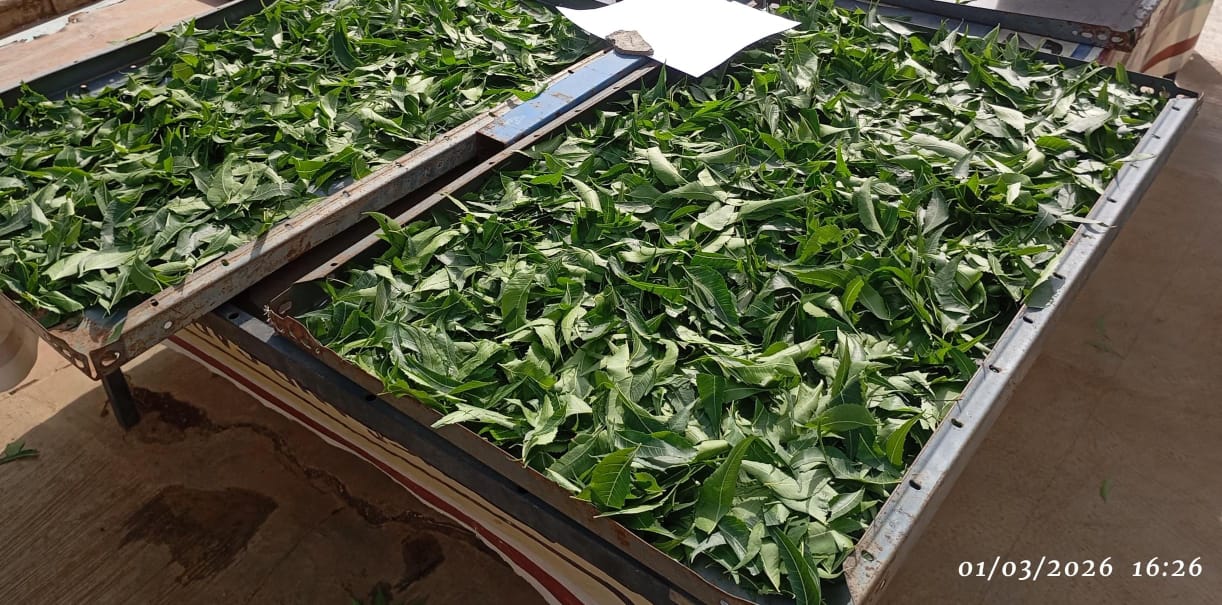
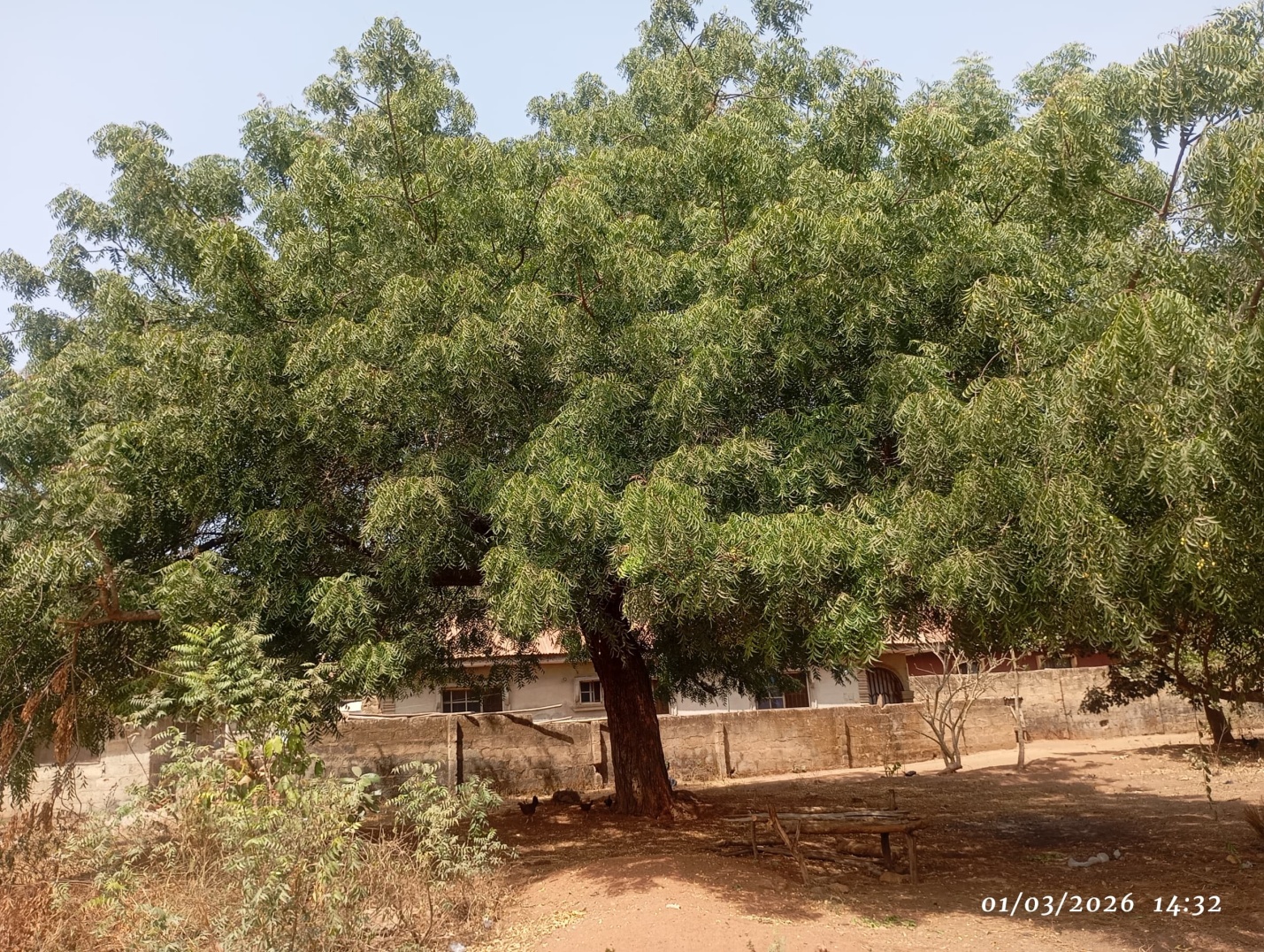
Fresh Azadirachta indica leaves were collected from Laoye Oyediran Avenue, Iseyin, Oyo State, Nigeria (7.953562° N, 3.623506° E). The leaves were sorted, washed with tap water and repeatedly rinsed with deionized water. They were air-dried at ambient temperature of 104 C for 24hours, grounded to powder and sieved through a 212 µm mesh. The prepared powder was stored in clean, dry, airtight containers. The biosorbent material was cooled in a desiccator after drying and stored for biosorption experiments.
2.3Chemical modification
This process was performed using Marshall et al. (1999). The prepared neem leaf powder was treated with 0.6 M citric acid. The material was soaked in the citric acid solution and stirred at room temperature, after which it was oven-dried at 50 °C overnight. The modified biomass was washed with deionized water using a Buchner funnel to remove unbound citric acid, dried again at 50 °C to constant weight, cooled and stored in airtight containers. The modified product was kept separately from the unmodified sample and labelled as (CLNP)
2.4Biosorbent characterization
The two samples unmodified (ULNP) and modified (CLNP) were characterized using Fourier transform infra-red spectrometer (FTIR; MCRL Laboratory University of Ibadan), a scanning electrode microscope (SEM) and a Compact pH Meter (LAQUAtwin-pH-22).
The pH was estimated using as described by Redha (2020) and (Torres, 2020). Several aliquots of 50-Ml aliquot was added into different stoppered bottles, and at intervals the pH was adjusted from 2 to 10 range using 0.2 mol/L of HCl and 0.1 mol/L of NaOH. The stoppered bottles were labelled CLNP and ULNP for modified and unmodified samples respectively. After the time range of 24hours has elapsed, the final Ph was determined and a curve was plotted.
2.5Batch biosorption experiments
Batch experiments evaluated adsorbent dosage, pH, contact time and initial cadmium concentration. An optimum dosage of 0.2 g was selected for subsequent experiments. For pH studies, 0.2 g of each biosorbent was contacted with 50 mL of 30 mg/L cadmium solution at pH values from 2 to 10, adjusted using 0.2 M NaOH and 0.2 M HNO3, followed by shaking for 2 h. For contact-time experiments, 0.2 g of biosorbent was contacted with 50 mL of 30 mg/L cadmium solution for 15, 30, 60, 120 and 180 min. The reported optimum pH values were maintained during this experiment: pH 8 for CNLP and pH 10 for UNLP. For concentration studies, 0.2 g of each biosorbent was contacted with 50 mL of cadmium solutions of 10, 20, 30, 40 and 50 mg/L at the respective optimum pH. After treatment, samples were filtered through Whatman No. 1 filter paper and residual cadmium was determined by flame atomic absorption spectroscopy (FAAS).
2.6Calculations, evaluation and data interpretation
The amount adsorbed in all experiments was determined using FAAS. The amount of adsorbate adsorbed onto the adsorbent at equilibrium qe (mg/g), can be calculated by
Co is the initial concentration of adsorbate (mg/L), Ce is the concentration of adsorbate at equilibrium (mg/L), V is the volume of the solution (L) and M is the mass of the adsorbent used (g).
3Results and discussion
3.1Physicochemical characteristics of adsorbents
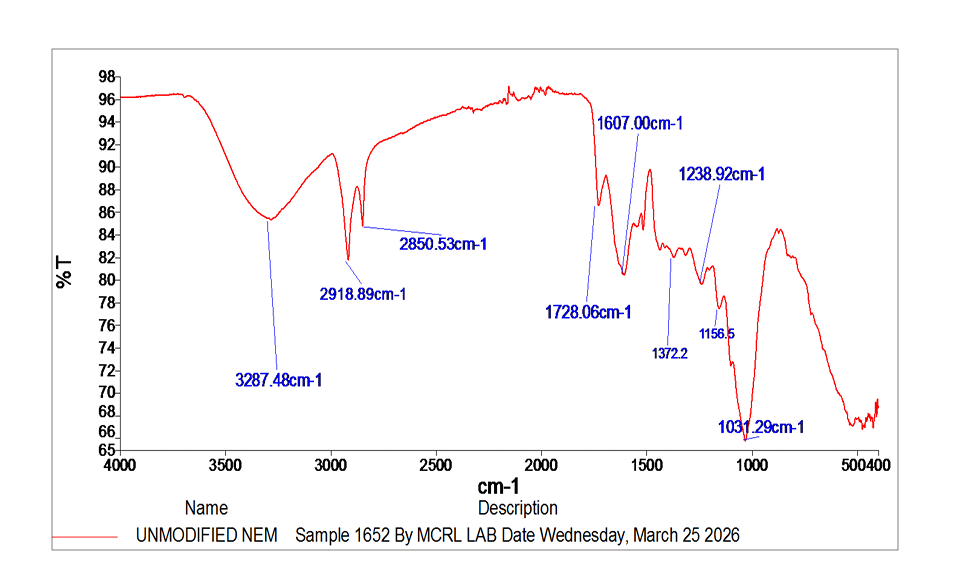
Figure 1 Shows the FTIR spectra of ULNP and CLNP. The broad absorption band in ULNP (Figure 1(a)) at 3287.48 cm⁻¹ is attributed to the stretching vibration of hydroxyl (–OH) groups associated with alcohols and phenolic compounds which aligns with Ahmad et al. (2021). The absorption bands at 2918.89 cm⁻¹ and 2850.53 cm⁻¹ correspond to the asymmetric and symmetric stretching vibrations of aliphatic C–H bonds in cellulose, hemicellulose, and lignin (Yasim-Anuar et al., 2022; Pandey, 1999). The strong absorption peak at 1728.06 cm⁻¹ is attributed to carbonyl (C=O) stretching vibrations of carboxylic acids or ester groups, indicating the presence of oxygen-containing functional groups involved in metal ion binding. These functional groups suggest that the unmodified adsorbent possesses active binding sites capable of interacting with cadmium ions during the biosorption process.
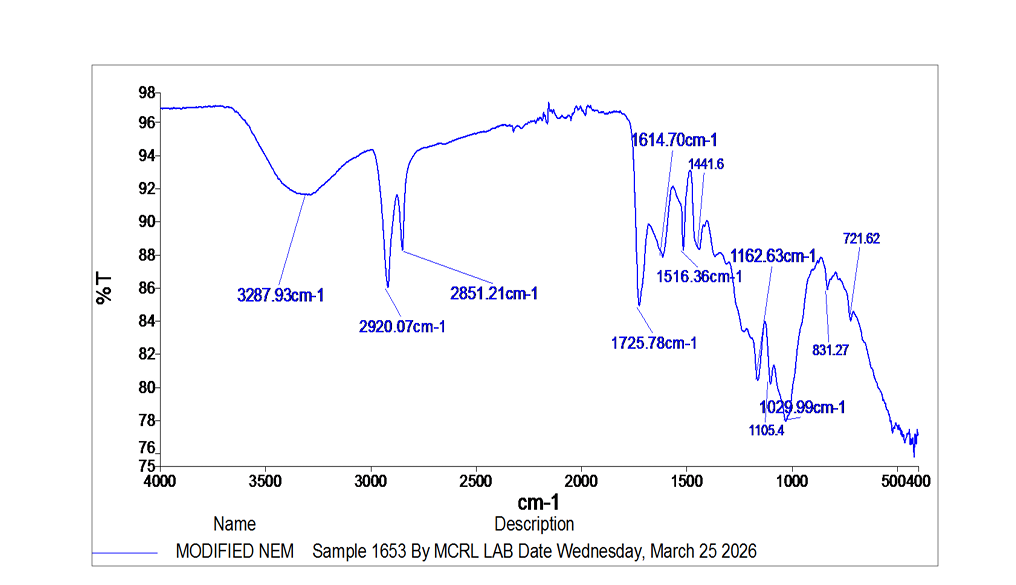
The FTIR spectrum in CLNP (Figure 1b) shows broad absorption band at 3287.93 cm⁻¹ is attributed to the stretching vibration of hydroxyl (–OH) groups associated with cellulose, hemicellulose, and phenolic compounds ((Ahmad et al., 2021). The absorption bands at 2920.07 cm⁻¹ and 2851.21 cm⁻¹ correspond to the asymmetric and symmetric stretching vibrations of aliphatic C–H groups present in lignocellulose materials (Yasim-Anuar et al., 2022; Lee et al., 2020). The peak observed at 1725.78 cm⁻¹ represents carbonyl (C=O) stretching vibrations, confirming the presence of carboxylic functional groups introduced or enhanced during citric acid modification. Additional peaks observed at 1614.70 cm⁻¹, 1516.36 cm⁻¹, and 1441.6 cm⁻¹ indicate changes in surface functional groups after modification. The peaks around 1162.63 cm⁻¹, 1105.4 cm⁻¹, and 1029.99 cm⁻¹ are attributed to C–O stretching vibrations (Baby et al., 2019).
3.2Adsorption parameters
3.2.1Effect of pH
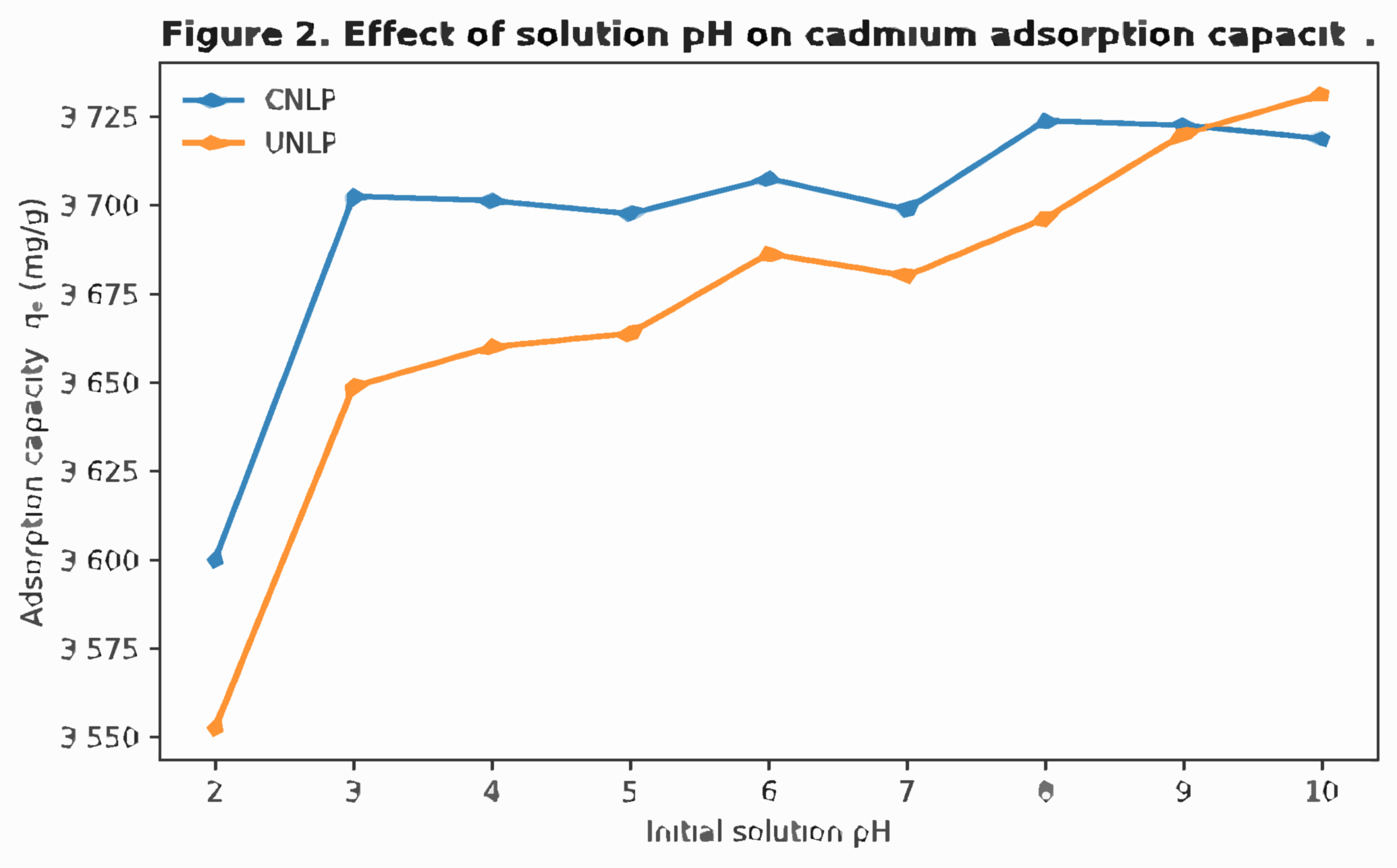
The influence of variation in pH affect biosorption technique. The results obtained showed that cadmium adsorption increased with an increase in pH until the optimum pH was reached. Consequently, the optimum pH for cadmium biosorption is commonly observed within the pH range of 5–8, depending on the nature of the biosorbent and the experimental conditions (Redha, 2020; Torres, 2020). This increase may be attributed to the decrease in competition between hydrogen ions and cadmium ions for the available adsorption sites on the biosorbent surface. As shown in Figure 3. Cd2+ adsorption increases with increasing pH values. Beyond the optimum pH, the adsorption process decreased due to precipitation of cadmium ions from solution. The results indicate that pH significantly influences the biosorption efficiency of the biosorbent.
3.2.2Effect of contact time
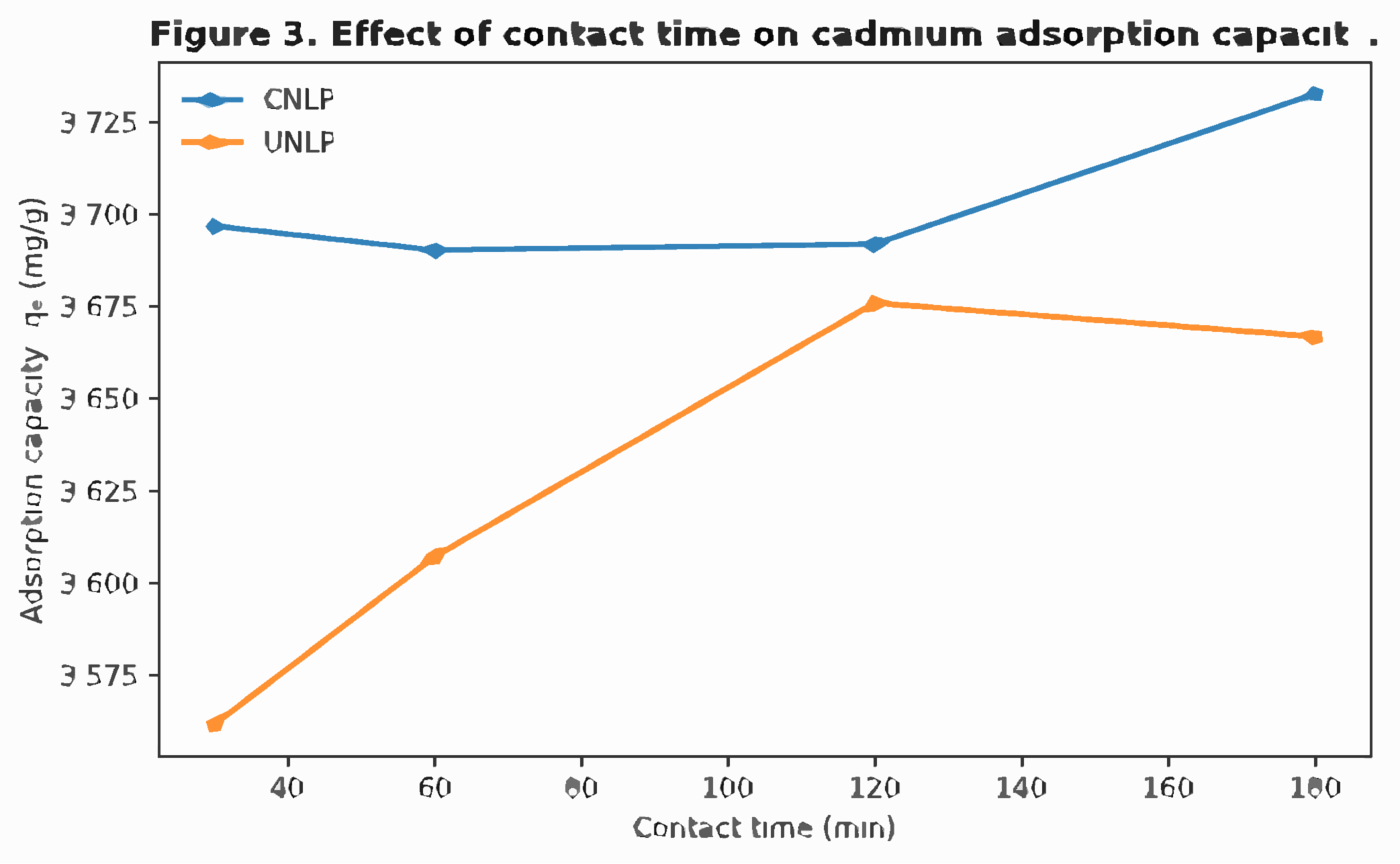
Contact time is a key parameter in adsorption technique governs the interaction between metal ions in solution and the active sites on the biosorbent surface. At the initial stage of the process, adsorption occurred rapidly due to the availability of a large number of vacant active sites on the biosorbent surface. As time progressed, more cadmium ions diffused and occupied these sites, leading to a gradual increase in adsorption capacity (Liu et al., 2021). The Figure 4 Shows the adsorption of Cd2+ on both the ULNP and CLNP. The concentrations of cadmium ions increased rapidly with increasing contact time for modified ULNP and decreased at a point for unmodified CLNP.
3.2.3Effect of initial concentration
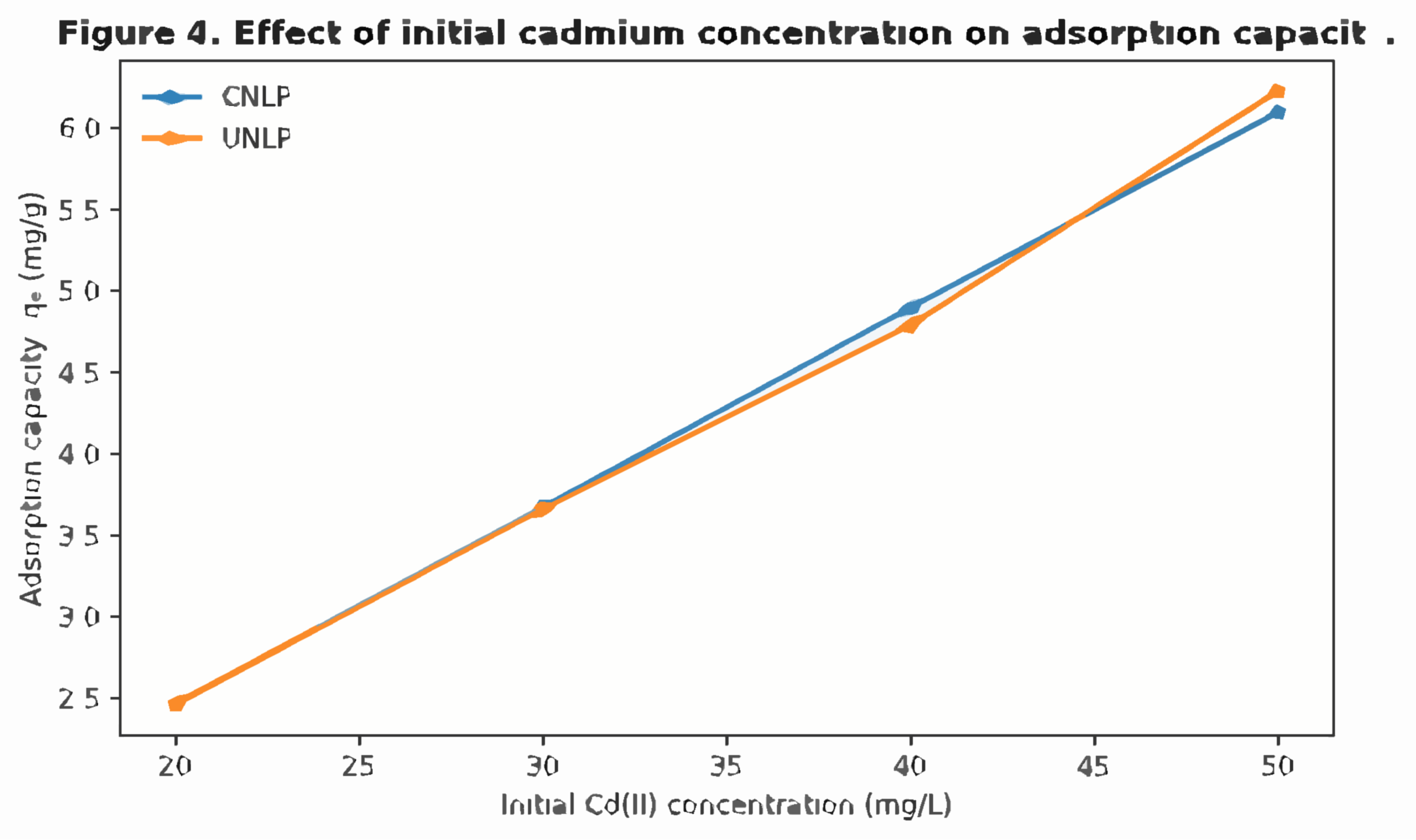
Initial concentration is an important factor that provides the driving force for mass transfer between the aqueous phase and the biosorbent surface. The Figure 5 shows that adsorption capacity increased with an increase in initial metal ion concentration for both citric acid modified (CNLP) and unmodified (UNLP) Azadirachta indica biosorbents. For the ULNP, the maximum capacity was reached at 50mg/L and for the CLNP at 48mg/L slightly lower than modified sample.
3.2.4Effect of adsorbent dosage
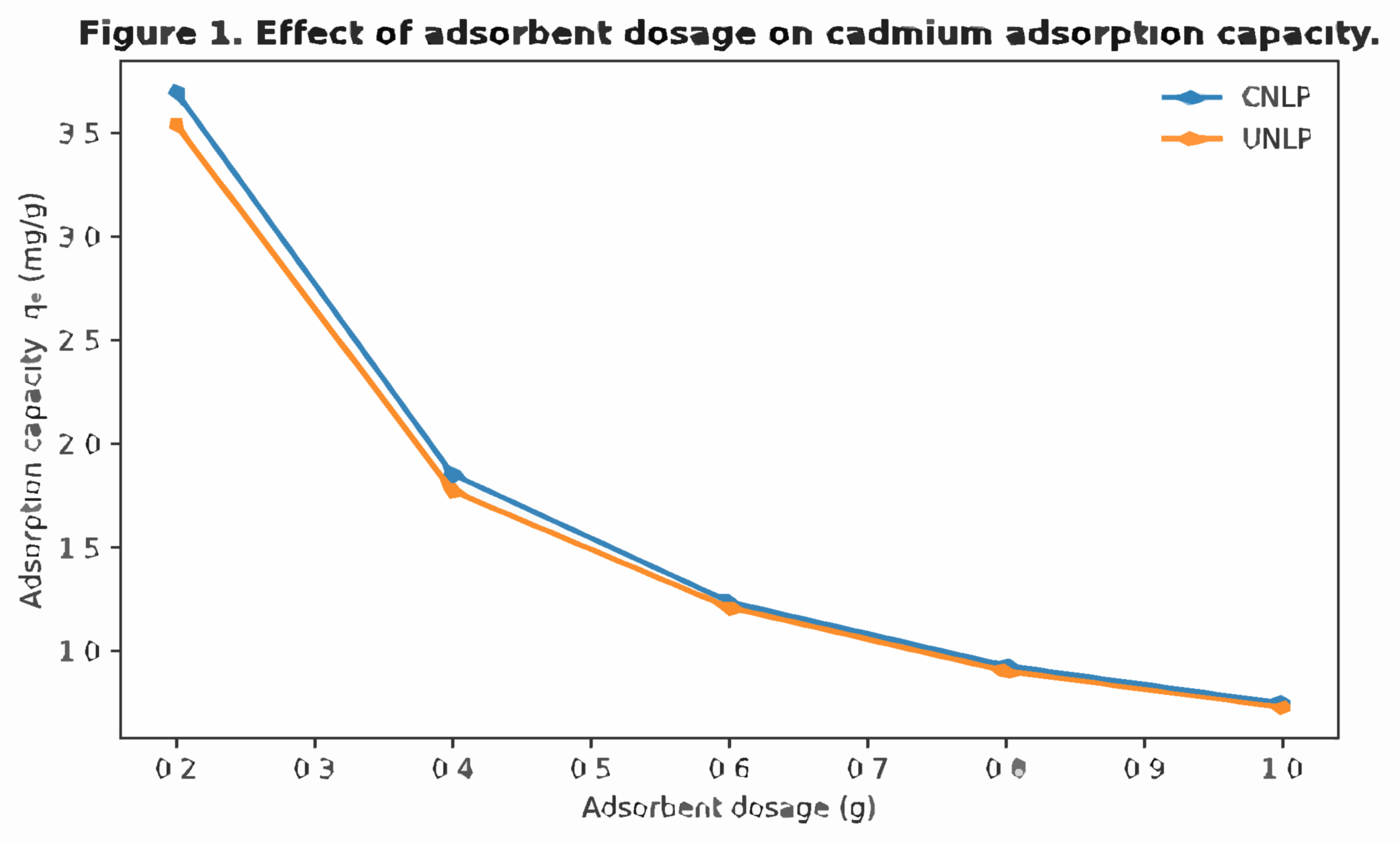
Figure 5 shows that the highest Cd2+ adsorption occurred at 3.6 for CLNP and 3.5 for ULNP. A case study of this trends have been reported in previous biosorption studies (Okolo et al., 2020). However, the adsorption capacity decreased with an increase in adsorbent dosage. This may be attributed to the lower adsorbate-to-adsorbent ratio at higher dosages, where the available cadmium ions become distributed over a greater number of binding sites. In addition, aggregation of biosorbent particles at higher dosage may reduce the effective surface area available for adsorption (Pang et al., 2022).
3.3Adsorption equilibrium and kinetics
3.3.1Adsorption equilibrium
This is a technique to compare various biosorbents on several operational conditions for the modified sample CLNP and unmodified ULNP. The representation is to verify and identify if biosorption of CLNP and ULNP were fitted into isotherm models, including Freundlich and Langmuir isotherms. Table 1 Indicate that the Langmuir model best fit the adsorption of Cd2+, as shown by the determination coefficient (R2) values. However, ULNP exhibited higher R2 values (0.6198 for Unmodified Cd2+ adsorption) than Modified CLNP (0.0597), suggesting that the citric acid modification likely influenced the adsorption behaviour. The Freundlich model showed very low R² values (0.0597 and 0.0129), indicating poor representation of the experimental data. The negative Freundlich parameters reported for CNLP further indicate that the model was not appropriate for that dataset.
| Adsorption | Adsorbent | Langmuir | Freundlich | ||||
|---|---|---|---|---|---|---|---|
| qm(mg/g) | KL | R2 | KF (mg/L) | n | R2 | ||
| Cd2+ Modified | CLNP | 1.119 | 0.117 | 0.583 | 3.010 | -8.630 | 0.0129 |
| Cd2+ Unmodified | ULNP | 6.382 | 1.705 | 0.6198 | 3.360 | 5.320 | 0.0597 |
Note: qm is the maximum adsorption capacity; KL is the Langmuir constant related to the affinity of the binding sites; R2 is the determination coefficient; n is the Freundlich intensity constant; K F is the Freundlich constant, an indicator of the adsorption capacity
3.3.2Adsorption kinetics
Kinetic studies of biosorption examines the rate at which the biosorption process occurs and provide clarity into the mechanisms and efficiency of metal-ion removal from the aqueous solution. In this research, adsorption kinetics were analysed using the pseudo-first-order and pseudo-second-order kinetic models, with results presented in Table 2.
The pseudo-first-order model gave relatively poor fits, with R² values of 0.431 for UNLP and 0.0780 for CNLP. In contrast, the pseudo-second-order model gave R² values of 1.0000 and 0.9999, respectively, and calculated equilibrium capacities of 3.682 and 3.695 mg/g. The high R2 values in unmodified ULNP implies that it provided a more accurate representation of the adsorption kinetics
| Adsorption | Adsorbent | Pseudo First order | Pseudo Second | ||||
|---|---|---|---|---|---|---|---|
| qe (mg/g) | KL | R2 | qe (mg/L) | K2 | R2 | ||
| Cd2+ Modified | CLNP | 0.033 | -0.004 | 0.078 | 3.695 | -2.129 | 0.999 |
| Cd2+ Unmodified | ULNP | 0.063 | -0.006 | 0.431 | 3.682 | 0.612 | 1.000 |
4Conclusion
The study demonstrates that Azadirachta indica leaf biomass can interact with and remove cadmium(II) from aqueous solution under batch conditions. Adsorption behavior was influenced by adsorbent dosage, solution pH, contact time and initial cadmium concentration. A working dosage of 0.2 g was selected for both biosorbents, with reported optimum pH values of 10 for UNLP and 8 for CNLP and an optimum contact time of 180 min. The Langmuir model described the equilibrium data better than the Freundlich model, and the reported RL values indicated favorable adsorption. Kinetic data were much more closely represented by the pseudo-second-order model than the pseudo-first-order model. FTIR results demonstrated the presence of hydroxyl, carbonyl and C–O-containing functional groups and changes following citric acid treatment.
A particularly important finding is that the reported Langmuir maximum adsorption capacity was higher for unmodified neem leaf powder (6.382 mg/g) than for citric acid-modified powder (1.119 mg/g). Therefore, the results do not support a simple conclusion that citric acid modification enhanced equilibrium adsorption capacity under the tested conditions. Instead, they indicate that modification changed the surface chemistry and adsorption behavior, while the unmodified biomass showed the higher reported Langmuir capacity. Further studies should investigate modification conditions, replicate measurements, surface area, and point of zero charge, metal speciation and regeneration performance before drawing conclusions about the practical superiority of modified neem biomass. Azadirachta indica leaf biomass possesses appreciable potential for the removal of cadmium from aqueous solution and can serve as a low-cost and environmentally friendly biosorbent.
Conflict of Interest
The authors of this research work declare no conflicts of interest and no funding information was stated in the source project report.
References
- [1]Ahmad MA, Eusoff MA, Oladoye PO, Adegoke KA, Bello OS (2021). Optimization and batch studies on adsorption of methylene blue dye using pomegranate fruit peel based adsorbent. Chem Data Collect, 32, 100676. https://doi.org/10.1016/j.cdc.2021.100676
- [2]Ali H, Khan E, Ilahi I (2019). Environmental chemistry and ecotoxicology of hazardous heavy metals: Environmental persistence, toxicity, and bioaccumulation. Journal of Chemistry, 2019, 6730305. https://doi.org/10.1155/2019/6730305
- [3]Baby R, Saifullah B, Hussein MZ (2019). Palm kernel shell as an effective adsorbent for the treatment of heavy metal contaminated water. Sci Rep, 9, 18955. https://doi.org/10.1038/s41598-019-55099-6
- [4]Balali-Mood M, Naseri K, Tahergorabi Z, Khazdair MR, Sadeghi M (2021). Toxic mechanisms of five heavy metals: Mercury, lead, chromium, cadmium, and arsenic. Frontiers in Pharmacology, 12, 643972. https://doi.org/10.3389/fphar.2021.643972
- [5]Bibi M, Samiullah, Behlil F, Afzal S, Sahifa (2023). Essential and non-essential heavy metals: Source and impacts on human health and plants. Pure and Applied Biology, 12(2), 835–847. https://doi.org/10.19045/bspab.2023.1200083
- [6]Briffa J, Sinagra E, Blundell R (2020). Heavy metal pollution in the environment and their toxicological effects on humans. Heliyon, 6(9), e04691. https://doi.org/10.1016/j.heliyon.2020.e04691
- [7]Dhaouadi F, Sellaoui L, Hernández-Hernández LE, Bonilla-Petriciolet A, Mendoza-Castillo DI, Reynel-Ávila HE, et al (2021). Preparation on an avocado seed hydrochar and its application as heavy metal adsorbent: Properties and advance statistical physics modeling. Chemical Engineering Journal, 417, 128116.
- [8]Kumar U, Bandyopadhyay M (2006). Sorption of cadmium from aqueous solution using retreated rice husk. Bioresour Technol, 97, 104–109.
- [9]Lee XJ, Ong HC, Gan YY, Chen WH, Mahlia TMI, Ok YS (2020). State of the art review on conventional and advanced pyrolysis of biomass for biochar production and application. Renewable and Sustainable Energy Reviews, 123, 109781. https://doi.org/10.1016/j.rser.2020.109781
- [10]Liu W, Li K, Hu X, Zhang R, Li Q (2021). Characteristics and mechanism of Pb²⁺ adsorption from aqueous solution onto biochar derived from microalgae and chitosan-modified microalgae. Frontiers in Environment Chemistry, 2, 693509. https://doi.org/10.3389/fenvc.2021.693509
- [11]Marshall W, Wartelle L, Boler D, Johns M, Toles C (1999). Enhanced metal adsorption by soybean hulls modified with citric acid. Bioresour Technol, 69(3), 263–268. https://doi.org/10.1016/S0960-8524(98)00185-0
- [12]Nguyen HHT, Nguyen HT, Ahmed SF, Rajamohan N, Yusuf M, Sharmal A, et al (2023). Emarging waste-to-wealth application of fly ash for environmental remediation: A review. Environ Res, 227, 115800.
- [13]Obayomi KS, Bello JO, Yahya MD, Chukwunedum E, Adeoye JB (2020). Statistical analyses on effective removal of cadmium and hexavalent chromium ions by multiwall carbon nanotubes (MWCNTs).
- [14]Okolo BI, Adewuyi A, Oladipo AA (2020). Biosorption of cadmium (II) ions from aqueous solution using modified neem (Azadirachta indica) leaf powder. South African Journal of Chemical Engineering, 34, 40–49. https://doi.org/10.1016/j.sajce.2020.07.003
- [15]Pandey KK (1999). A study of chemical structure of soft and hardwood and wood polymers by FTIR spectroscopy. Journal of Applied Polymer Science, 71(12), 1969–1975. https://doi.org/10.1002/(SICI)10974628(19990321)71:12<1969::AID-APP6>3.0.CO;2-D
- [16]Pang Y, Zhao C, Li Y, Li Q, Bayongzhong X, Peng D, et al (2022). Cadmium adsorption performance and mechanism from aqueous solution using red mud modified with amorphous MnO₂. Sci Rep, 12, 4424. https://doi.org/10.1038/s41598-022-08451-2
- [17]Redha AA (2020). Removal of heavy metals from aqueous media by biosorption. International Journal of Environmental Research and Public Health, 17(23), 1–28. https://doi.org/10.3390/ijerph17238808
- [18]Torres E (2020). Biosorption: A review of the latest advances. Processes, 8(12), 1584. https://doi.org/10.3390/pr8121584
- [19]Wołowiec M, Komorowska-Kaufman M, Pruss A, Rzepa G, Bajda T (2019). Removal of heavy metals and metalloids from water using natural clay minerals and their composites: A review. Minerals, 9(8), 487. https://doi.org/10.3390/min9080487
- [20]Yasim-Anuar TAT, Ariffin H, Norrrahim MNF, Hassan MA, Tsukegi T, Nishida H, et al (2022). Lignocellulosic biomass as a sustainable source for adsorption of heavy metals: Characterization and applications. Polymers, 14(9), 1916. https://doi.org/10.3390/polym14091916