Civil Engineering
Enhancing the Flexural Strength of High-Strength Concrete by Incorporating Micro-silica and Quarry Dust
Department of Civil Engineering, Rivers State University, Port Harcourt, Nigeria
Published October 2026
Abstract
This study investigates the flexural strength, or modulus of rupture, of concrete mixtures incorporating supplementary replacement materials across varying water-to-binder (W/B) ratios at 28 days. Experimental results obtained from 100 mm x 100 mm x 500 mm prisms were evaluated against predicted values using Eurocode 2 and ACI 318-11 code relationships. The findings demonstrate that lower W/B ratios yield a denser, less porous concrete matrix, which significantly increases flexural strength. Moderate substitution with replacement materials optimizes the modulus of rupture through improved particle packing, filler effects, and pozzolanic activity that strengthens the interfacial transition zone. However, exceeding the optimal replacement limit decreases overall strength due to the dilution of essential cementitious content and incomplete hydration. An evaluation of internal consistency revealed that 19 out of 20 evaluated mixtures exhibited a precise 20% variance between directly measured and Eurocode-derived equivalent compressive strengths, confirming strong cross-property reliability. The notable exception occurred in a mixture with 10% replacement and a 0.20 W/B ratio; while it achieved the peak compressive strength of 73.4 MPa, it displayed a disproportionately lower flexural strength gain, indicating a divergence between compressive and flexural behaviors at optimal peak performance.
Keywords: flexural strength; modulus of rupture; water-binder ratio; Eurocodes; compressive strength
1Introduction
Concrete is one of the most widely used construction materials because of its high compressive strength, durability, availability, and versatility. However, conventional concrete has limitations when used in structures subjected to high loads and demanding service conditions. The development of high-strength concrete (HSC) has provided an opportunity to produce concrete with improved mechanical properties and enhanced structural performance. In addition to compressive strength, the flexural strength of concrete is an important mechanical property, particularly in structural members such as beams, slabs, pavements, and precast elements where resistance to bending and cracking is essential.
The production of high-strength concrete generally requires careful selection and proportioning of constituent materials, a relatively low water-to-cementitious-material ratio, and, in many cases, the incorporation of supplementary cementitious materials. Microsilica, commonly referred to as silica fume, is a highly reactive pozzolanic material consisting predominantly of very fine amorphous silica particles. Because of its extreme fineness and high silica content, microsilica can react with calcium hydroxide produced during cement hydration to form additional calcium silicate hydrate (C-S-H) gel. It can also improve particle packing and reduce the porosity of the cementitious matrix, thereby contributing to improved mechanical and durability properties of concrete (Siddique, 2011). Reviews of silica-fume concrete have reported improvements in compressive, tensile, and flexural properties at appropriate replacement levels, although excessive quantities may adversely affect some properties and workability (Siddique, 2011; Singh and Singh, 2024).
The incorporation of microsilica is particularly relevant to high-strength concrete because the refinement of the cement paste and interfacial transition zone can contribute to a denser concrete microstructure. Siddique (2011) reported that silica fume has a pronounced influence on the flexural strength of concrete, while more recent reviews have similarly identified improvements in flexural performance at suitable silica-fume replacement levels. However, the response is dependent on factors such as water-to-binder ratio, curing conditions, material characteristics, dosage, and the use of chemical admixtures (Singh and Singh, 2024). Consequently, the optimum microsilica content cannot be assumed to be the same for all concrete mixtures.
In addition to the use of supplementary cementitious materials, increasing attention has been given to the utilization of industrial and quarrying by-products as alternatives to conventional construction materials. Quarry dust, also referred to as quarry rock dust, is a fine material generated during the crushing and processing of rocks for aggregate production. Its utilization as a partial replacement for natural fine aggregate can help reduce the demand for natural sand and provide a beneficial use for a material that may otherwise require disposal. A comprehensive review by Al-Kharabsheh et al. (2022) indicates that quarry dust can be used in concrete to a certain extent without detrimental effects on strength and durability, although higher replacement levels may reduce workability and adversely affect concrete performance.
The influence of quarry dust on flexural strength has also been demonstrated experimentally. Meisuh et al. (2018) investigated concrete containing 25% and 100% quarry rock dust as replacements for sand and reported improvements in flexural strength relative to the control concrete under the conditions investigated. Their findings indicate that the characteristics and proportion of quarry dust can influence the bending performance of concrete. However, the effect of quarry dust is not necessarily linear because increasing its quantity can alter workability, packing characteristics, water demand, and the interfacial characteristics of the concrete matrix (Al-Kharabsheh et al., 2022).
The combined incorporation of microsilica and quarry dust therefore provides a potentially useful approach to producing high-strength concrete with enhanced mechanical performance while making more effective use of industrial and quarrying by-products. Microsilica may contribute primarily through pozzolanic activity, pore refinement, and improvement of the cementitious matrix, whereas quarry dust can influence the grading and packing of the fine aggregate system. The interaction between these materials may consequently affect the flexural behaviour of the resulting concrete. Nevertheless, the optimum combination is dependent on the characteristics and proportions of the constituent materials, water-to-binder ratio, curing regime, aggregate properties, and mix design.
Although previous studies have examined microsilica and quarry dust separately, their combined effect on the flexural strength of high-strength concrete requires further investigation for specific materials and mix proportions. In particular, establishing the relationship between replacement levels and flexural strength can provide useful information for the development of concrete mixtures suitable for structural applications. Therefore, this study investigates the flexural strength of high-strength concrete containing microsilica and quarry dust, with particular emphasis on evaluating the effect of their incorporation on the flexural performance of concrete and identifying suitable proportions for achieving improved structural performance.
1.1Literature review
Flexural strength is an important mechanical property of concrete because it represents the ability of a concrete member to resist bending and tensile stresses. It is particularly relevant to structural elements such as beams, slabs and pavements, where cracking and failure may be governed by tensile stresses. In high-strength concrete, improvements in the cementitious matrix and interfacial transition zone can influence flexural performance. The incorporation of supplementary cementitious materials such as microsilica (silica fume) has therefore received considerable attention because of its potential to improve the microstructure and mechanical properties of concrete.
Microsilica is an extremely fine, highly reactive pozzolanic material containing a high proportion of amorphous silica. Its very fine particles contribute to pore refinement and improved packing, while its pozzolanic reaction with calcium hydroxide produces additional calcium silicate hydrate (C-S-H) gel. These mechanisms can produce a denser cement paste and stronger interfacial transition zone, thereby improving the mechanical performance of concrete (Siddique, 2011). A review by Siddique (2011) reported that microsilica has a particularly pronounced influence on flexural strength compared with some other tensile-related properties. The review also indicated that flexural strength generally increased with increasing microsilica content within the ranges investigated.
The beneficial influence of microsilica on high-strength concrete has also been associated with improvements in the overall strength and microstructure of the concrete matrix. Güneyisi et al. (2011) found that silica fume significantly enhanced the strength characteristics of high-strength concrete, although its incorporation also affected workability. More recent reviews indicate that microsilica contents in the approximate range of 10–25% of cement mass have frequently produced improvements in mechanical properties, including flexural strength, while excessive replacement levels may become detrimental to overall concrete performance (Singh and Singh, 2024).
Quarry dust has also been investigated as a partial replacement for natural fine aggregate. Its angular particles and fine material content can improve particle packing and the bond between aggregate and cement paste. However, increasing quarry-dust content can increase water demand and reduce workability, which may subsequently influence the strength of concrete (Al-Kharabsheh et al., 2022). The review by Al-Kharabsheh et al. (2022) reported that flexural strength generally increased to some extent with quarry-dust replacement, although the magnitude of improvement depended on the replacement level and characteristics of the materials used.
Experimental evidence supporting the effect of quarry dust on flexural strength was provided by Meisuh et al. (2018). Their investigation considered concrete with 25% and 100% replacement of natural sand by quarry rock dust and tested mixtures with compressive strengths ranging from approximately 25 to 47 MPa. At 28 days, the concrete containing 25% and 100% quarry dust exhibited flexural strengths approximately 2% and 4.3% higher, respectively, than the control concrete. The authors attributed the improvement partly to the characteristics of quarry dust and its interaction with the cementitious matrix.
The combined use of quarry dust and microsilica has also been examined, although the available literature is less extensive than studies investigating each material independently. Dehwah (2012) investigated self-compacting concrete containing quarry dust powder, silica fume combined with quarry dust powder, and other mineral fillers. The study evaluated several mechanical properties, including flexural strength, and demonstrated that the type and proportion of fine mineral materials influence the mechanical performance of concrete. In mixtures containing quarry dust powder, the use of approximately 8–10% quarry dust produced mechanical properties comparable to or better than mixtures incorporating silica fume in combination with quarry dust under the experimental conditions considered.
Overall, the literature indicates that both microsilica and quarry dust can contribute to improved flexural performance when incorporated at appropriate proportions. Microsilica primarily contributes through pozzolanic activity, pore refinement, and improvement of the cement paste and interfacial transition zone, whereas quarry dust can enhance aggregate packing and particle interlock. Nevertheless, the response of high-strength concrete to these materials is dependent on replacement level, water-to-binder ratio, aggregate characteristics, curing conditions, workability, and the use of chemical admixtures. Higher replacement levels are not necessarily associated with proportional increases in flexural strength because excessive fine material can increase water demand and adversely affect workability (Al-Kharabsheh et al., 2022; Singh and Singh, 2024).
A review of the existing literature therefore suggests a need for further experimental investigation into the combined effect of microsilica and quarry dust on the flexural strength of high-strength concrete. In particular, the optimum combination and replacement levels may vary according to the properties of locally available cement, aggregates, microsilica and quarry dust. Establishing these relationships can contribute to the development of high-strength concrete mixtures that achieve satisfactory flexural performance while utilizing industrial and quarry by-products more effectively.
2Materials and methods
2.1Materials
Cement: Ordinary Portland Cement (OPC) Grade 52.5N was used as the primary hydraulic binder. The cement complied with the requirements of ASTM C150/C150M-22 (Standard Specification for Portland Cement) and BS EN 197-1:2019 (Cement - Composition, specifications and conformity criteria). It was obtained from Dangote Cement in compliance with NIS414.
Microsilica: Densified silica fume (microsilica) was used as a supplementary cementitious material in this study. The material met the requirements of ASTM C1240-20 (Standard Specification for Silica Fume Used in Cementitious Mixtures) and BS EN 13263-1:2005+A1:2009 (Silica fume for concrete - Definitions, requirements and conformity criteria). The microsilica was supplied in powder form and contained more than 85% silicon dioxide (SiO₂), with a specific surface area greater than 15,000 m²/kg.
Quarry Dust: Quarry dust (QD), a by-product obtained from granite crushing operations, was used as a partial replacement for natural river sand in this study. The material was sourced from a local quarry in Rivers State and satisfied the physical requirements specified in BS EN 12620:2002+A1:2008 (Aggregates for concrete) and ASTM C33/C33M-18 (Standard Specification for Concrete Aggregates). Before use, the quarry dust was passed through a 4.75 mm sieve to eliminate oversized particles and any unwanted impurities.
Fine Aggregate (Natural River Sand): Natural River sand was used as the control fine aggregate and complied with the specifications of BS EN 12620:2002+A1:2008 and ASTM C33/C33M-18. The sand was obtained from a local supplier and thoroughly washed to remove silt, clay, and other impurities. It was graded to meet the requirements of Zone II classification. Prior to sieve analysis, the sand was oven-dried to ensure an accurate determination of its particle size distribution.
Coarse Aggregate: Crushed granite with a nominal maximum size of 10 mm was used as the coarse aggregate in this study. The aggregate complied with the requirements of BS EN 12620:2002+A1:2008 and ASTM C33/C33M-18. It was obtained from a certified quarry in Rivers State and thoroughly washed to remove dust and fine particles. The material was also properly graded to meet the specified size requirements.
Water: Potable water was used for both the mixing and curing of concrete specimens. The water satisfied the requirements of BS EN 1008:2002 (Mixing water for concrete - Specification for sampling, testing and assessing the suitability of water) and ASTM C1602/C1602M-22 (Standard Specification for Mixing Water Used in the Production of Hydraulic Cement Concrete). It was obtained from the municipal water supply at Rivers State University and was free from harmful substances that could interfere with cement hydration or reduce the durability of the concrete.
Superplasticizer: A High-Range Water-Reducing Admixture (HRWRA) based on polycarboxylate ether was used to improve the workability of the concrete while maintaining a low water-binder ratio. The admixture complied with ASTM C494/C494M-19 (Standard Specification for Chemical Admixtures for Concrete) Type F and BS EN 934-2:2009+A1:2012 (Admixtures for concrete, mortar and grout). The superplasticizer was stored and handled according to the manufacturer’s instructions to ensure that its performance remained effective throughout the experimental work.
2.2Specimen preparation
Concrete constituent materials were sourced and test on physical properties such as specific gravity and particle size distribution were conducted to BS 812:1999 and B1377:197 respectively, Values obtained were used to compute mix design based on particle packing method as per ASTM C29. A total of 240 cubes of size 150 mm 150 mm 150 mm were prepared and cast as per BS 1881:199. A total of 60 beam prisms of size 100 mm 100 mm 500 mm as per BS 12390-13.
2.3Mix design of high-strength concrete
The mix design was based on Particle packing method for proper minimization of void. The mix proportions obtained is presented in Table 1
| Mix | Percentage replacement | Cement (kg/m3) | Fine aggregate (kg/m3) |
Coarse aggregate (kg/m3) |
Microsilica(kg/m3) | QuarryDust(kg/m3) | Superplasticizer (%) |
|
|---|---|---|---|---|---|---|---|---|
| 0.20 | 0% | 549.48 | 797.55 | 1196.32 | 0 | 0 | 1.5 | |
| 5% | 544.08 | 737.64 | 1167.75 | 34.28 | 40.86 | 1.5 | ||
| 10% | 510.15 | 697.01 | 1164.58 | 68.21 | 79.38 | 1.5 | ||
| 15% | 477.04 | 655.87 | 1161.40 | 101.32 | 118.40 | 1.5 | ||
| 20% | 450.54 | 616.87 | 1158.40 | 127.82 | 155.39 | 1.5 | ||
| 0.24 | 0% | 523.00 | 788.64 | 1182.96 | 0 | 0 | 1.5 | |
| 5% | 505.04 | 660.14 | 1203.84 | 31.82 | 142.42 | 1.5 | ||
| 10% | 473.84 | 719.01 | 1201 | 63.02 | 81.66 | 1.5 | ||
| 15% | 442.93 | 798.55 | 1197.83 | 94.07 | 122.11 | 1.5 | ||
| 20% | 412.72 | 617.59 | 1159.57 | 123.664 | 155.45 | 1.5 | ||
| 0.28 | 0% | 500.81 | 780.84 | 1171.3 | 0 | 0 | 1.5 | |
| 5% | 475.77 | 739.68 | 1167.92 | 29.68 | 39.85 | 1.5 | ||
| 10% | 441.81 | 697.03 | 1164.58 | 59.0 | 79.36 | 1.5 | ||
| 15% | 413.11 | 656.63 | 1162.74 | 87.70 | 118.53 | 1.5 | ||
| 20% | 385.47 | 615.90 | 1160.4 | 115.34 | 157.70 | 1.5 | ||
| 0.32 | 0% | 459.64 | 787.52 | 1181.29 | 0 | 0 | 1.5 | |
| 5% | 432.26 | 745.63 | 1178.78 | 27.38 | 40.22 | 1.5 | ||
| 10% | 405.42 | 704.03 | 1176.27 | 54.21 | 80.15 | 1.5 | ||
| 15% | 379.12 | 663.03 | 1173.94 | 80.32 | 119.67 | 1.5 | ||
| 20% | 353.78 | 621.75 | 1171.6 | 105.86 | 159.31 | 1.5 | ||
2.4Flexural strength test
Flexural strength, also known as the modulus of rupture, was measured at 28 days using prism specimens of 100 mm × 100 mm × 500 mm. The test followed the procedures specified in BS EN 12390-5:2019 and ASTM C78/C78M-22.

The prisms were placed on roller supports with a span length of 300 mm, and load was applied at the third points using the four-point bending method as shown in fig.2.1. The load was increased at a constant rate of 0.06 ± 0.04 MPa/s until the specimen failed. Flexural strength was calculated using:
Where:
: flexural strength (MPa)
P: maximum applied load (N)
L: span length (mm)
b: specimen width (mm)
d: specimen depth (mm)
If failure occurred outside the middle third of the span, the distance from the nearest support to the fracture point was used in the calculation.
3Results and discussion
Flexural strength (modulus of rupture) was determined experimentally on 100 mm x 100 mm x 500 mm prisms at 28 days, and compared against modulus of rupture values predicted from the measured flexural test data using the Eurocode 2 and ACI 318-11 code relationships.
As part of the flexural testing, the flexural test results were also used, in conjunction with the Eurocode 2 tensile-strength relationship, to back-calculate an equivalent compressive strength implied by each prism's measured flexural performance. These Eurocode-derived equivalent compressive strengths ranged from approximately 38.7 MPa to 56.9 MPa across the mixes, and while they follow a broadly similar pattern of decline at higher replacement and water-binder ratio, they are generally 10 to 20 MPa lower than the directly measured cube compressive strengths reported. This gap is expected, since flexural-to-compressive strength correlations in codes of practice are calibrated on conventional concrete and tend to be conservative for concrete containing supplementary cementitious materials such as micro-silica; it nonetheless provides a useful independent cross-check confirming that the flexural and compressive results are broadly consistent with one another in their response to percentage replacement and water-binder ratio.
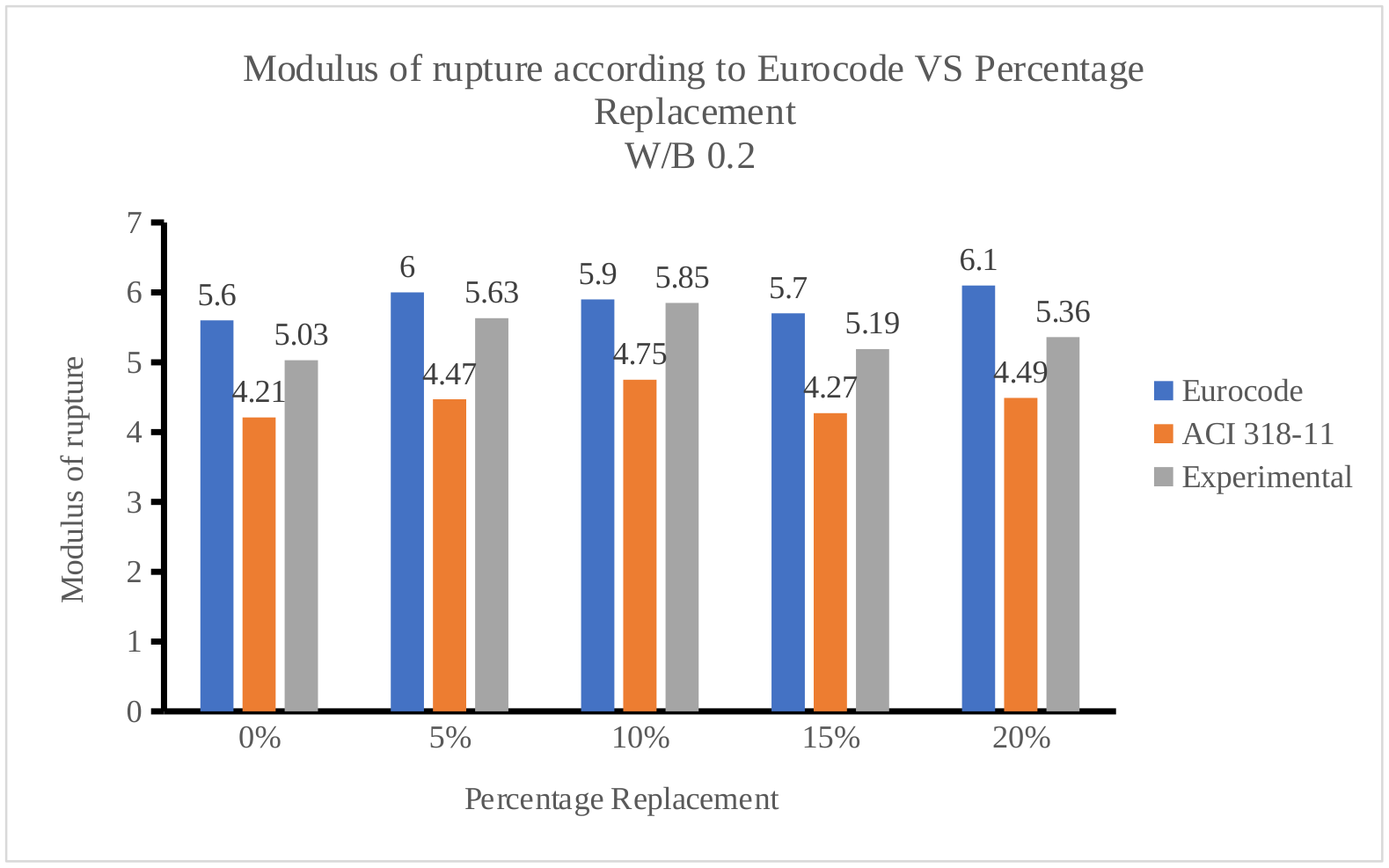
Figure 2 displays the results related to the modulus of rupture for concrete mixtures created at a water-to-binder ratio of 0.20. This figure indicates that the highest flexural strength was observed within the water-binder ratios studied, suggesting that lower ratios lead to a more compact and resilient concrete structure. This pattern reinforces the idea that optimal levels of replacement materials improve the modulus of rupture, while excessive levels diminish strength due to less availability of cement paste and incomplete reactions of the materials used for replacement. This finding aligns with the observations made by Aydın and Baradan (2007), who concluded that utilizing low water-to-binder ratios with appropriate supplementary materials enhances the mechanical properties of concrete by minimizing permeability and reinforcing interfacial bonding. Juenger and Siddique (2015) reached similar findings, emphasizing that the success of supplementary cementitious materials is heavily influenced by the percentage of replacement and the composition of the binder used.
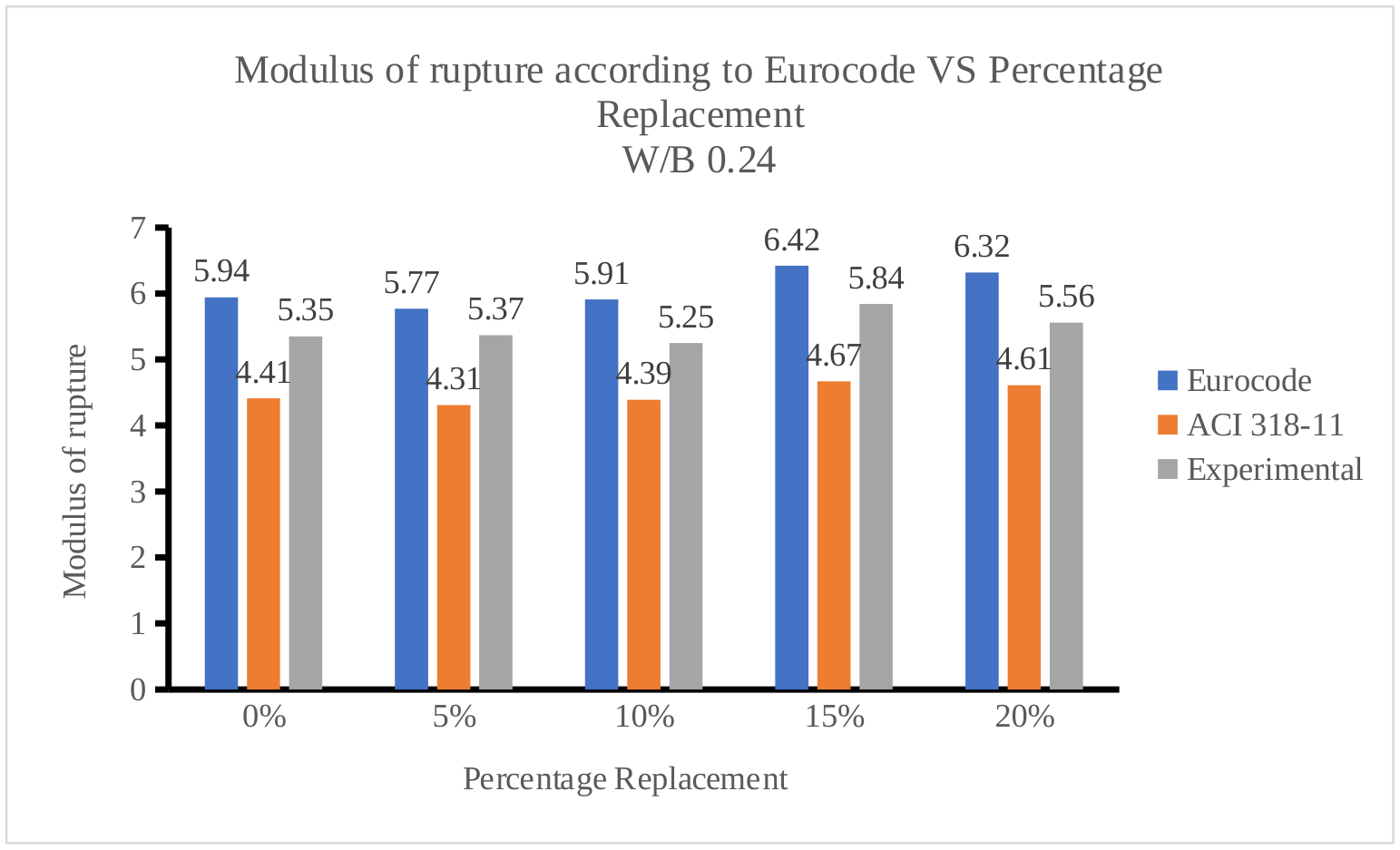
Figure 3 depicts the variation in modulus of rupture at a W/B ratio of 0.24. The outcomes reveal elevated flexural strength values when compared to mixtures with higher water-binder ratios, underscoring the beneficial effect of reduced water content on the density and strength progression of concrete. The incorporation of replacement materials led to increased modulus of rupture at lower levels of replacement; however, surpassing the optimal replacement level resulted in diminished strength due to insufficient cement hydration products. These results align with the findings of Siddique (2011), who discovered that the controlled substitution of cement with supplementary materials improves mechanical properties, including flexural strength, due to enhanced bonding and microstructural refinement. These findings also support ACI Committee 363 (2010), which highlighted that achieving high-strength concrete necessitates an optimized binder formulation along with low water-binder ratios.
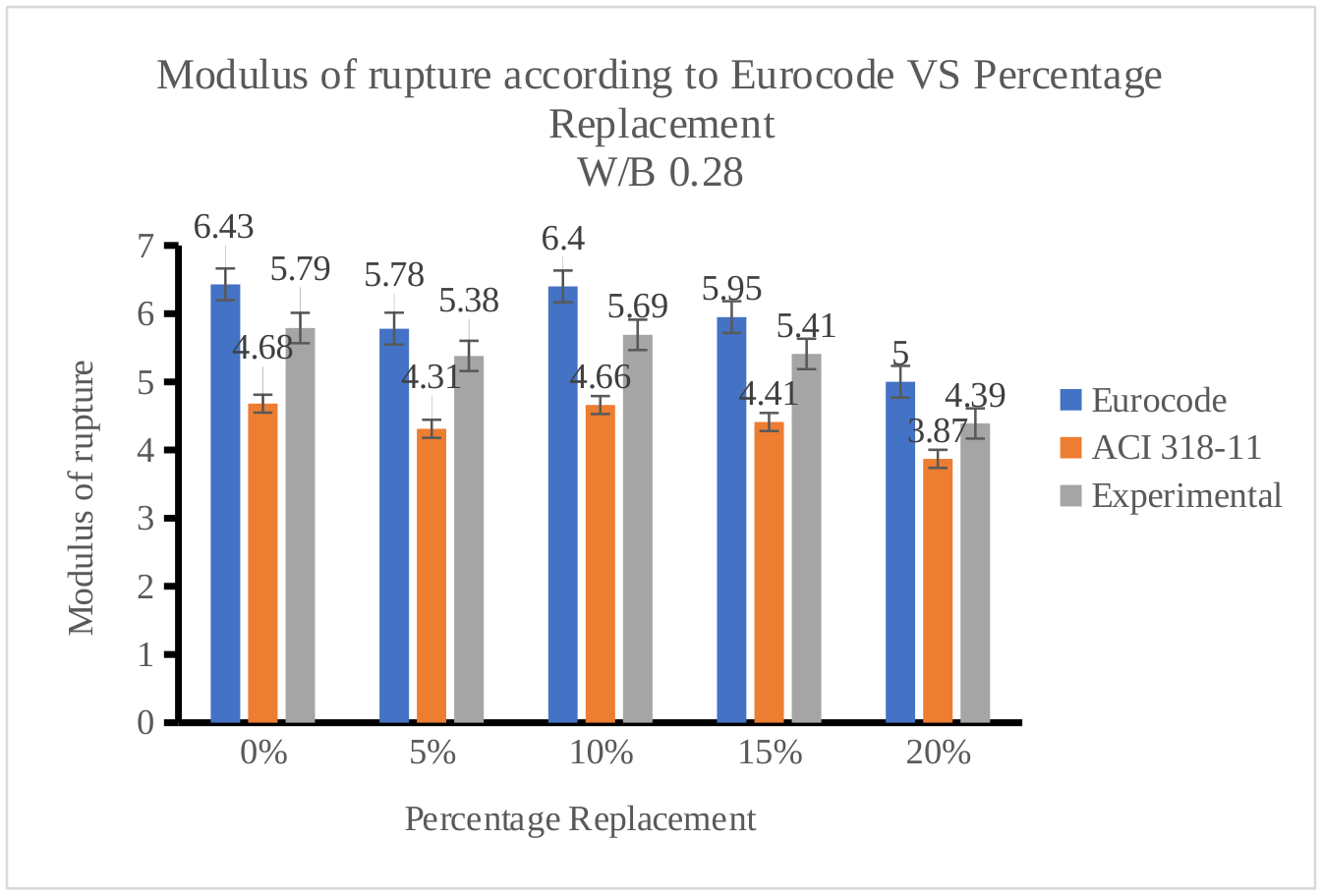
Figure 4 depicts the behavior of modulus of rupture for concrete mixtures made at a W/B ratio of 0.28. The data illustrates that a lower water-binder ratio contributes to greater flexural strength in comparison to higher W/B mixtures, which is attributed to a reduction in porosity and a denser cement composition. The trends in replacement levels reveal that moderate amounts of replacement enhance the modulus of rupture, while increased percentages of replacement result in a decline due to dilution of the cement content. This observed pattern is in agreement with the research conducted by Neville (2011), who noted that lower water-cement ratios generally yield stronger concrete outcomes, as they minimize capillary pores. It also corroborates Thomas (2018), who indicated that the use of supplementary cementitious materials enhances concrete strength if utilized within an optimal range of replacement.
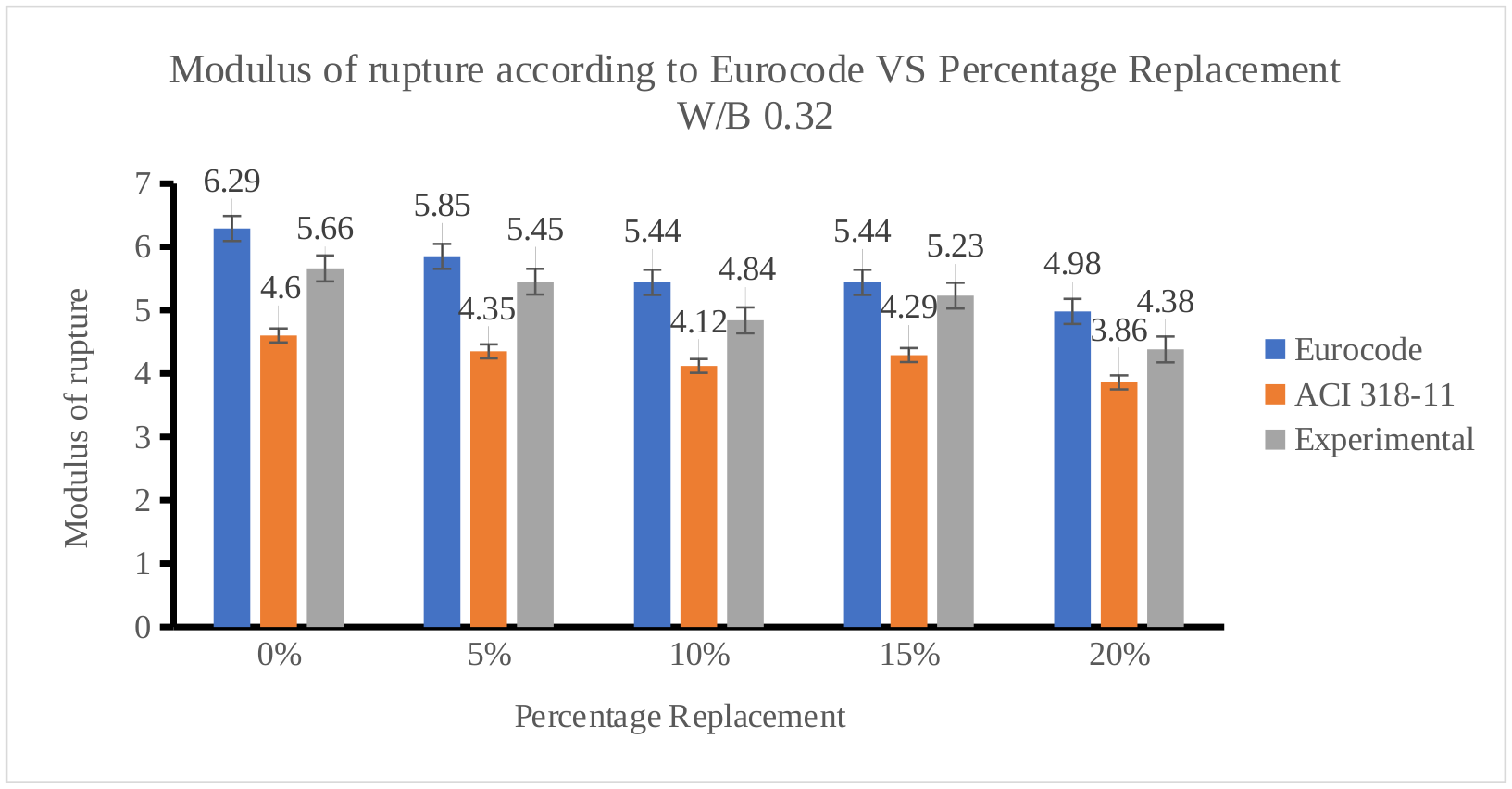
Figure 5 illustrates how the modulus of rupture varies for concrete mixtures with different substitution percentages at a water-binder ratio (W/B) of 0.32, following Eurocode standards. The findings suggest an initial rise in flexural strength with the inclusion of replacement materials, peaking at moderate replacement levels, followed by a gradual decrease as percentage replacements increase. The enhancements observed at lower levels of replacement are linked to the effects of fillers, better particle distribution, and potential pozzolanic reactions that strengthen the interfacial transition zone. Nevertheless, excessive substitution limits the availability of essential cementitious materials needed for developing strength. This conclusion aligns with the findings of past works, which noted that a measured addition of supplementary cementitious materials boosts concrete's flexural strength due to the improvement in microstructural characteristics and packing density, while excessive inclusion leads to decreased strength. Furthermore, optimal replacement percentages enhance mechanical properties of concrete through pozzolanic activity and refinement of the pore structure.
3.1Evaluation of internal consistency
The internal consistency of the study's mechanical property results by comparing the compressive strength measured directly on cubes in Table 4.1 against an equivalent compressive strength back-calculated from the experimental flexural (modulus of rupture) test results using the Eurocode 2 tensile-strength relationship values reported in 4.4. If the two mechanical properties are behaving consistently with one another, the equivalent compressive strength derived from flexural data should track the directly measured compressive strength closely across all twenty mixes.
| PR (%) | w/b | Measured Compressive Strength (MPa) | Eurocode-Equivalent Strength (MPa) | Gap (MPa) | Gap (%) |
|---|---|---|---|---|---|
| 0 | 0.20 | 57.6 | 46.1 | 11.5 | 20.0% |
| 0 | 0.24 | 63.1 | 50.5 | 12.6 | 20.0% |
| 0 | 0.28 | 71.1 | 56.9 | 14.2 | 20.0% |
| 0 | 0.32 | 68.8 | 55.0 | 13.8 | 20.0% |
| 5 | 0.20 | 64.9 | 51.3 | 13.6 | 20.0% |
| 5 | 0.24 | 60.4 | 48.3 | 12.1 | 20.0% |
| 5 | 0.28 | 60.6 | 48.5 | 12.1 | 20.0% |
| 5 | 0.32 | 61.6 | 49.3 | 12.3 | 20.0% |
| 10 | 0.20 | 73.4 | 50.0 | 23.4 | 31.9% |
| 10 | 0.24 | 62.6 | 50.1 | 12.5 | 20.0% |
| 10 | 0.28 | 70.5 | 56.4 | 14.1 | 20.0% |
| 10 | 0.32 | 55.3 | 44.2 | 11.1 | 20.0% |
| 15 | 0.20 | 59.3 | 47.4 | 11.9 | 20.0% |
| 15 | 0.24 | 70.9 | 56.7 | 14.2 | 20.0% |
| 15 | 0.28 | 63.2 | 50.6 | 12.6 | 20.0% |
| 15 | 0.32 | 59.9 | 47.9 | 12.0 | 20.0% |
| 20 | 0.20 | 65.7 | 52.6 | 13.1 | 20.0% |
| 20 | 0.24 | 69.2 | 55.4 | 13.8 | 20.0% |
| 20 | 0.28 | 48.6 | 38.9 | 9.7 | 20.0% |
| 20 | 0.32 | 48.4 | 38.7 | 9.7 | 20.0% |
The results of this cross-validation are consistent in nineteen of the twenty mixes, the Eurocode-derived equivalent compressive strength sits at almost exactly 80% of the directly measured cube compressive strength having a gap of 20.0%, with a standard deviation across those nineteen mixes of essentially zero. This is a very strong indicator of internal consistency between the two independently measured mechanical properties (compressive strength from cubes and flexural strength from prisms), since a near-perfectly uniform ratio across the entire replacement and water-binder-ratio range means the flexural results are behaving consistently with the compressive results, with no mix showing an anomalous or contradictory relationship between the two properties.
The single exception is the 10% replacement mix at a water-binder ratio of 0.20, where the gap widens to 31.9% instead of the near-universal 20.0%. This is the same mix identified throughout the results as the peak-performing mix (73.4 MPa, the highest compressive strength recorded in the entire research, discussed in 4.1. Its wider-than-expected gap here means that, while its measured compressive strength was exceptionally high, its flexural strength did not rise by a proportionally matching amount. This is consistent with the divergence between compressive and flexural behaviour. The 10% replacement, 0.20 water-binder-ratio mix appears to be exactly where that divergence shows up most clearly.
Overall, this cross-validation confirms that the compressive and flexural results are internally consistent across nearly the entire test research, it identifies the single mix where that consistency breaks down and ties that finding back to the same mix already flagged as exceptional.
4Conclusion
- Lowering the water-to-binder ratio consistently improves the mechanical properties of concrete, resulting in a higher modulus of rupture by minimizing permeability and creating a more compact structure.
- The controlled, moderate inclusion of supplementary replacement materials enhances concrete's flexural capacity through microstructural refinement and enhanced interfacial bonding.
- Excessive material substitution ultimately weakens the concrete because it limits the availability of the cement paste required for adequate strength development.
- Flexural and compressive strength behaviors remain highly consistent and predictable across standard mixed designs, maintaining a uniform performance ratio when cross-validated against Eurocode 2 tensile-strength models.
- At the absolute peak of compressive performance, identified as 10% replacement at a 0.20 W/B ratio, flexural strength does not scale at a proportionally matching rate, demonstrating a distinct behavioural divergence between the two mechanical properties.
5Recommendations
- Formulate high-strength concrete mixes using optimally low water-to-binder ratios alongside appropriately measured supplementary materials to maximize the modulus of rupture.
- Restrict replacement materials to strictly moderate levels to avoid diluting the cement content, which subsequently degrades flexural performance.
- Factor in the conservatism of standard codes of practice when designing with supplementary cementitious materials, as traditional flexural-to-compressive strength correlations tend to underestimate actual performance.
- Utilize independent cross-validation methods, such as back-calculating equivalent compressive strength from flexural test data, to verify internal consistency across various experimental mix designs.
References
- [1]Al-Kharabsheh BN, Arbili MM, Majdi A, Ahmad J, Deifalla AF, Hakamy A, et al (2022). Feasibility study on concrete made with substitution of quarry dust: A review. Sustainability, 14(22), 15304. https://doi.org/10.3390/su142215304
- [2]Dehwah HAF (2012). Mechanical properties of self-compacting concrete incorporating quarry dust powder, silica fume or fly ash. Construction and Building Materials, 26(1), 547–551. https://doi.org/10.1016/j.conbuildmat.2011.06.056
- [3]Güneyisi E, Gesoğlu M, Özbay E (2011). Influence of supplementary cementitious materials on engineering properties of high strength concrete. Construction and Building Materials, 25(5), 2639–2648. https://doi.org/10.1016/j.conbuildmat.2010.12.013
- [4]Meisuh BK, Kankam CK, Buabin TK (2018). Effect of quarry rock dust on the flexural strength of concrete. Case Studies in Construction Materials, 8, 16–22. https://doi.org/10.1016/j.cscm.2017.12.002
- [5]Siddique R (2011). Utilization of silica fume in concrete: Review of hardened properties. Resources, Conservation and Recycling, 55(11), 923–932. https://doi.org/10.1016/j.resconrec.2011.06.012
- [6]Singh A, Singh N (2024). Mechanical properties of silica fume based concrete: A review. Materials Today: Proceedings. https://doi.org/10.1016/j.matpr.2024.05.037