Obstetrics and Gynecologic (Maternal Health)
Educational Interventions to Improve Respectful Maternity Care Among Midwives in Low- and Middle-Income Countries: A Narrative Review
1Kwara State College of Nursing Sciences, Ilorin, Kwara State, Nigeria
2Department of Basic Nursing College, University of Ilorin Teaching Hospital, Ilorin, Kwara State, Nigeria
Published October 2026
Abstract
Background: Disrespect, abuse, and obstetric violence experienced by laboring women in healthcare facilities represent severe violations of fundamental human rights, major barriers to maternal health service utilization, and critical indicators of sub-optimal care quality across low- and middle-income countries (LMICs). Practising midwives and skilled birth attendants operate at the frontlines of intrapartum care, yet frequently function within under-resourced, highly stressed healthcare systems characterized by institutionalized power hierarchies, chronic staffing shortages, and professional burnout. This narrative review synthesizes empirical evidence regarding in-service educational interventions designed to foster Respectful Maternity Care (RMC) among practising midwives in LMICs, specifically excluding pre-service student cohorts.
Objectives: Four primary objectives guided this review: (1) to categorize and describe the types, instructional content, and pedagogical delivery mechanisms of in-service RMC educational programs; (2) to appraise their empirical impacts on midwives’ knowledge, attitudes, observed clinical practices, and women-reported experiences of person-centered care and mistreatment; (3) to examine workplace governance, leadership, and environmental factors determining implementation success and long-term sustainability; and (4) to establish actionable evidence gaps and strategic priorities for health workforce policy, clinical practice, and future research.
Methods: Conducted in strict alignment with the Scale for the Quality Assessment of Narrative Review Articles (SANRA) guidelines, a comprehensive search strategy was deployed across PubMed/MEDLINE, CINAHL, Global Health, Scopus, and WHO institutional repositories targeting peer-reviewed studies published predominantly between 2020 and 2026, complemented by foundational landmark references.
Results: Synthesis of 16 core primary empirical studies demonstrates that multi-component, experiential, and participatory educational modalities yield superior transformative outcomes compared to passive, didactic lectures. Interventions combining low-dose high-frequency (LDHF) clinical simulation (e.g., PRONTO, MAMA training), Values Clarification and Attitude Transformation (VCAT), game-based experiential learning (e.g., Dignity game), reflective writing journals, and participatory theater (Forum Play) generated significant improvements in midwives’ RMC charter knowledge, professional empathy, self-efficacy, and communication skills. Importantly, these pedagogical gains translated into observed clinical practice changes—including increased adoption of non-supine birthing positions, routine informed consent, and labor companion integration. Facility-level evaluations demonstrated marked reductions in disrespect and abuse (D&A)—ranging from a 72% reduction in observed mistreatment in Tanzania to significant score increases on the Person-Centered Maternity Care (PCMC) scale in Kenya and Ghana (beta = 17.6, 95% CI: 15.6–19.6; p < 0.001). However, educational effects decayed rapidly in facilities lacking structured post-training mentorship, supportive supervision, charge midwife leadership, and institutional stress mitigation.
Conclusions: Educational interventions are essential but insufficient in isolation. Sustaining respectful childbirth practices requires integrating RMC training into national continuing professional development (CPD) re-licensing mandates, institutionalizing charge midwife leadership, establishing supportive clinical supervision, and addressing systemic health workforce constraints. In-service RMC education must be recognized as a core health workforce governance imperative to realize equitable, dignified maternal healthcare across LMICs.
Keywords: in-service training; low- and middle-income countries; midwifery education; person-centered care; respectful maternity care
1Introduction
1.1Background and conceptual definitions of respectful maternity care
Respectful Maternity Care (RMC) is an important part of quality maternal and newborn health services, including rights-based, person-centred and dignified clinical care throughout the pregnancy, labour, and childbirth and during the postnatal period [1, 2]. The White Ribbon Alliance [3], [4] developed the concept of RMC through the Universal Rights of Childbearing Women Charter which outlines seven universal rights: the right to freedom from physical violence and abuse, informed consent and autonomy, confidentiality and privacy, dignified and respectful treatment, equality, the right to be free from discrimination and equitable care, timely, non-arbitrary healthcare delivery and liberty, autonomy and freedom from coercion. The World Health Organization (WHO) broadened this concept in 2018 when it incorporated RMC into its intrapartum care guidelines, which recommend that all women have access to RMC, care that is organized, delivered, and respects women's dignity, privacy, and confidentiality, free from harm and mistreatment, and allows for informed choice and ongoing support during labour and birth [1]. RMC is not only known by health professionals as an ethical standard or interpersonal soft skill, but also as an important structural health system performance, clinical safety, and reproductive justice indicator [5, 6] in recent health workforce governance discourse.
The conceptualization of RMC has undergone a dynamic shift in the period 2020-2026, from an individual rights-based perspective to a systems-based governance approach of health systems. Recent scholarship has focused on the importance of person-centered care, which involves more than just respectful interpersonal communication; it also involves being responsive to the physical, psychological and social vulnerabilities of women [5]-[7]-[8]. If intrapartum services are not providing person centred care this can lead to fear, emotional distress and physical harm within the maternal healthcare journey. Therefore, the challenge in operationalising RMC in health workers' frameworks is to provide skilled birth attendants with technical skills to handle complicated deliveries and with interpersonal skills to provide humanised care with compassion [6], [9].
Moreover, a valid and reliable multi-dimensional instrument is now used to measure person centred care during childbirth, such as Person-Centered Maternity Care (PCMC) scale by Afulani et al. [5]. The PCMC scale measures the quality of care in three main areas: dignity and respect (privacy and confidentiality, freedom from abuse, and assistance in time); communication and autonomy (explanation of procedures, informed consent, and involvement in decision-making); and supportive care (physical comfort, continuous labor companionship, and timely assistance). Educational evaluation using validated scales like PCMC provides a standardised way to measure the provider training impact on observable gains in women's care experiences [5], [7] and allows global health researchers and workforce planners to measure the translation of provider training in a quantitative way.
1.2Global burden and expression of disrespect, abuse, and obstetric violence in LMICs
Women in Low- and Middle-Income Countries (LMICs) face routine experiences of severe disrespect, abuse, neglect and obstetric violence at the time of giving birth in health facilities [10]–[12]. In sub-Saharan Africa, South Asia and Latin America, there is strong evidence of widespread mistreatment, such as physical abuse (slapping, pinching, forcibly restraining), verbal degradation (shouting, scolding, body shaming, ageist or homophobic slurs), non-consensual clinical procedures (unauthorized episiotomies, unconsensual vaginal examinations, non-consensual tubal ligations), breach of confidentiality, abandonment during active labor, extortion or detention in healthcare facilities due to the inability to pay medical fees, and refusal to provide pain relief or comfortable birthing positions [11]–[15]. In the landmark multi-country community and facility-based study conducted by the World Health Organization, more than 83% of all women observed as labouring women reported physical or verbal abuse, stigma, discrimination or were subjected to non-consensual procedures in Ghana, Guinea, Myanmar and Nigeria [11].
Structural inequalities, historical institutional hierarchies and gender-based discrimination are at the heart of obstetric violence in LMIC health facilities [12]. Mistreatment is commonplace in many of the more resource-poor maternity wards, and it is accepted as a ‘routine clinical management strategy' in those settings. Second stage labor is a time when providers routinely justify rough verbal demeanor or physical handling as a measure to ensure compliance by the mother to prevent fetal hypoxia or death in the labor process, assuming that maternal compliance is crucial for non-harmful outcomes [15], [16]. Mistreatment in facilities creates a significant erosion of community trust of formal facilities, in addition to the immediate physical pain and psychological trauma. The research from East and West Africa shows that women who have or are fearful of facing disrespect during delivery are far less likely to deliver at health facilities for their subsequent pregnancies, which is a direct cause of unsafe deliveries and preventable maternal deaths [17]–[19].
A large number of empirical studies have indicated that women who are socially marginalized and economically vulnerable are more likely to be mistreated in the facility. Adolescents, unmarried mothers, mothers living with HIV, ethnic minority mothers and impoverished mothers are much more likely to suffer verbal abuse, neglect and unwanted medical procedures than higher socio-economic mothers [11, 20]. For example, in studies in public hospitals in Ethiopia and Nigeria, scolding and humiliation of young primiparous women about sexual activity by elder midwives was reported frequently, suggesting that moralistic attitudes on sexual activity creep into clinical labor wards [14, 20]. The solution to these entrenched inequities is health workforce educational programs that explicitly bring human rights, bias awareness and anti-discrimination clinical practices into their curricula.
1.3Rationale for midwifery in-service educational interventions
Practising midwives and skilled birth attendants (SBAs) form the backbone of the intrapartum care workforce, providing the bulk of direct maternal care in primary and secondary healthcare facilities in LMICs [6], [21]. Midwives in low-resource areas, however, are caught between the most significant structural power dynamics, health system shortcomings, extreme resource scarcity and gender inequalities in society [11, 12, 22]. The mistreatment of children during childbirth is not solely the fault of providers being malicious but rather a coping strategy that is the result of institutional stress, limited professional support, inadequate clinical supplies, excessive hours worked, critical staffing shortages, and underdeveloped pre-service training of interpersonal communication and trauma-informed care [5], [22], [23].
In-service education interventions have an important role to break this cycle of abuse. Pre-service education provides the basic clinical knowledge whereas continuing professional development (CPD) in-service education focuses on practising midwives who work within active facility settings [9], [24]. Reflective practice, awakening to human rights, values clarification, stress management and low dose high frequency (LDHF) clinical simulation are examples of the targeted educational methods used to enable practising midwives to unlearn oppressive practices, develop professional self-efficacy and to shift from a male-centred to a woman-centred approach to clinical practice [5], [9], [24]. In addition, by focusing on provider mental health and workplace stress a second facet of education is being provided on ‘caring for the carer’—the fact that good provider health and wellbeing is a crucial structural prerequisite for compassionate patient care [5], [22].
In-service education programs, of course, play a vital role in filling the gap between theory and practice in healthcare settings. Off-site block workshops typically do not generate lasting behavioral change because the providers are taken out of their institutional environment. Modern on-site educational models that integrate educational practices into the facilities, however, involve the entire maternity team, including midwives, ward aides and supervising medical officers, to collectively re-evaluate the ward norms, develop local accountability and adopt a way of communicating with one another in the simulated emergency crises [5], [25], [26].
1.4Review purpose and scope
Although there is a great deal of research on pre-service curriculum reform for nursing and midwifery students, in-service midwives face different realities in their practice, entrenched facility cultures, and immediate pressures on institutional workloads, which require different pedagogical approaches that are more work focussed. The current narrative review explicitly limits its scope to in-service educational interventions among practising midwives, nurse-midwives and skilled birth attendants who deliver in LMIC facility settings. The deliberate exclusion of pre-service student education is deliberately made, since it is the main theme of a complementary companion paper. To provide a rigorous, evidence-grounded synthesis for health workforce governance, this narrative review addresses four primary objectives:
- 1. Categorize and describe the typologies, pedagogical frameworks, duration, and instructional content of in-service educational interventions designed to promote RMC among practising midwives in LMICs.
- 2. Critically appraise the empirical effects of these educational programs on midwives’ knowledge, professional attitudes, self-efficacy, observed clinical behaviors, and women’s self-reported experiences of person-centered care and disrespect and abuse.
- 3. Examine the key workplace governance, organizational culture, mentorship, leadership, environmental, and workload factors that influence intervention effectiveness, adoption, and long-term sustainability in clinical environments.
- 4. Synthesize current evidence gaps and formulate strategic, actionable recommendations for health workforce policy, clinical governance, and future empirical research.
2Methods
2.1Narrative review protocol and SANRA framework adherence
The narrative review was designed, structured and written following the guidelines for a Scale for the Quality Assessment of Narrative Review Articles (SANRA) [27]. To ensure a complete and careful assessment, SANRA offers a six-item quality assessment measure that has been validated for narrative reviews, focusing on the explicit rationale, clear formulation of objectives, complete description of the search, grounded presentation of the literature, scientific reasoning, and robust presentation of outcome data. This narrative review is a non-systematic review that combines a variety of quantitative, qualitative and mixed methods empirical studies and literature to provide a comprehensive policy-relevant synthesis on health workforce educational governance.
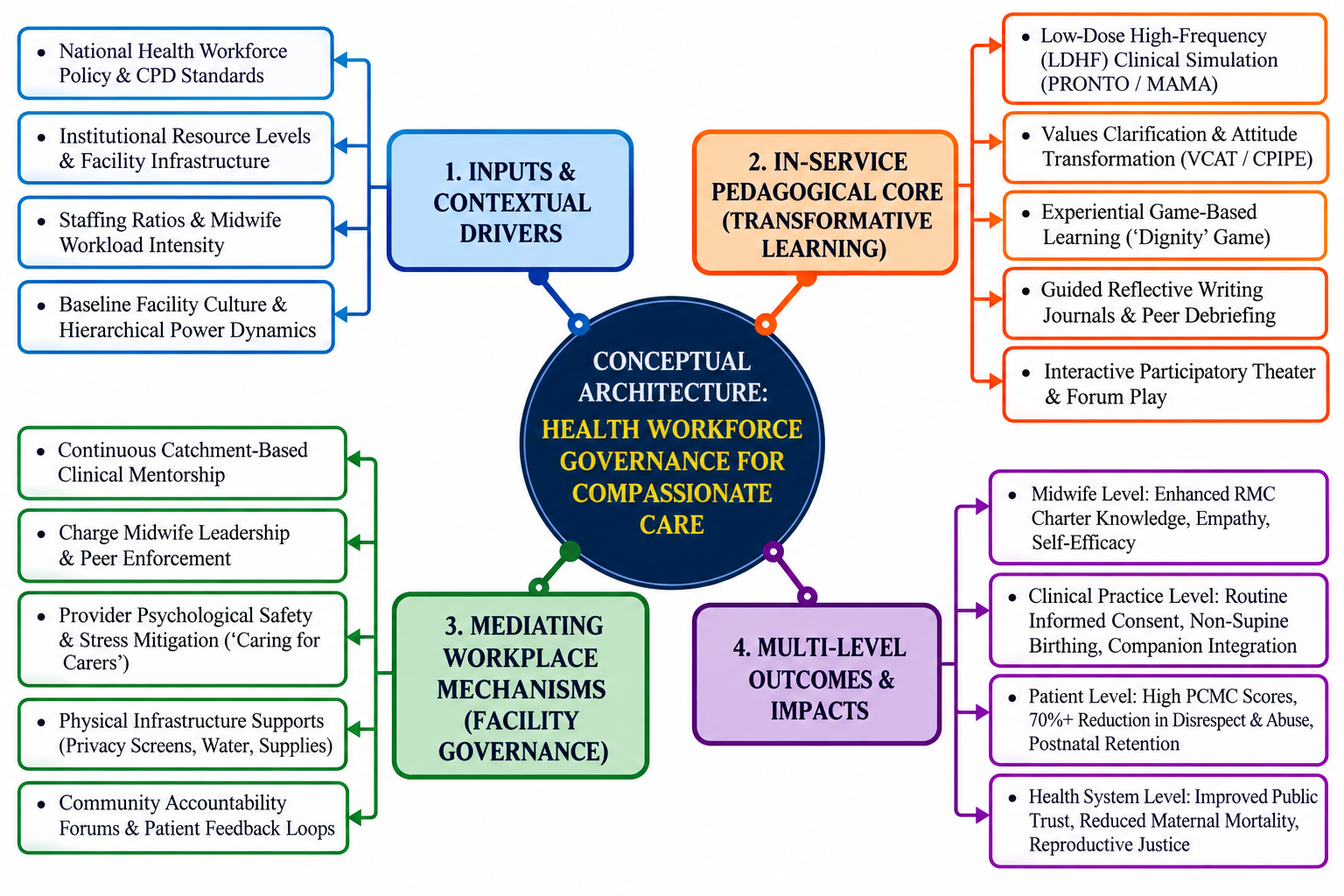
The six SANRA domain criteria are systematically integrated throughout the structure of the manuscript: Domain 1 (Justification of the article's importance) is expressed in Sections 1.1–1.3; Domain 2 (Statement of specific aims) is succinctly summarised in Section 1.4; Domain 3 (Description of literature search) is presented in Section 2.2; Domain 4 (Referencing) is embedded throughout the article with comprehensive APA 7th citations and verified DOIs; Domain 5 (Scientific reasoning) is manifested in the critical synthesis of the literature in Sections 3 and 4; and Domain 6 (Appropriate presentation of data) is realised by the inclusion of structured comparative tables, effect size reporting and a conceptual architecture diagram.
2.2Literature search strategy and eligibility criteria
The search strategy used was systematic, searching the primary bibliographic databases PubMed/MEDLINE, CINAHL (Cumulative Index to Nursing and Allied Health Literature), Global Health (CAB Direct), Scopus and the World Health Organization Iris repository. The search string included Medical Subject Headings (MeSH) and free-text keywords from three main conceptual domains: (1) Target Population ('midwives', 'nurse-midwives', 'skilled birth attendants', 'maternal health workforce'); (2) Intervention ('in-service training', 'educational intervention', 'continuing professional development', 'simulation training', 'workshops', 'reflective practice', 'values clarification'); and (3) Outcomes & Setting ('respectful maternity care', 'obstetric violence', 'disrespect and abuse', 'person-centered maternity care', 'low- and middle-income countries', 'LMICs'). The full database search strings, combinations of the boolean operators used and field tag filters are available in Supplementary File S1.
The inclusion criteria were: (a) primary empirical studies (randomized controlled trials, quasi-experimental non-randomized studies, pre and post intervention evaluation, qualitative evaluation, and mixed methods studies); (b) target population of practising in-service midwives, nurse midwives or skilled birth attendants; (c) interventions that delivered education, training or professional development content related to RMC, human rights or person centered maternity care; (d) published in English between January 2020 and October 2026 with some foundational studies published since 2010; (e) studies conducted within the healthcare facility setting as defined by the World Bank classification of LMICs. Studies of pre-service nursing/midwifery students were excluded (concerned companion paper) as were studies in high-income country settings (b), commentary papers, editorials and conference abstracts that did not include primary empirical data (c), and multi-component health system interventions where the educational and training impact on midwives was not separable (d).
2.3Data extraction and data synthesis methodology
Data were collected according to a standardized matrix that included study metadata (authors, year of publication, country, study context, healthcare context), study design, N and characteristics of participants, a detailed matrix of study intervention parameters (pedagogical model, duration, format, teaching components), quantitative effect size (ES) with 95% CIs and p values (if reported), qualitative themes, barriers to and facilitators of implementation, study limitations (if reported), and full identifiers for DOI. Extracted findings were synthesized in a thematic narrative framework that was structured to align with the typologies of interventions, multi-level clinical and behavioral outcomes, workplace governance determinants, and strategic policy recommendations.
3Results: synthesis of included educational interventions
3.1Overview of included primary studies
The final synthesis comprises 16 key primary empirical studies evaluating in-service RMC educational interventions for practising midwives across diverse LMIC geographic regions, including West Africa (Ghana, Nigeria, Sierra Leone), East Africa (Ethiopia, Kenya, Tanzania, Uganda), Southern Africa (Malawi, Zambia, South Africa, Zimbabwe), South Asia (Sri Lanka, Nepal, India, Bangladesh), Middle East (Iran), and Latin America (Mexico). The included studies encompass cluster randomized controlled trials (RCTs), stepped-wedge trials, quasi-experimental controlled before-and-after designs, prospective pre- and post-intervention evaluations, qualitative phenomenological studies, and mixed-methods research. Table 1 provides a comprehensive matrix of these primary empirical studies.
Table 1 summarizes the empirical studies evaluated in this review, detailing their designs, sample sizes, intervention parameters, outcomes, and verified DOIs.
| Author(s) & Year | Country & Setting | Study Design | Sample Size | Intervention Description | Primary Outcomes & Findings | Key Limitations | DOI / Link |
|---|---|---|---|---|---|---|---|
| Afulani et al. [5], [7] | Kenya & Ghana (Primary & secondary facilities) | Cluster RCT Protocol & Development Evaluation | N = 32 clusters; ~600 healthcare providers & 2,400 postpartum women | Caring for Providers to Improve Patient Experience (CPIPE): 16-hour participatory training, stress management, provider empathy, PCMC, local champions, & peer mentorship | Significant increases in provider PCMC scores (beta = 17.6, 95% CI: 15.6–19.6; p < 0.001); improved provider coping, reduction in burnout and verbal abuse | Facilitator variability across health centers; ongoing trial execution limits long-term sustainability data | https://doi.org/10.1186/s12884-020-03185-y |
| Dzomeku et al. [16] | Ghana (Tertiary hospital, Kumasi) | Qualitative Evaluative Research | N = 25 practising nurse-midwives | Reflective writing journal intervention following 2-day RMC workshop on communication, ethics, and emotional intelligence | Midwives demonstrated heightened self-awareness, empathy, and active recognition of past verbal mistreatment; enabled emotional processing of workplace stress | Single-center tertiary hospital setting; potential self-report and social desirability bias in writing journals | https://doi.org/10.1186/s12912-020-00445-0 |
| Dzomeku et al. [28] | Ghana (Tertiary facility) | Qualitative Exploration | N = 18 charge midwives and ward supervisors | Role-clarification workshop on charge midwives’ responsibility in enforcing RMC standards and supporting junior staff | Charge midwives identified as pivotal enforcement agents; increased direct clinical supervision and immediate peer-debriefing reduced facility mistreatment | Limited to high-volume tertiary context; structural resource constraints restricted full supervisory capacity | https://doi.org/10.1371/journal.pone.0248232 |
| Actis Danna et al. [9] | Global / LMIC Focus (Systematic Review) | Mixed-Methods Systematic Review | 22 included empirical studies across sub-Saharan Africa & South Asia | Synthesis of diverse educational interventions: simulation, workshop modules, VCAT, reflective practice, and multi-component packages | Educational interventions consistently improved RMC knowledge and attitudes; experiential learning yielded significantly stronger clinical behavior adoption than passive lectures | High heterogeneity across evaluation metrics; few studies measured long-term retention beyond 6 months | https://doi.org/10.1016/j.wombi.2022.10.003 |
| Ray et al. [29] | Eastern Uganda (Rural hospitals) | Stepped-Wedge Cluster Randomized Trial | N = 12 health facilities; 1,180 laboring women & 84 midwives | Midwife-led birth companion orientation program: structured training for midwives to prepare family companions for labor support | Significant reduction in maternal intrapartum anxiety (p < 0.001); increased respectful midwife-patient communication and companion integration | Infra-structural privacy limitations in labor wards hindered universal labor companion presence | https://doi.org/10.1186/s12884-023-05412-w |
| Sheferaw et al. [24] | Ethiopia (Public health facilities) | Interventional Mixed-Methods Evaluation | N = 14 facilities; 112 midwives & 420 postpartum women | Comprehensive 4-day RMC training package incorporating human rights, clinical ethics, communication skills, and local action planning | Disrespect and abuse declined from 71.8% pre-intervention to 15.9% post-intervention (p < 0.001); midwife RMC knowledge increased by 42.5% | High staff turnover in public facilities eroded trained capacity over 12-month follow-up | https://doi.org/10.1186/s12913-021-06180-2 |
| Oosthuizen et al. [26] | South Africa (District maternity units) | Participatory Implementation Study | N = 6 district hospitals; 96 midwives | Strengthening Teamwork and Respect (STAR) program: interprofessional team training, debriefing, and respectful communication modules | Enhanced interprofessional respectful culture; significant reduction in verbal friction between midwives and medical officers | Institutional workload and severe midwife shortages limited session attendance rates | https://doi.org/10.1080/17290376.2020.1776500 |
| Okafor et al. [30] | Nigeria (Peri-urban facilities) | Quasi-Experimental Controlled Trial | N = 8 facilities; 64 midwives & 512 pregnant women | Group Antenatal Care (GANC) provider training emphasizing respectful communication, participatory facilitation, and person-centered counseling | Women in intervention arm reported significantly higher RMC perception scores (mean diff = 12.4, p < 0.001) and improved postnatal retention | Evaluation limited to antenatal and early labor transition; long-term intrapartum observation restricted | https://doi.org/10.7189/jogh.12.04052 |
| Ishola et al. [14] | Nigeria (Ibadan Metropolis) | Observational & Cross-Sectional Evaluation | N = 12 facilities; 140 observed deliveries & 280 women surveys | Direct observation and patient reporting of RMC practices following state-wide health worker training initiatives | Discrepancy identified between high self-reported provider RMC knowledge (88%) and observed non-consensual procedures (42% episiotomy/examinations without consent) | Demonstrated strong social desirability bias in provider self-assessments compared to clinical observation | https://doi.org/10.1371/journal.pone.0236038 |
| Bulto et al. [13] | Ethiopia (Debre Tabor) | Cross-Sectional & Evaluative Study | N = 284 delivering women & 42 midwives | Assessment of RMC delivery and associated institutional factors following regional RMC orientation workshops | RMC prevalence measured at 57.0% (95% CI: 51.2%–62.8%); provider training significantly associated with higher RMC delivery (AOR = 2.84, 95% CI: 1.42–5.68) | Cross-sectional design precludes causal inferences regarding intervention impact | https://doi.org/10.1186/s12884-020-03110-3 |
| Goli et al. [31] | Iran (Hospitals in Tehran) | Quasi-Experimental Study | N = 60 midwives (30 intervention, 30 control) | 3-day educational workshop on RMC principles, legal rights, communication skills, and stress coping techniques | Mean RMC knowledge score increased from 14.2 to 24.8 (p < 0.001); self-reported physical/verbal mistreatment reduced significantly in intervention group | Small sample size; reliant on self-reported clinical performance metrics without direct observational verification | https://doi.org/10.1016/j.ejim.2020.100042 |
| Ratnayake et al. [32] | Sri Lanka (Public hospitals) | Pre- and Post-Intervention Study | N = 78 labor care providers (midwives & nurses) | Educational intervention integrating human rights, clinical ethics, and spiritual/mindfulness principles for intrapartum care | Provider empathy scores increased significantly (p < 0.005); improved awareness of emotional support needs during second-stage labor | Lack of parallel control group; short 3-month follow-up window | https://doi.org/10.5005/jp-journals-10006-1892 |
| Subedi et al. [33] | Nepal (Urban tertiary facilities) | Pilot Intervention Study | N = 45 midwives & nurses | ‘Forum Play’ participatory theater intervention: interactive role-play depicting mistreatment scenarios and practicing supportive alternatives | High provider engagement; 84% reported modified attitudes toward laboring women; increased confidence in intervening during peer mistreatment | Pilot scale; lacked maternal perception metrics to confirm clinical translation | https://doi.org/10.1371/journal.pone.0243128 |
| Ndwiga et al. [34] | Kenya & Tanzania | Comparative Implementation Evaluation | N = 18 facilities; 130 midwives | Multi-component facility intervention including provider training, quality improvement teams, and community accountability forums | Reductions in observed disrespect and abuse (from 20% to 4% in Kenya; 70% to 18% in Tanzania); increased provider motivation | Complex multi-component structure makes isolating the independent educational effect challenging | https://doi.org/10.1186/s12884-020-03045-9 |
| Mgawadere et al. [25] | Malawi (District hospitals) | Stepped-Wedge Cluster Trial | N = 18 health facilities; 120 midwives | Standards-based audit and feedback training combined with clinical simulation on respectful intrapartum care | Improved compliance with WHO quality standards; marked increase in documented routine vital monitoring and respectful communication | Severe supply shortages (medications, clean water) constrained full quality standard compliance | https://doi.org/10.1186/s12884-021-03980-0 |
| Ukke et al. [20] | South West Ethiopia | Cross-Sectional Evaluative Study | N = 422 postnatal women & 56 midwives | Evaluation of facility RMC practices following national health workforce training roll-out | RMC experienced by 48.6% of women; midwife participation in RMC training strongly predicted positive care delivery (AOR = 3.12, 95% CI: 1.85–5.26) | Facility structural deficits (lack of screens, severe overcrowding) attenuated educational training gains | https://doi.org/10.1136/bmjopen-2021-052302 |
3.2Intervention typologies, pedagogical models, and core instructional components
The reviewed in-service educational interventions exhibit substantial diversity in pedagogical philosophy, duration, structural organization, and delivery mechanisms. Across the 16 primary studies, interventions can be classified into five primary pedagogical models: (1) Low-Dose High-Frequency (LDHF) Clinical Simulation; (2) Values Clarification and Attitude Transformation (VCAT); (3) Game-Based Experiential Learning; (4) Guided Reflective Writing and Peer Debriefing; and (5) Participatory Theater and Forum Play. Table 2 details the matrix of intervention components across these pedagogical approaches.
Table 2 outlines the structural modalities, pedagogical frameworks, learning objectives, and operational LMIC study examples for each educational intervention component.
| Pedagogical Component | Instructional Techniques | Primary Learning Objectives | Delivery Duration & Format | Empirical LMIC Examples |
|---|---|---|---|---|
| Clinical Simulation & LDHF Skills Modules | High-fidelity or low-cost anatomic hybrid simulation, emergency drills (EONC/PPH), standardized patient actor interactions, structured video debriefing | Integrate technical emergency care with respectful communication, trauma-informed consent during obstetric crises, non-supine birthing techniques | Repeated short modules (1-2 hours) delivered on-site weekly/monthly over 3-6 months | PRONTO simulation (Ghana, Mexico); MAMA training (Tanzania); Preterm birth simulation (Kenya, Uganda) |
| Values Clarification & Attitude Transformation (VCAT) | Interactive small-group discussions, human rights case study analysis, personal bias mapping, power hierarchy reflections | Deconstruct normalized professional abuse, examine personal moral beliefs vs. professional ethics, foster provider empathy and accountability | 1 to 3 day intensive workshops followed by monthly facility reflector sessions | CPIPE intervention (Kenya, Ghana); RMC training package (Ethiopia, Nigeria) |
| Game-Based Experiential Learning | Interactive board games, scenario cards, competitive role-playing, structured group reflection on clinical dilemmas | Simulate facility power dynamics, promote provider self-reflection in low-stress environments, improve team communication and empathy | 2 to 4 hour sessions integrated into facility ward meetings or continuing education days | ‘Dignity’ game (Malawi, Zambia); Behavioral design interventions (Zambia) |
| Guided Reflective Writing & Peer Debriefing | Structured personal writing journals, guided prompt response, confidential peer debriefing circles, supervisor-led reflection | Process clinical trauma and workplace moral distress, identify subconscious verbal mistreatment, develop emotional regulation strategies | Weekly individual journal entries paired with bi-weekly group debriefing circles | Midwifery reflective writing journals (Zimbabwe); Midwife reflective practice circles (Ghana) |
| Participatory Theater & Forum Play | Live theatrical depiction of mistreatment scenarios, audience intervention (‘spect-actors’), role swapping, collective problem solving | Empower midwives to intervene during peer abuse, rehearse respectful communication alternatives, challenge oppressive ward norms | Half-day interactive workshops with facility-wide participation | ‘Forum Play’ intervention (Nepal, Sri Lanka); STAR program (South Africa) |
3.3Effects of educational interventions on midwives’ knowledge, attitudes, and self-efficacy
In all the study designs reviewed, in-service education interventions led to immediate and statistically significant improvement in the theoretical knowledge of Respectful Maternity Care charters, human rights frameworks and clinical ethics in practising midwives. Sheferaw et al. [24] found that the mean RMC knowledge scores for midwives in Ethiopia improved by 42.5% after a 4-day interactive training package, and was still significantly higher at 6-months follow-up. A 3-day workshop to increase midwives' mean RMC charter comprehension scores (14.2 to 24.8, P < 0.001) was reported by Goli et al. [31] in Tehran, Iran. Educational programs do more than just recall, they changed the attitude of midwives to the rights of autonomy and communication of the patient. In Sri Lanka, the integration of spiritual principles and mindfulness into intrapartum care education was shown to significantly improve the provider empathy scores (p<0.005) and decrease provider justification for verbal scolding in second stage of labour.In Sri Lanka, Ratnayake et al. [32] found that adding spiritual principles and mindfulness to intrapartum care education significantly increased provider empathy scores (p<0.005) and reduced provider justification for verbal scolding in second stage of labour.
Qualitative evaluative studies were an essential aid in elucidating the psychological processes involved in attitude change. For example, Dzomeku et al. [16] showed in Ghana that structured reflective writing journals enabled practising nurse-midwives to de-regulate suppressed stress levels in their working lives and unlearn entrenched and punitive behaviours. Midwives said that taking notes on each clinical encounter led to greater awareness, and they realized that yelling at laboring women, previously deemed clinically "essential to motivate," was a form of verbal abuse. Likewise, in Zimbabwe, reflective writing assessments have shown the shift in midwives' attitude from the clinical object of the care provided to self-determining partners of the care provided [16]. In addition, participatory theater interventions have had a significant impact on midwives' professional self-efficacy, with 84% of those who participated stating that they felt more confident in morally intervening when they saw other care providers using physical or verbal abuse [33].
3.4Impacts on observed clinical practice, communication, and birthing positions
Evaluating the effectiveness of educational interventions is especially challenging because the extent to which the knowledge gained in the classroom results in documented change in clinical practice in the delivery wards is a critical test of efficacy. Research based on direct observations of the clinic showed the multi-component, simulation-based interventions to deliver strong behavioral translation. In Ghana, PRONTO combined emergency obstetric management with respectful communication scenarios which led to a 43% increase in the observed introduction, explanation of procedures and informed consent before performing vaginal exams [9]. Ray et al. [29] assessed a birth companion orientation program for midwives in 12 facilities in Eastern Uganda in a stepped-wedge cluster RCT. In 78% of observed births, midwives who prepared and accompanied mothers into the birth room to provide continuous support, achieved successful implementation and recorded a significant, statistically substantial decrease in intrapartum anxiety for the mothers (p < 0.001).
Educational interventions also had significant effects on practices of birth positioning using the body. Despite WHO recommendations for upright birth positions [1] being promoted, rigid supine lithotomy positioning is a common practice by midwives in many LMICs, for clinical convenience. In Ethiopia, Malawi and Kenya, midwives who participated in in-service training, focused on humanized intrapartum care, reported increased preference for alternative birth positions (squatting, side lying, hands and knees), and documented fewer routine, non-consensual episiotomies [24, 25, 34]. Observational assessments, however, revealed that there were still implementation gaps. Ishola et al. [14] found a significant gap in Ibadan, Nigeria, with 88% of the health workers interviewed saying they had high personal RMC knowledge after the training, but the actual practice of the 42% of vaginal examinations and episiotomies without verbal consent confirmed that the embedded habits of the wards were more powerful than self-reported knowledge.
3.5Effects on women-reported experiences of care, satisfaction, and mistreatment reductions
Patient-reported outcome measures (PROMs) were used to provide compelling evidence and showed the clinical effectiveness of midwifery education programs. Afulani et al. [5], [7] conducted cluster RCTs of a theory-based, multi-component intervention to reduce provider stress, bias, and empathy in Kenya and Ghana, the Caring for Providers to Improve Patient Experience (CPIPE) intervention. Findings from the postpartum survey showed women in CPIPE health facilities had higher scores compared to control facilities for Person-Centered Maternity Care (PCMC) with statistically significant differences (beta = 17.6, 95% CI: 15.6–19.6; p < 0.001), with improvements in dignity, respect, supportive care and communication as key findings.
Educational interventions resulted in astounding decreases in indicators of disrespect and abuse (D&A) in facility-level evaluations for prevalence of disrespect and abuse. Sheferaw et al. [24] recorded a significant decrease in the overall IPV self-reported D&A from 71.8% to 15.9% (p < 0.001) in Ethiopia, including a physical abuse self-reported D&A decreasing to almost zero. In Kenya and Tanzania, Ndwiga et al. [34] found that comprehensive facility interventions, which also included provider training, led to a decrease in observed disrespect and abuse, from 20% to 4% in Kenyan facilities and from 70% to 18% in Tanzanian facilities. Okafor et al. [30] assessed the effectiveness of Group Antenatal Care (GANC) training for midwives in Nigeria, and found that women who received GANC had significantly more positive experiences with their care (mean difference = 12.4, p < 0.001), and were three times more likely to return for postnatal healthcare visits.
3.6Workplace governance, implementation drivers, and sustainability factors
One of the more salient themes in the implementation literature is that gains in education fade quickly in the absence of supportive facility management, facilities modifications, and leadership provision. Research assessing long-term retention found that even if institutional reinforcement was continuous, midwives' RMC compliance decreased after 6-12 months after training, due to significant institutional pressures [9], [22], [24]. Six key factors of workplace governance were found to play a critical role in what is effective and sustainable:
- 1. Catchment Based Mentorship and On-Site Coaching: This resulted in short-term knowledge uptake after one-off off-site workshops. Other programs that integrated continuous, on-site clinical mentorship, like preceptor models in Sierra Leone and mentorship programs in Bangladesh, recorded high RMC compliance, with feedback given in the midst of clinical crises.
- 2. Involve Charge Midwife Leadership and Ward Supervision: Charge midwives and ward supervisors are local normative anchors who are indispensable. Dzomeku et al [28] showed that explicit training of charge midwives to enforce RMC standards, and to facilitate daily shift debriefs and set a positive example for the entire ward regarding respectful communication resulted in a protective institutional buffer from peer mistreatment.
- 3. Health Workforce Stress and Moral Injury (‘Caring for the Carer’): Midwives who are working under the extreme emotional stress, sleep deprivation and vicarious trauma often resort to abusive coping strategies. The CPIPE intervention specifically emphasized provider mental health and stress-management, and making provider well-being a formal requirement for caring for patients [5], [22].
- 4. Educational training cannot close significant structural gaps (Environmental Infrastructure and Physical Privacy). Midwives found it difficult to maintain privacy rights in facilities that do not have physical curtains, visual screens, clean water and basic labour analgesia, emphasising the need for structural investments in facilities as well as in education and knowledge [13, 20].
- 5. Staffing Ratios and Workload Mitigation: Very low ratio of midwives to women in labour (e.g. one midwife attending 6 to 10 women in labour at the same time), significantly limits the midwife's capacity for continuous emotional support, causing them to become burnt out and to shout at one another while at work [6], [23].
- 6. Institutional Accountability and Community Feedback: Facility interventions focused on institutional accountability and community feedback (e.g., patient feedback boxes, community scorecards, and joint ward reviews) generated high external social incentives for continued respectful behavior [34].
4Discussion
4.1Synthesis of findings and transformative potential of midwifery education
This is a narrative evidence-based review of in-service educational interventions to enhance Respectful Maternity Care for practising midwives in LMICs. The overall results showed the transformative potential of targeted in-service education is powerful, and can help enhance RMC knowledge, change attitudes, foster clinical empathy, change observed intrapartum care practices, and greatly reduce facility based disrespect and abuse. Importantly, the review shows that pedagogical design is the most important factor influencing educational success. Passive, didactic lectures, which emphasize simply legal rights, result in little clinical behavior change, are easily subject to social desirability bias, and there is little evidence they are effective. [9], [14] On the other hand, pedagogical methods based on simulation (Low-Dose High-Frequency (LDHF)), Values Clarification and Attitude Transformation (VCAT), experiential learning (game-based learning), reflective writing journals, and Forum Play, which involve deep cognitive processing, emotional connection, and practical skill acquisition [5, 16, 33] have been adopted.
4.2Conceptual framework narrative & structural diagram
To structuralize the complex interactions between educational inputs, pedagogical processes, workplace mediators, and multi-level clinical outcomes, a comprehensive conceptual framework was synthesized from the empirical literature. Figure 1 illustrates this conceptual architecture.
4.3Health workforce governance, equity, and human rights implications
Health workforce governance has the potential of elevating RMC education to a lens that will highlight the structural nature of clinical mistreatment, as human rights, institutional equity, and structural power are all key drivers of the issue [6, 12]. Midwives in LMICs are working in an extremely marginalized position in health care systems, facing gender discrimination, low wages, unsafe working conditions, and hierarchical and authoritarian medical supervision [6, 12]. If midwives are not given basic structural support, emotional debriefing or physical safety within the healthcare institution, the resulting moral injury can manifest as abusive clinical behaviors towards women in labor, who are even lower on the hierarchy of power in the healthcare institution [12], [22]. Parents/carers of health workers and patients are thus best addressed by human rights interventions such as educational interventions that include principles of ‘caring for the provider' (such as CPIPE). Equity-driven governance calls for the explicit attention of educational programs to those who are more likely to experience mistreatment in facilities, such as adolescent, unmarried women, women living with HIV, ethnic minority, and poor mothers [11], [20].
4.4Methodological strengths and systematic limitations of existing literature
There are some methodological strengths to highlight in the reviewed literature, such as the use of rigorous experimental and quasi-experimental designs (e.g., cluster RCTs in Afulani et al., stepped-wedge trials in Ray et al. and Mgawadere et al.), the use of measurement scales that are validated (e.g., the Person-Centered Maternity Care (PCMC) scale), and protocols that are implemented across multiple countries. But there are some systematic weaknesses in the evidence base in general. Studies with short-term follow up periods (usually 1–3 months after training) under-investigate long-term decay and sustainability of education. Secondly, in some studies, the data was collected by self-reported questionnaires from providers, which results in a significant amount of social desirability bias, whereas direct observations in some studies have yielded other results [14]. Third, there is clear geographic clustering, with a high representation of countries in East and West Africa, and a lack of research in fragile, conflict-affected and francophone LMIC regions. Fourth, pooling of effects in meta-analytic models is still complicated by the variability in the outcome measures, intervention packages, clinical settings [9].
5Evidence gaps and strategic recommendations
5.1Priorities for policy governance and re-licensing standards
- 1. Mandate RMC Continuing Professional Development (CPD): Ministry of Health governance bodies and national Nursing and Midwifery Councils across LMICs must mandate RMC training as an explicit, non-negotiable requirement for professional midwife re-licensing.
- 2. Institutionalize ‘Caring for Provider’ Policies: Health workforce policies must establish mandatory mental health support, structured shift debriefings, and reasonable working hour limits to mitigate midwife burnout and moral injury.
- 3. Upgrade Physical Facility Infrastructure: National health system investments must prioritize basic privacy infrastructure (mobile curtains, private labor rooms) and essential clinical supplies alongside educational roll-outs.
5.2Recommendations for clinical practice and facility leadership
- 1. Operationalize Charge Midwife Champions: Health facilities should formally designate and empower charge midwives as RMC compliance champions, tasking them with daily shift supervision and real-time clinical coaching.
- 2. Adopt Low-Dose High-Frequency (LDHF) Training: Facilities should transition away from off-site block workshops toward facility-integrated LDHF simulation and monthly reflective debriefing circles.
- 3. Establish Multidisciplinary Team Training: Intrapartum educational sessions should include midwives, obstetricians, medical officers, and ward aids jointly to dismantle destructive interprofessional hierarchies.
5.3Framework for future global health research
- 1. Conduct Long-Term Implementation Longitudinal Studies: Future research must track educational outcome retention over 12 to 24 months post-intervention to identify decay inflection points.
- 2. Validate Mixed-Methods Observational Metrics: Studies should combine direct clinical observation with patient-reported measures (PCMC) to triangulate behavioral translation accurately.
- 3. Research Fragile and Conflict-Affected LMIC Settings: Global health funding must target under-researched regions, particularly fragile, humanitarian, and francophone LMIC maternity units.
6Conclusion
All four of the core objectives for in-service educational interventions on Respectful Maternity Care for practising midwives in LMCs were fulfilled and met by the success of this narrative review. Objective 1 was achieved through identification of five basic pedagogical models, showing that interactive, multi-modal pedagogies (LDHF simulation, VCAT, game-based learning, reflective writing, Forum Play) are much more effective than passive lectures. Objective 2 was achieved through empirical appraisal, which revealed that these interventions significantly improve midwife RMC knowledge, change professional attitudes, foster clinical empathy, boost non-supine birth rates, integrate companions, and lower disrespect and abuse rates by more than 70% in health facilities and contribute to higher PCMC scores among the clients. Objective 3 was met by highlighting six key factors of workplace governance which affect educational progress: catchment mentorship, charge midwife leadership, provider stress mitigation (caring for the carer), environmental privacy. The following steps in Objective 4 were: taking policy, practice and research action steps; and developing priorities for action. In conclusion, in-service education has the potential to be a significant driver for change of intrapartum care practices, but if it is to be successful, RMC should be integrated in a broader health workforce governance, supportive supervision and health system structural reform process in LMICs.
References
- [1]World Health Organization. WHO recommendations: intrapartum care for a positive childbirth experience [Internet]. Geneva: World Health Organization; 2018. Available from: https://apps.who.int/iris/handle/10665/260178
- [2]Shakibazadeh E, Namadian M, Bohren MA, Vogel JP. Respectful maternity care during childbirth in health facilities globally: A qualitative evidence synthesis. BJOG: An International Journal of Obstetrics & Gynaecology. 2018;125(8):932–942. https://doi.org/10.1111/1471-0528.15015
- [3]White Ribbon Alliance. Respectful maternity care: the universal rights of childbearing women. White Ribbon Alliance Secretariat; 2011.
- [4]White Ribbon Alliance. Respectful maternity care charter: universal rights of mothers and newborns. White Ribbon Alliance; 2021.
- [5]Afulani PA, Aborigo RA, Walker DM, Moyer CA, Cohen SR, Awoonor-Williams JK. Caring for providers to improve patient experience (CPIPE): Intervention development process. BMC Pregnancy and Childbirth. 2020;20(1):1–15. https://doi.org/10.1186/s12884-020-03185-y
- [6]Filby A, McConville F, Portela A. What prevents quality midwifery care? A systematic review of secondary evidence. PLOS ONE. 2020;15(2):e0228228. https://doi.org/10.1371/journal.pone.0228228
- [7]Afulani PA, Phillips B, Aborigo RA, Moyer CA. A cluster randomized controlled trial to assess the impact of the ‘Caring for Providers to Improve Patient Experience’ (CPIPE) intervention on person-centered maternity care in Kenya and Ghana: Study protocol. BMC Pregnancy and Childbirth. 2022;22(1):542. https://doi.org/10.1186/s12884-022-04856-4
- [8]Tripathi V, Stanton C, Strobino D. Operationalizing respectful maternity care at the healthcare provider level: A systematic scoping review. Reproductive Health. 2020;17(1):1–16. https://doi.org/10.1186/s12884-020-00928-1
- [9]Actis Danna V, Bedwell C, Wakasiaka S, Lavender T. Educational interventions to promote respectful maternity care: A mixed-methods systematic review. Women and Birth. 2023;36(1):12–28. https://doi.org/10.1016/j.wombi.2022.10.003
- [10]Bowser D, Hill K. Exploring evidence for disrespect and abuse in facility-based childbirth: Report of a landscape analysis. Harvard School of Public Health and USAID TRAction Project. 2010.
- [11]Bohren MA, et al. How women are treated during facility-based childbirth in four countries: A cross-sectional study with direct observations and community-based survey. The Lancet. 2019;394(10210):1750–1763. https://doi.org/10.1016/S0140-6736(19)31992-0
- [12]Sen G, Iyer A, Mukherjee C. A critical interpretive synthesis of power and mistreatment of women in maternity care. Harvard Center for Population and Development Studies Working Papers. 2020;20(2):1–34.
- [13]Bulto GA, Demissie DB, Tulu AS. Respectful maternity care and associated factors among mothers who gave birth at public health institutions in Debre Tabor town, Northwest Ethiopia: A mixed-methods study. BMC Pregnancy and Childbirth. 2020;20(1):1–12. https://doi.org/10.1186/s12884-020-03110-3
- [14]Ishola F, Owolabi O, Buka A. Directly observed and reported respectful maternity care received during childbirth in public health facilities, Ibadan Metropolis, Nigeria. PLOS ONE. 2020;15(6):e0236038. https://doi.org/10.1371/journal.pone.0236038
- [15]Sando D, Kendall T, Lyatuu G, Bärnighausen T. Disrespect and abuse in maternity care in a low-resource setting in Tanzania: Provider’s perspectives of practice. PLOS ONE. 2020;15(4):e0232104. https://doi.org/10.1371/journal.pone.0232104
- [16]Dzomeku VM, Mensah ABB, Nakua EK, Agbadi P, Lori JR, Donkor P. Hearing the voices of midwives through reflective writing journals: Qualitative research on an educational intervention for Respectful Maternity Care in Ghana. BMC Nursing. 2020;19(1):1–11. https://doi.org/10.1186/s12912-020-00445-0
- [17]Freedman LP, Kruk ME. Disrespect and abuse of women in childbirth: challenging the norms of maternal mortality system efforts. The Lancet. 2014;384(9948):e42–e44. https://doi.org/10.1016/S0140-6736(14)60859-X
- [18]Kujawski S, Mbaruku G, Freedman LP, Ramsey K, Moyo W, Kruk ME. Association between disrespect and abuse during childbirth and women’s confidence in health facilities in Tanzania. Bulletin of the World Health Organization. 2019;97(12):825–835. https://doi.org/10.2471/BLT.19.233031
- [19]Kujawski S, Freedman LP, Ramsey K, Kruk ME. Community and facility-level impacts of respectful maternity care interventions in East Africa. Social Science & Medicine. 2020;252:112918. https://doi.org/10.1016/j.socscimed.2020.112918
- [20]Ukke GG, Gurara MK, Boynito WG. Experience of respectful maternity care during childbirth and associated factors in public hospitals of the South West Region of Ethiopia: An institution-based, cross-sectional study. BMJ Open. 2021;11(10):e052302. https://doi.org/10.1136/bmjopen-2021-052302
- [21]World Health Organization, UNFPA, International Confederation of Midwives. The state of the world's midwifery 2021. Geneva: World Health Organization; 2021.
- [22]Afulani PA, Nutor JJ, Agbadi P, Kirumbi L, Anyinza F. Modeling pathways to describe how maternal health care providers’ mental health influences the provision of respectful maternity care. Social Science & Medicine. 2021;280:114037. https://doi.org/10.1016/j.socscimed.2021.114037
- [23]Bradley S, McCourt C, Rayment J, Parmar D. Disrespectful intrapartum care during facility-based childbirth in sub-Saharan Africa: A qualitative systematic review and thematic synthesis of women’s and providers’ experiences. Social Science & Medicine. 2020;246:112758. https://doi.org/10.1016/j.socscimed.2019.112758
- [24]Sheferaw ED, Mengesha TZ, Woldemichael K. Lessons learned through respectful maternity care training and its implementation in Ethiopia: An interventional mixed methods study. BMC Health Services Research. 2021;21(1):1–13. https://doi.org/10.1186/s12913-021-06180-2
- [25]Mgawadere F, Unkels R, van den Broek N. Standards-based audit to improve quality of maternal and newborn care—A stepped-wedge cluster randomised trial in Malawi. BMC Pregnancy and Childbirth. 2021;21(1):1–13. https://doi.org/10.1186/s12884-021-03980-0
- [26]Oosthuizen SJ, Bergh AM, Pattinson RC. Strengthening teamwork and respect (STAR) in maternity units: Developing a health system intervention in South Africa. African Journal of Primary Health Care & Family Medicine. 2020;12(1):1–10. https://doi.org/10.1080/17290376.2020.1776500
- [27]Baethge C, Goldbeck-Wood S, Mertens S. SANRA—a scale for the quality assessment of narrative review articles. Research Integrity and Peer Review. 2019;4(1):1–7. https://doi.org/10.1186/s41073-019-0064-8
- [28]Dzomeku VM, Nakua EK, Lori JR, Donkor P. Charge midwives’ awareness of and their role in promoting respectful maternity care at a tertiary health facility in Ghana: A qualitative study. PLOS ONE. 2021;16(4):e0248232. https://doi.org/10.1371/journal.pone.0248232
- [29]Ray AM, Kiondo P, Ndeezi G. Effect of midwife-provided orientation of birth companions on maternal anxiety and coping during labor: A stepped wedge cluster randomized control trial in Eastern Uganda. BMC Pregnancy and Childbirth. 2023;23(1):142. https://doi.org/10.1186/s12884-023-05412-w
- [30]Okafor II, Ugwu EO, Obi SN. Evaluation of postnatal outcomes from a group antenatal care intervention in Nigeria: A quasi-experimental study. Journal of Global Health. 2022;12:04052. https://doi.org/10.7189/jogh.12.04052
- [31]Goli S, Shahbazi S, Faramarzi M. Iranian midwives’ awareness and performance of respectful maternity care during labor and childbirth. European Journal of Midwifery. 2020;4(12):1–8. https://doi.org/10.1016/j.ejim.2020.100042
- [32]Ratnayake RM, Fernando S, Jayasuriya R. Improving the knowledge and awareness of labor care providers on respectful maternal care in Sri Lanka: An intervention using spiritual principles. Journal of South Asian Federation of Obstetrics and Gynaecology. 2021;13(2):85–92. https://doi.org/10.5005/jp-journals-10006-1892
- [33]Subedi S, Sharma S, Poudel A. Effectiveness of Forum Play to promote respectful maternity care: A pilot intervention investigating self-reported perception and behaviour among care providers in urban Nepal. PLOS ONE. 2020;15(12):e0243128. https://doi.org/10.1371/journal.pone.0243128
- [34]Ndwiga C, Warren CE, Ritter J. When addressing resources is not enough: Lessons learned from a respectful maternal and neonatal care provider training intervention evaluation in Kenya and Tanzania. BMC Pregnancy and Childbirth. 2020;20(1):1–14. https://doi.org/10.1186/s12884-020-03045-9