Procurement Management
Where the Exposure Goes: How a Statutory Procurement Default Relocates Risk in Nigerian Public Construction
Department of Quantity Surveying, Faculty of Environmental Design, Ahmadu Bello University, Zaria, Nigeria
Published October 2026
Abstract
A risk analysis reveals what exposures exist and how they should be addressed. Procurement law sets the range of responses that is possible. The purpose of this paper is to determine where the exposure ends up in case of conflict between these two. This study combines the document analysis of Nigeria's Public Procurement Act 2007 with the structured content analysis of nineteen papers on procurement regulation and developing economy contexts discovered through the specified search strategy and selected based on the set criteria. All procurement methods prescribed in the Act are compared regarding their appropriateness in satisfying the four exposure types detected in risk analysis. Open competitive bidding, which is the default procedure of the Act according to section 24, is unfitting to address all four of them. Those which perform better belong to Part VII of the Act and are conditional upon specific justification that the procuring organization might not have. Thus, the exposure is displaced onto two methods that are allowed within any of the routes: the stringency of the prequalification process of the bidder, and the contract instruments which are attached to the award of the contract. The Nigerian articles of evidence address sustainable procurement and the risk of bid evaluation in the projects of public tertiary institutions. However, neither their titles nor abstracts offer any assessment of the stringency of prequalification and the contract terms. Thus, it is unknown whether these two methods can accommodate the exposure. One legislative improvement proposal is offered: allowing for a documented risk analysis to justify the restricted or direct procurement route, provided that it is independently verified.
Keywords: contractual instruments; prequalification; public procurement regulation; risk allocation; statutory default
1Introduction
1.1Background
Risk analysis reveals a list of exposures to a public client and what should be done in order to mitigate them. Thin market indicates the negotiated approach, inability to specify the scope of supply before tendering to the step-by-step interaction with the market, the long lead time for critical supplies to the early award to a qualified supplier with protective conditions and an urgent threat to the emergency procurement.
However, sometimes these solutions are not available due to procurement law. In Nigeria, Public Procurement Act 2007 establishes open competitive bidding as the default procedure in section 24 and allows special and restricted procedures of Part VII only in certain cases and on specific justification [1]. In the case the justification is not accepted, the default procedure is employed regardless of the requirements of the risk analysis.
Transparency objective of the Act is well recognized, and its predecessor system suffered from inefficiency and discretionary awards without competition [2]. This paper assumes the existing regime and asks where the exposure will be located in case of statutory procurement default that excludes the route indicated by the analysis.
1.2Aim and objectives
The idea is to establish how risk exposure relocates after the statutory procurement default has limited the way selected via risk analysis. There are three goals to be reached:
- 1. To compare the procurement routes available according to the Act and the exposure categories detected by risk analysis.
- 2. To establish which options are still open to a public client if the route selected via risk analysis is unavailable.
- 3. To discover what has been said in the evidence about the remaining options in practice of Nigerian public construction projects.
1.3Contribution and connection to companion paper
This paper describes how the exposure relocates when the procurement route is limited, along with the evaluation of the weight of the evidence at the points of relocation. There are two complementary papers by the same authors using different approaches and level of analysis. The one explains how far the international literature on the subject covers the pathway from risk assessment to procurement decision. The other studies five infrastructure projects in Nigeria using case study approach. This paper uses the statutory provision as the level of analysis.
2Statutory framework
2.1The Act and the methods
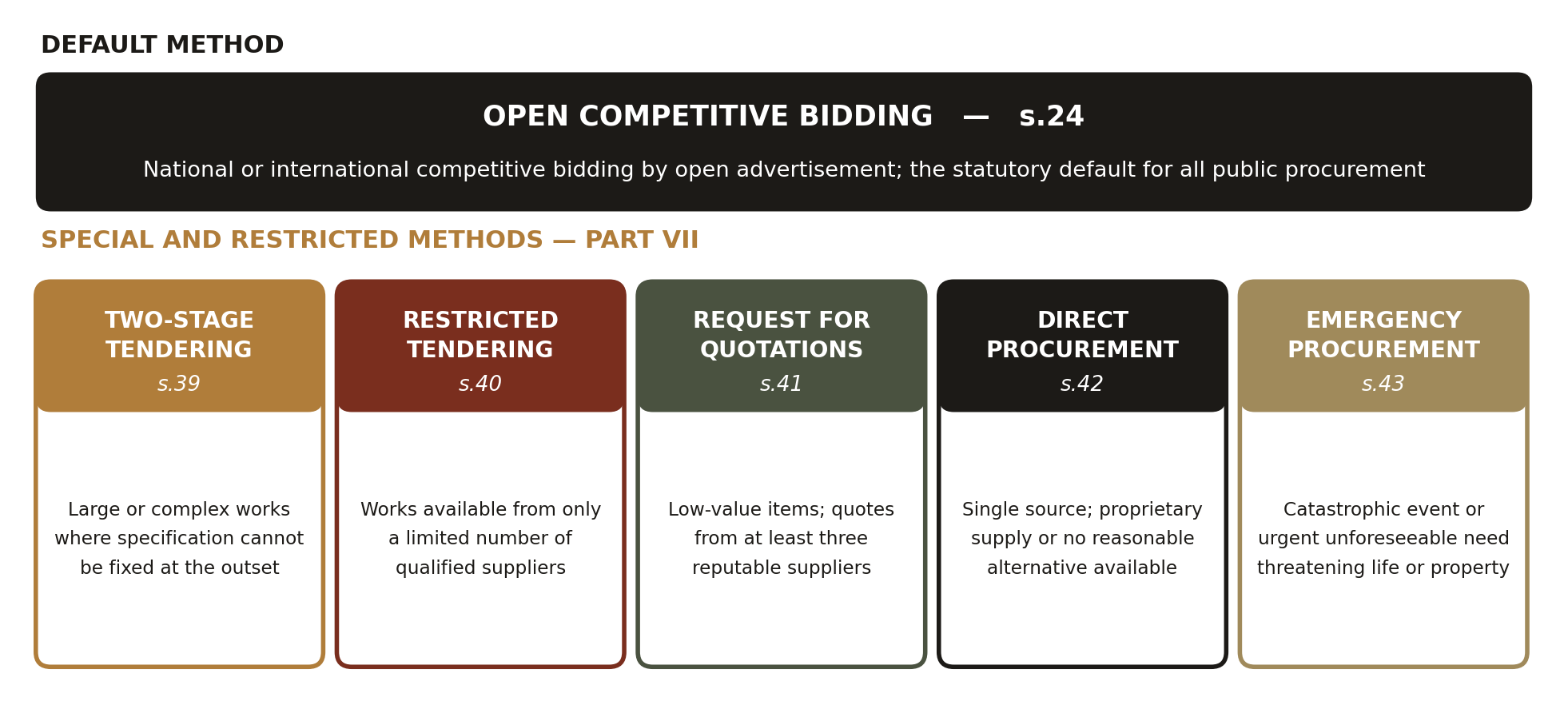
Public Procurement Act 2007 established Bureau of Public Procurement as the regulator and prescribed the set of procurement methods for the use by procuring organizations [1]. Open competitive bidding is the default procedure according to Section 24. Part VII of the Act describes five procedures, each is conditional: two stage tendering in Section 39 for large and complex projects, where specification cannot be known beforehand; restricted tendering in Section 40 where there are only a limited number of potential suppliers for that particular supply; request for quotations in Section 41 for small value procurement; direct procurement in Section 42 for single-source or proprietary supplies; and emergency procurement in Section 43 (Figure 1).
2.2Effects of the Act on the delivery
Evaluation of the delivery effects of the Act is contradictory. In one estimation of time outcomes of the project, it is concluded that the Act has not delivered the expected results, providing reasons why [3]. In another one the Act demonstrates true progress in transparency and accountability in comparison to the previous system [2]. Both estimates can be correct at the same time. One of the explanations which is developed further in this paper is that a regime may promote probity in awarding, but reduce the options available to a client for delivery risks.
3Methodology
3.1Design
Document analysis of policy was complemented with a review of empirical evidence. The Act itself is a document and can be analyzed directly. The effects are not contained in the Act thus the review provides them.
3.2The evidence subset
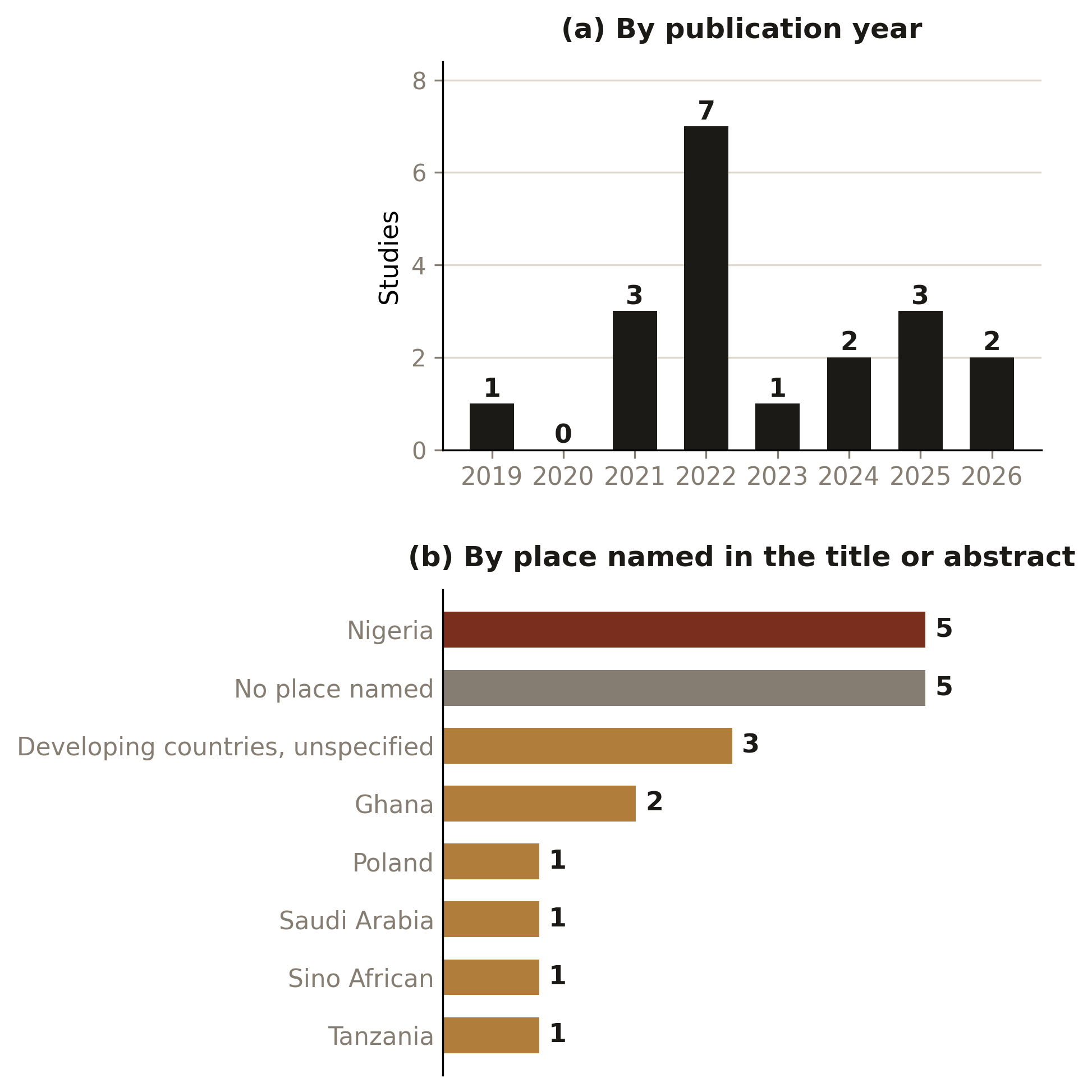
Twenty documents have been identified in the structured search that has been formulated as the question of what effects do the public procurement regulations and developing economy conditions have on risk management and procurement decisions in construction projects. This search has been done as a part of the eight-search protocol reported in another paper and performed according to the PRISMA 2020 criteria [4]. The inclusion criteria include peer-reviewed journals; construction, infrastructure or public works context; coverage of public procurement regulation or policy or developing economy procurement; English language. One paper published in 2016 without journal, DOI and abstract in the export has been excluded on the ground of the first criterion. As a result, there remain nineteen papers. They are kept together with their publication venue and SCImago quartiles if reported. Figure 2 below represents the publication years and places mentioned in the titles or abstracts of these papers.
3.3Analytical procedure
Two analyses have been performed. First, each procurement method prescribed by the Act has been compared to the four exposure types which are usually identified in the course of risk analysis: thin or proprietary supply market, undefined scope of supply at the tendering stage, long lead critical supply and urgent threat. Fit has been estimated on the four-point scale with the options of not available, weak, partial and strong fit in relation to the criteria stated in the respective section. Second, the evidence subset has been reviewed for the information concerning the two procurement mechanisms that are still available in case the above route is closed off, namely prequalification and contractual instruments.
3.4Limitations
There are four caveats in connection with the above findings. First, the ratings in Figure 3 reflect the interpretation of the conditions provided in each section of the statute performed by one rater and the independent rating has not been conducted yet. Second, the ratings reflect the interpretation of the law, but not of the practice of procuring organizations thus it is likely to be somewhat different. Third, the evidence subset contains nineteen papers that have been identified in a single search and could be extended by another search. Fourth, the codings of the evidence subset have been performed basing on the titles, abstracts and indexed metadata, while in the companion review about 50% (13 out of 24) abstract based codings have changed in the full text. No primary data have been collected from procuring organizations.
4Fit between exposure and permitted method
The pattern in Figure 3 can be observed when it is read by rows rather than columns.
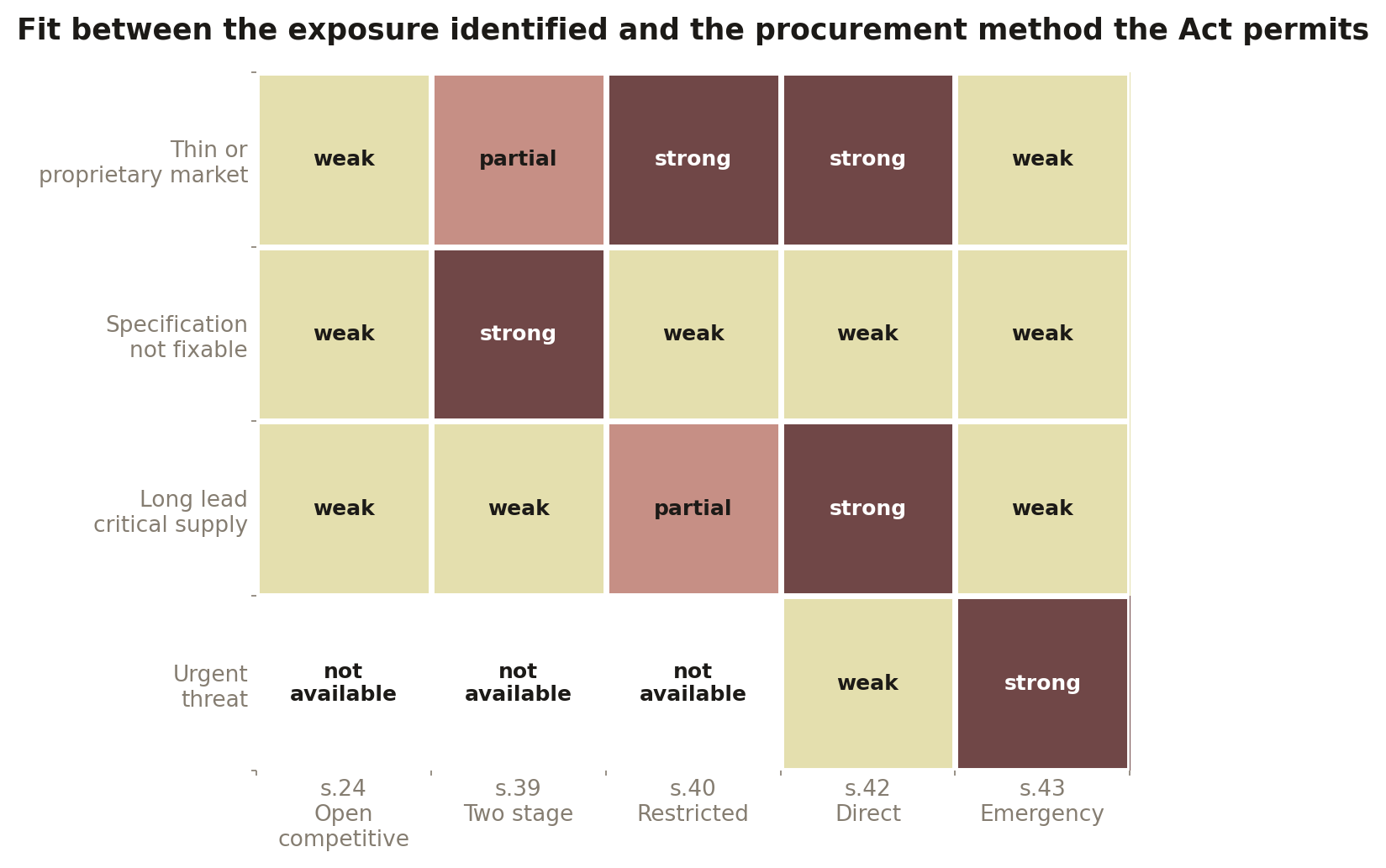
Open competitive bidding is an ineffective method to address the thin or proprietary supply market since there are few competitors who are able to bid. Restricted tendering at section 40 and direct procurement at section 42 directly respond to the exposure, but each needs a justification. In the case of an unspecifiable scope of supply at the tendering stage, the two-stage tendering at section 39 responds strongly while the default option responds weakly. Long lead critical supply is best addressed via direct procurement and there is no other method which responds to this exposure effectively. Finally, in the case of urgent threat, there is a clear response prescribed in the Act at section 43.
While the default option does not suit any of the four exposures well, the options suitable for exposures are conditional upon justification. The Act is aimed at promoting probity in awarding and the conditions reflect this purpose. Nevertheless, a public client who has performed an adequate risk analysis may find himself in the situation when he cannot respond to the exposure following the findings of his analysis.
5Where the exposure goes
The exposure that the chosen route cannot handle does not disappear. It is relocated to the two mechanisms available to the public client irrespective of the route he has chosen (Figure 4).
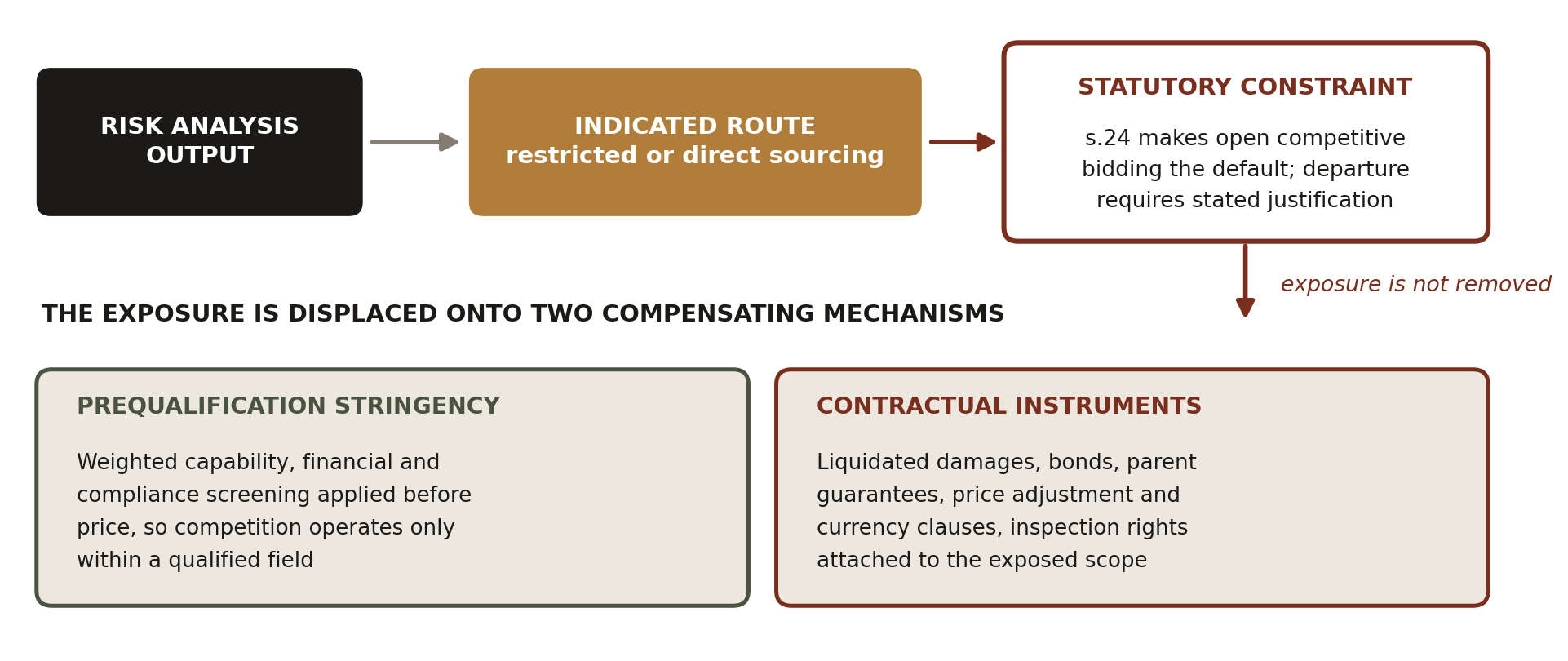
The first mechanism is the stringency of the prequalification process. Selecting on the basis of the capability, financial position and compliance before price whittles the field down to the capable suppliers and competition happens among them. The UK construction industry response to the Modern Slavery Act is discussed including in the due diligence process: supply chain mapping, assessment, prequalification, contracting, auditing and supplier development [5]. The authors of this paper perceive this as procurement-based risk management. The importance of the process is increased due to the focus on price as the decisive criterion, since the guidance on how to do business in Nigeria recommends that an unusually low tender may conceal back-end fees [6].
The second mechanism is the contract. Liquidated damages, performance bonds, parent company guarantees, price adjustment mechanisms and inspection rights transfer the risk to the award rather than process. Dixit uses risk assessment to evaluate 64 possible combinations of sourcing method, contract form and pricing system [7]. In the Zambian building industry, the client addresses risks via selecting the procurement method, the payment method and the contract form [8]. If the first is restricted, then the latter two have to bear the risk allocation responsibility. Osipova and Eriksson find in their analysis of eleven Swedish projects that procurement alternatives influence the risk management process throughout the project [9].
6The research evidence on the remaining mechanisms
If the risk exposure is linked to the prequalification process and the contract, then the appropriateness of each will define the outcome. The subset does not provide any information on either of the issues. Most of the evidence concerns the barriers to sustainable procurement, project performance and bid evaluation. It has been derived from the titles and abstracts only, and the full texts may change the findings.
6.1Nigerian evidence
There are two studies of public construction projects that concern the topic. One discusses procurement methods, risk management and project performance [10]. The other investigates the movement of the projects towards sustainable procurement and risks resilience [11]. Two additional studies describe barriers to sustainable procurement, one in the Nigerian public construction industry [12] and one in the Nigerian construction industry based on exploratory factor analysis [13]. A model of publicly funded projects in developing countries has been developed [14]. The closest to the theory of displacement in the subset is the study of the risks of bid evaluation in procurement by public tertiary institutions [15], but neither its title nor abstract hints at the fact that the hypothesis has been tested.
6.2Other regulated settings
The subset also includes the research done in other regulated environments. Tanzanian study on procurement contract risk management and force account project performance discusses the regulatory environment [16]. Another paper estimates the organizational procurement performance on public construction projects on predetermined indicators [17]. There is also the Polish study on investment project risks that have been realized during implementation of the projects under public procurement [18]. There is also a case study on risk management in procurement options [19]. Finally, there is a study which checks if the government actions, laws and policies influence the relationship between economic factors and risk management [20].
6.3Regulation which extends beyond the route selection
There is a number of papers that find that regulation goes beyond the route selection stage. Two of them are about health and safety regulations during the procurement of public construction projects in Ghana [21], [22]. Another paper analyzes the risks and benefits associated with social procurement and opportunism during the delivery phase [23]. Fourth paper considers the public client's management of innovation risk in the procurement process [24] and fifth one provides the systematic review on the risks of sustainable procurement [25]. None of the titles or abstracts suggest that the displaced exposure will occur at the contract/specification stage.
6.4Public private partnership
Public Private Partnership approach lies outside the methods listed in Figure 3. There are three papers in the subset about public private partnerships. These include the study of measures of effective risk management in developing countries [26], the review of the project-focused literature [27] and the dynamics of Sino-African infrastructure delivery [28].
6.5Prescription limit
There is one finding which will limit any prescription. Comparative sourcing in disruption risk finds that the buyers prioritize cost over resilience since resilience is not reliably attractive when low cost is available [29]. Any entity which awards on the basis of price faces the same challenges. Stringent prequalification and contractual arrangements need more than just the right to employ them. The better solution has to be more convincing than the cheaper one.
7Implications
| Exposure identified | Indicated route | If foreclosed, response available |
|---|---|---|
| Thin or proprietary supply market | s.40 or s.42 | Stringent prequalification; bonds and guarantees; inspection rights |
| Scope not specifiable at tender | s.39 | Remeasurement or provisional sums; staged design deliverables in contract |
| Long lead critical supply | s.42 | Early award within the default route; liquidated damages; expediting rights |
| Currency and escalation exposure | not route dependent | Price adjustment and currency clauses attached to the exposed scope |
Source: Prepared by the authors from sections 24 and 39 to 43 of the Act [1].
Options for each exposure are shown in Table 1. There are four guidelines for practice. First, prequalification must be perceived as a risk management tool and evaluated on the basis of capability, financial standing, delivery record and compliance, and not only on turnover. Second, the risk management tools should be chosen according to the type of exposure identified, since each of them increases the cost of the bid regardless of its occurrence. Third, where a special procurement route is needed, justification must be developed according to risk analysis, and not afterwards. Fourth, it is necessary to keep the justification of the route and the risk management tools for audit.
In policy-making terms, a narrow proposal is made in this paper. The possibility of making a justified restricted or direct procurement route with a documented risk analysis subject to independent review will make it possible to achieve both goals: transparency and delivery. At the moment, these two goals contradict each other, and this contradiction is resolved in advance.
8Conclusion
Compared with four common exposure types, the default procedure under section 24 does not suit any of them and procedures that suit better should be justified. The exposure is connected with prequalification and the terms of the contract concerning the award.
With regard to the studies on Nigeria in the subset, the papers identify barriers to sustainable procurement and bid evaluation risk management as a problem but do not provide any information about the prequalification process and contract terms. Therefore, the account remains an argument based on the wording of the Act and the studies addressing similar issues. This account has not been tested against the actual behavior of procuring entities.
The future research will be able to test the account against the data gathered by the analysis of justification memoranda for the requests of special routes, and prequalification criteria and the terms of the contract used in similar projects. The research will confirm whether the displacement takes place as described and whether the entities using the mechanism in question perform better than those which do not use it.
References
- [1]Federal Republic of Nigeria. Public Procurement Act 2007 (Act No. 14). Abuja: Federal Government Press; 2007.
- [2]Emenike N, Ozurumba BA, Ubani CE, Ubah CP. Impact of the Nigerian 2007 Public Procurement Act on organizations: enhancing transparency and accountability. International Journal of Research and Innovation in Social Science. 2025;9(1). https://doi.org/10.47772/IJRISS.2025.9010056
- [3]Oladiran OJ, Oche MO. Public Procurement Act and project time outcomes in Nigeria. Covenant Journal of Engineering Technology. 2024;8(2).
- [4]Page MJ, McKenzie JE, Bossuyt PM, Boutron I, Hoffmann TC, Mulrow CD, et al. The PRISMA 2020 statement: an updated guideline for reporting systematic reviews. BMJ. 2021;372. https://doi.org/10.1136/bmj.n71
- [5]Trautrims A, Gold S, Touboulic A, Emberson C, Carter H. The UK construction and facilities management sector's response to the Modern Slavery Act. Business Strategy and Development. 2020;4(3):279–293. https://doi.org/10.1002/bsd2.158
- [6]Shapiro D. Doing business in Nigeria. Journal of Corporate Accounting and Finance. 2014;25(6):3–6. https://doi.org/10.1002/jcaf.21981
- [7]Dixit V. Risk assessment of different sourcing contract scenarios in project procurement. International Journal of Construction Management. 2020;22(8):1537–1549. https://doi.org/10.1080/15623599.2020.1728610
- [8]Tembo Silungwe CK, Khatleli N. An analysis of the allocation of pertinent risks in the Zambian building sector using Pareto analysis. International Journal of Construction Management. 2018;20(4):321–334. https://doi.org/10.1080/15623599.2018.1484853
- [9]Osipova E, Eriksson PE. How procurement options influence risk management in construction projects. Construction Management and Economics. 2011;29(11):1149–1158. https://doi.org/10.1080/01446193.2011.639379
- [10]Odunjo O, Adeoye DO, Oloyede MA, Akewusola R. Procurement strategies, risk management and project performance in public building projects. Journal of Applied Sciences and Environmental Management. 2026;30(5). https://doi.org/10.4314/jasem.v30i5.13
- [11]Odunjo OO, Adeoye DO, Oloyede MA, Akewusola R. Towards sustainable and risk-resilient procurement in public building projects. FUDMA Journal of Sciences. 2026;10(6). https://doi.org/10.33003/fjs-2026-1006-4857
- [12]Oyewobi L, Jimoh R. Barriers to adoption of sustainable procurement in the Nigerian public construction sector. Sustainability. 2022;14(22). https://doi.org/10.3390/su142214832
- [13]Ogunsanya O, Aigbavboa C, Thwala D, Edwards D. Barriers to sustainable procurement in the Nigerian construction industry: an exploratory factor analysis. International Journal of Construction Management. 2019. https://doi.org/10.1080/15623599.2019.1658697
- [14]Ogunsanya O, Aigbavboa C, Thwala D. Sustainable procurement model for publicly funded construction projects in developing nations. International Journal of Construction Management. 2021. https://doi.org/10.1080/15623599.2021.1889087
- [15]Suleiman S, Saidu I, Adamu A, Tsado AJ. Management of bid evaluation risks in procurement of construction projects of public tertiary institutions. Environmental Technology and Science Journal. 2024;15(1). https://doi.org/10.4314/etsj.v15i1.15
- [16]Mwaiseje S, Panga F, Mchopa A, Mathias SN. Procurement contract risks management and the performance of force account construction projects. SAM Advanced Management Journal. 2024. https://doi.org/10.1108/samamj-07-2024-0036
- [17]Alsamarraie MM, Ghazali F. Evaluation of organizational procurement performance for public construction projects. International Journal of Construction Management. 2022. https://doi.org/10.1080/15623599.2022.2070447
- [18]Siemińska E. Risks of investment projects implemented under public procurement in Poland. World of Real Estate Journal. 2025. https://doi.org/10.15678/worej.2450-534x.18953
- [19]Musosha C, Kelvin C. Risk management in procurement options in project management. International Journal of Humanities and Education Research. 2025;7(1). https://doi.org/10.33545/26649799.2025.v7.i1b.147
- [20]Rehman MA, Bin Isha MS. Moderation role of government acts, laws and policies between economic factors and risk management. Journal of Project Management. 2023. https://doi.org/10.5267/j.jpm.2023.8.001
- [21]Boadu E, Sunindijo R, Wang C. Health and safety consideration in the procurement of public construction projects. Buildings. 2021;11(3). https://doi.org/10.3390/buildings11030128
- [22]Boadu E, Sunindijo R, Wang C, Frimpong S. Health and safety integration into the procurement stages of public construction projects. Construction Economics and Building. 2022;22(3). https://doi.org/10.5130/ajceb.v22i3.8136
- [23]Loosemore M, Keast R, Barraket J, Denny-Smith G. The risks and opportunities of social procurement in construction projects. International Journal of Managing Projects in Business. 2022. https://doi.org/10.1108/ijmpb-11-2021-0300
- [24]Lenderink B, Halman J, Boes J, Voordijk H. Procurement and innovation risk management: how a public client managed to realise innovation. Journal of Purchasing and Supply Management. 2022. https://doi.org/10.1016/j.pursup.2022.100747
- [25]Ogunmakinde O, Aghajani M, Memari A. Identifying risks in sustainable procurement for construction: a systematic literature review. Smart and Sustainable Built Environment. 2025. https://doi.org/10.1108/sasbe-12-2024-0543
- [26]Mazher K, Chan A, Choudhry R, Zahoor H. Identifying measures of effective risk management for public-private partnership infrastructure projects in developing countries. Sustainability. 2022;14(21). https://doi.org/10.3390/su142114149
- [27]Almeile AM, Chipulu M, Ojiako U, Vahidi R. Project-focussed literature on public-private partnership in developing countries. Production Planning and Control. 2022. https://doi.org/10.1080/09537287.2022.2123408
- [28]Eshun BT, Chan A. An evaluation of project risk dynamics in Sino-Africa public infrastructure delivery. Sustainability. 2021;13(19). https://doi.org/10.3390/su131910822
- [29]Niu B, Zheng Z, Wang L. Information value versus flexibility cost: comparison of dual sourcing and artificial intelligence sourcing for resilient supply. Risk Analysis. 2025;45(8):2197–2231. https://doi.org/10.1111/risa.70005