Fashion Styling
Fashion Styling as Visual Storytelling: Audience Perception and Its Role in Contemporary
1Department of Fashion Design & Technology, Chattogram BGMEA University of Fashion and Technology (CBUFT), Chattogram, Bangladesh
2Pacific Jeans Ltd., Chattogram, Bangladesh
Published October 2026
Abstract
Fashion styling is commonly treated as an aesthetic practice, yet its function extends to the construction and communication of visual meaning. This study examines fashion styling as a form of visual storytelling and investigates how audiences perceive its ability to communicate narratives, emotions, identity, and brand messages without relying on written language. A descriptive, survey-based design was employed using an online questionnaire completed by 105 respondents drawn from students, fashion professionals, and general audiences through convenience sampling. The questionnaire addressed demographic characteristics, awareness of fashion styling, styling and storytelling, and interpretation and perception. Descriptive statistics were used for closed-ended responses, while thematic interpretation was applied to open-ended responses. The findings show strong audience recognition of styling as a narrative device: 92.4% of respondents agreed that fashion styling can communicate a story without words. Clothing was identified as the most influential storytelling element (91.4%), followed by color palette (57.1%) and accessories (50.5%). In addition, 58.1% reported emotional connection with styled images without text, while 89.5% considered styling very important for communicating brand messages or themes. Most respondents also acknowledged that cultural and personal experience shapes interpretation and that different audiences may read the same visual differently. The study positions fashion styling as an important interface between aesthetic design, visual communication, and audience interpretation.
Keywords: fashion styling; visual storytelling; visual communication; fashion imagery; audience perception; brand communication; emotional response; cultural interpretation
1Introduction
Fashion styling is the deliberate selection, coordination, and presentation of garments, accessories, beauty elements, and contextual details to construct a coherent visual appearance. Although styling is often discussed in relation to aesthetics and trend formation, its communicative function is equally important. Fashion operates through signs, symbols, and culturally situated meanings, allowing dress to participate in the construction of identity and social representation [1–3]. Styling therefore does more than complete an outfit; it organizes visual elements into a message that can be read by an audience.
The communicative role of styling has become particularly significant as fashion imagery has expanded across editorial photography, advertising, film, celebrity culture, social media, and digital branding. Fashion communication is shaped not only by designers and brands but also by cultural intermediaries who select, arrange, frame, and circulate visual meanings [4,5]. Within this system, stylists contribute to the translation of design concepts into recognizable moods, identities, lifestyles, and narratives.
Visual storytelling refers to the construction of meaning through visual elements rather than through explicit verbal explanation. In fashion imagery, garments, color, accessories, makeup, hair, setting, pose, composition, and photographic treatment can work together to suggest character, emotion, time, place, or social identity. Fashion photography and editorial practice have historically demonstrated how the arrangement of dress and image can move beyond product presentation toward narrative and conceptual expression [6,7].
Audience interpretation is not necessarily uniform. Images are read through individual experience, cultural background, and existing systems of representation [8,9]. Consequently, the same styled image may evoke different meanings for different viewers. Understanding this interpretive dimension is increasingly important for brands and creative practitioners seeking to communicate consistently across culturally diverse and digitally mediated audiences.
Despite substantial theoretical discussion of fashion as communication, the role of styling itself as a standalone visual storytelling mechanism has received comparatively less attention in survey-based audience research. The present study addresses this gap by examining how respondents perceive the narrative, emotional, cultural, and brand-communication functions of fashion styling.
2Research objectives
- 1. To examine fashion styling as a visual storytelling practice within contemporary fashion communication.
- 2. To identify the styling elements that audiences perceive as most important for constructing visual narratives.
- 3. To assess audience perceptions of the emotional impact of styled fashion imagery without accompanying text.
- 4. To examine how personal and cultural experience influences the interpretation of styled visuals.
- 5. To evaluate the perceived importance of styling in communicating fashion brand messages and themes.
3Literature review
Fashion has long been examined as a system through which social and cultural meanings are produced. Barthes [1] conceptualized fashion through a semiotic framework in which garments and their descriptions participate in systems of signification. Barnard [2] similarly positioned fashion as communication, emphasizing its relationship with identity, culture, ideology, and social interaction. Entwistle [3] further demonstrated that dress is embodied and socially situated, making clothing an important component of identity construction.
The visual dimension of fashion communication is particularly relevant to styling. Fashion imagery does not simply document clothing; it frames clothing within a visual context that can generate mood, character, and narrative. Evans [6] described the development of fashion imagery as a space in which spectacle and modernity could be articulated through clothing and image-making, while Jobling [10] examined the relationship between word and image in fashion photography. These perspectives support the view that styling can function as an active narrative mechanism rather than a secondary aesthetic activity.
Audience interpretation introduces an additional layer of complexity. Sontag [8] emphasized the interpretive nature of photographic images, while Berger [9] highlighted the role of viewing position and social context in the construction of visual meaning. Contemporary visual-culture scholarship likewise treats images as sites of negotiation between representation, identity, and the viewer [11,12]. From this perspective, fashion styling communicates through a combination of visual cues and audience interpretation rather than through a single fixed meaning.
Fashion communication also operates within commercial and media environments. Kawamura [4] emphasized the role of fashion-system actors and cultural intermediaries in producing and circulating fashion meanings, while Tungate [5] linked visual presentation to fashion branding and market communication. In digital environments, the rapid circulation of fashion imagery increases the importance of immediately legible visual narratives. However, the effectiveness of such narratives depends partly on whether audiences recognize and interpret the stylistic cues embedded in the image.
Literature therefore establishes a strong conceptual basis for understanding styling as visual communication, but a practical question remains: how do audiences themselves perceive the storytelling capacity of styling? The present survey addresses this question by examining awareness, perceived storytelling elements, emotional response, media exposure, cultural interpretation, and perceived importance for brand communication
4Materials and methods
4.1Research design
A descriptive and analytical survey design was used to investigate audience perceptions of fashion styling and visual storytelling. The study focused on self-reported perceptions rather than controlled experimental measurement of visual responses.
4.2Instrument and data collection
Primary data was collected through an online questionnaire. The instrument was organized into four thematic sections: (i) demographic characteristics, (ii) awareness of fashion styling, (iii) styling and storytelling, and (iv) interpretation and perception. The questionnaire included closed-ended questions suitable for descriptive statistical analysis and an open-ended item designed to capture respondents’ own definitions of fashion styling.
4.3Sample and sampling
The final sample comprised 105 respondents. Participants included students, fashion professionals, and respondents from other professional or personal backgrounds. Convenience sampling was used. The sample should therefore be understood as a non-probability sample, and the results are interpreted as descriptive evidence of the surveyed group rather than as statistically representative of the wider population.
4.4Data analysis
Closed-ended responses were summarized using frequencies and percentages. The open-ended responses were examined thematically to identify recurring concepts associated with fashion styling, including self-expression, confidence, identity, creativity, emotion, and storytelling. Because the study is descriptive, no inferential statistical testing is presented.
4.5Scope of interpretation
The study evaluates perceptions of styling as visual communication; it does not experimentally test whether specific styling combinations cause particular emotional or behavioral outcomes. Accordingly, expressions such as 'communicate,' 'influence,' or 'create emotional connection' refer to respondents’ reported perceptions.
5Results and discussion
5.1Respondent profile
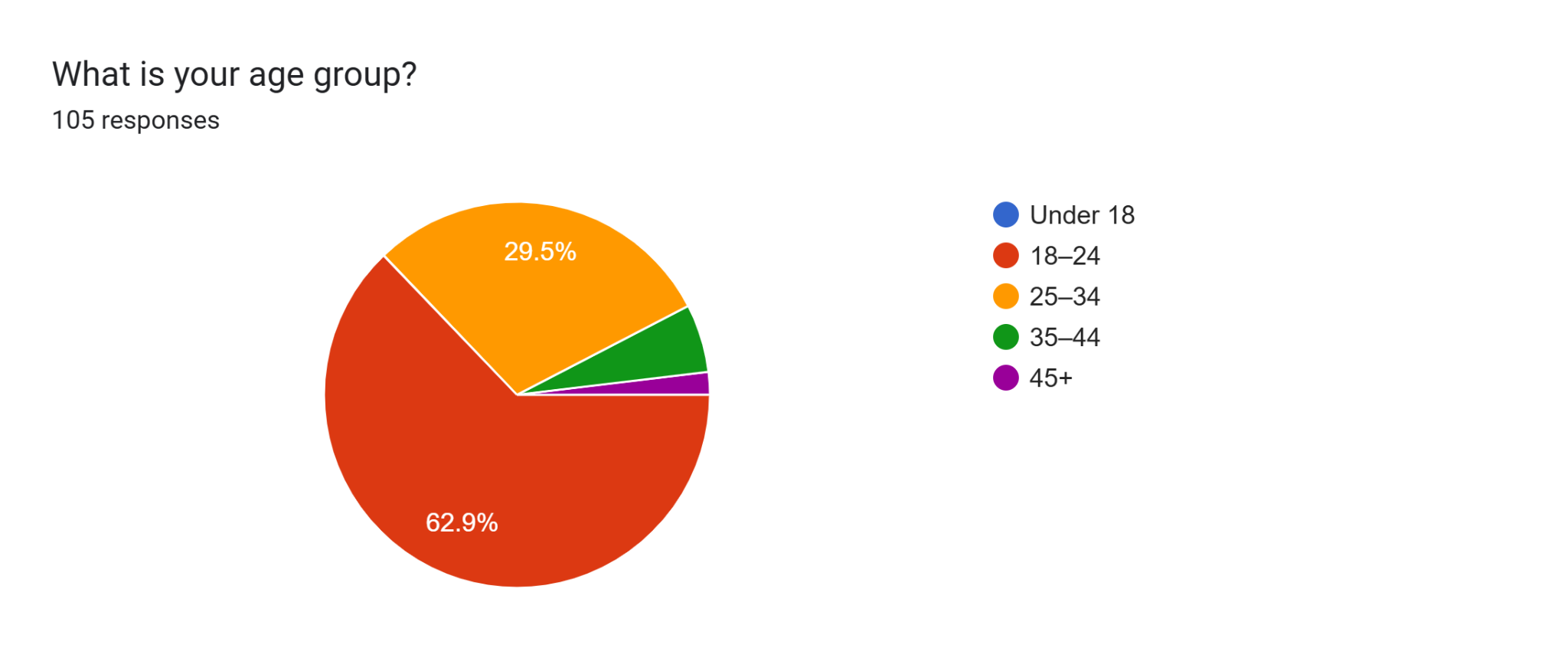
The respondent profile indicates a predominantly young and fashion-engaged sample. Respondents aged 18–24 represented 62.9% of the sample, followed by the 25–34 group at 29.5%. Older age categories were represented only to a limited extent. This concentration should be considered when interpreting the findings because younger audiences are likely to encounter fashion styling frequently through social and digital media.
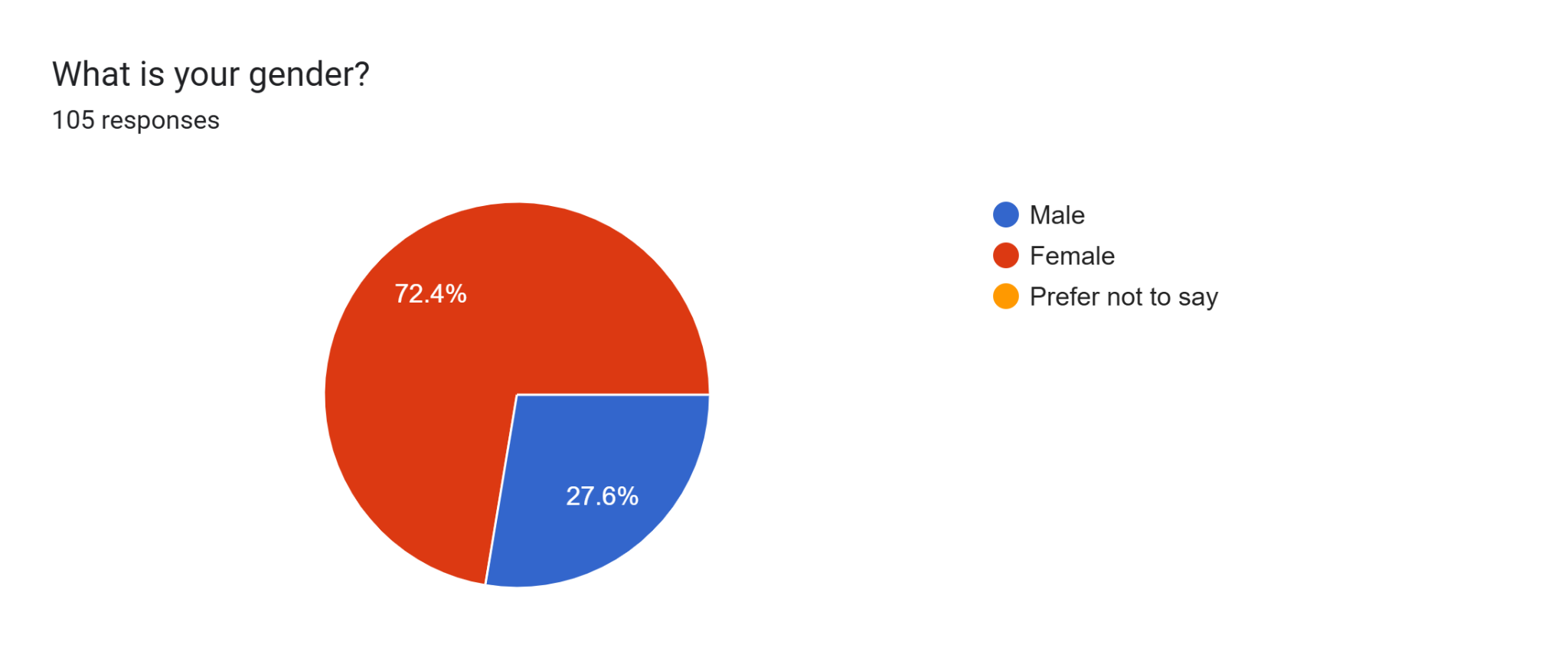
Women accounted for 72.4% of respondents and men for 27.6%; no respondent selected 'prefer not to say.' The sample was therefore gender-imbalanced, which may influence the aggregate perception measures.
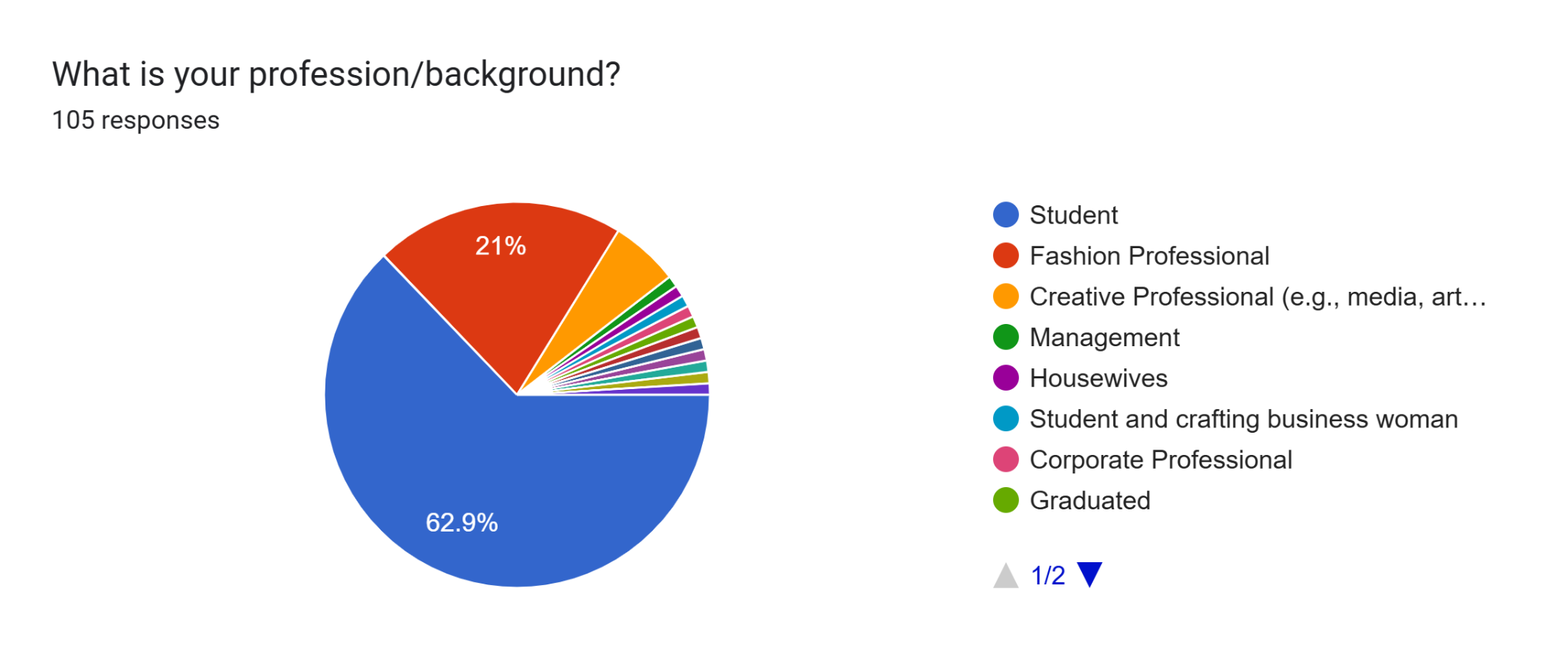
Students constituted the largest respondent group (62.9%), while fashion professionals represented approximately 21%. The remaining respondents came from a range of creative, corporate, graduate, business, and other backgrounds. The findings therefore reflect a mixture of primarily student perspectives and additional views from participants with professional exposure to fashion or related fields.
5.2Awareness of fashion styling
Self-reported familiarity with fashion styling was relatively high. Approximately half of the respondents (50.5%) described themselves as very familiar with fashion styling, 41.9% as somewhat familiar, and 7.6% as not familiar. Thus, more than nine in ten participants reported at least some familiarity with the subject.
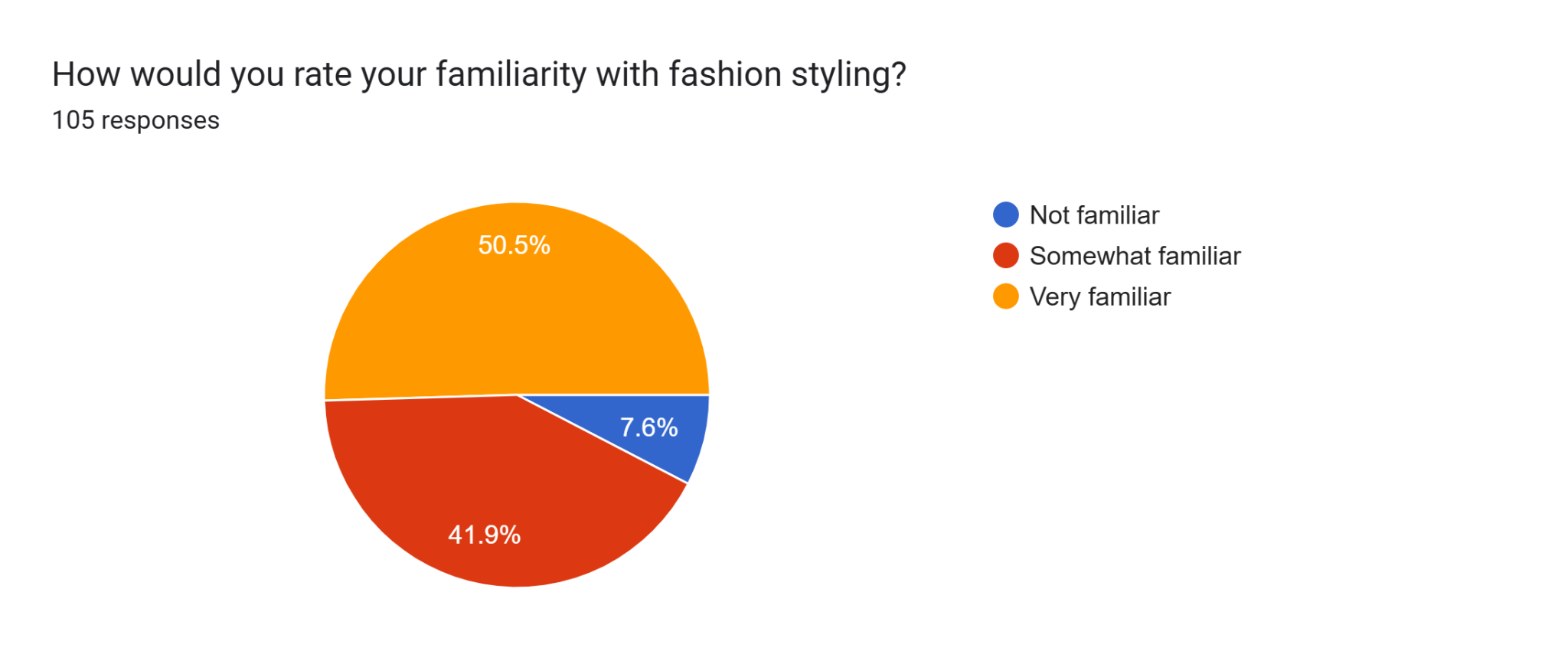
This level of familiarity is important for interpreting the subsequent findings. The survey was not dominated by respondents with no knowledge of fashion styling; instead, the majority had some prior awareness, increasing the relevance of their evaluations of styling as a communicative practice.
5.3Styling as a visual storytelling mechanism
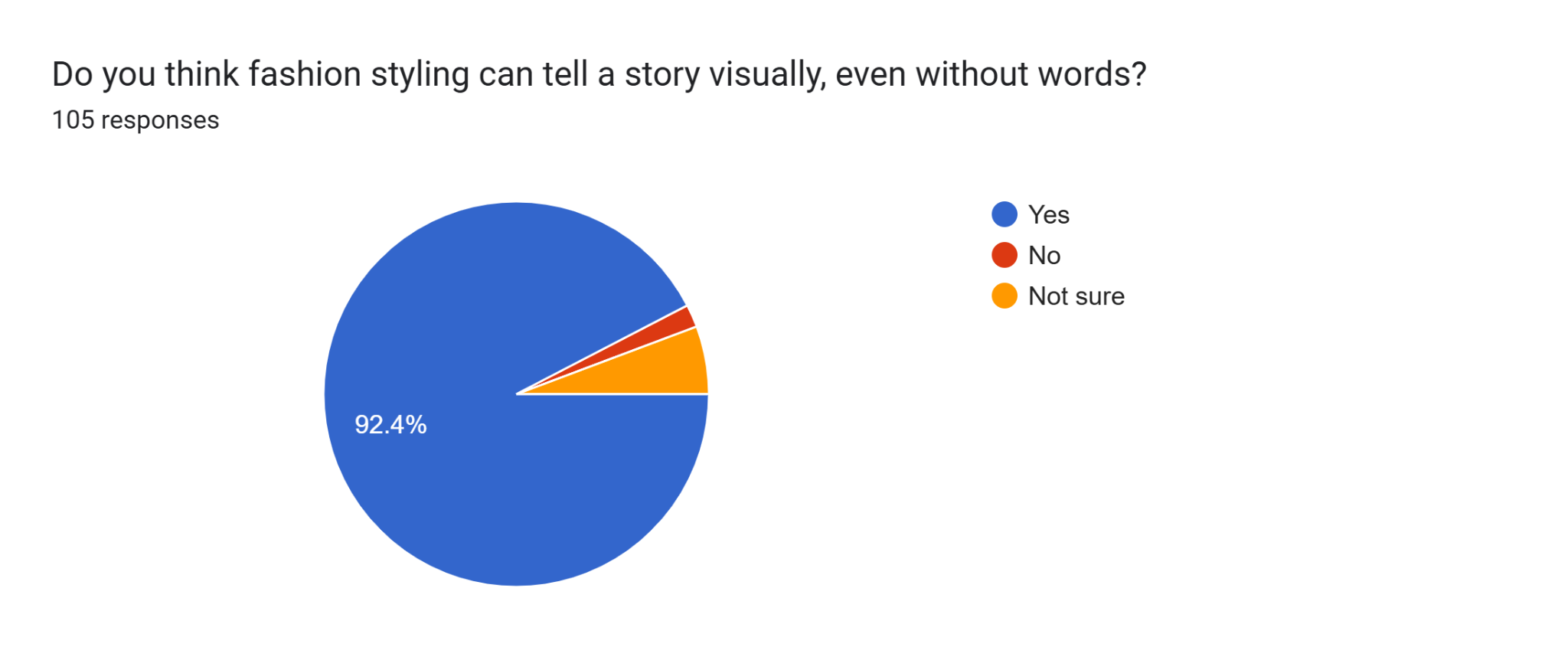
A strong majority of respondents (92.4%) agreed that fashion styling can communicate a story visually without words. This is the central empirical finding of the study and supports the conceptual position that styling operates as a form of non-verbal communication [1,2]. The result suggests that respondents recognize the narrative potential of fashion imagery even when verbal explanation is absent.
When respondents were allowed to select up to three styling elements, clothing was identified most frequently (96 respondents; 91.4%), followed by color palette (60; 57.1%), accessories (53; 50.5%), makeup and hair (43; 41.0%), and background or setting (35; 33.3%). The ranking indicates that the garment itself remains the primary narrative cue, while color and styling details provide additional layers of meaning.
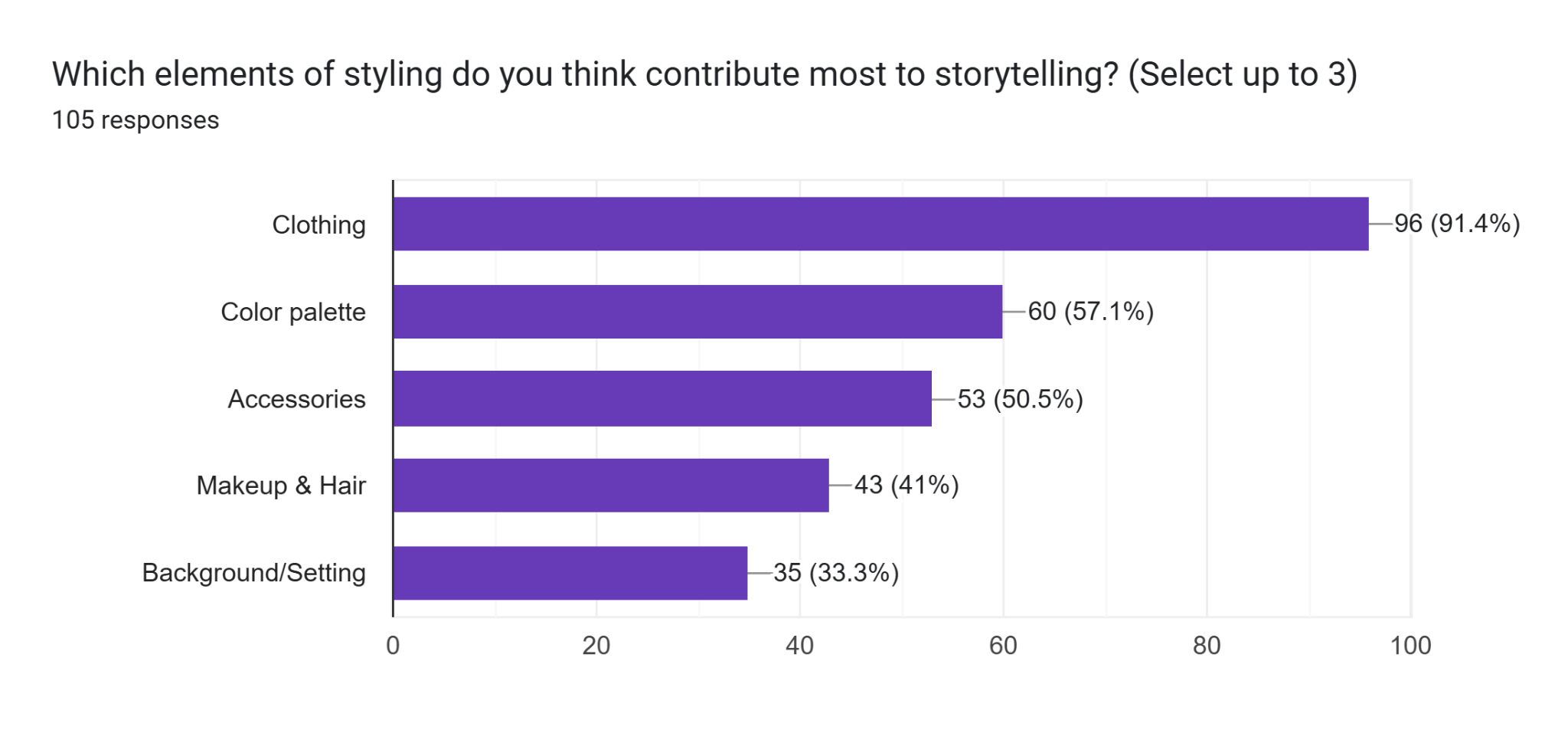
These findings are consistent with semiotic approaches to fashion, in which clothing functions as a visible signifier while the surrounding visual environment contributes to contextual interpretation [1,3]. The results also reinforce the practical importance of coordination: narrative meaning is not necessarily located in a single garment but can emerge from the interaction among clothing, color, accessories, beauty styling, and setting.
5.4Emotional response to styled imagery
The survey also examined whether respondents had experienced emotional connection with a styled image or editorial without accompanying text. A total of 58.1% answered yes, while 35.2% selected 'maybe'; only a small minority answered no.
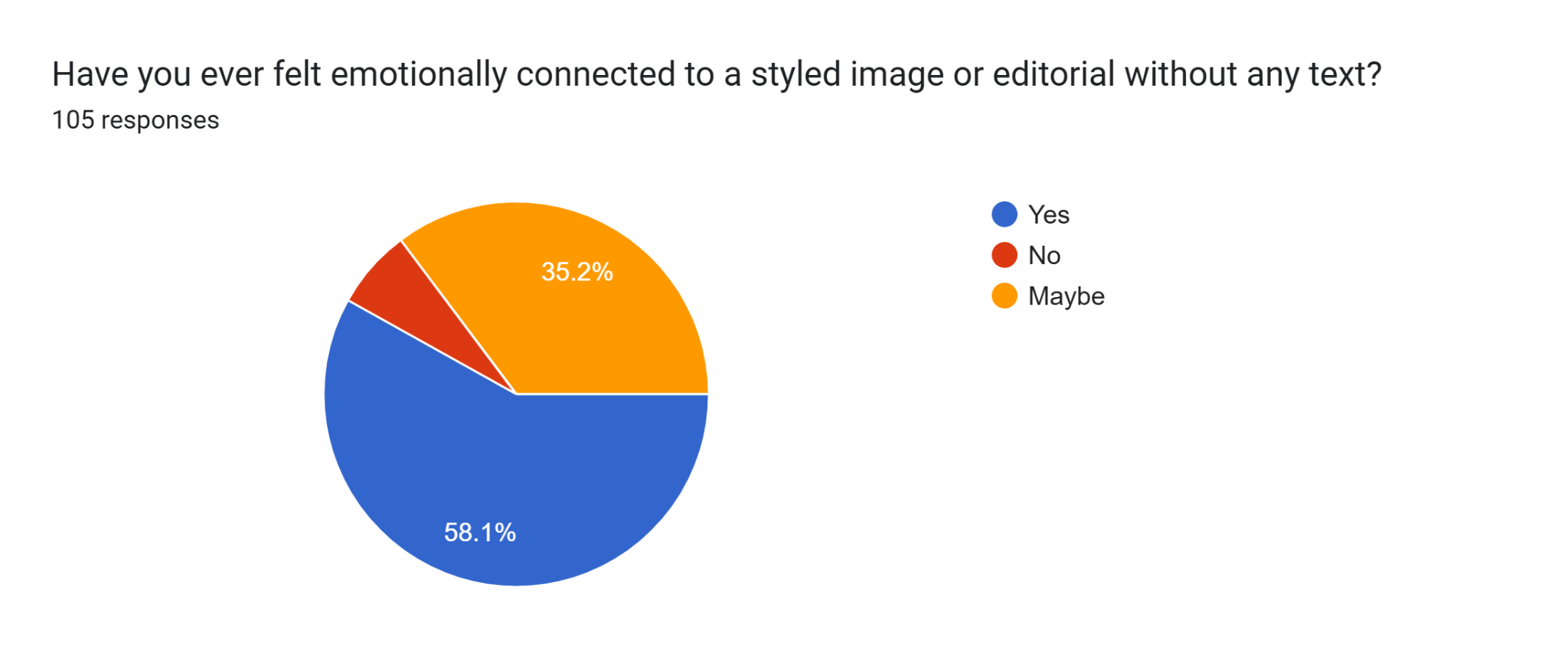
The combined pattern suggests that visual styling is capable of generating perceived emotional response for a substantial proportion of the surveyed audience. However, the relatively large 'maybe' category also indicates that emotional interpretation is not uniform. This variability is consistent with the view that images are interpreted through individual experience and viewing context [8,9].
5.5Media exposure and the digital environment
Social media was the dominant source through which respondents encountered fashion styling content: 85 respondents (81.0%) selected social media. Fashion shows were identified by 39.0%, fashion films or advertisements by 23.8%, and fashion magazines by 22.9%. A small number of respondents identified other sources, including runway events and study materials.
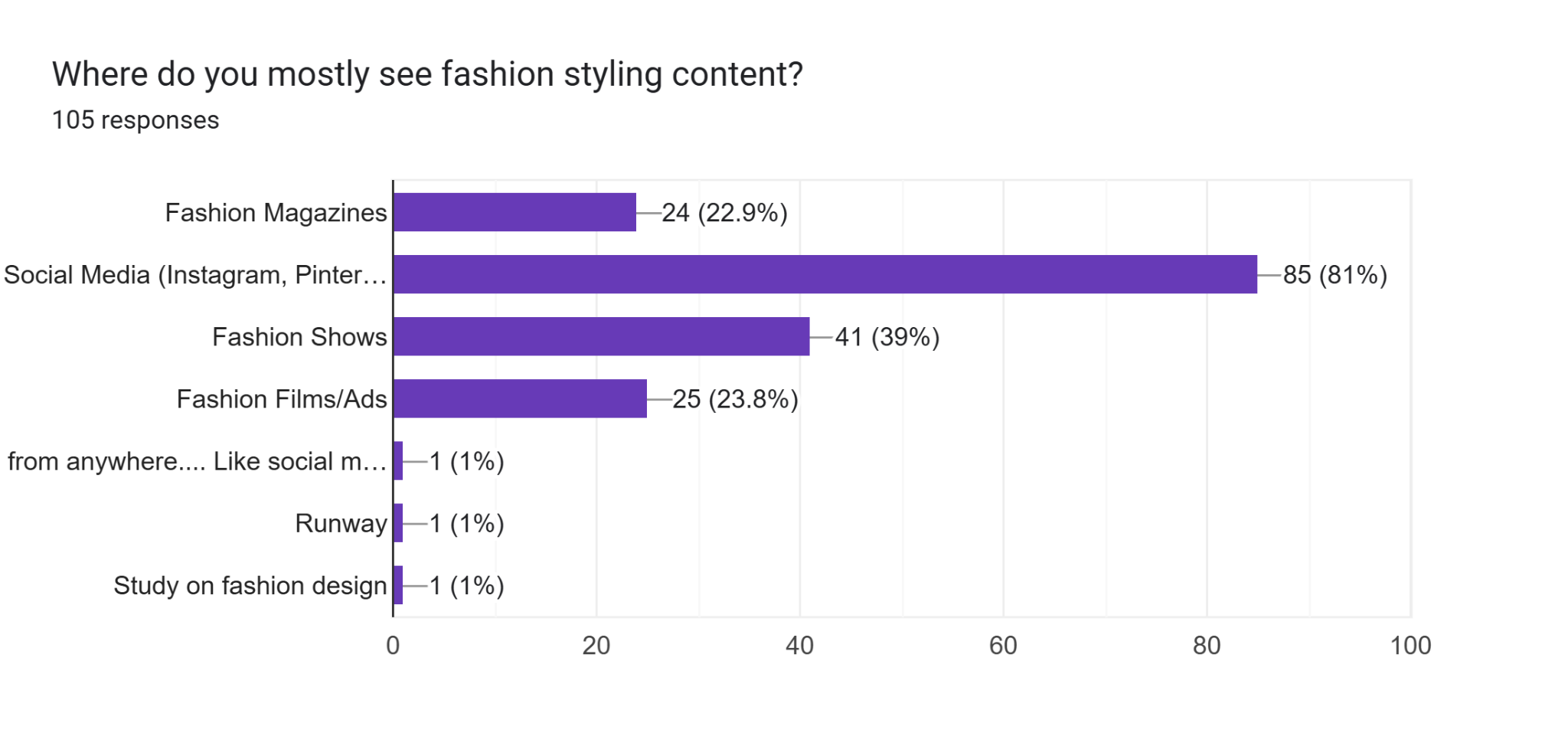
The dominance of social media highlights the changing environment in which styling communicates. Unlike traditional editorial formats, social platforms expose audiences to high volumes of rapidly consumed visual content. This environment increases the importance of clear and immediately recognizable visual cues. The finding is compatible with the broader understanding of fashion as a system shaped by cultural intermediaries and media circulation [4,5].
5.6Cultural and personal interpretation
A substantial majority of respondents (69.5%) stated that they interpret styled visuals through their own cultural or personal experiences; 22.9% reported doing so sometimes, and 7.6% reported that they do not.
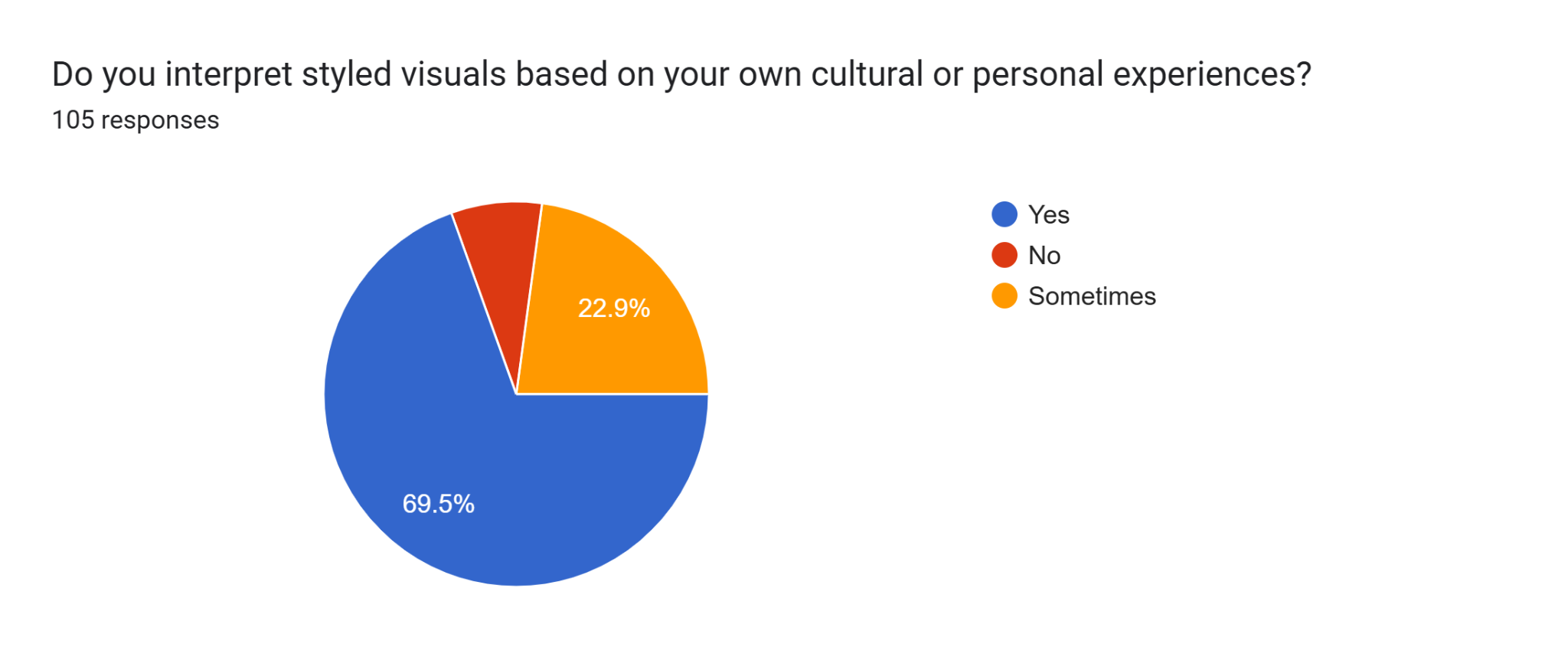
This result emphasizes that visual storytelling is not entirely controlled by the stylist or brand. The meaning constructed by the viewer is influenced by previous experience, cultural context, and individual interpretation. Such a finding is consistent with representation-oriented approaches to visual culture, which treat meaning as something negotiated between the image and its audience [11–13].
The survey further found that 83.8% of respondents believed different audiences might interpret the same styled fashion visual differently. Only a small minority rejected this view, while 13.3% were uncertain.
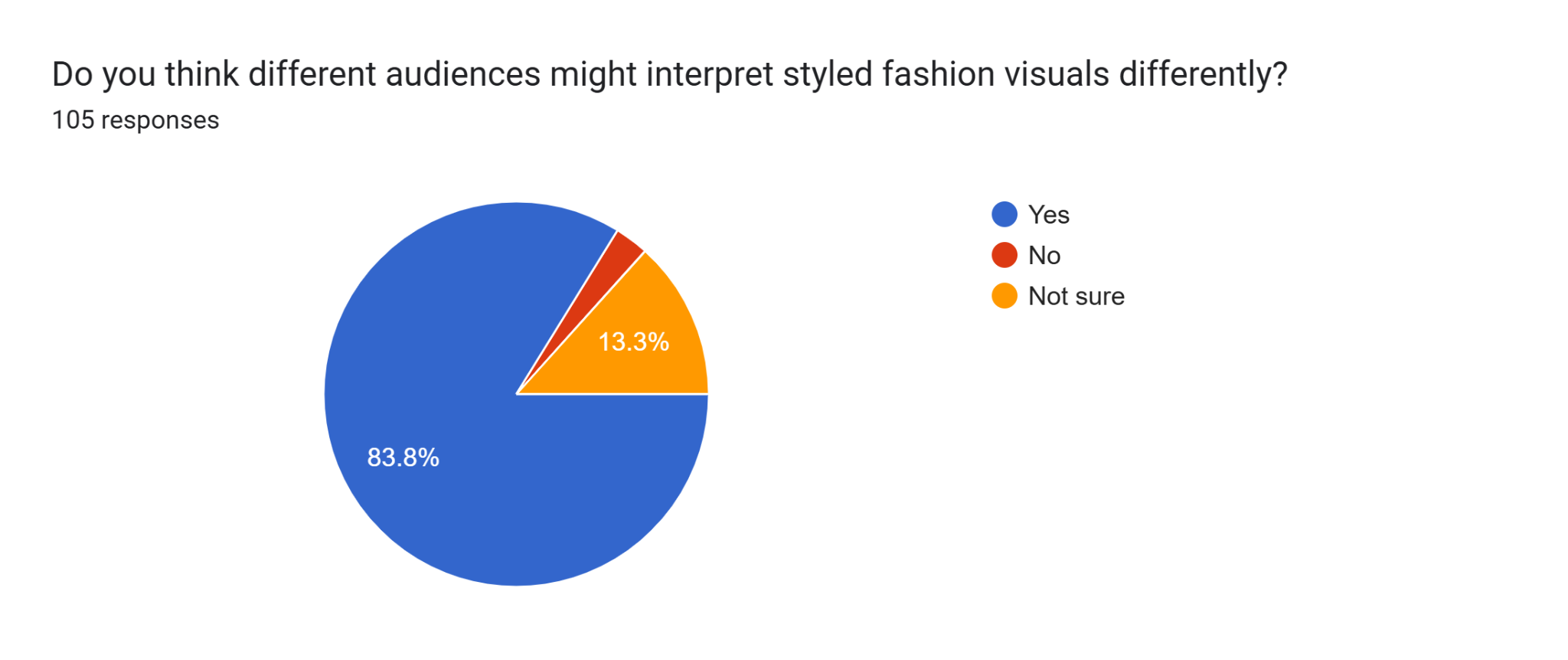
Together, these findings indicate that effective styling should account for audience diversity. A visual narrative may be intended to communicate a particular identity or mood, but its interpretation can vary across social and cultural contexts. For international fashion brands, this has practical implications for visual campaign development and localization.
5.7Styling and brand communication
The perceived importance of styling for communicating brand messages was particularly strong. Overall, 89.5% of respondents rated styling as very important, while the remaining 10.5% considered it somewhat important; virtually no respondents regarded styling as unimportant.
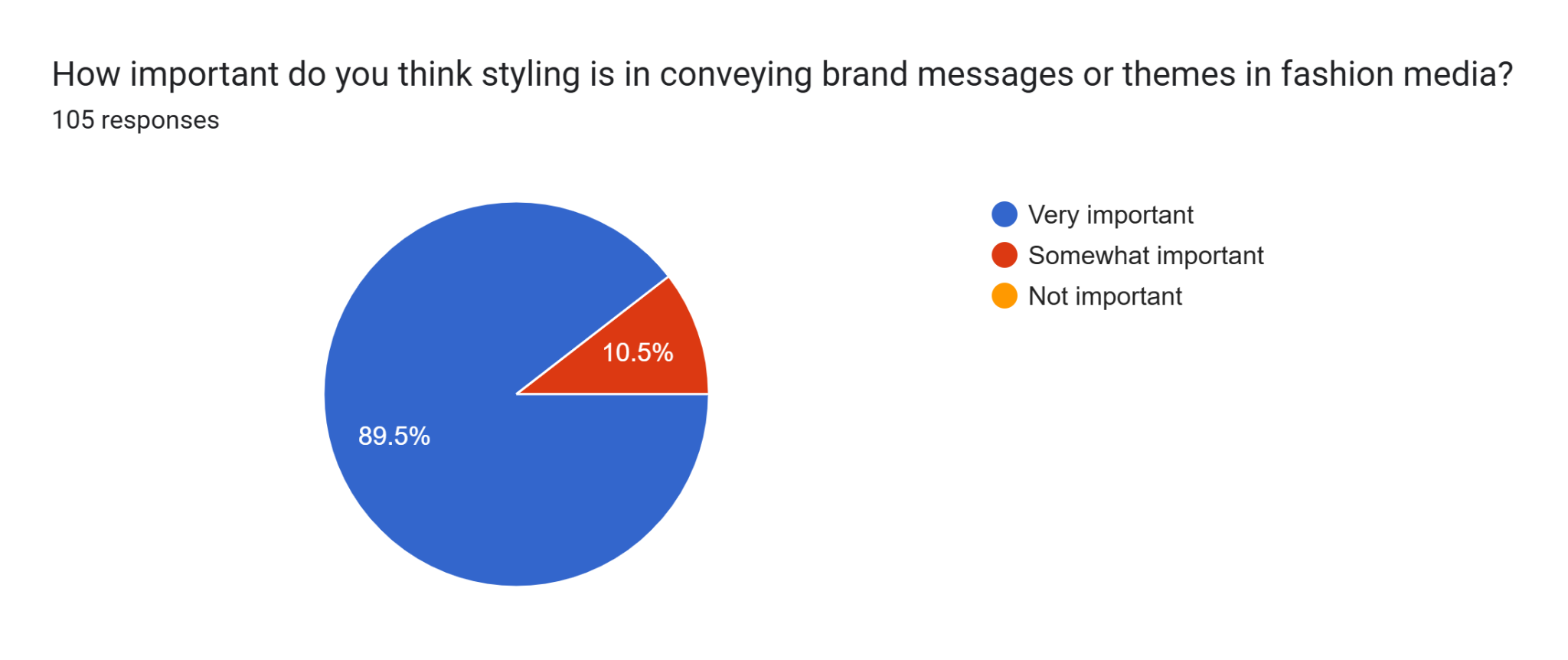
This result positions styling as more than a finishing stage in image production. From the respondents’ perspective, styling is closely connected with the communication of brand identity and thematic direction. This interpretation is consistent with fashion-brand literature emphasizing the role of coherent visual presentation in constructing recognizable market identities [5].
5.8Open-ended responses
Eighty-four respondents provided one-line descriptions of what fashion styling means to them. Thematic review showed recurring associations with self-expression, confidence, personality, identity, creativity, emotion, and visual storytelling. Several responses characterized styling as an artistic or creative process through which ideas and emotions can be transformed into a coherent visual appearance.
These qualitative responses complement the quantitative findings. Participants did not generally restrict styling to the practical act of choosing clothes; instead, they associated it with identity construction and expressive communication. This is consistent with theoretical accounts that position dress as a medium through which individuals and groups communicate social and cultural meanings [2,3].
6Implications
The findings have implications for fashion practice, education, and brand communication. First, stylists can approach garments, color, accessories, beauty elements, and setting as coordinated narrative components rather than isolated aesthetic choices. Second, brands can use styling deliberately to reinforce visual identity and thematic consistency across campaigns and digital channels. Third, fashion education can give greater attention to visual narrative construction, audience interpretation, and the cultural context of styling.
- 1. Styling education should integrate narrative development with garment coordination and visual composition.
- 2. Fashion brands should align styling decisions with intended brand identity, campaign themes, and target-audience context.
- 3. Stylists should consider cultural diversity when creating visual narratives for international or digitally distributed audiences.
- 4. Digital fashion communication should prioritize coherent visual cues that remain legible in fast-moving social-media environments.
- 5. Future creative practice may explore AI-assisted, virtual, and interactive styling while retaining human-centered narrative and cultural considerations.
7Limitations
Several limitations should be considered. First, the sample size was limited to 105 respondents and was obtained through convenience sampling; therefore, the findings cannot be generalized statistically to all fashion consumers or audiences. Second, the sample was concentrated among younger respondents and included a higher proportion of women and students, which may have influenced the aggregate results. Third, the study relied on self-reported perceptions rather than experimental observation of responses to standardized visual stimuli. Finally, the qualitative analysis was thematic and interpretive, meaning that the open-ended findings should be viewed as indicative rather than exhaustive.
8Future research
Future studies should extend this work through larger probability-based or stratified samples and should compare audience groups across age, gender, professional background, and cultural context. Experimental research using standardized fashion images could test whether specific combinations of clothing, color, accessories, setting, and composition produce measurable differences in emotional or narrative interpretation. Cross-cultural research would be particularly valuable because the present findings indicate that personal and cultural experience can shape visual interpretation. Further research may also examine the effects of digital influencers, AI-generated styling, virtual fashion environments, and interactive visual storytelling.
9Conclusion
This study demonstrates that respondents perceive fashion styling as a meaningful form of visual storytelling rather than merely an aesthetic arrangement of garments. The survey results show strong recognition of styling’s communicative capacity: 92.4% of respondents agreed that styling can tell a story without words, while clothing, color palette, and accessories were identified as the most influential storytelling elements. More than half of respondents reported emotional connection with styled imagery without text, and 89.5% considered styling very important for communicating fashion brand messages or themes.
The findings also demonstrate that visual meaning is audience dependent. Most respondents reported interpreting styled visuals through personal or cultural experience, and 83.8% recognized that different audiences may interpret the same visual differently. Fashion styling therefore occupies an important position at the intersection of design, visual communication, identity, and cultural interpretation. Its effectiveness depends not only on the creativity of the stylist but also on the audience’s ability and context to read the visual cues embedded in the image.
Within the limits of the sample and descriptive research design, the study supports the use of styling as a strategic storytelling tool in contemporary fashion communication. For educators, stylists, and fashion brands, the findings suggest that narrative intention, audience context, and coordinated visual elements should be treated as central considerations in styling practice.
Acknowledgments
The authors sincerely acknowledge the valuable participation of all respondents who contributed their time, perspectives, and insights to this study. Their responses provided the essential empirical basis for examining fashion styling as a form of visual storytelling and audience communication. The authors also appreciate the support and constructive assistance received during the development and completion of this research.
References
- [1]Barthes R. The fashion system. University of California Press; 1967.
- [2]Barnard M. Fashion as communication. 2nd ed. Routledge; 2014.
- [3]Entwistle J. The fashioned body: Fashion, dress and modern social theory. 2nd ed. Polity Press; 2015.
- [4]Kawamura Y. Fashion-ology: An introduction to fashion studies. Berg; 2005.
- [5]Tungate M. Fashion brands: Branding style from Armani to Zara. 3rd ed. Kogan Page; 2012.
- [6]Evans C. Fashion at the edge: Spectacle, modernity and deathliness. Yale University Press; 2003.
- [7]Crane D. Fashion and its social agendas: Class, gender, and identity in clothing. University of Chicago Press; 2012.
- [8]Sontag S. On photography. Farrar, Straus and Giroux; 1977.
- [9]Berger J. Ways of seeing. Penguin Books; 1972.
- [10]Jobling P. Fashion spreads: Word and image in fashion photography since 1980. Berg; 1999.
- [11]Kawamura Y. Doing research in fashion and dress: An introduction to qualitative methods. Bloomsbury; 2018.
- [12]Sturken M, Cartwright L. Practices of looking: An introduction to visual culture. 3rd ed. Oxford University Press; 2018.
- [13]Hall S. Representation: Cultural representations and signifying practices. Sage Publications; 1997.
- [14]Wilson E. Adorned in dreams: Fashion and modernity. Rev. ed. Rutgers University Press; 2003.
- [15]Breward C. Fashion. Oxford University Press; 2003.
- [16]Arnold R. Fashion, desire and anxiety: Image and morality in the 20th century. Rutgers University Press; 2001.
- [17]Mirzoeff N. How to see the world. Pelican Books; 2015.