Software and Automation
Smart Learning Vehicle Monitoring System
Department of Electronics and Telecommunication Engineering, Samarth Polytechnic, Belhe, Junnar, Pune, Maharashtra, India
Published October 2026
Abstract
The Smart Learning Vehicle Monitoring System is an intelligent system designed to improve vehicle monitoring, safety, and learning using modern technologies such as IoT, sensors, cameras, and machine learning. The system collects real-time vehicle information such as speed, location, driver behavior, and surrounding conditions. Image classification techniques are used to identify important road conditions and objects. The collected data is processed and monitored through a centralized system, allowing users to observe vehicle performance and detect abnormal conditions. The proposed system helps reduce accidents, improve driving awareness, and provide useful information for vehicle management. It can be further enhanced with advanced AI, real-time alerts, cloud monitoring, and predictive analysis.
1Introduction
The Smart Learning Vehicle Monitoring System is an advanced technology-based system designed to improve vehicle safety, monitoring, and learning using modern electronics, sensors, communication technologies, and intelligent data processing. The system continuously monitors important vehicle parameters such as vehicle location, speed, fuel level, engine condition, and driver behavior. The collected information can be transmitted to a monitoring unit or mobile/web application for real-time observation and analysis.
The system can also be useful for driving schools, educational institutions, fleet operators, and vehicle owners. In a learning environment, instructors can monitor the performance of learners and provide feedback based on actual driving data. Thus, the Smart Learning Vehicle Monitoring System combines vehicle monitoring with learning and performance analysis to promote safer, more efficient, and responsible driving.
- 1. Smart Learning Vehicle Monitoring System is a technology-based system designed for vehicle monitoring and driver learning.
- 2. The system uses sensors, GPS, microcontroller, and communication technology to collect vehicle information.
- 3. It can monitor parameters such as vehicle speed, location, fuel level, and vehicle condition.
- 4. GPS technology helps in tracking the real-time location of the vehicle.
- 5. The system can detect over-speeding and unsafe driving conditions.
2Proposed system
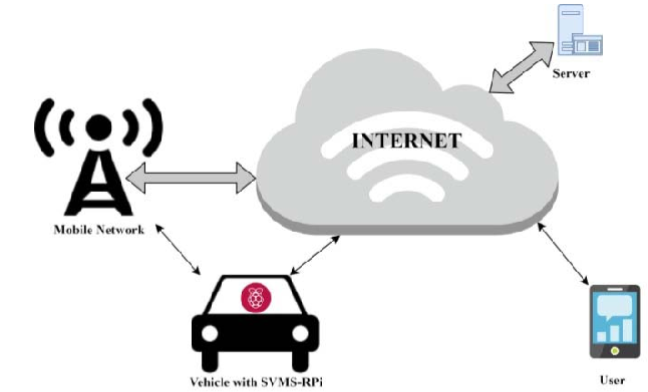
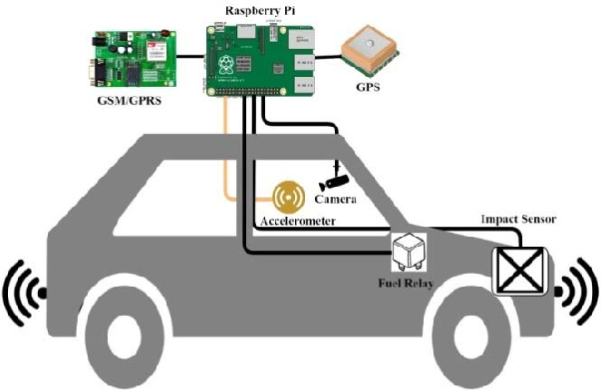
The proposed system is designed to monitor vehicle performance, improve driving safety, and provide real-time information about vehicle conditions. It uses sensors, a microcontroller, and wireless communication to collect and display important vehicle data.
The main points of the proposed system are:
- 1. Vehicle Monitoring: The system monitors important vehicle parameters such as speed, distance, and engine conditions.
- 2. Sensor Integration: Sensors are used to collect real-time data from the vehicle.
- 3. Microcontroller: A microcontroller such as Arduino or ESP32 processes the data received from the sensors.
- 4. Real-Time Display: The collected information is displayed on an LCD or mobile application.
- 5. Safety Alerts: The system can provide alerts when the vehicle exceeds a predefined speed limit or when an abnormal condition is detected.
- 6. Wireless Communication: Wi-Fi, Bluetooth, or a suitable communication module can transmit vehicle data to a monitoring device.
- 7. Learning and Analysis: The system helps students understand vehicle operation, sensor technology, embedded systems, and vehicle monitoring.
2.1Working of the proposed system
The sensors collect vehicle data and send it to the microcontroller. The microcontroller processes the information and displays the results on the screen or mobile application. If a monitored parameter exceeds its specified limit, the system generates an alert. The recorded information can be used for learning, analysis, and improving driving awareness.
2.2Expected benefits
- Improves vehicle monitoring and driving awareness.
- Provides real-time vehicle information.
- Helps identify abnormal vehicle conditions.
- Supports practical learning of automotive electronics and IoT.
- Offers a foundation for developing advanced smart vehicle systems.
3Data collection and image classification
3.1Data collection
The Smart Learning Vehicle Monitoring System requires data to monitor vehicle conditions and identify different situations. Data can be collected using sensors, cameras, and other vehicle-monitoring devices.
The collected data may include:
- Vehicle speed
- Distance travelled
- Vehicle location
- Engine/vehicle condition
- Images or video of the vehicle surroundings
- Driver or road-condition observations
- Sensor readings at different operating conditions
The collected data is stored in a database for further analysis and system training. Properly organized and labelled data helps the system provide accurate monitoring results.
3.2Image classification
Image classification is used to identify and categorize images captured by the vehicle camera. A machine-learning model can be trained using labelled images.
For example, images can be classified into categories such as:
- Normal road condition
- Obstacle detected
- Vehicle detected
- Traffic sign detected
- Poor/unsafe road condition
The image is captured by the camera and processed by the classification model. The model compares the image features with the trained dataset and predicts the appropriate category. If an unsafe condition or obstacle is detected, the system can generate an alert.
Process: Data Collection → Image Labelling → Image Pre-processing → Model Training → Image Classification → Result/Alert
This approach helps the Smart Learning Vehicle Monitoring System combine vehicle monitoring, image processing, and machine learning to improve safety and provide useful learning data.
4Implementation and results
The Smart Learning Vehicle Monitoring System is implemented using sensors, a microcontroller, camera, and monitoring software. The system collects vehicle data such as speed and distance and captures road images.
The collected data is processed and displayed in real time. Image classification helps identify vehicles, obstacles, and road conditions. The system provides alerts when abnormal or unsafe conditions are detected.
Result: The system successfully performs real-time vehicle monitoring, image classification, and safety alert generation.
5Conclusion and future work
5.1Conclusion
The Smart Learning Vehicle Monitoring System provides an effective solution for real-time vehicle monitoring and safety. The system uses sensors, a camera, microcontroller, and image classification to collect and process vehicle and road data. It helps detect important conditions and provides alerts when required. The proposed system is useful for improving vehicle safety, monitoring performance, and understanding smart vehicle technologies.
5.2Future work
The system can be further improved by adding:
- GPS tracking for real-time vehicle location.
- Mobile application for remote monitoring.
- Cloud storage for storing vehicle data.
- Advanced AI/ML models for accurate image classification.
- Automatic emergency alerts during critical situations.
- Obstacle and accident detection for improved safety.
- Real-time speed and driver-behaviour analysis.
- IoT connectivity for continuous data monitoring.
References
- [1]Wikipedia. Motor vehicle [Internet]. Available from: https://en.wikipedia.org/wiki/Motor_vehicle
- [2]Sousanis J. World vehicle population tops 1 billion units. WardsAuto [Internet]. Available from: http://wardsauto.com/news-analysis/world-vehicle-population-tops-1-billion-units
- [3]Wikipedia. List of countries by traffic-related death rate [Internet]. Available from: https://en.wikipedia.org/wiki/List_of_countries_by_traffic-related_death_rate
- [4]World Health Organization. Global status report on road safety 2015. Geneva: World Health Organization; 2015.
- [5]Nejdet, Abdulhamit S. Traffic accident detection by using machine learning methods. In: International Symposium; 2012 Mar; Bosnia and Herzegovina. Vol. 2. p. 468–474.