Medical Microbiology
16S rRNA Metagenomics of Gut Microbiota of Male Wistar Rats Fed with Genetically Modified Cowpea
1Department of Medical Laboratory Science, Madonna University, Elele Campus, Nigeria
2Department of Medical Laboratory Science, Niger Delta University, Amassoma, Bayelsa State, Nigeria
Published October 2026
Abstract
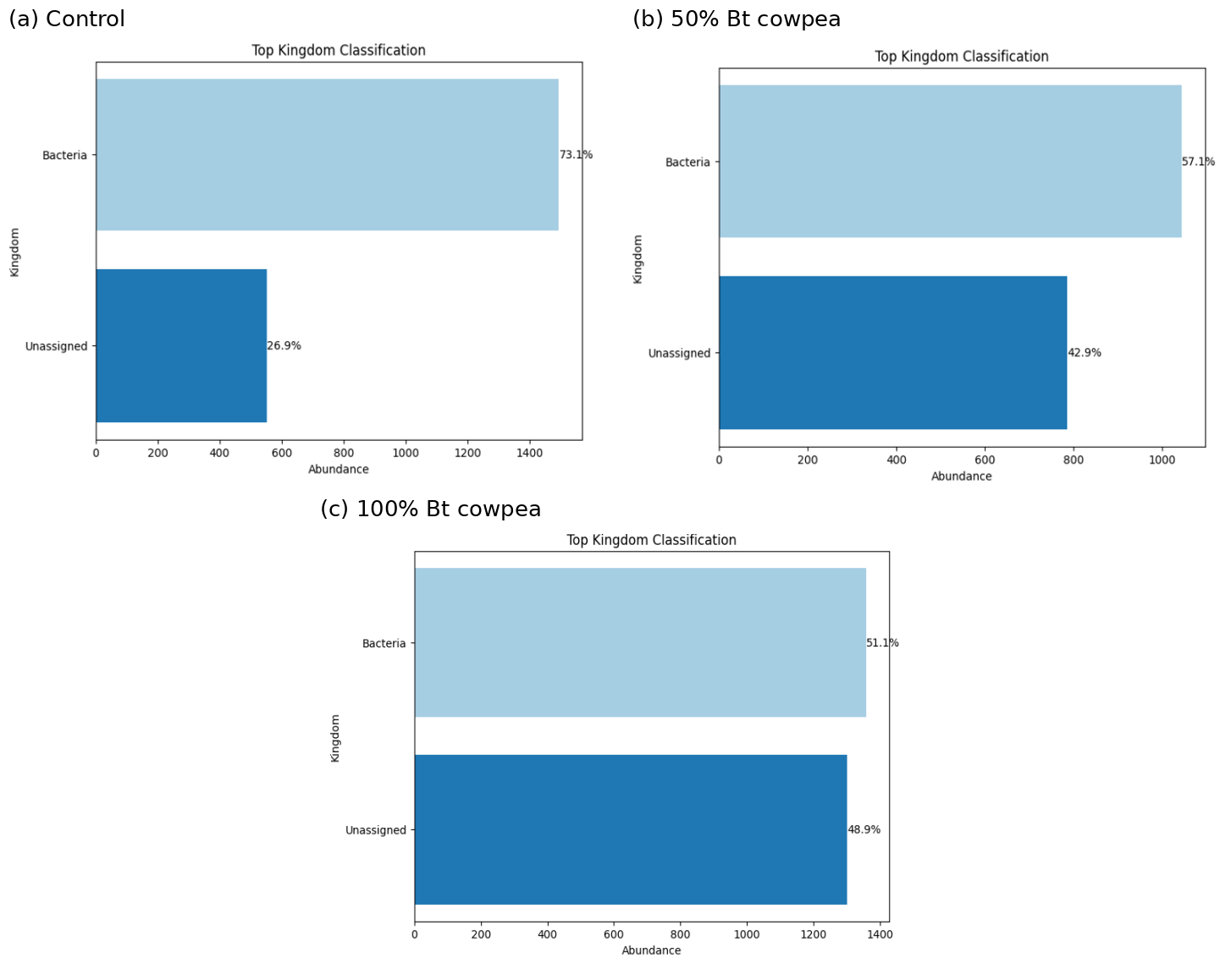
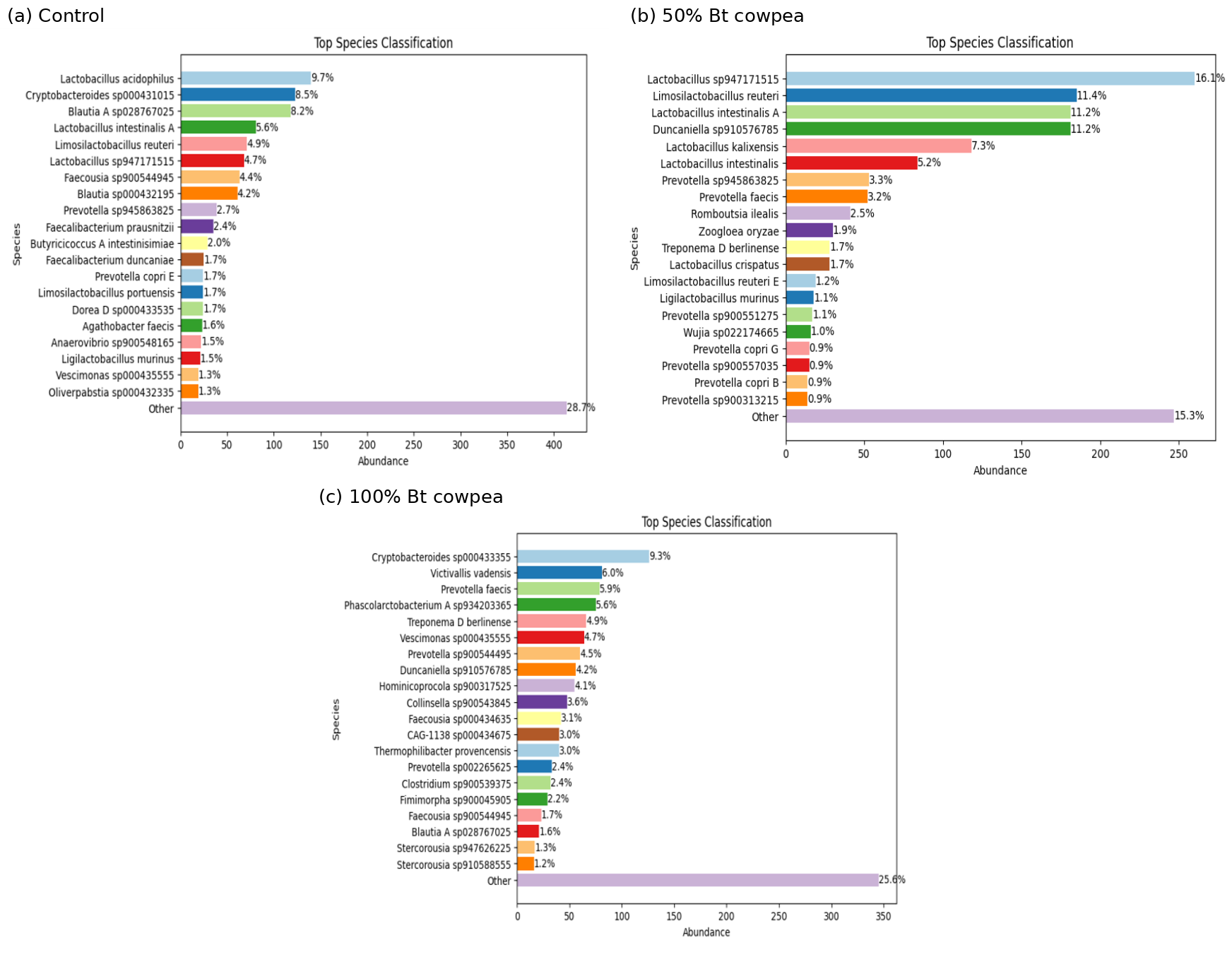
The gut microbiota is an important component of host physiology, contributing to nutrient metabolism, intestinal homeostasis, immune regulation and maintenance of the gut environment. Genetically modified Bt cowpea expressing a Bacillus thuringiensis insecticidal protein provides an important approach for controlling cowpea pod borer and improving cowpea production. However, evaluation of its potential influence on the intestinal microbial community is relevant to the assessment of its biological effects following dietary exposure. This study investigated the effect of dietary consumption of genetically modified Bt cowpea on the gut microbiota of male Wistar rats using 16S rRNA metagenomic analysis. Adult male Wistar rats were acclimatized and allocated to control, 50% Bt cowpea and 100% Bt cowpea dietary groups and maintained on the respective diets for 16 weeks. At the end of the feeding period, faecal samples were collected from two rats in each group, pooled within treatment groups and subjected to bacterial DNA extraction and 16S rRNA metagenomic analysis. The kingdom-level analysis showed that bacterial sequences constituted 73.1% of the classified reads in the control group, 57.1% in the 50% Bt cowpea group and 51.1% in the 100% Bt cowpea group, while unassigned sequences increased from 26.9% in the control to 42.9% and 48.9% in the 50% and 100% Bt cowpea groups, respectively. Species-level analysis demonstrated distinct taxonomic profiles among the dietary groups. The control group was characterized principally by Lactobacillus acidophilus (9.7%), Cryptobacterioides sp000431015 (8.5%), Blautia sp028767025 (8.2%), Lactobacillus intestinalis (5.6%) and Limosilactobacillus reuteri (4.9%). In the 50% Bt cowpea group, the predominant taxa were Lactobacillus sp947171515 (16.1%), Limosilactobacillus reuteri (11.4%), Lactobacillus intestinalis A (11.2%) and Duncaniella sp910576785 (11.2%). In contrast, the 100% Bt cowpea group was characterized predominantly by Cryptobacterioides sp000433355 (9.3%), Victivallis vadensis (6.0%), Prevotella faecis (5.9%), Phascolarctobacterium sp94392035 (5.6%), Treponema D berlinense (4.9%) and Vescimonas sp00043555 (4.7%). These findings demonstrate dose-associated differences in the taxonomic composition of the gut bacterial community following Bt cowpea exposure. The increased representation of Lactobacillus and Limosilactobacillus in the 50% Bt cowpea group, together with the emergence of Prevotella, Phascolarctobacterium and Victivallis among the predominant taxa at 100% Bt cowpea exposure, suggests dietary modulation of the intestinal microbial ecosystem. Such changes are biologically plausible because dietary composition, particularly the availability of fermentable carbohydrates and dietary fibre, is a major determinant of gut microbial composition and function (Delzenne et al., 2025; Ross et al., 2024). The study provides preliminary evidence that prolonged consumption of Bt cowpea is associated with alterations in the taxonomic structure of the gut microbiota of Wistar rats and supports the need for further studies using individually analysed animals, appropriate non-GM cowpea controls and functional microbiome measurements.
Keywords: Bt cowpea; genetically modified cowpea; gut microbiota; 16S rRNA metagenomics; Wistar rats; Lactobacillus; Prevotella
1Introduction
Cowpea (Vigna unguiculata) – popularly known as beans – is an indigenous African crop and major source of protein. It is a staple food for humans, as well as an essential animal feed, Cowpea plays a crucial role in food and nutritional security, as well as providing an important source of income. The edible parts are the grains. However, it is affected by cowpea pod borer (Maruca vitrata) which can lead to severe losses of about 60 % yield (Miko et al., 2018).
Genetically modified cowpeas are cowpeas that have been trans genetically manipulated by the insertion of Bt gene (Cry1Ab protein), a gene isolated from the soil bacterium Bacillus thuringiensis. The transgenic cowpea (Vigna unguiculata) is modified to express the Cry1Ab protein, which is expected to confer protection from certain lepidopteran insect pests of cowpea, principally the pod borer (Maruca vitrata).
The mammalian gut microbiota is a dynamically interacting ecosystem within the host’s digestive tract. It contains various microorganisms, including bacteria, fungi, and viruses. The gut microbiota (sometimes referred to as a “microbial organ”) influences host evolution and physiological regulation through its wide range of genetic and metabolic capabilities. Among these microorganisms, bacteria are the most abundant and the most extensively studied. In humans, the gut contains approximately 1013 bacteria, making the colon one of the largest known microbial ecosystems (Sender et al., 2016). Metagenomic studies have identified more than 10 phyla of bacteria, but in healthy adults, Bacteroidetes and Firmicutes dominate the gut microbiota. This is due to the stable ecological balance achieved by long-term symbiosis between the host and its microorganisms.
16S rRNA metagenomics is a culture–independent and amplicon based metagenomics that targets the highly conserved and variable regions of the 16S rRNA gene in the classification of bacteria. Genomically, the gut microbiota contains a gene count that surpasses the host genome by more than a hundredfold (Gilbert et al., 2018). The swift advancement of metagenome-assembled genomes (MAGs) technology has significantly broadened the comprehension of the genomic resources of uncultured microorganisms. The gene library contains various functional modules, such as fiber degradation, short-chain fatty acid (SCFA) production, and antibiotic resistance (Zou et al., 2019). These modules provide a molecular foundation for understanding the ecological role of bacteria, developing microbial intervention strategies, and elucidating the host’s disease mechanisms. They play a pivotal role in controlling the host’s health status due to their structure, function, and dynamic changes.
The gut microbiota can synthesize various vitamins, providing the host with micronutrients in addition to those obtained from the diet. Although the absolute amount of microbiota-derived vitamins is often smaller than that of dietary vitamins, they are essential for energy metabolism, immune cell activation, and the regulation of inflammation (Yoshii et al., 2019). Vitamins are also important for the gut microbiota network, supporting the growth and metabolism of different microbes and maintaining community structure and ecological stability through competition and sharing (Tarracchini et al., 2024). These findings indicate complex cross-feeding relationships based on vitamin dependence within the gut microbiota, which are fundamental to its ecological functions as a “microbial organ.”
This study therefore investigates the impact of GM cowpea consumption on gut microbiota using 16S rRNA metagenomics.
2Methodology
Adult male Wistar rats were housed in a well ventilated, hygienic metallic cage, under standard conditions (12 h light/dark, 22–25 °C, 50–60% humidity). The Wistar rats were allowed to acclimatize for two weeks and the rats were randomly assigned into the control groups, 50% Bt cowpea and 100% Bt cowpea. The rats were fed for 16 weeks with animal chow, 50% Bt cowpea and 100% Bt cowpea respectively.
Two Wistar rats from each group were euthanized and sacrificed at the 16th week. Faecal samples were collected directly from the gut of the rats. Samples from each group were pooled and homogenized to form a sample. Aliquot of faecal samples was transferred into sterile cryotubes and were stored at −80 °C until DNA extraction. DNA was extracted using Zymo kit for faecal microbiome DNA. A bead-beating step was employed to ensure lysis of tough bacterial cell walls. The extracted DNA was quantified using Nanodrop 1000 and purity was assessed (260/280 ratio). Extracted DNA was stored at −80 °C. Extracted bacterial DNA was sent for 16S rRNA metagenomics analysis.
3Results
In this study, the bacterial diversity of microbiome of Wistar rats fed with Bt cowpea using 16S rRNA metagenomics were analyzed. The results for 16S rRNA metagenomics are presented in the figures below
4Discussion
The present study investigated the effect of 16 weeks of dietary exposure to genetically modified Bt cowpea on the gut bacterial microbiota of male Wistar rats using 16S rRNA metagenomic analysis. The experimental animals were divided into control, 50% Bt cowpea and 100% Bt cowpea dietary groups, and faecal samples were collected at the end of the feeding period for microbiome analysis.
The findings in this present work demonstrate a shift in the relative representation of different bacterial taxa across the dietary groups. This distinction is important because the gut microbiota is a complex ecological community in which dietary substrates, microbial competition, cross-feeding and host factors collectively determine bacterial abundance and community structure. Current evidence indicates that diet is one of the strongest environmental determinants of gut microbial composition and function (Ross et al., 2024). Therefore, the differences observed in the present study may reflect interactions between the nutritional characteristics of cowpea, the Bt trait and the pre-existing intestinal microbial ecosystem.
At the kingdom level (figure 1), bacterial sequences represented approximately 73.1% of the classified sequences in the control group, compared with 57.1% in the 50% Bt cowpea group and 51.1% in the 100% Bt cowpea group. Conversely, unassigned sequences increased from approximately 26.9% in the control group to 42.9% and 48.9% in the 50% and 100% Bt cowpea groups, respectively. This pattern may indicate that increasing Bt cowpea exposure was associated with a lower proportion of sequences that could be assigned to the bacterial kingdom under the analytical conditions used.
Figure 2 demonstrates that Bt cowpea exposure was associated with distinct species-level microbial profiles at 50% and 100% dietary exposure. The 50% Bt cowpea group was characterized predominantly by Lactobacillus and Limosilactobacillus taxa, whereas the 100% Bt cowpea group showed greater representation of Cryptobacterioides, Victivallis, Prevotella, Phascolarctobacterium, Treponema and Vescimonas.
The results therefore suggest that increasing Bt cowpea exposure may have influenced the ecological structure of the gut bacterial community, but the response was not a simple linear increase or decrease in one bacterial group. Rather, different exposure levels were associated with different microbial configurations.
This interpretation agrees with current evidence that dietary composition is a major driver of gut microbiome structure and that microbial responses to dietary interventions can be complex and context-dependent (Ross et al., 2024; Delzenne et al., 2025). At the same time, previous animal studies of GM foods have generally not established consistent adverse alterations of gut microbiota, emphasizing the importance of appropriate non-GM comparators and functional endpoints (Nejabat et al., 2024).
Previous experimental studies have generally reported that genetically modified crops do not produce major adverse alterations in mammalian gut microbiota, although individual bacterial taxa can differ between dietary treatments.Studies of Bt rice have reported changes in particular bacterial populations without demonstrating broad deterioration of gut microbial communities. A long-term study examining Bt rice-associated bacterial communities found that microbial differences were strongly influenced by ecological niche and temporal factors, while differences associated with Bt rice were relatively mild and transient (Wu et al., 2021). Similarly, Huang et al. (2024) reported that Bt rice could alter particular bacterial taxa in rhizosphere communities.
The present findings also differ in an important respect from some previous mammalian feeding studies because the predominant changes observed here involved lactic-acid-associated bacteria such as Lactobacillus and Limosilactobacillus. The observed pattern is therefore more consistent with microbial community restructuring than with a simple loss of beneficial bacteria.
In addition, the results are compatible with the findings of Mo et al. (2021), who demonstrated adaptive changes in the gut microbiome of transgenic pigs. In that study, L. reuteri and other potentially beneficial microorganisms were more abundant in specific intestinal compartments of transgenic animals, while microbial functional pathways associated with carbohydrate metabolism were also altered.Thus, the present study provides evidence of microbiome modulation following Bt cowpea consumption, but does not by itself establish microbiome toxicity.
5Conclusion
The 16S rRNA metagenomic findings suggest that 16 weeks of dietary exposure to Bt cowpea was associated with changes in the gut bacterial taxonomic profile of male Wistar rats. The most prominent observation was the enrichment of Lactobacillus and Limosilactobacillus in the Bt cowpea groups, particularly at the higher dietary exposure level, accompanied by an apparent increase in Prevotella. These changes indicate modification of the gut microbial community. The findings contribute preliminary evidence to the safety assessment of genetically modified cowpea by demonstrating that prolonged dietary exposure can be examined using culture-independent 16S rRNA metagenomics. . However, because samples were pooled within treatment groups, the findings are exploratory and cannot establish statistical significance or causality. Future studies should include individually analysed animals, a non-GM isogenic cowpea comparator, larger sample sizes, microbial diversity and differential-abundance analyses, short-chain fatty-acid measurements, intestinal histopathology and host biochemical/immunological endpoints.
References
- [1]Delzenne NM, Bindels LB, Neyrinck AM, Walter J (2025). The gut microbiome and dietary fibres: Implications in obesity, cardiometabolic diseases and cancer. Nature Reviews Microbiology, 23, 225–238.
- [2]Gilbert JA, Blaser MJ, Caporaso JG, Jansson JK, Lynch SV, Knight R (2018). Current understanding of the human microbiome. Nature Medicine, 24, 392–400.
- [3]Miko AS, Muhd AA, Umar SS (2018). Effects of genetically modified agricultural product on the health of consumers in Nigeria. International Journal of Advanced Academic Research Sciences, Technology and Engineering, 4(6), 46–55.
- [4]Mo J, Li G, Huang G, Wang H, Shi J, Zhou R, et al. (2021). Adaptation of gut microbiome to transgenic pigs secreting β-glucanase, xylanase, and phytase. Frontiers in Genetics, 12, 631071.
- [5]Nejabat M, Heydari M, Keshani P, Joulaei H, Nazari N (2024). Effects of genetically modified food on gut microbiota in animal models: A systematic review. Journal of Health Sciences and Surveillance System, 12(1), 1–11.
- [6]Ross FC, Patangia D, Grimaud G, Lavelle A, Dempsey EM, Ross RP, et al. (2024). The interplay between diet and the gut microbiome: Implications for health and disease. Nature Reviews Microbiology, 22, 671–686.
- [7]Tarracchini C, Lugli GA, Mancabelli L, van Sinderen D, Turroni F, Ventura M (2024). Exploring the vitamin biosynthesis landscape of the human gut microbiota. mSystems, 9, 0092924.
- [8]Wu N, Shi W, Liu W, Gao Z, Han L, Wang X (2021). Differential impact of Bt-transgenic rice plantings on bacterial community in three niches over consecutive years. Ecotoxicology and Environmental Safety, 223, 112569.
- [9]Yoshii K, Hosomi K, Sawane K, Kunisawa J (2019). Metabolism of dietary and microbial vitamin B family in the regulation of host immunity. Frontiers in Nutrition, 6, 48.
- [10]Zou Y, Xue W, Luo G, Deng Z, Qin P, Guo R, et al. (2019). 1,520 reference genomes from cultivated human gut bacteria enable functional microbiome analyses. Nature Biotechnology, 37, 179–185.