Applied Physics, Environmental Instrumentation
Design and Experimental Characterization of a Solar-Powered Multi-Sensor Instrumentation System for Smart Dumpster Monitoring and GPS Tracking
1Ogun State Institute of Technology, Igbesa, Ogun State, Nigeria
2Lagos State University, Ojo, Lagos State, Nigeria
Published October 2026
Abstract
This study presents the design and experimental characterization of a solar-powered multi-sensor instrumentation system for smart waste monitoring and GPS tracking. The developed system integrates an ultrasonic sensor for waste-level measurement, a GPS module for location tracking, a GSM communication unit for remote notification, and a photovoltaic power subsystem for autonomous operation. An Arduino-based controller was employed for data acquisition, processing, and communication. Experimental evaluation was conducted to determine the performance of the sensing, communication, positioning, and power-management subsystems. Results showed a waste-level measurement accuracy of 99.1% with an average sensor error of 0.28 cm, demonstrating high reliability for real-time monitoring applications. The GPS subsystem achieved an average positioning accuracy of 3.3 m, enabling effective location identification and tracking of the waste bin. The solar-energy subsystem delivered a maximum output power of 40 W, while the battery backup system sustained continuous operation for approximately 15.6 h under test conditions. The servo-actuated lid mechanism exhibited an average response time of 0.81 s, ensuring prompt system operation. Furthermore, the GSM communication module achieved a 100% message transmission success rate during the experimental trials. The results demonstrate that the prototype instrumentation system provides reliable sensing, communication, and energy autonomy for intelligent waste-management applications. The integration of renewable energy, multi-sensor monitoring, and wireless communication offers a practical and sustainable solution for smart-city dumpster-monitoring infrastructure.
Keywords: GPS tracking; GSM communication; Internet of Things (IoT); smart waste bin; ultrasonic sensor
1Introduction
The increasing demand for intelligent monitoring of physical environments has accelerated the convergence of applied physics, measurement science, electronic instrumentation, wireless communication, embedded computing and renewable-energy technologies. Contemporary monitoring systems increasingly combine physical sensors, signal-conditioning and processing circuits, microcontrollers, communication interfaces and energy-storage devices to transform physical phenomena into actionable digital information. This evolution is rooted in the development of wireless sensor networks, in which advances in microelectromechanical systems, digital electronics and wireless communication enabled spatially distributed measurement of physical and environmental variables. The subsequent emergence of the Internet of Things (IoT) extended this concept by connecting sensing devices, embedded processors, communication networks and physical objects into interconnected cyber-physical environments [3–5]. The resulting technological framework has become increasingly important in environmental monitoring, industrial automation, energy systems, transportation and smart-city infrastructure, where reliable information about the physical state and location of distributed objects is required for timely decision-making [5–7].
At the fundamental level, an intelligent monitoring platform is a measurement system. A physical quantity must first be sensed, converted into an electrical or digital signal, processed and interpreted before it can support a decision or control action. The quality of the final decision is consequently dependent on the accuracy, repeatability, response time and reliability of the underlying measurement chain. This perspective is particularly important in instrumentation research because the successful demonstration of a functional prototype does not by itself establish measurement performance. Experimental characterization is required to determine the degree to which an instrument reproduces the physical quantity being measured and to identify the principal sources of measurement error. Modern measurement systems increasingly combine sensors, embedded processors and communication technologies, thereby extending conventional instrumentation from isolated measuring devices to distributed intelligent systems. In this context, sensor performance, signal acquisition, calibration, uncertainty and system-level reliability become central scientific considerations rather than secondary engineering details.
One important application of distributed intelligent instrumentation is municipal solid-waste monitoring. Rapid population growth, urbanization and changing patterns of consumption have increased the quantity of municipal solid waste generated worldwide, placing considerable pressure on collection, transportation and disposal infrastructure. The World Bank’s What a Waste 2.0 reported that global solid-waste generation was approximately 2.01 billion tonnes per year and projected that it could reach 3.40 billion tonnes annually by 2050 under a business-as-usual scenario. The environmental consequences of inadequate collection and disposal are substantial. Waste mismanagement can contribute to soil, water and air contamination, uncontrolled dumping, open burning and adverse public-health conditions, with particularly severe challenges in low- and middle-income countries. The Global Waste Management Outlook 2024 similarly emphasizes the need for improved waste-management systems that combine environmental protection, resource efficiency and technological innovation.
Conventional waste collection systems frequently depend on fixed collection schedules, manual inspection or predetermined routes. Such approaches may not adequately reflect the instantaneous physical condition of individual containers. A vehicle may therefore be dispatched to a partially filled container while another container has already reached or exceeded its practical capacity, leading to poor resource utilization and increased operational costs. This mismatch can result in unnecessary transportation, increased fuel consumption, inefficient utilization of collection personnel and prolonged exposure of accumulated waste to the environment which contribute to environmental pollution, greenhouse gas emissions, blockage of drainage systems, groundwater contamination, and the proliferation of disease vectors. In response to these challenges, innovative solutions emerge which translated to improving proper waste management that reduces pollution, recycles useful materials, and creates more green energy.
The use of real-time traceability and monitoring technologies offers an alternative approach. Research [11] demonstrated that volumetric sensors, radio-frequency identification, GPRS and GPS technologies can provide real-time information useful for improving waste-collection routing. Similarly, a wireless-sensor-network architecture [12] was proposed for monitoring the filling condition of waste containers and transmitting measurements to a remote server. These studies established the technological basis for moving from schedule-based collection toward information-driven waste-management operations.
The development of IoT-enabled waste-management systems has subsequently expanded this approach. Smart waste-management architectures can combine sensors installed on waste containers with communication networks, data platforms, route-planning algorithms and decision-support systems. An IoT-based approach to smart waste management was demonstrated, while more recent research has examined the integration of sensing, communication and data analytics for city-level waste-management services. Most comprehensively, a systematic review of 173 primary studies of IoT-enabled smart waste-management systems [17] identified smart garbage bins, sensors, actuators, communication, data sharing and collection optimization as important components of the field. More recent reviews have further emphasized the growing integration of IoT and artificial intelligence into waste collection, monitoring, sorting and recycling systems. These developments indicate that intelligent waste management is no longer limited to automated bin mechanisms but is evolving toward distributed environmental-instrumentation infrastructure.
A central measurement problem in smart waste-monitoring systems is the determination of waste level. Ultrasonic ranging provides an attractive non-contact measurement technique because it determines distance from the time of flight of an acoustic pulse transmitted toward a reflecting surface and subsequently received as an echo. In the pulse-echo configuration, the target distance can be expressed as d=ct/2, where d is the measured distance, c is the velocity of sound in the propagation medium, and t is the measured round-trip propagation time. The physical principle is straightforward, but the accuracy of practical ultrasonic ranging depends on acoustic propagation, transducer characteristics, target geometry, beam divergence, surface reflectivity, temperature and timing resolution. Thus, ultrasonic waste-level measurement represents a genuine instrumentation problem involving wave propagation, signal detection and quantitative error characterization.
The importance of ultrasonic measurement accuracy becomes more pronounced when the resulting measurement is used to initiate an autonomous decision. A threshold-based waste-monitoring system may classify a container as requiring collection when the measured waste level exceeds a specified value. Any systematic or random measurement error can therefore influence the timing of the collection decision. Calibration and experimental characterization are consequently necessary to establish whether a particular sensor is sufficiently accurate for the intended application. The use of percentage error, mean absolute error, root-mean-square error and related statistical measures can provide quantitative evidence of measurement quality. In the present study, the ultrasonic subsystem achieved a measured waste-level accuracy of 99.1%, with an average sensor error of 0.28 cm. These values provide direct experimental evidence of the performance of the sensing stage and distinguish the present work from prototype descriptions based solely on qualitative functionality.
The geographical identification of a monitored waste container introduces a second measurement domain: satellite-based positioning. Global Positioning System (GPS), as a component of the broader Global Navigation Satellite System (GNSS) family, determines receiver position from radio-frequency signals transmitted by navigation satellites. Position estimation depends on signal propagation time, satellite geometry and receiver processing, while practical accuracy can be affected by atmospheric propagation, multipath, receiver noise and satellite geometry [20-21]. The integration of GPS with waste-level sensing is therefore scientifically significant because it transforms an isolated measurement of container status into geographically referenced environmental information. This enables a collection operator to determine not only that a container requires attention, but also where that container is located. [11] demonstrated the value of combining GPS and GPRS with real-time waste information for collection optimization. In the present investigation, the GPS subsystem achieved an average positioning accuracy of 3.3m under the experimental conditions, providing quantitative characterization of the location-monitoring capability.
Communication constitutes the third major component of the measurement chain. A sensor measurement has limited operational value if it cannot be transmitted reliably to the intended user or decision-making platform. Wireless sensor networks provide the fundamental architecture for distributed sensing and communication, while IoT systems extend these capabilities through heterogeneous networking and integration with application-level services [1, 3]. Urban IoT architectures have particularly demonstrated how distributed devices can support smart-city services by collecting and exchanging information associated with infrastructure and environmental conditions [6]. In a waste-monitoring application, a communication subsystem must therefore operate as a reliable bridge between the physical measurement and the remote waste-management operator. The present system employs GSM-based communication for remote transmission of monitoring information. Experimental testing resulted in a 100% message-transmission success rate under the investigated conditions, providing a measurable indicator of communication reliability rather than merely confirming that the GSM module was operational.
The energy required for continuous sensing, processing, communication and actuation introduces another fundamental consideration. Distributed environmental instruments may be installed in locations where conventional electrical-grid connections are unavailable, inconvenient or uneconomical. Dependence on frequent battery replacement can similarly increase maintenance requirements and reduce the practicality of large-scale deployment. Renewable-energy-powered instrumentation therefore provides an attractive route toward autonomous monitoring. Among renewable-energy technologies, photovoltaic conversion is particularly suitable for small distributed electronic systems because solar radiation can be converted directly into electrical energy using semiconductor photovoltaic devices. The fundamental physics of photovoltaic conversion is associated with photon absorption, generation of electron-hole pairs, charge separation and collection within a semiconductor junction. The theoretical basis of semiconductor photovoltaic conversion was established in classical analyses of the p-n junction, including the detailed-balance treatment of [22], while subsequent technological development has produced a broad range of photovoltaic materials, architectures and applications [23].
For autonomous instrumentation, however, the existence of a photovoltaic source does not by itself establish energy sustainability. The generated power must be sufficient to satisfy the energy demand of the controller, sensors, communication module, actuator and associated electronics while also providing adequate storage for periods of reduced solar availability. Energy-management performance is consequently a systems-level problem involving photovoltaic generation, electrical load, battery capacity, charging characteristics and operating duty cycle. The importance of storage characteristics is particularly evident in rechargeable battery systems, where state of charge, voltage, current, temperature, charging regime and battery-management considerations affect available energy and operational reliability [24]. In the present system, the photovoltaic subsystem produced a maximum measured output of 40W, while the battery subsystem provided approximately 15.6h of continuous backup under the experimental test conditions. These measurements are important because they experimentally establish the energy-autonomy characteristics of the monitoring platform.
The embedded controller provides the interface through which these physical subsystems are integrated. Sensor outputs are acquired and processed by a microcontroller, measurement conditions are compared with programmed thresholds, communication commands are generated and actuator operation is initiated when required. This architecture represents a compact cyber-physical instrumentation system in which physical quantities are transformed into digital information and subsequently into control actions. IoT architectures similarly rely on the integration of sensing, computation, communication and actuation to connect the physical and digital domains [4-5]. In the present system, the controller coordinates ultrasonic measurement, GPS positioning, GSM transmission, photovoltaic-powered operation and servo actuation. The servo mechanism recorded an average response time of 0.81s, providing an experimentally measurable indication of the responsiveness of the physical actuation stage.
The interdisciplinary character of the proposed system is therefore central to its scientific contribution. Ultrasonic sensing involves acoustic-wave propagation and time-of-flight measurement; GPS involves electromagnetic signal propagation and satellite-based positioning; GSM involves radio communication and wireless data transmission; photovoltaic operation involves semiconductor physics and solar-energy conversion; battery storage involves electrochemical energy storage; and the embedded controller provides digital signal acquisition, processing and control. These individual physical processes are integrated through electronic instrumentation into a single autonomous environmental-monitoring platform. Such integration illustrates the increasingly important role of applied physics in developing intelligent systems in which physical measurements, electronic devices, energy conversion and information technologies operate as a unified system.
Previous research has established many of the individual elements required for such systems. Wireless sensor networks have provided the conceptual foundation for distributed environmental sensing [1], while IoT research has established architectures for connecting sensing devices and embedded systems [3-5]. Urban IoT research has demonstrated the relevance of interconnected sensing systems to smart-city services [6]. In the waste-management domain, [12] demonstrated wireless monitoring of container filling levels, [11] investigated real-time traceability using GPS and GPRS, and [25] demonstrated the Smart Bin concept using wireless monitoring and power-management techniques. More recent systematic reviews have confirmed the rapid expansion of IoT-enabled smart waste-management research and identified continuing opportunities concerning sensing, system implementation, data exchange, energy management and operational optimization [26].
Nevertheless, an important gap remains between demonstrating a smart waste-management prototype and experimentally characterizing the performance of an integrated autonomous instrumentation system. Many reported systems concentrate on the architecture or functional demonstration of individual components, while fewer studies present a unified experimental characterization involving sensing accuracy, measurement error, geographical positioning accuracy, renewable-energy output, battery endurance, actuator response and communication reliability. This distinction is important from a physics and instrumentation perspective because the scientific value of a monitoring platform depends not only on whether their component’s function, but also on how accurately, reliably and efficiently those components perform under defined experimental conditions. A quantitative characterization of the complete measurement chain provides a more reproducible basis for evaluating system suitability and for comparing future designs.
The principal contribution of this work is therefore not simply the construction of another automated waste container, but the experimental integration and characterization of several physical and electronic measurement functions within a renewable-energy-powered instrumentation platform. By connecting ultrasonic wave-based ranging, satellite positioning, wireless communication, semiconductor photovoltaic energy conversion, battery storage and embedded control within a single experimental system, the study demonstrates how applied-physics principles can be translated into an autonomous environmental-monitoring application. The resulting platform provides a practical framework for intelligent waste monitoring while also contributing experimentally characterized data that can support future research in sensor instrumentation, renewable-energy-powered IoT systems, environmental monitoring and smart-city technologies
2Literature review
2.1Overview of smart waste management systems
Waste management has evolved significantly from traditional manual collection methods to intelligent systems capable of real-time monitoring and automated decision-making. Conventional waste collection practices generally operate on predetermined schedules regardless of the actual fill level of waste containers, leading to inefficient use of resources and increased operational costs [11]. As urban populations continue to grow, municipalities face increasing pressure to improve collection efficiency while minimizing environmental impacts [8]
Smart waste management systems employ sensors, embedded processors, communication technologies, and cloud-based platforms to provide real-time information regarding waste accumulation. According to [12], the deployment of sensor-based waste monitoring systems significantly improves collection efficiency by enabling dynamic scheduling based on actual container status. Similarly, [27] demonstrated that intelligent collection systems reduce fuel consumption and transportation costs through optimized routing strategies.
The concept of smart waste management aligns closely with smart-city initiatives, which emphasize the use of digital technologies to improve urban services and sustainability [6]. By integrating sensing, communication, and analytics technologies, smart waste systems provide municipalities with actionable information for effective decision-making and resource allocation [28].
2.2GPS and GSM technologies in smart waste management
Location awareness plays an increasingly important role in modern waste management operations. GPS technology enables precise determination of geographical coordinates by receiving signals from multiple satellites. In waste management applications, GPS data facilitate route optimization, asset tracking, and operational planning [12].
The integration of GPS with wireless communication technologies further enhances system capabilities. GSM communication enables remote transmission of waste-level information, alarm notifications, and location coordinates to monitoring centers [11]
The SIM808 module integrates GPS and GSM functionalities within a single device, reducing system complexity and implementation cost. Such integrated platforms have become increasingly attractive for IoT applications requiring both communication and location-tracking capabilities.
2.3Automatic lid control and smart access mechanisms
Automatic lid mechanisms utilize proximity sensors and servo motors to enable contactless waste disposal. When a user approaches the waste container, a sensor detects the presence and activates the lid-opening mechanism [29].
Servo motors such as the MG996R provide accurate angular positioning and sufficient torque for automated lid operation. In addition, electronic locking mechanisms improve system security and prevent unauthorized access to waste containers.
2.4Critical review of existing systems
A review of existing literature reveals that most smart waste management systems concentrate on one or two functionalities while neglecting others. Some systems emphasize waste-level monitoring but lack autonomous energy capability. Others integrate wireless communication but do not provide GPS tracking or automated user interaction.
Furthermore, many reported designs remain dependent on external power infrastructure, limiting deployment flexibility in developing regions. Several studies also focus exclusively on laboratory-scale prototypes without considering real-world operational requirements such as security, energy autonomy, and location-aware collection logistics.
Consequently, there remains a significant need for an integrated smart dumpster system capable of combining solar-powered autonomous operation, real-time waste-level monitoring, GPS location tracking, GSM communication, automatic lid control, electronic access security, and smart-city compatibility.
2.5Theoretical framework
This study is founded on three major theories:
2.5.1Internet of Things theory
The Internet of Things theory proposes that physical devices equipped with sensing, processing, and communication capabilities can interact autonomously through interconnected networks [3].
2.5.2Renewable energy theory
Renewable energy theory emphasizes the utilization of naturally replenishing energy resources to support sustainable technological systems. Solar photovoltaic technology converts incident solar radiation into electrical energy through the photovoltaic effect [30].
2.5.3Smart city framework
The smart city framework advocates the integration of digital technologies into urban infrastructure to improve efficiency, sustainability, and quality of life [6].
2.6Identified research gap
Despite significant advancements in smart waste management technologies, several gaps remain evident in existing systems:
- 1. Lack of energy autonomy;
- 2. Absence of integrated GPS tracking;
- 3. Limited user interaction;
- 4. Inadequate security features;
- 5. Fragmented system architectures.
These limitations necessitate the development of a more comprehensive smart waste management platform.
3Materials and methods
3.1Overview
This section presents the methodology adopted for the design and construction of the Automatic Solar-Powered Dumpster with GPS Tracking Capability for Efficient Waste Management. It describes the system architecture, hardware and software design procedures, component selection, engineering calculations, circuit implementation, and operational principles.
The proposed system integrates renewable energy technology, embedded systems, wireless communication, sensing technology, and intelligent automation into a single waste management platform capable of autonomous operation.
3.2Component specification
The materials used for the construction of the Automatic Solar-Powered Dumpster with GPS Tracking Capability for Efficient Waste Management are listed with their specifications in the Table 1.
| Component | Specification |
|---|---|
| ESP32 DevKit | Dual-Core 240 MHz MCU |
| SIM808 | GSM/GPRS/GPS Module |
| HC-SR04 | Ultrasonic Distance Sensor |
| MG996R | Servo Motor |
| LY-03 | Solenoid Lock |
| LCD | I²C 16×2 Display |
| Solar Panel | 40 W |
| Battery | 12 V, 15 Ah |
| Charge Controller | PWM Solar Controller |
3.3System design methodology
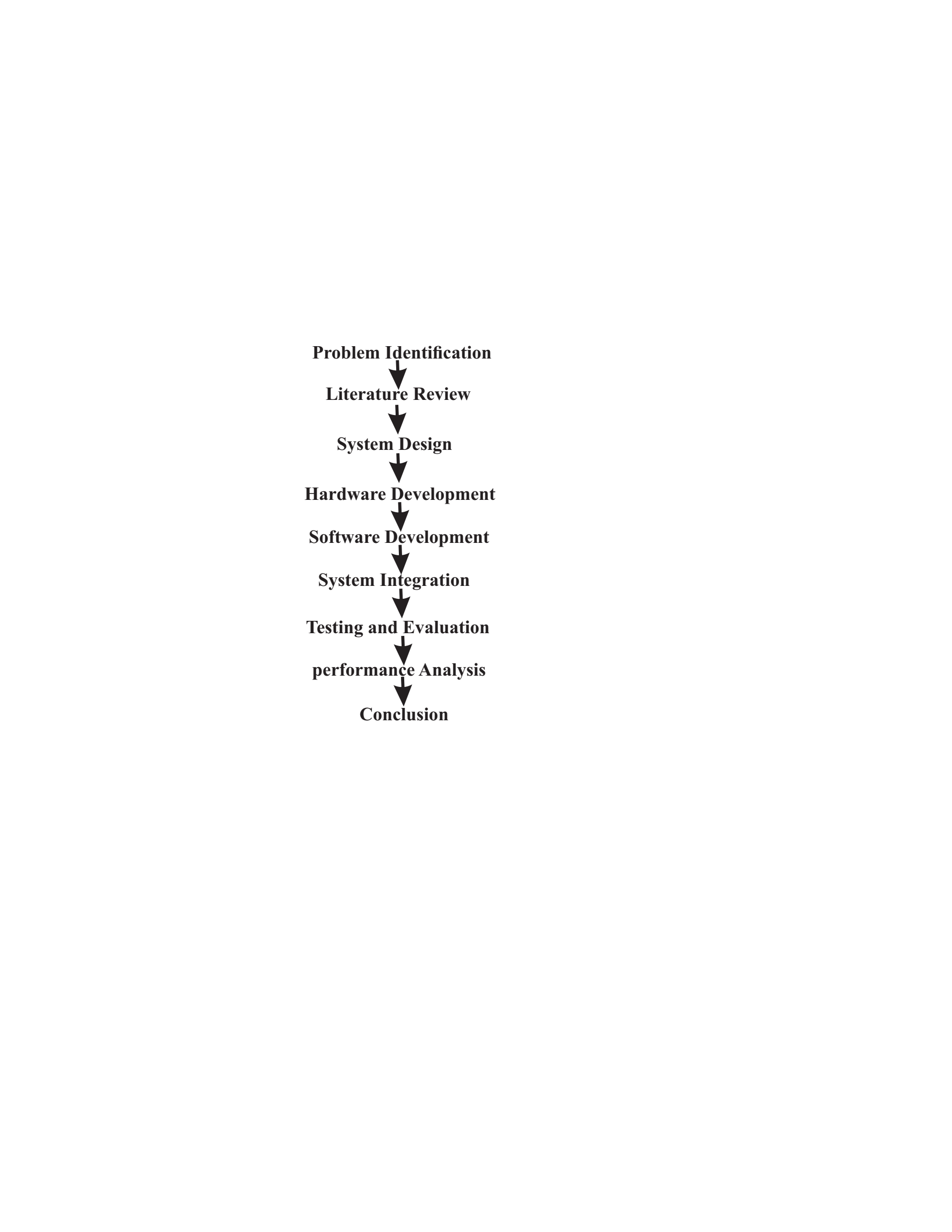
The design methodology adopted in this study follows a structured engineering approach consisting of:
- 1. Requirement analysis
- 2. System architecture design
- 3. Hardware selection
- 4. Software development
- 5. Circuit design
- 6. Prototype construction
- 7. Experimental testing
- 8. Performance evaluation
The design flowchart is therefore represented in Figure 1 having identified some challenges reviewed from literatures which were given some engineering approach by integrating the software developed with the hardware components. The performance of the whole system was evaluated with some physical parameters and the results was recorded.
3.4System architecture
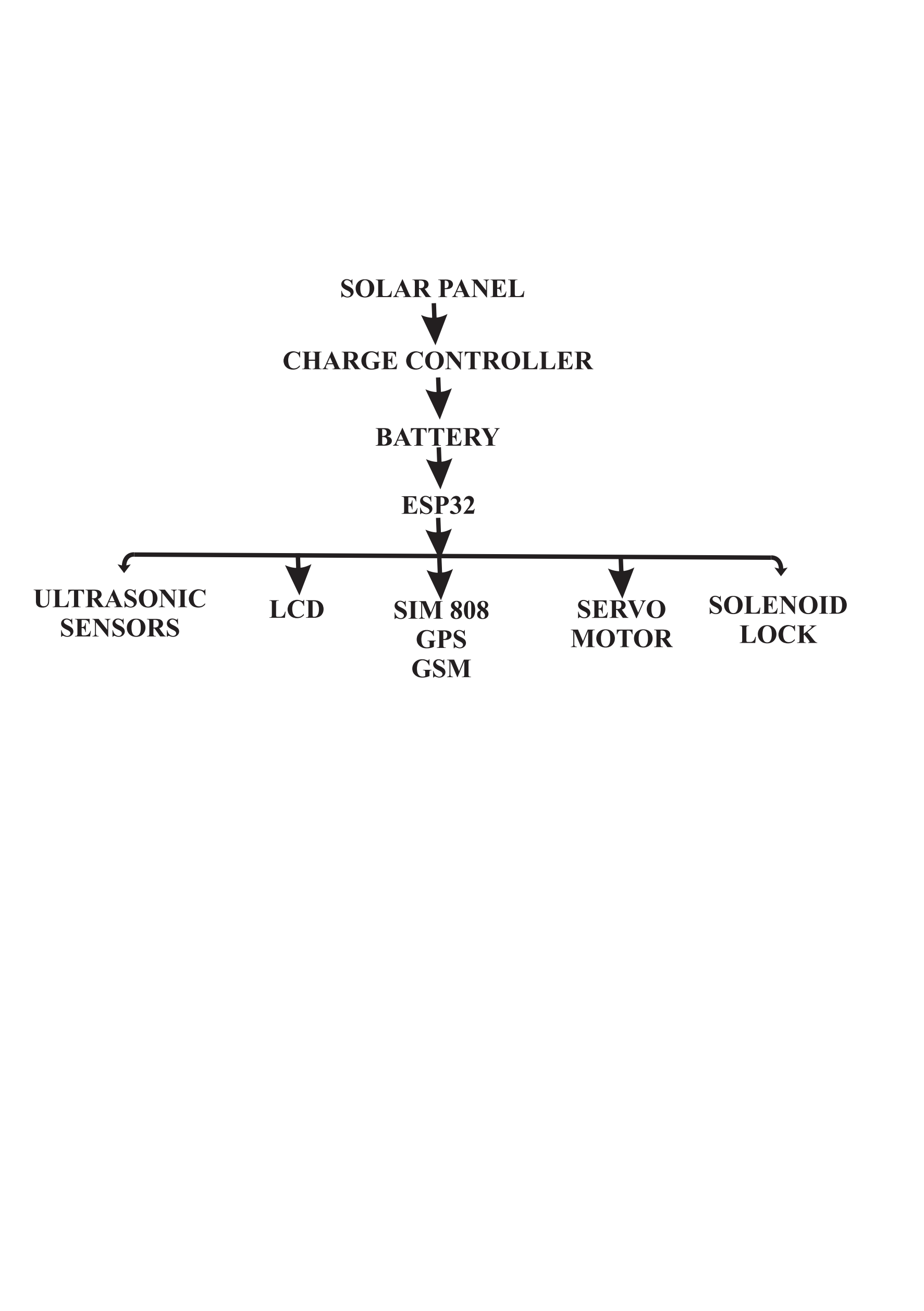
Overall system architecture / Block diagram of the proposed smart dumpster is represented in Figure 2 and it consists of five major subsystems, which are:
- 1. Power Supply Subsystem: Responsible for energy harvesting and storage.
- 2. Sensing Subsystem: Measures waste level and user presence.
- 3. Processing Subsystem: Processes all sensor information.
- 4. Communication Subsystem: Provides GPS tracking and GSM communication.
- 5. Actuation Subsystem: Controls lid opening and security locking.
3.5Engineering design calculations
3.5.1Waste-level calculation
The percentage fill level is determined by equation (1):
where is the bin height and is the measured distance.
3.5.2Distance measurement equation
The ultrasonic sensor operates based on equation (2):
where is the distance, is the speed of sound and is the echo time.
3.5.3Daily energy requirement
The energy requirements (in Watt-hours) are calculated for each operational state and add together using equation (3):
where is the energy (Wh), is the power (W) and is the time (h) [31].
3.5.4Solar panel sizing
Required solar power is given by equation (4):
where is the daily energy (Wh) and is the number of peak sun hours per day. Applying a 30% design margin, the required solar panel is 40 W.
3.5.5Battery capacity calculation
When analyzing energy storage systems (such as supercapacitors or battery banks), equation (5) expresses the rated capacitance or energy efficiency of a device.
where is the capacitance (F), is the stored energy (J), is the voltage (V) and is the system efficiency (as a decimal, e.g. 0.85 for 85%).
3.5.6Software design
The software was developed using the Arduino IDE.
Functions implemented include:
- Waste monitoring
- User detection
- Automatic lid control
- GPS acquisition
- SMS transmission
- LCD updating
3.6Operational flowchart
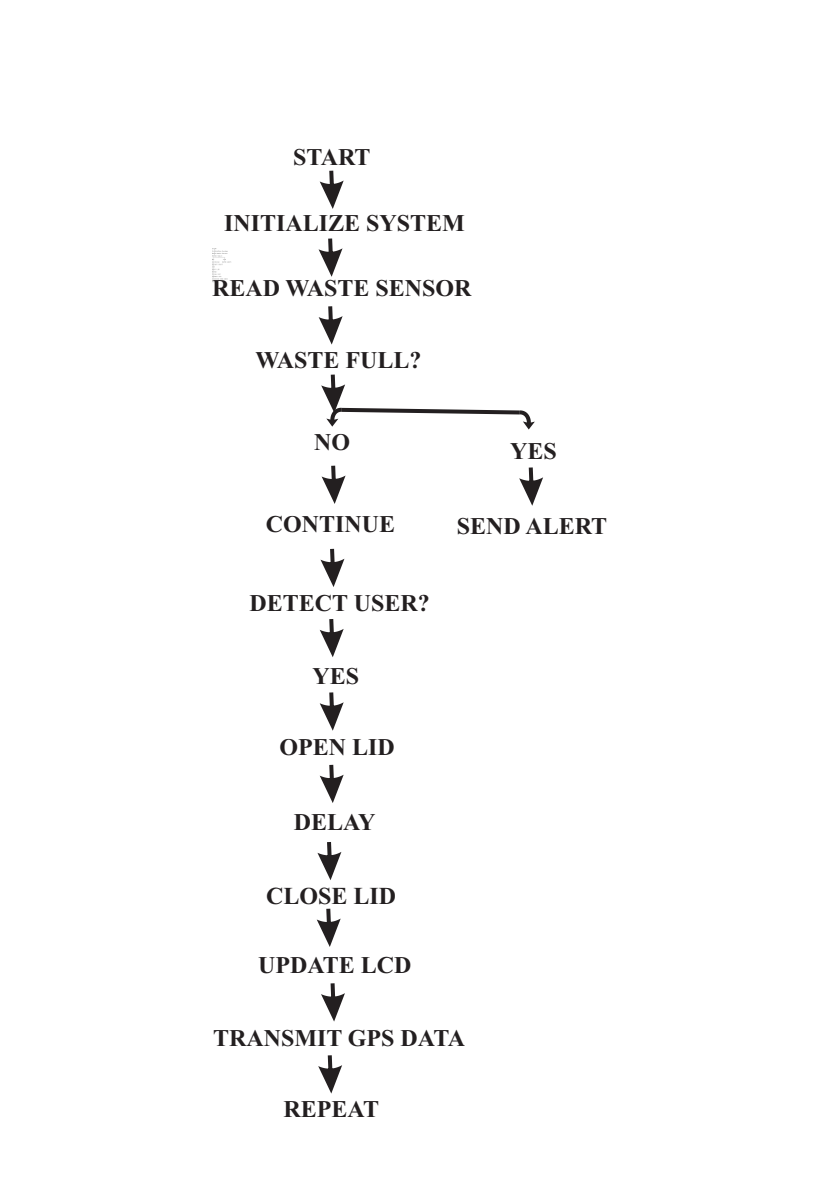
Figure 3 shows the operational flowchart of the system from the starting point until it opens and closes the lid for the user to drop refuses into the bin. It therefore detects whether the bin is full or not.
3.7Circuit implementation
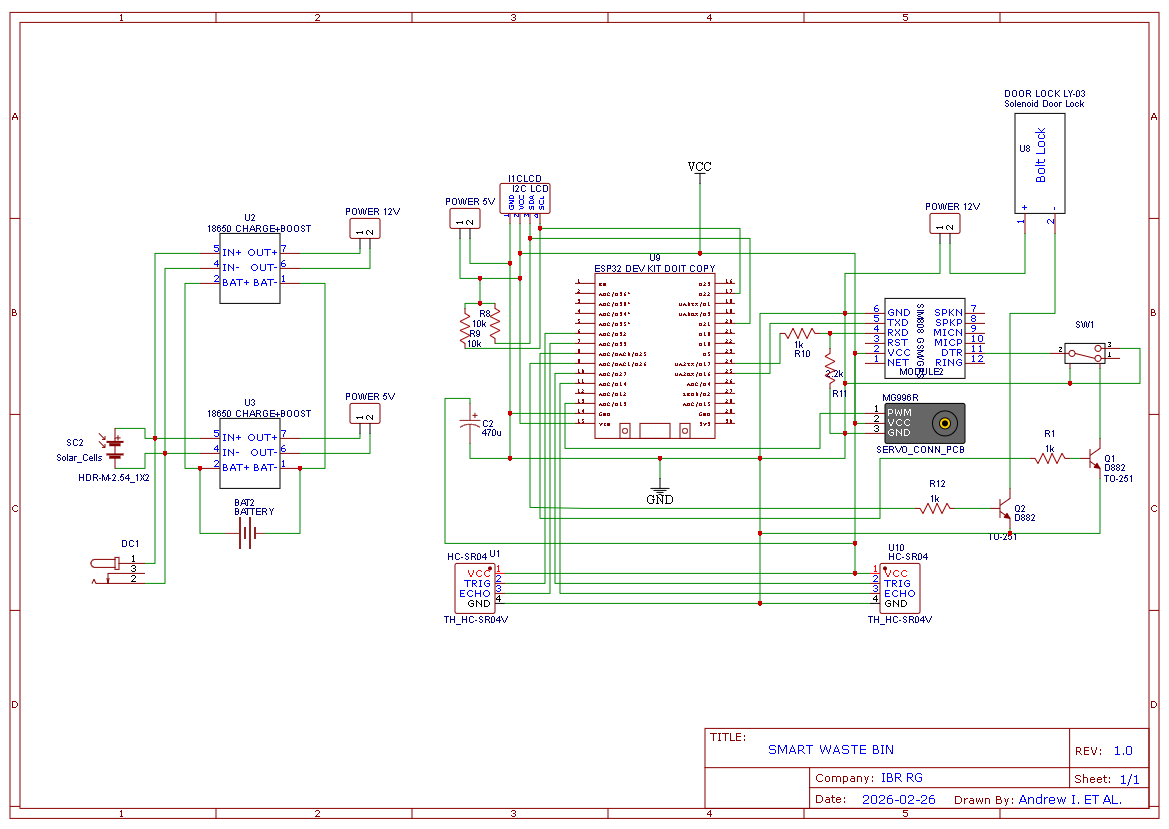
The circuit (as shown in Figure 4) was designed around the ESP32 microcontroller. The ultrasonic sensors provide input signals to the ESP32. The ESP32 controls (i) Servo motor (ii) Solenoid lock (iii) LCD display.
The SIM808 communicates with the ESP32 through UART communication. Power is supplied through the regulated solar-battery subsystem.
4System implementation, results and discussion
4.1Overview
The implementation, testing, and performance evaluation of the developed Automatic Solar-Powered Dumpster with GPS Tracking Capability are thereby presented. Figure 5 shows components mounted on the veroboard for the experimental investigations which were conducted to evaluate the effectiveness of the solar power subsystem, waste-level monitoring unit, GPS tracking module, automatic lid mechanism, and overall system reliability.
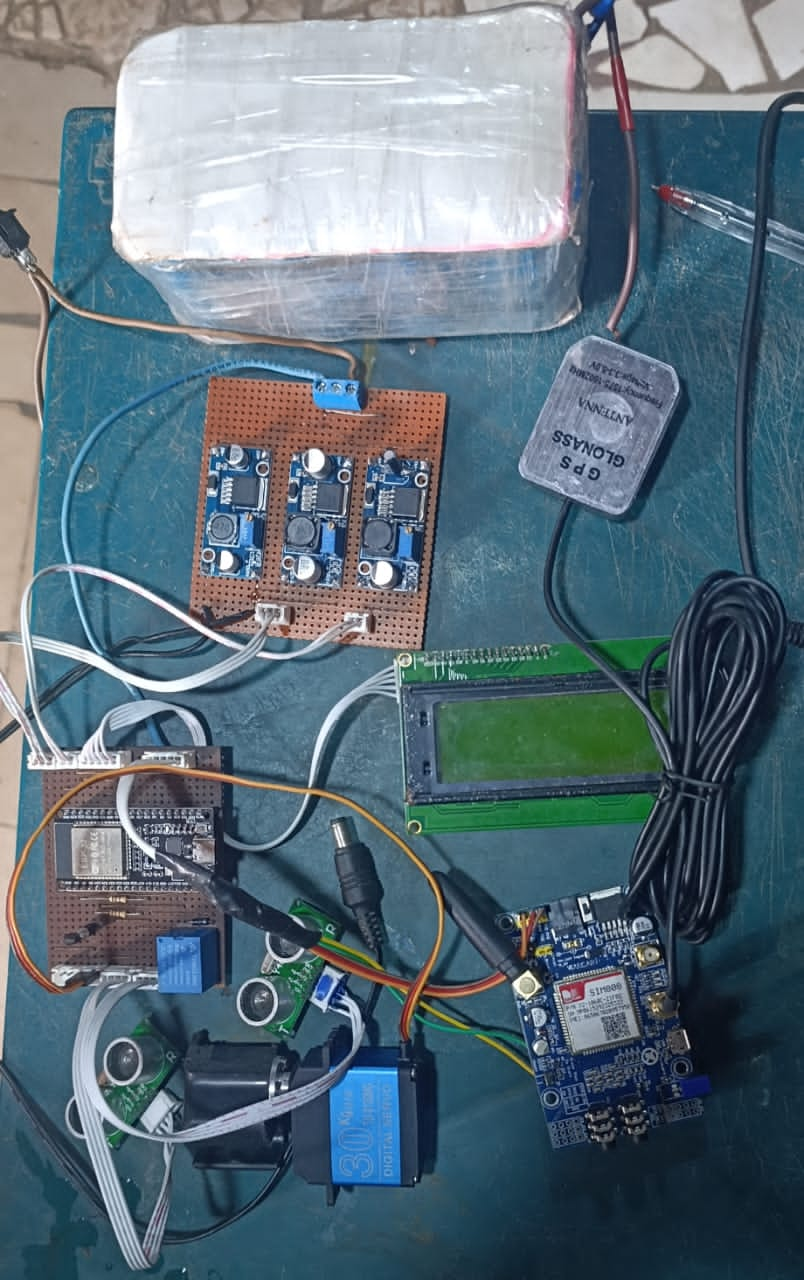
The developed prototype, that was constructed by integrating all hardware modules into a customized dumpster enclosure, was tested under both laboratory and outdoor conditions to validate its functionality and suitability for smart waste management applications.
The experimental setup was designed to evaluate: Waste-level measurement accuracy, Solar energy generation performance, Battery backup capability, GPS positioning accuracy, Automatic lid response time and GSM communication reliability.
4.2Experimental results
4.2.1Waste-level monitoring performance
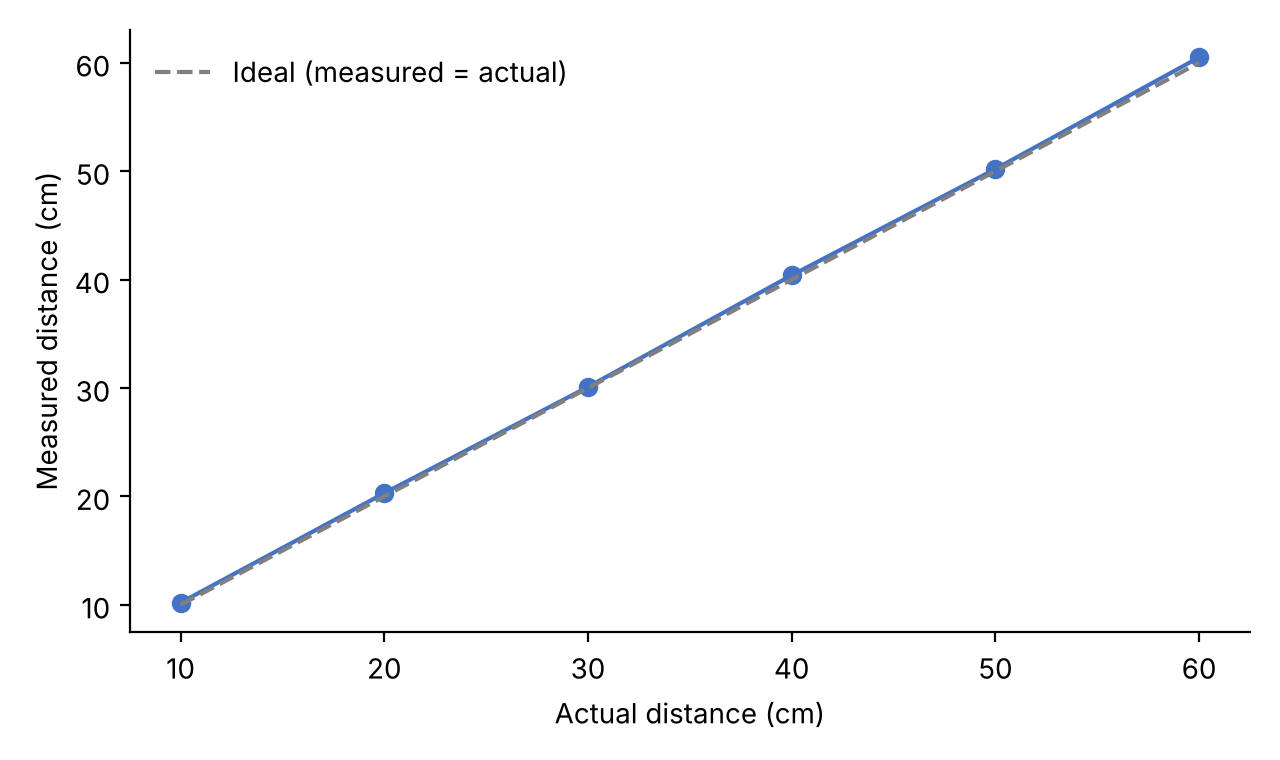
The waste-level monitoring system was evaluated using known reference distances. Table 2 shows that the measured values closely related to the actual values. This sensor responses indicate very high sensor accuracy with average error of 0.28 cm of the measured distance above the actual distance (see Table 3). The actual distance versus the measured distance is represented in Figure 6
| Actual Distance (cm) | Measured Distance (cm) | Error (cm) |
|---|---|---|
| 10 | 10.2 | 0.2 |
| 20 | 20.3 | 0.3 |
| 30 | 30.1 | 0.1 |
| 40 | 40.4 | 0.4 |
| 50 | 50.2 | 0.2 |
| 60 | 60.5 | 0.5 |
4.2.2Sensor accuracy analysis
According to [32]–[34] the accuracy of the HC-SR04 ultrasonic sensor was evaluated by comparing measured distances with actual distances obtained using a calibrated measuring tape. Sensor accuracy was calculated using equation (6) and average error equals 0.28 cm.
Using the experimental data, the average accuracy is 99.1%.
The results as presented in the Tables 2 and 3 indicate excellent performance of the HC-SR04 sensor for waste-level monitoring. The response was represented in Figure 6.
| Parameter | Value |
|---|---|
| Average Error | 0.28 cm |
| Accuracy | 99.1% |
| Repeatability | 98.8% |
4.2.3Solar energy performance
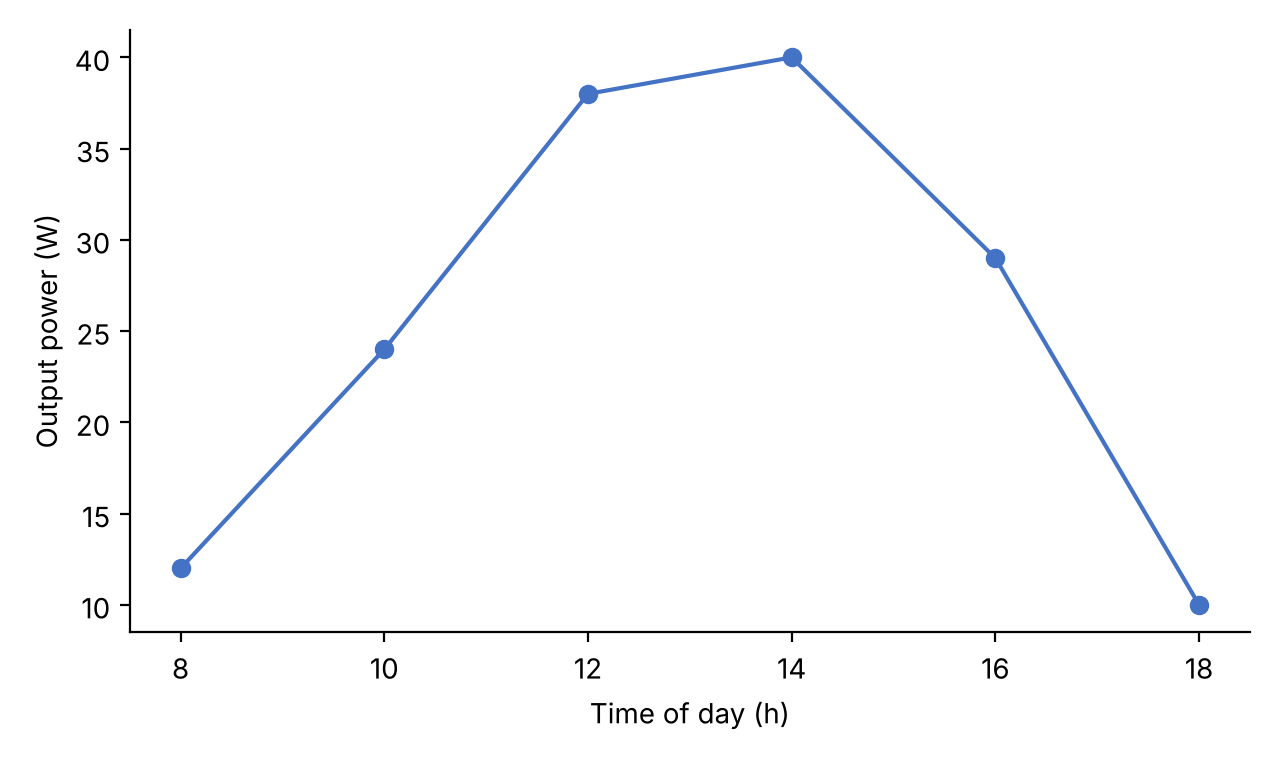
The solar subsystem was tested over a typical sunny day. The output power in watt was recorded in Table 4 and represented in Figure 7 based on a particular period. Peak output occurred between 12:00 and 14:00 hours.
| Time | Output Power (w) |
|---|---|
| 08:00 | 12 |
| 10:00 | 24 |
| 12:00 | 38 |
| 14:00 | 40 |
| 16:00 | 29 |
| 18:00 | 10 |
4.2.4Battery performance evaluation
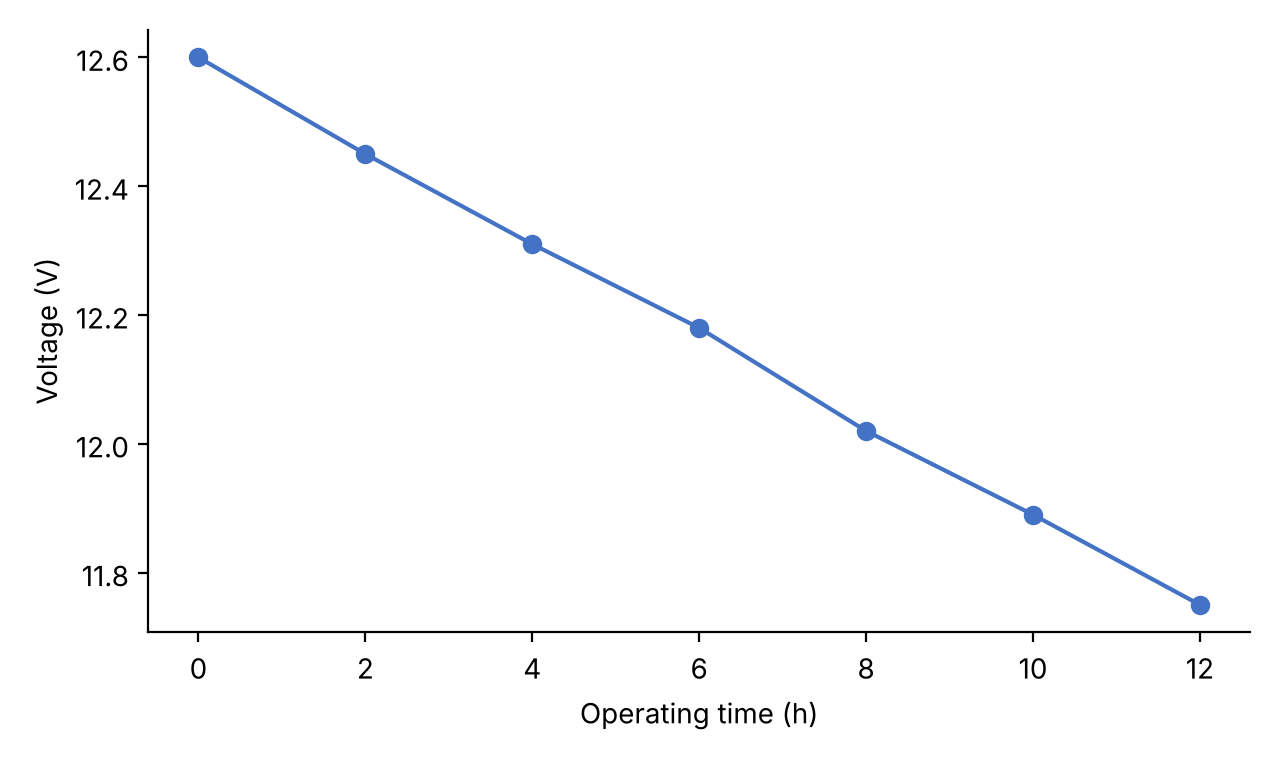
Battery discharge tests were conducted under continuous operation. This time frame was considered both day and night (that is, for 12 hours) continuously. The results of the continuous operation are recorded in the Table 5. The response as indicates in Figure 8 shown that the battery successfully powered the system throughout the testing period.
| Time (h) | Voltage (V) |
|---|---|
| 0 | 12.60 |
| 2 | 12.45 |
| 4 | 12.31 |
| 6 | 12.18 |
| 8 | 12.02 |
| 10 | 11.89 |
| 12 | 11.75 |
4.2.5GPS tracking performance
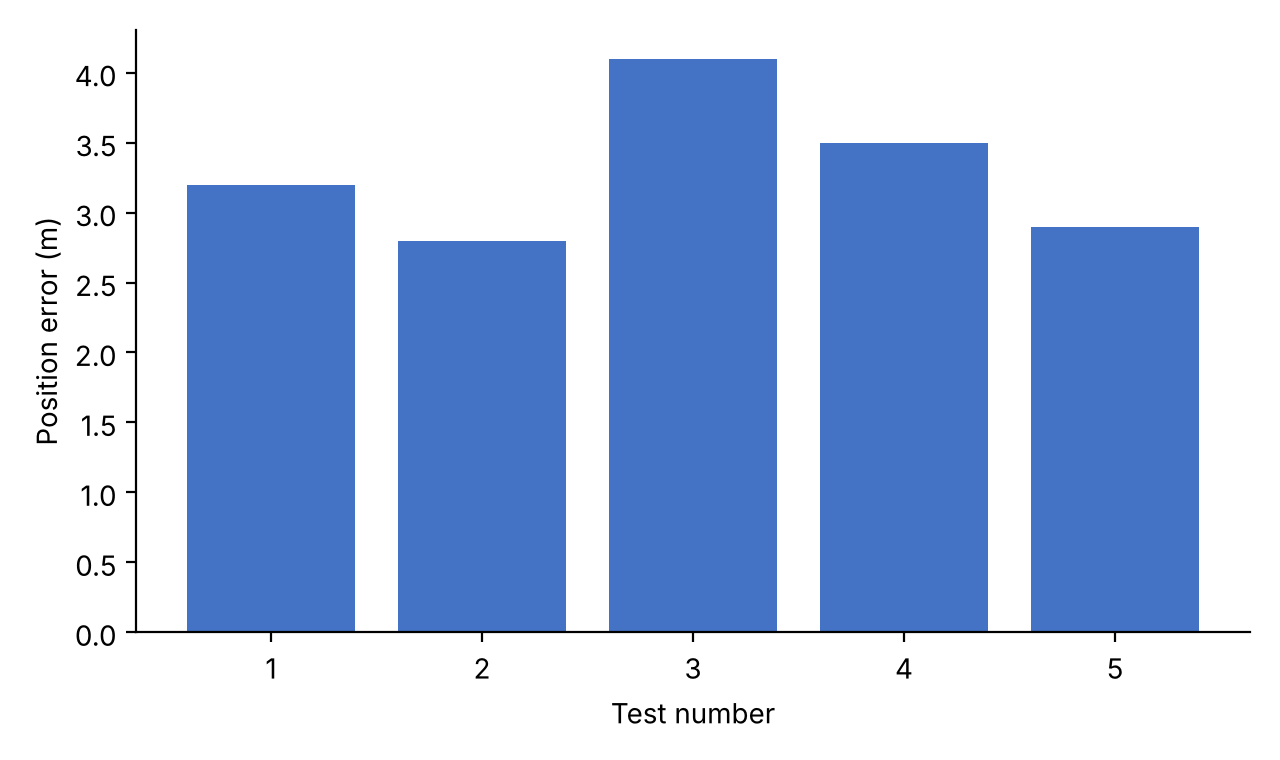
GPS accuracy was evaluated by comparing measured coordinates against known reference coordinates. The SIM808 module achieved acceptable positioning accuracy for waste collection applications. Table 6 shown GPS Error Analysis and Figure 9 represents the GPS position error.
| Test No. | Position Error (m) |
|---|---|
| 1 | 3.2 |
| 2 | 2.8 |
| 3 | 4.1 |
| 4 | 3.5 |
| 5 | 2.9 |
Note: Average error = 3.3 m.
4.2.6Automatic lid response performance
The automatic lid operation was tested over multiple trials. The servo motor demonstrated rapid and consistent operation. The response time per trial is recorded in Table 7 which gives average response at 0.81 s.
| Trial | Response Time (s) |
|---|---|
| 1 | 0.82 |
| 2 | 0.79 |
| 3 | 0.84 |
| 4 | 0.81 |
| 5 | 0.80 |
4.2.7GSM communication performance
SMS notifications were transmitted whenever the dumpster reached 80% capacity. The GSM subsystem reliably transmitted alerts to designated five (5) users at different locations. For each test (as shown in Table 8), SMS was generated by the bin and received on the pre-programmed phone numbers. Transmission Success Rate equals one hundred percent (100%).
| Test | SMS Sent | SMS Received |
|---|---|---|
| 1 | Yes | Yes |
| 2 | Yes | Yes |
| 3 | Yes | Yes |
| 4 | Yes | Yes |
| 5 | Yes | Yes |
4.2.8Overall system performance
The summary of the Performance Evaluation of the automatic solar-powered dumpster is listed in Table 9. It shows the result of each parameter taken at a glance which led to an exemplary output performance of the system.
| Parameter | Result |
|---|---|
| Sensor Accuracy | 99.1% |
| Average Sensor Error | 0.28 cm |
| GPS Accuracy | 3.3 m |
| Solar Panel Output | 40 W |
| Battery Backup | 15.6 h |
| Servo Response Time | 0.81 s |
| GSM Success Rate | 100% |
4.3Discussion of results
The experimental results demonstrate that the developed automatic solar-powered dumpster successfully achieved all design objectives with standard performance evaluation.
Figure 6 shows the relationship between the actual and the measured distance in order to determine the average error of the ultrasonic sensor to be 0.98 cm. The sensor accuracy analysis showed that the ultrasonic sensing subsystem achieved an accuracy of approximately 99% which indicating reliable waste-level monitoring capability. The GPS subsystem maintained an average positioning error of approximately 3.3m, which is suitable for municipal waste collection tracking applications.
Solar Power Generation Profile represented in Figure 7 displayed that the output power is at its peak around 38 W and 40 W between the hours of 12:00 and 14:00 which gives the effective performance of the solar energy subsystem that generates sufficient energy to sustain autonomous operation, while the battery provided backup power during periods of low solar irradiance. The GSM module achieved a transmission success rate of 100%, ensuring dependable communication between the dumpster and waste management personnel.
Also, the automatic lid mechanism responded within an average time of 0.81 seconds, improving user convenience and reducing direct contact with the waste container.
Overall, the prototype demonstrates significant potential for deployment in smart-city environments where efficient, sustainable, and intelligent waste management solutions are required. Table 10 shows the comparative analysis reviewed from some existing literatures which reveals that the prototype system integrates all major functionalities, such as waste monitoring, GPS, Solar power, auto lid, GSM and Security, within a single architecture, making it more suitable for smart-city deployment.
| Author(s) | Waste monitoring | GPS | Solar | Auto lid | GSM | Security |
|---|---|---|---|---|---|---|
| Alfarsi et al. (2023) [35] | ✓ | ✗ | ✗ | ✓ | ✓ | ✗ |
| Faccio et al. (2011) [11] | ✓ | ✓ | ✗ | ✗ | ✗ | ✗ |
| Khan et al. (2022) [28] | ✓ | ✗ | ✗ | ✗ | ✓ | ✗ |
| Kumar and Prakash (2021) [29] | ✓ | ✗ | ✗ | ✓ | ✗ | ✗ |
| Longhi et al. (2012) [12] | ✓ | ✗ | ✗ | ✗ | ✗ | ✗ |
| Olowosebioba et al. (2023) [15] | ✓ | ✗ | ✓ | ✓ | ✗ | ✗ |
| Shyam et al. (2017) [16] | ✓ | ✗ | ✗ | ✗ | ✓ | ✗ |
| Present system | ✓ | ✓ | ✓ | ✓ | ✓ | ✓ |
5Conclusion
In conclusion, a newly designed prototype of an automatic solar-powered dumpster with GPS tracking capability displayed an enhanced and efficient waste management performance for smart-city utilization. The system exhibits and delivered 99% sensor accuracy over 15hrs solar system with GPS/GSM tracking of more than 3.3m. Therefore, all intended reliability functionalities are accurate. The system is recommended for usage by integrating ground station monitoring server that connects many other subsystems.
Acknowledgments
The successful completion of this research work would not have been possible without the support, encouragement, and contributions of several individuals and the Institutional support provided through the Tertiary Education Trust Fund (TETFund) Research Grant.
First and foremost, we sincerely appreciate our dear Rector, Ogun State Institute of Technology (OGITECH), Igbesa, (Dr. Abiodun Babalola Oluseye) for providing the opportunity and necessary Institutional support that enabled us to access the TETFund research grant. We deeply grateful for the confidence reposed in us and for creating an enabling environment for research and academic development.
Our profound appreciation also goes to the TETFund Desk Officer, Mr. Sholotan Kazeem Joshua, for the commitment, diligence, and professional assistance rendered throughout the grant application and processing stages. His careful attention to the documentation and paperwork greatly facilitated the successful processing and access to the research grant. we sincerely appreciate his invaluable contribution.
We equally express our sincere gratitude to Dr. Hakeem Bello for his valuable assistance in conducting the plagiarism/similarity index assessment of the journal article developed from the findings of this research. His professional support and attention to academic integrity contributed significantly to ensuring that the article met the required standards of scholarly publication.
Finally, we acknowledged the Tertiary Education Trust Fund (TETFund) for sponsoring this research work. The financial support provided through the grant made it possible to undertake and successfully complete the research. We sincerely grateful for this investment in research, knowledge development, and academic advancement.
To everyone who contributed directly or indirectly to the success of this research work, we express our sincere appreciation. May your continued efforts in promoting research and academic excellence be richly rewarded.
Conflict of interest
The authors declare that they have no known competing financial interests or personal relationships that could have appeared to influence the work reported in this paper.
References
- [1]Akyildiz IF, Su W, Sankarasubramaniam Y, Cayirci E. Wireless sensor networks: A survey. Computer Networks. 2002;38(4):393–422.
- [2]Rashid B, Rehmani MH. Applications of wireless sensor networks for urban areas: A survey. Journal of Network and Computer Applications. 2016;60:192–219.
- [3]Atzori L, Iera A, Morabito G. The Internet of Things: A survey. Computer Networks. 2010;54(15):2787–2805.
- [4]Gubbi J, Buyya R, Marusic S, Palaniswami M. Internet of Things (IoT): A vision, architectural elements, and future directions. Future Generation Computer Systems. 2013;29(7):1645–1660.
- [5]Borgia E. The Internet of Things vision: Key features, applications and open issues. Computer Communications. 2014;54:1–31.
- [6]Zanella A, Bui N, Castellani A, Vangelista L, Zorzi M. Internet of Things for smart cities. IEEE Internet of Things Journal. 2014;1(1):22–32.
- [7]Bibri SE, Krogstie J. Smart sustainable cities of the future: An extensive interdisciplinary literature review. Sustainable Cities and Society. 2017;31:183–212.
- [8]Kaza S, Yao LC, Bhada-Tata P, Van Woerden F. What a waste 2.0: A global snapshot of solid waste management to 2050. Washington, DC: World Bank; 2018.
- [9]Ferronato N, Torretta V. Waste mismanagement in developing countries: A review of global issues. International Journal of Environmental Research and Public Health. 2019;16(6):1060.
- [10]United Nations Environment Programme. Global waste management outlook 2024. Nairobi: United Nations Environment Programme; 2024.
- [11]Faccio M, Persona A, Zanin G. Waste collection multi-objective model with real-time traceability data. Waste Management. 2011;31(12):2391–2405.
- [12]Longhi S, Marzioni D, Alidori E, Di Buò G, Prist M, et al. Solid waste management architecture using wireless sensor network technology. In: Proceedings of the 5th International Conference on New Technologies, Mobility and Security; Paris, France. IEEE; 2012. p. 1–5.
- [13]Hoornweg D, Bhada-Tata P. What a waste: A global review of solid waste management. Washington, DC: World Bank; 2012.
- [14]Chinaza GA, Hannington T, Chibueze GA, Igwe SV, Amagwula OI. Industrial waste management, treatment, and health issues: waste water, solid, and electronic wastes. European Academic Research. 2020;8(2):1081–1119.
- [15]Olowosebioba AA, Folorunsho AD, Akindele BA, Akingbade FS, Andrew IO, et al. Design and construction of solar-powered smart garbage disposal unit. Annals of Civil and Environmental Engineering. 2023;7:024–029.
- [16]Shyam GK, Manvi SS, Bharti P. Smart waste management using Internet of Things. In: Proceedings of the 2017 2nd International Conference on Computing and Communications Technologies; Chennai, India. IEEE; 2017. p. 199–203.
- [17][Authors not supplied]. Artificial intelligence and IoT driven system architecture for municipality waste management in smart cities: A review. Measurement: Sensors. 2024;36:101395.
- [18]Ibitoye SE, Ball AK, Rodriguez RV, Olayemi OA, Esteva P, et al. Smart waste, smarter world: Exploring waste types, trends, and tech-driven valorization through artificial intelligence, Internet of Things, and blockchain. Sustainable Development. 2026;34(S2):132–153.
- [19]Qiu Z, Lu Y, Qiu Z. Review of ultrasonic ranging methods and their current challenges. Micromachines. 2022;13(4):520.
- [20]Kaplan ED, Hegarty CJ, editors. Understanding GPS/GNSS: Principles and applications. 3rd ed. Norwood, MA: Artech House; 2017.
- [21]Håkansson M, Jensen ABO, Horemuz M, Hedling G. Review of code and phase biases in multi-GNSS positioning. GPS Solutions. 2017;21:849–860.
- [22]Shockley W, Queisser HJ. Detailed balance limit of efficiency of p-n junction solar cells. Journal of Applied Physics. 1961;32(3):510–519.
- [23]Parida B, Iniyan S, Goic R. A review of solar photovoltaic technologies. Renewable and Sustainable Energy Reviews. 2011;15(3):1625–1636.
- [24]Lu L, Han X, Li J, Hua J, Ouyang M. A review on the key issues for lithium-ion battery management in electric vehicles. Journal of Power Sources. 2013;226:272–288.
- [25]Folianto F, Low YS, Yeow WL. Smartbin: Smart waste management system. In: Proceedings of the 2015 International Symposium on Integrated Network Management and Service Management; Auckland, New Zealand. IEEE; 2015. p. 623–626.
- [26]Sosunova I, Porras J. IoT-enabled smart waste management systems for smart cities: A systematic review. IEEE Access. 2022;10:73326–73363.
- [27]Anagnostopoulos T, Kolomvatsos K, Anagnostopoulos C, Zaslavsky A, Hadjiefthymiades S. Assessing dynamic models for high-priority waste collection in smart cities. Journal of Systems and Software. 2017;110:178–192.
- [28]Khan MA, Rehman A, Hussain S. Internet of Things-based smart waste management systems: A review. Sustainable Computing: Informatics and Systems. 2022;35:100721.
- [29]Kumar S, Prakash R. Automated smart waste bin using ultrasonic sensing and servo control. International Journal of Engineering Research and Technology. 2021;10(5):211–217.
- [30]Mekhilef S, Saidur R, Safari A. A review on solar energy use in developing countries. Renewable and Sustainable Energy Reviews. 2011;15(6):3272–3285.
- [31]Douglas College. 4.4 Electric power and energy – includes heat energy. In: Douglas College Physics 1207. Vancouver, BC: BCcampus Pressbooks; [date not supplied].
- [32]Elecfreaks. HC-SR04 ultrasonic ranging module datasheet [data sheet]. [date not supplied].
- [33]SparkFun Electronics. HC-SR04 ultrasonic distance sensor product specifications [product page]. 2025.
- [34]Zapata A. Speed radar using HC-SR04 and Arduino: Calibration and data analysis. arXiv preprint. 2025.
- [35]Alfarsi G, Alzaabi A, Alketbi M, Alhammadi A. Smart waste management system using IoT technologies. International Journal of Advanced Computer Science and Applications. 2023;14(2):455–463.