Civil Engineering
Evaluation of Mechanical Performance of High-Strength Recycled Aggregate Concrete Containing Nano-Silica
Department of Civil Engineering, Rivers State University, Port Harcourt, Nigeria
Published October 2026
Abstract
Recycled aggregate concrete (RAC) offers a sustainable route for absorbing construction and demolition waste, but its comparatively weak and porous aggregate structure limits its use in high-strength structural applications. Nano-silica has been reported to narrow this performance gap through pore-filling and pozzolanic action, yet its combined effect with recycled coarse aggregate (RCA) on the mechanical behaviour of high-strength recycled aggregate concrete (HSRAC) has not been fully characterised across a wide range of mix proportions. This study evaluated the compressive strength, flexural strength, split tensile strength, and water absorption of HSRAC produced with recycled coarse aggregate replacement levels of 0–40% and nano-silica dosages of 0–20%, across water-cement ratios of 0.23–0.42. A total of 25 mix combinations, generated using a Taguchi L25 orthogonal array as an experimental design tool, were cast, cured, and tested at 7, 14 and 28 days for compressive strength and at 28 days for the remaining properties, following relevant British and European Standard test methods. Results showed that a combination of 10% nano-silica and 20% RCA at a water-cement ratio of 0.37 produced the highest 28-day compressive strength of 52.9 MPa, a 23.1% increase over the plain control mix, alongside the highest flexural strength of 4.16 MPa. Split tensile strength generally declined with increasing RCA and nano-silica content, falling by up to 19.9% relative to the control, while water absorption increased from a "Good" durability range (3.6–4.6%) in the control mixes to a "Fair" range (5.4–5.9%) at the highest replacement levels. The findings indicate that nano-silica can substantially recover the mechanical performance of RCA-based concrete for compressive and flexural loading, but its benefit is more limited for tensile and durability-related properties, particularly beyond 20% RCA replacement.
Keywords: recycled aggregate concrete; nano-silica; Taguchi; compressive strength
1Introduction
The construction sector is a major consumer of natural resources and a major generator of waste, with global construction and demolition waste (CDW) currently exceeding two billion tons annually and projected to rise sharply in the coming decades [2, 6]. Recycled coarse aggregate (RCA), obtained by crushing waste concrete, offers an attractive means of diverting this waste stream back into productive use and has been associated with substantial reductions in embodied carbon compared with natural aggregate [8]. However, the crushing process leaves old, porous mortar attached to the aggregate surface and introduces micro-cracks, so recycled aggregate concrete (RAC) typically develops multiple interfacial transition zones that lower its compressive strength, stiffness, and durability relative to natural aggregate concrete [5, 7]. This weakness becomes especially limiting for high-strength concrete, conventionally defined as concrete with a 28-day compressive strength above 50 MPa, where RCA has traditionally been considered unsuitable.
Nano-silica has emerged as an effective modifier for closing this performance gap. Its extremely fine particle size allows it to fill capillary pores in the cement paste while also reacting pozzolanically with calcium hydroxide to generate additional calcium-silicate-hydrate (C-S-H) gel, densifying the microstructure and strengthening the interfacial transition zone [1, 3]. Reported improvements include increases in fracture energy and fracture toughness of RAC of up to 29–32% relative to unmodified RAC [1], together with reduced chloride penetration and capillary absorption [4]. Even so, most existing studies have examined nano-silica in RAC of conventional strength grade, and comparatively few have systematically varied nano-silica dosage, RCA replacement level, and water-cement ratio together to characterise the resulting mechanical behaviour of high-strength recycled aggregate concrete (HSRAC).
This study addresses that gap by experimentally evaluating the compressive strength, flexural strength, split tensile strength, and water absorption of HSRAC produced with nano-silica and recycled coarse aggregate across a wide combination of mix proportions. A Taguchi L25 orthogonal array was used purely as an efficient experimental design tool to generate twenty-five representative mix combinations spanning water-cement ratios of 0.23–0.42, RCA replacement levels of 0–40%, and nano-silica dosages of 0–20%. The specific objectives of this study were to: (i) quantify the compressive strength development of HSRAC at 7, 14 and 28 days across the selected mix combinations; (ii) determine the influence of RCA replacement and nano-silica dosage on flexural strength; (iii) evaluate their combined influence on split tensile strength; and (iv) assess the resulting water absorption as an indicator of durability.
2Materials and methods
2.1Materials
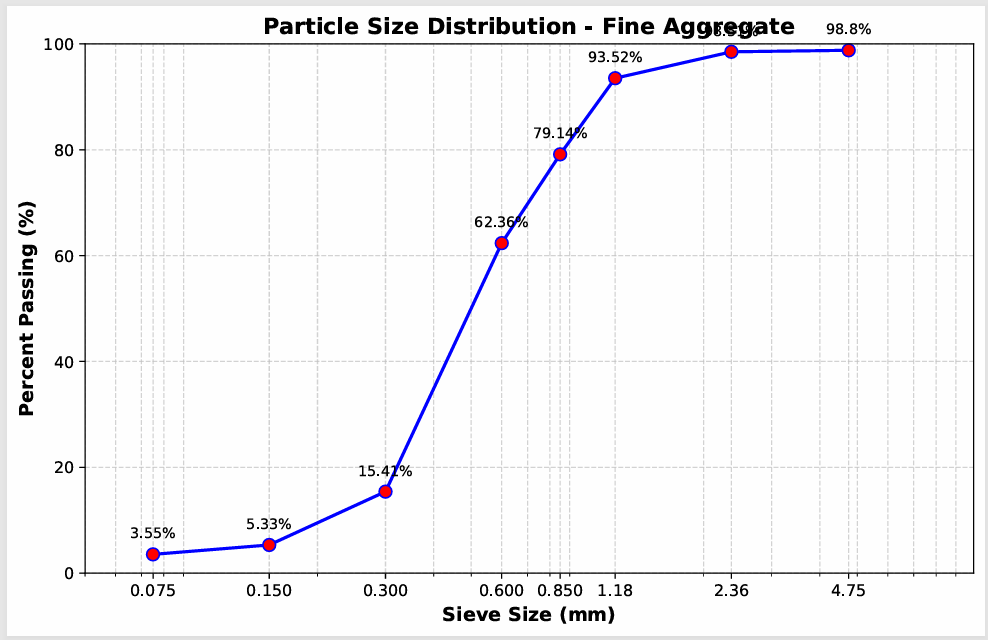
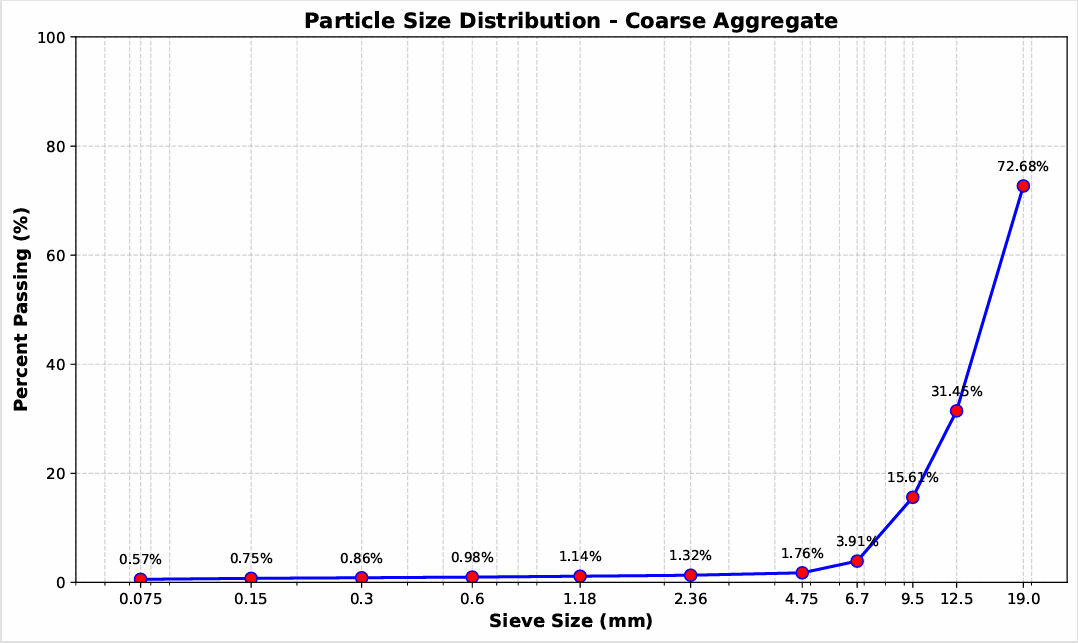
This study utilizes Ordinary Portland cement conforming to BS EN 197-1:2011, with a specific gravity of 2.65. River sand was used as fine aggregate with particle size distribution satisfying BS EN 12620:2002. Natural coarse aggregate with a maximum nominal size of 20 mm and RCA obtained from crushing precast concrete elements with a maximum nominal size of 20 mm were used. Commercially available powdered nano-silica was used and superplasticizer was employed to maintain workability across all mixes. The particle size distributions of the fine and coarse aggregates are shown in Figure 1 and Figure 2.
2.2Mix design using a Taguchi L25(56) orthogonal array
The Taguchi method was employed to design the experimental program. Six control factors were identified: water-cement ratio, RCA replacement percentage, maximum cement content, fine aggregate content, nano-silica percentage, and coarse aggregate content. Each factor was assigned five levels as shown in Table 1.
| S/N | Parameter | Level 1 | Level 2 | Level 3 | Level 4 | Level 5 |
|---|---|---|---|---|---|---|
| 1 | Water–cement ratio | 0.23 | 0.28 | 0.32 | 0.37 | 0.42 |
| 2 | RCA replacement (%) | 0 | 10 | 20 | 30 | 40 |
| 3 | Maximum cement content (kg/m3) | 608.7 | 500.0 | 437.5 | 378.4 | 333.3 |
| 4 | Fine aggregate (kg/m3) | 144.3 | 408.0 | 417.3 | 423.3 | 415.5 |
| 5 | Nano-silica replacement (%) | 0 | 5 | 10 | 15 | 20 |
| 6 | Coarse aggregate (kg/m3) | 1200 | 1250 | 1300 | 1350 | 1400 |
The total degrees of freedom required was calculated as 6(5 − 1) = 24, necessitating a minimum of 25 experiments. An L25(56) orthogonal array was selected, resulting in 25 unique mix combinations. For each mix, 100 mm cube specimens were cast and tested at 7, 14, and 28 days, 100 mm diameter × 200 mm high cylinders were cast for split tensile strength and water absorption testing at 28 days, and 100 × 100 × 500 mm prisms were cast for flexural strength testing at 28 days. All specimens were demoulded after 24 hours and water-cured until the respective testing ages, giving a total of 150 specimens across the four test types.
2.3Test methods
Compressive strength was determined in accordance with BS EN 12390-1 as:
where P is the failure load and A is the cross-sectional area of the cube.
Flexural strength (modulus of rupture) was determined by the third-point loading method in accordance with BS EN 12390-5:2019 as:
where P is the failure load, a is the distance between the load point and the nearest support, and b and d are the width and depth of the prism.
Split tensile strength was determined in accordance with BS EN 12390-6:2023 as:
where P is the failure load, d is the cylinder diameter and L is the cylinder length.
Water absorption was determined in accordance with BS 1881-122, using oven-dried specimens immersed in water for 24 hours:
where WA is the water absorption (%), and Wwet and Wdry are the saturated and oven-dried masses.
3Results and discussion
3.1Compressive strength
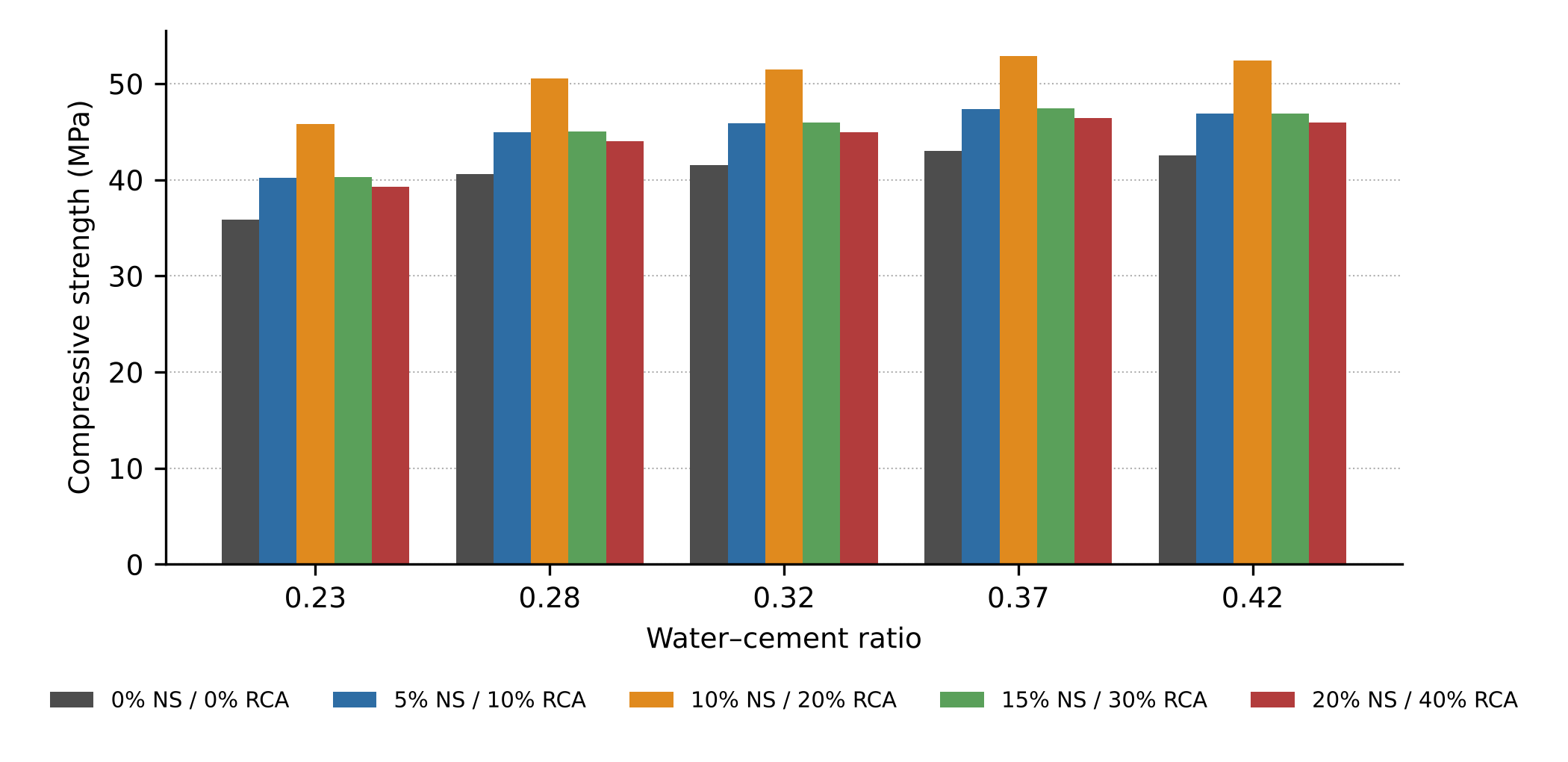
Compressive strength tests were conducted in accordance with BS EN 12390-1 using 100 × 100 × 100 mm cube specimens. Testing was performed using a universal testing machine at 7, 14, and 28 days of curing. The results at 7, 14 and 28 days are shown in Figure 3, Figure 4 and Figure 5.
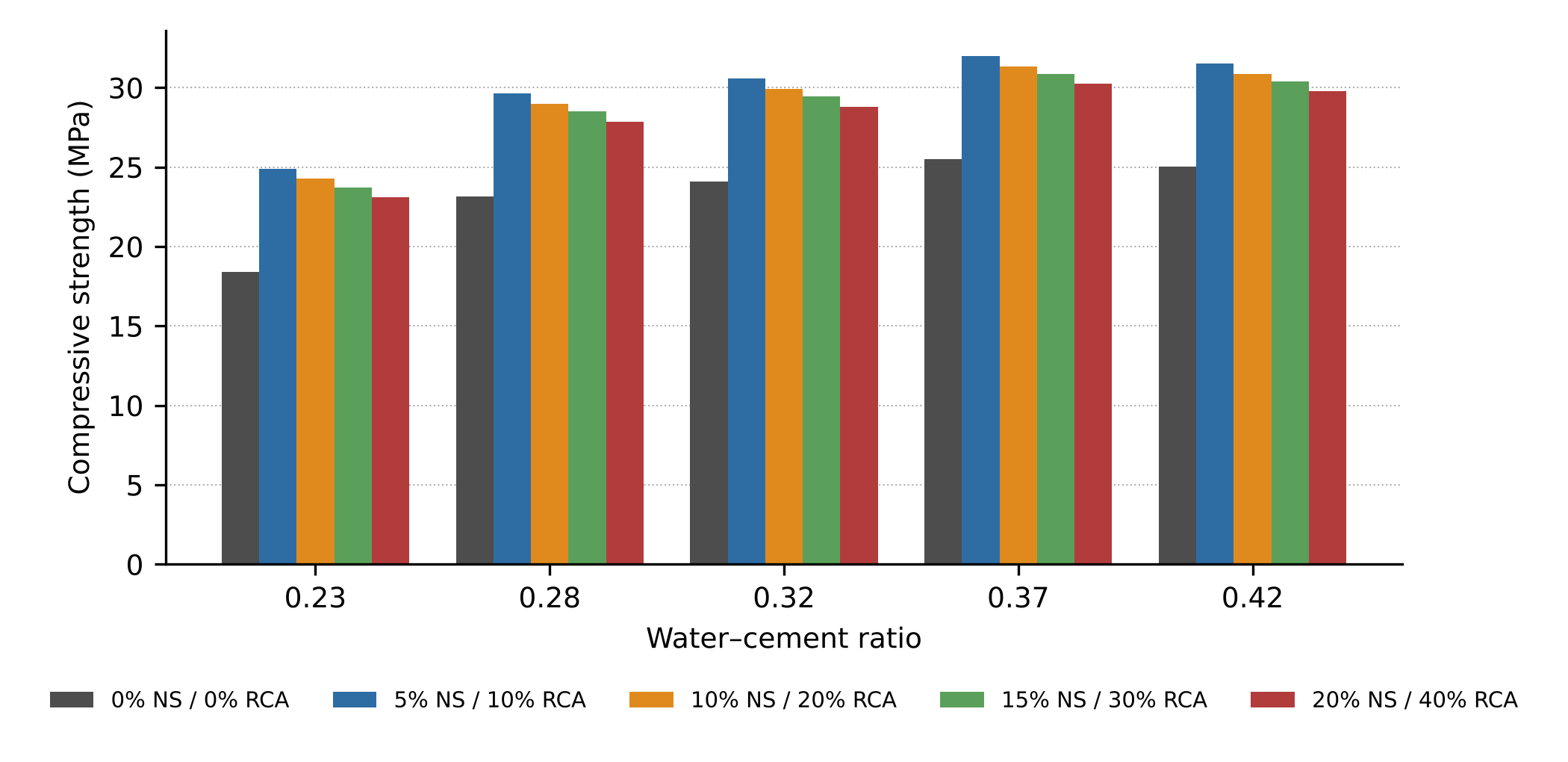
At 7 days, the highest compressive strength was achieved with the combination of 5% nano-silica and 10% RCA at a w/c ratio of 0.37. This formulation produced a mean strength of approximately 32.0 MPa, representing a 25.5% increase over the control mix at the same age. The early-age strength enhancement can be attributed to the nucleation effect of nano-silica particles, which provide additional surfaces for the precipitation of calcium silicate hydrate (C-S-H) gel, accelerating the early stages of cement hydration.
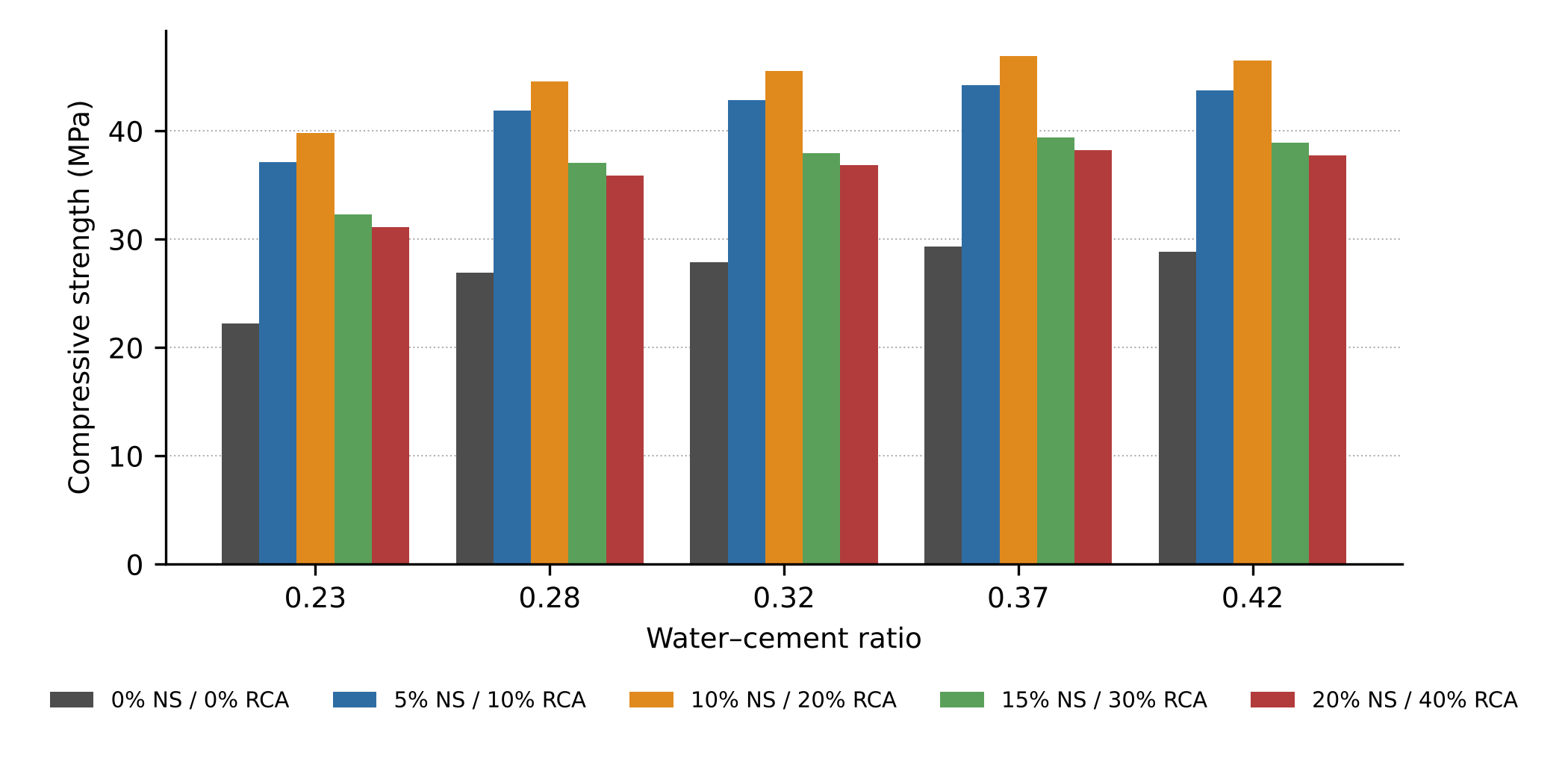
At 14 days, the optimal combination shifted to 10% nano-silica with 20% RCA at the same 0.37 w/c ratio. This mix achieved a mean strength of approximately 46.9 MPa, corresponding to a remarkable 60.1% increase compared to the control mix at 14 days. This substantial improvement demonstrates the progressive activation of the pozzolanic reaction of nano-silica, which consumes calcium hydroxide (CH) produced during cement hydration and generates additional C-S-H gel. By 14 days, this secondary reaction had contributed significantly to matrix densification and ITZ strengthening, overcoming the inherent weaknesses introduced by the 20% RCA content.
3.2Flexural strength
Flexural strength, also known as the modulus of rupture, measures the tensile strength of concrete in bending. The flexural strength results obtained from prismatic beam specimens tested at 28 days in accordance with BS EN 12390-5:2019 are shown in Figure 6.
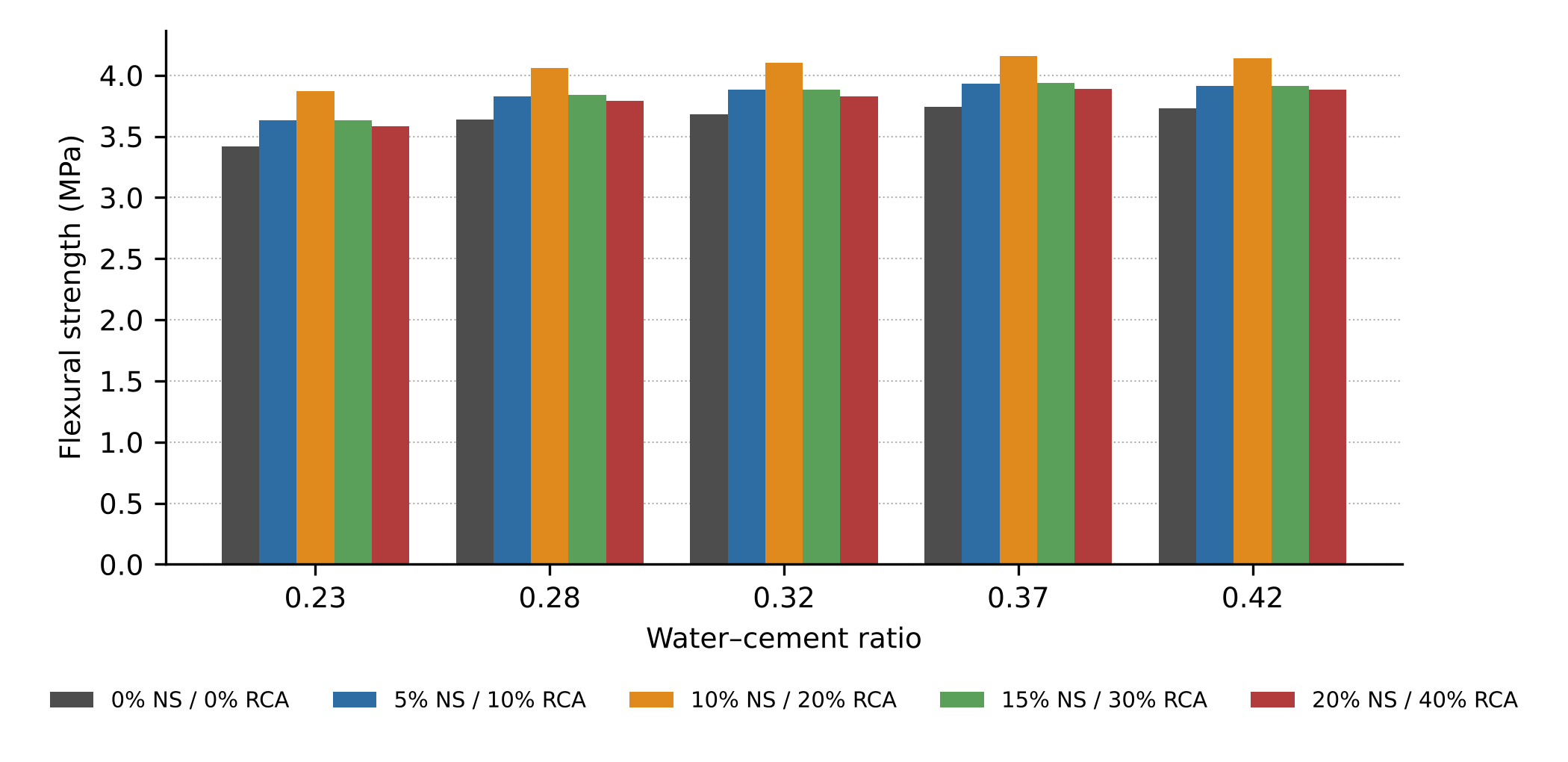
As Figure 6 shows, the control mixes (without NS or RCA) showed flexural strengths ranging from 3.42 MPa (w/c = 0.23) to 3.74 MPa (w/c = 0.37). The highest control flexural strength (3.74 MPa) occurred at w/c = 0.37, while the lowest (3.42 MPa) occurred at the lowest w/c (0.23). This suggests that very low water-cement ratios may cause brittleness or reduced workability, which can affect the flexural performance.
When NS and RCA were introduced, all mixes showed an increase in flexural strength at the 5% NS / 10% RCA level, with further increases at the 10% NS / 20% RCA level. Beyond that, at 15% NS / 30% RCA and 20% NS / 40% RCA, the flexural strength decreased but remained above the control values for most mixes. The chart illustrates that the highest flexural strengths occur at w/c = 0.37 (4.16 MPa) and 0.42 (4.14 MPa), while the lowest occur at w/c = 0.23 (3.42 MPa). This suggests that flexural strength benefits from a moderately high water-cement ratio, possibly because a slightly more workable mix allows better compaction around the recycled aggregates and ensures uniform distribution of the cement paste.
The optimal combination of nano silica and recycled aggregate replacement level that maximizes the flexural strength is at 10% NS / 20% RCA.
3.3Split tensile strength
The split tensile strength test, performed in accordance with BS EN 12390-6, provides an indirect measure of this property. The results are shown in Figure 7.
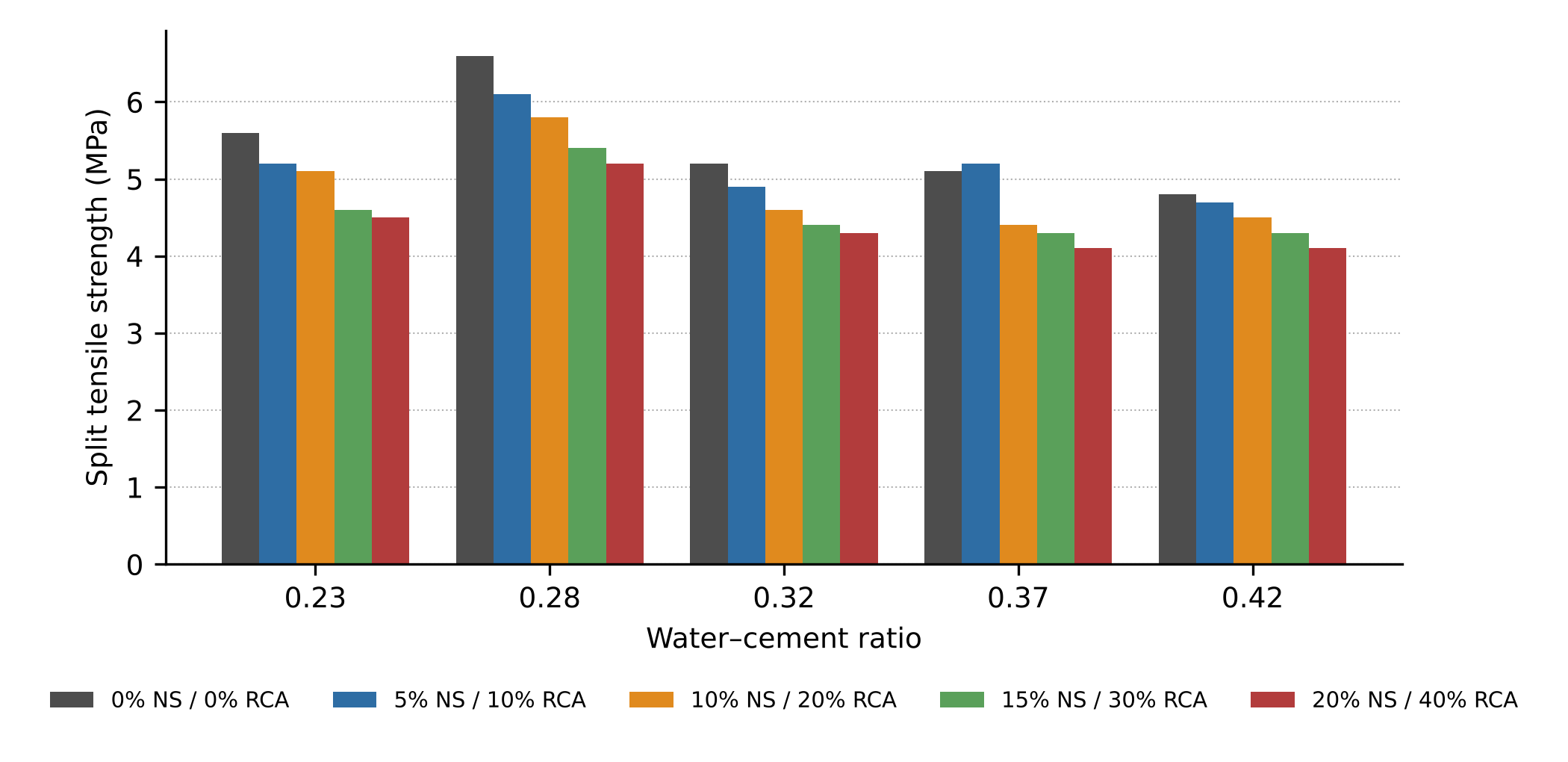
As Figure 7 illustrates, the control mixes (without NS or RCA) exhibited split tensile strengths ranging from 4.8 MPa to 6.6 MPa. This variation confirms that the water-cement ratio and aggregate grading significantly influence tensile capacity. The highest control strength was recorded at w/c = 0.28 (6.6 MPa), suggesting that this water content provides an optimal balance between hydration and workability for tensile performance.
As the percentage of NS and RCA increased, a general decline in tensile strength was observed across nearly all mixes. The only exception was w/c = 0.37 at the 5% NS / 10% RCA level, where a marginal increase of 0.33% was noted. This decline can be attributed to the inherent characteristics of recycled concrete aggregate, which typically includes:
- residual mortar adhering to the original aggregate particles, creating a weaker zone;
- micro-cracks formed during the crushing process; and
- higher porosity compared with natural aggregates, which may increase the likelihood of failure under tensile stress.
Water/cement ratio of 0.37 stands out because it is the only mix where a replacement combination (5% NS / 10% RCA) yielded a slightly higher tensile strength than the control (+0.33%). Although the increase is small, it is noteworthy and could be explained by several mechanisms:
- Filling effect: Nano-silica particles are extremely fine and can fill microscopic voids in the cement paste, increasing density and improving the bond between paste and aggregate.
- Pozzolanic action: NS reacts with calcium hydroxide to produce additional calcium silicate hydrate (C-S-H), which strengthens the matrix.
- Optimal synergy: At this specific replacement level, the benefits of NS may have outweighed the initial drawbacks of RCA, leading to a net improvement.
However, when the RCA content was raised to 20% or more, the positive effect of NS was overwhelmed, and tensile strength dropped sharply. At 10% NS/20% RCA, the reduction was 14.95%, and at 20% NS/40% RCA, it reached 19.87%. This indicates that the beneficial influence of nano-silica is limited to low replacement levels and cannot fully compensate for higher proportions of recycled aggregate.
3.4Water absorption
Water absorption was measured as an indicator of durability and resistance to moisture ingress. Among the various durability indicators for concrete, water absorption is one of the most direct measures of pore structure and permeability. The water absorption test was performed on specimens at 28 days of age following BS 1881-122:1983. The results are shown in Figure 8.
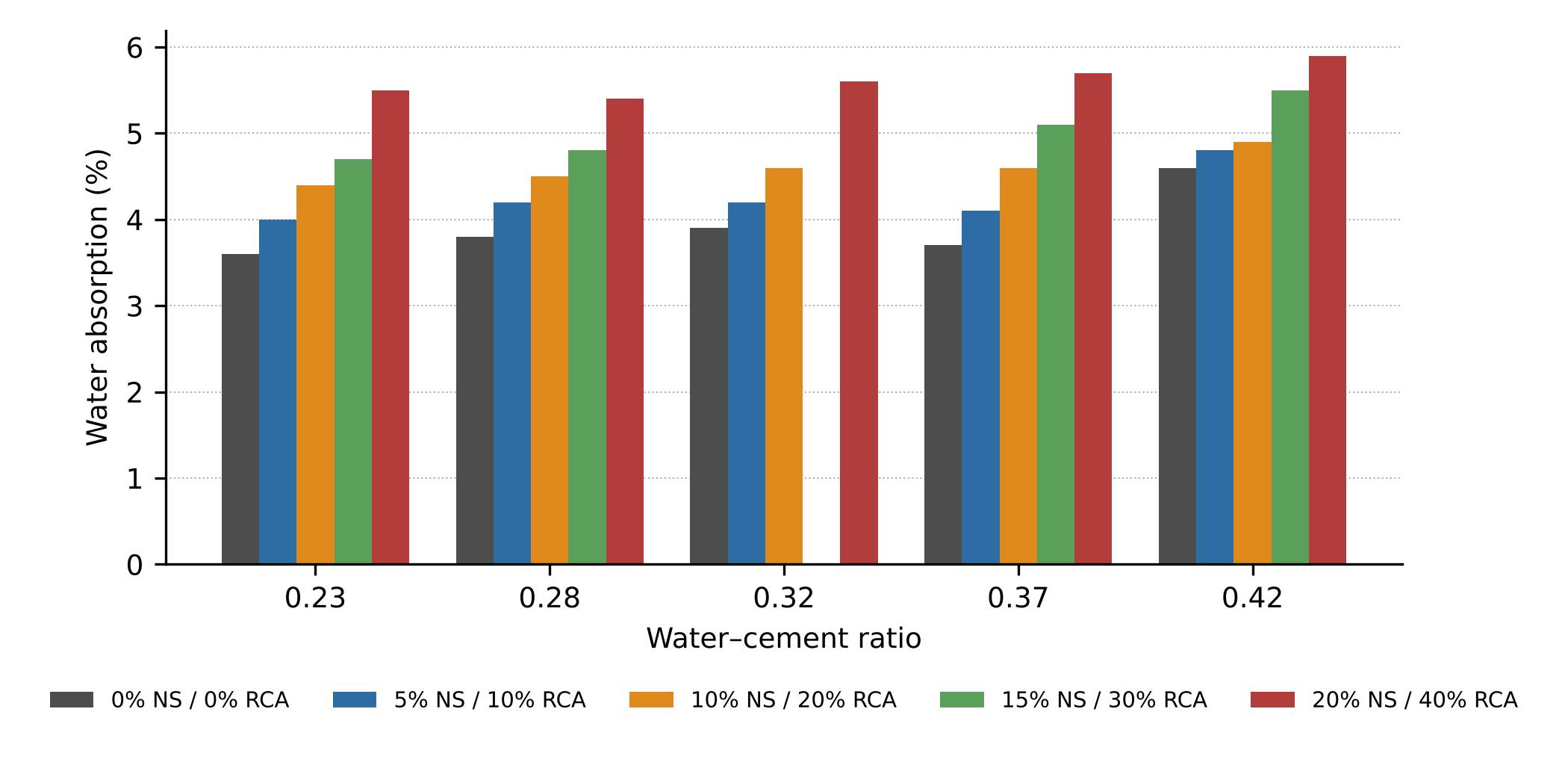
Figure 8 illustrates that the control mixtures (without NS or RCA) exhibited water absorption between 3.6% and 4.6%. The lowest value occurred at the lowest water-cement ratio (0.23), and the highest at w/c = 0.42. This pattern is consistent with the well-known effect that reducing the water-cement ratio yields a denser cement matrix with fewer capillary pores. Across every water-cement ratio, adding NS and RCA led to a higher water absorption compared to the corresponding control. The magnitude of the increase grew as the replacement level rose. This behavior is primarily due to the nature of recycled concrete aggregate. RCA typically carries old mortar that remains attached to the original stone, and that mortar is more porous than natural aggregate. In addition, the crushing process introduces micro-cracks that further facilitate water ingress. Nano-silica has the potential to refine the pore structure of the cement paste, but in this study its effect was not enough to offset the increased porosity contributed by the recycled materials.
3.4.1Durability assessment
Durability assessments often categorize water absorption as follows: less than 3%, excellent; 3% to 5%, good; 5% to 7%, fair; above 7%, poor. Using this scale:
- the control mixes all fall in the good category, with w/c = 0.23 approaching excellent;
- the 5% NS / 10% RCA mixes remain in the good range;
- the 10% NS / 20% RCA mixes are also mostly good, though w/c = 0.42 reaches 4.9%, the upper boundary;
- the 15% NS / 30% RCA mixes show values from 4.7% to 5.5%, pushing the higher-w/c mixtures into the fair category; and
- the 20% NS / 40% RCA mixes all fall into the fair range (5.4–5.9%).
Thus, as the replacement level increases, the durability rating shifts from Good to Fair. Even at the highest levels, however, water absorption remains below 6%, which is still acceptable for many structural applications, particularly in environments where exposure to moisture is limited.
4Conclusion
This study evaluated the mechanical performance of high-strength recycled aggregate concrete containing nano-silica across a wide range of water-cement ratios, RCA replacement levels, and nano-silica dosages. The following conclusions were drawn:
- 1. Nano-silica improved the compressive strength of HSRAC up to an optimal combination of 10% nano-silica and 20% RCA replacement, beyond which gains diminished due to the increasing dominance of weaker recycled aggregate; the highest 28-day compressive strength recorded was 52.9 MPa, a 23.1% improvement over the plain control mix.
- 2. Flexural strength followed a similar trend, with all nano-silica/RCA combinations outperforming the control and the greatest improvement (11–13%) recorded at 10% nano-silica / 20% RCA.
- 3. Split tensile strength generally declined with increasing nano-silica and RCA content, falling by up to 19.9% relative to the control, indicating that this tensile-loading mode is more sensitive to the inherent porosity and weak interfacial zones of recycled aggregate than compressive or flexural loading.
- 4. Water absorption increased progressively with nano-silica and RCA content, shifting the durability classification from "good" in the control mixes to "fair" at the highest replacement levels, though absorption remained below 6% throughout.
- 5. Overall, the results indicate that nano-silica can substantially recover the compressive and flexural performance of recycled aggregate concrete, supporting its use in structurally demanding applications when RCA replacement is kept at or below approximately 20%. However, its benefit is more limited for split tensile strength and water absorption, and these properties should be given particular consideration when RCA content exceeds this level, particularly in durability-critical applications.
References
- [1]Fallahnejad H, Gholampour A. Influence of nano-silica particles on fracture features of recycled aggregate concrete using boundary effect method: Experiments and prediction models. Structural Concrete. 2024;25(2):1125–1142.
- [2]Huang L, Wang J, Zhang X. Impact behavior of recycled aggregate concrete modified with nano-silica and fiber. Scientific Reports. 2025;15:Article 19137.
- [3]Kumar S, Singh R, Verma A. A review on the properties of recycled aggregate concrete (RAC) modified with nano-silica. Materials Today: Proceedings. 2023;78:245–252.
- [4]Li L, Xuan D, Sojobi AO, Liu S, Poon CS. Efficiencies of carbonation and nano silica treatment methods in enhancing the performance of recycled aggregate concrete. Construction and Building Materials. 2021;310:Article 125263.
- [5]Prusty R, Mukharjee BB, Barai SV. Nano-engineered concrete using recycled aggregates and nano-silica: Taguchi approach. Advances in Concrete Construction. 2015;3(4):253–268.
- [6]UNEP & GlobalABC. Global Status Report for Buildings and Construction 2024/2025. United Nations Environment Programme; 2025.
- [7]Yan Y, He F. Effects of nano-silica on mechanical properties of recycled concrete: A review. Functional Materials. 2024;31(2):215–224.
- [8]Yang H, Liu Y, Chen W. Evaluation of road performance and carbon emission accounting analysis of recycled aggregates from construction and demolition waste. Scientific Reports. 2025;15:29395.