Civil Engineering
Experimental Investigation of the Compressive Strength of High-Strength Concrete Containing Ground Granulated Blast Furnace Slag (GGBS)
Department of Civil Engineering, Rivers State University, PMB 5080, Port Harcourt, Nigeria
Published October 2026
Abstract
This study investigates the mechanical properties of high-strength concrete (HSC) containing ground granulated blast furnace slag (GGBS) as a partial replacement of cement using experimental and statistical methods. GGBS was incorporated because it enhances long-term strength. A mix design based on the absolute volume method was adopted to produce HSC at water–binder ratios of 0.20–0.29 and GGBS contents of 0–20%. Workability (slump) tests were first conducted on the fresh concrete to measure its consistency. A maximum 28-day compressive strength of 68.3 MPa was obtained for a water–binder ratio of 0.20 at 10% replacement, while a split tensile strength of 2.97 MPa was achieved at 10% replacement for a water–binder ratio of 0.23. For all mixes, the maximum compressive strength was measured at 10% GGBS inclusion.
Keywords: high-strength concrete; ground granulated blast furnace slag; compressive strength; split tensile strength; water–binder ratio
1Introduction
Concrete is the most widely utilised construction material in civil and structural engineering due to its adaptability, availability of raw materials, and favourable mechanical properties, particularly its high compressive strength. Globally, concrete underpins the construction of buildings, bridges, pavements, offshore structures, and other critical infrastructure. As urbanization accelerates and structural systems become increasingly complex, there is a growing demand for materials that can sustain higher loads while maintaining durability, economy, and structural efficiency (Aïtcin, 2022; Neville and Brooks, 2023).
In response to these demands, high-strength concrete (HSC) has become a critical material in modern structural engineering practice. High-strength concrete is typically characterized by compressive strength values exceeding those of conventional concrete and is increasingly employed in high-rise buildings, long-span bridges, and heavily loaded structural elements. The use of HSC enables reduced member sizes, increased usable floor space, enhanced stiffness, and improved resistance to serviceability-related issues such as excessive deflection and cracking (Zhang et al., 2023; Chen et al., 2024).
Despite its advantages, the production of high-strength concrete presents significant technical and environmental challenges. Achieving high compressive strength generally requires low water–binder ratios and elevated cement contents, which increase material cost and exacerbate sustainability concerns. Cement manufacturing is energy-intensive and remains one of the largest contributors to anthropogenic carbon dioxide emissions. Recent global assessments indicate that the cement industry contributes approximately 7–8% of total CO₂ emissions, underscoring the urgent need for alternative strategies that reduce cement consumption without compromising structural performance (Scrivener et al., 2023; Liu et al., 2024).
To address these challenges, supplementary cementitious materials (SCMs) have been widely adopted as partial replacements for ordinary Portland cement in concrete production. SCMs contribute to improved performance, reduced environmental impact, and enhanced long-term durability when appropriately incorporated. Among the commonly used SCMs, such as fly ash, silica fume, and metakaolin, ground granulated blast furnace slag (GGBS) has gained increasing attention due to its availability, economic viability, and favourable physicochemical properties (Zhou et al., 2022; Rahman and Islam, 2024).
Ground granulated blast furnace slag is a by-product of the iron and steel manufacturing process, obtained by rapidly quenching molten slag to form a glassy, granular material, which is subsequently ground to a fine powder. GGBS possesses latent hydraulic properties and reacts in the presence of calcium hydroxide produced during cement hydration to form additional calcium silicate hydrate (C–S–H). This secondary hydration process contributes to improved microstructural refinement, reduced pore connectivity, and enhanced mechanical performance of concrete when optimal replacement levels are adopted (Li et al., 2023; Kumar et al., 2024).
In the context of high-strength concrete, GGBS plays a particularly significant role due to its ability to enhance development of later-age strength while mitigating some of the adverse effects associated with high cement content. Recent studies have demonstrated that partial replacement of cement with GGBS in HSC can result in improved compressive strength at medium to long curing ages, provided that appropriate mix proportions and curing conditions are maintained (Zhang et al., 2023; Okafor et al., 2025). However, excessive GGBS replacement may delay early-age strength development, which is a critical consideration in construction scheduling and structural performance assessment.
The compressive strength behaviour of GGBS-based high-strength concrete is governed by a complex interaction of multiple variables, including water–binder ratio, binder composition, GGBS replacement level, curing age, and aggregate characteristics. These parameters do not act independently; rather, they interact in nonlinear and often competing ways, making the accurate prediction of compressive strength particularly challenging (Chen et al., 2024; Rahman and Islam, 2024). Consequently, conventional mix design approaches based on simplified empirical relationships or prescriptive code provisions may be insufficient for reliably predicting the strength of GGBS-based HSC.
1.1Literature review
High-strength concrete is generally defined as concrete with compressive strength significantly higher than that of conventional structural concrete. While early classifications placed the threshold at 40 MPa, contemporary practice recognises HSC as concrete exceeding 50–60 MPa, depending on regional codes and material systems (Aïtcin, 2022; Neville and Brooks, 2023). The evolution of HSC has been driven by advances in materials science, including the use of low water–binder ratios, chemical admixtures, and SCMs.
Modern classifications distinguish between high-strength concrete and ultra-high-performance concrete (UHPC), the latter characterised by compressive strengths exceeding 120 MPa and incorporating fibre reinforcement and extremely low porosity matrices (Chen et al., 2024). The present study is concerned with HSC systems that incorporate GGBS and are designed using conventional aggregates and admixtures, rather than UHPC formulations.
1.1.1Mechanical characteristics of high-strength concrete
The mechanical behaviour of high-strength concrete differs markedly from that of normal-strength concrete. HSC exhibits higher modulus of elasticity, increased brittleness, and a more linear stress–strain relationship up to peak stress (Zhang et al., 2023). Its failure mode is typically more sudden due to the dense microstructure and reduced capacity for plastic deformation.
Recent experimental studies have shown that the compressive strength development of HSC is strongly influenced by curing age, binder composition, and water–binder ratio (Rahman and Islam, 2024; Li et al., 2023). These factors interact nonlinearly, making accurate strength prediction challenging without advanced modelling approaches.
1.1.2Structural applications of high-strength concrete
High-strength concrete is widely used in high-rise buildings, long-span bridges, precast structural elements, and heavily loaded columns. Its use enables reduced cross-sectional dimensions, leading to lighter structures and improved architectural flexibility (Aïtcin, 2022; Chen et al., 2024). In seismic regions, HSC is often combined with ductile reinforcement detailing to balance strength and deformation capacity.
1.1.3Overview of supplementary cementitious materials
Supplementary cementitious materials are finely divided materials that, when used in conjunction with Portland cement, contribute to the properties of hardened concrete through hydraulic or pozzolanic activity. Common SCMs include fly ash, silica fume, metakaolin, and GGBS. Their incorporation improves workability, reduces permeability, and enhances long-term mechanical performance (Zhou et al., 2022; Scrivener et al., 2023).
1.1.4Ground granulated blast furnace slag (GGBS): Production and properties
GGBS is produced by rapidly quenching molten blast furnace slag from iron production to form a glassy granular material, which is then ground to a fine powder. It contains calcium, silica, alumina, and magnesium oxides in proportions conducive to latent hydraulic activity (Li et al., 2023; Kumar et al., 2024).
In concrete systems, GGBS reacts with calcium hydroxide to form additional C–S–H, refining pore structure and enhancing later-age strength. Its slower hydration kinetics compared to cement explain the typical delay in early-age strength development observed in GGBS-modified mixtures (Rahman and Islam, 2024).
1.1.5GGBS in high-strength concrete systems
In high-strength concrete, GGBS contributes to improved microstructural density and long-term strength when used at optimal replacement levels. Studies from 2022 to 2025 consistently report that replacement levels between 20% and 50% can enhance compressive strength at 28–90 days, provided curing conditions are adequate (Zhang et al., 2023; Okafor et al., 2025).
However, excessive GGBS content may reduce early-age strength, which remains a key practical limitation in fast-track construction (Chen et al., 2024). This trade-off underscores the need for predictive models that can accurately estimate strength development across curing ages and mix compositions
1.1.6Influence of GGBS on the compressive strength of high-strength concrete
The incorporation of ground granulated blast furnace slag (GGBS) in high-strength concrete significantly influences compressive strength development through its effects on hydration kinetics, microstructural refinement, and pore structure evolution. Unlike Portland cement, GGBS is a latent hydraulic material that requires activation in the presence of calcium hydroxide and alkaline conditions. Its contribution to strength therefore depends on curing time, replacement level, and mix proportioning (Zhou et al., 2022; Rahman and Islam, 2024).
1.1.7Early-age strength behaviour
Early-age compressive strength is a critical parameter in construction scheduling and formwork removal. Numerous studies have reported that GGBS-containing mixtures exhibit slower strength gain at early ages compared to plain cement systems due to delayed slag hydration (Li et al., 2023; Chen et al., 2024). In high-strength concrete with low water–binder ratios, this effect can be more pronounced because reduced free water limits initial hydration.
Recent experimental results indicate that GGBS replacement levels exceeding 40% tend to reduce 1–7 day compressive strength in HSC systems, although the magnitude of reduction depends on curing temperature and admixture dosage (Zhang et al., 2023; Okafor et al., 2025). This highlights the importance of balancing sustainability objectives with early-age performance requirements.
1.1.8Medium- and long-term strength development
While early-age strength may be reduced, medium- and long-term compressive strength of GGBS-based HSC often exceeds that of control mixtures. This is attributed to the continued formation of secondary C–S–H from slag hydration, which densifies the microstructure and reduces pore connectivity (Rahman and Islam, 2024; Kumar et al., 2024).
Studies between 2022 and 2025 consistently show that 28–90 day compressive strength improves significantly when GGBS is used at optimal replacement levels, typically between 20% and 50% (Li et al., 2023; Zhang et al., 2024). This strength gain is particularly beneficial in structural applications where long-term performance governs design criteria.
1.1.9Effect of GGBS replacement level
The replacement level of GGBS is a dominant factor controlling compressive strength. At low replacement levels (<20%), the influence of slag is limited, whereas at moderate levels (20–40%), synergistic effects between cement hydration and slag activation enhance strength development (Zhou et al., 2022; Chen et al., 2024). Beyond this range, dilution effects and slower kinetics may outweigh benefits, especially at early ages.
1.1.10Interaction with water–binder ratio and curing age
The water–binder ratio plays a central role in governing the strength performance of GGBS-based HSC. Lower ratios improve ultimate strength but exacerbate early-age hydration delays. Curing age further moderates these effects, with slag contribution becoming more pronounced at later ages (Rahman and Islam, 2024; Okafor et al., 2025). These interactions underscore the complexity of strength development and the need for predictive modelling.
2Materials and methods
2.1Materials
The materials and experimental methodology used to evaluate the parameters studied are described in this section. The materials used were as follows:
- 1. Natural coarse aggregate of 25 mm maximum size.
- 2. Natural fine aggregate (sand) of 5 mm maximum size.
- 3. Water conforming to EN 1008.
- 4. Portland limestone cement, grade 42.5 (Dangote), conforming to NIS 444.
- 5. Ground granulated blast furnace slag, as per ASTM C 1240.
- 6. Superplasticizer: polycarboxylate ether (PCE) complying with EN 934-2.
2.2Experimental plan
Concrete cubes were cast to test the compressive strength. In accordance with BS 1881 Part 110: 1983, steel moulds of size 100 × 100 × 100 mm were used. Mix ratios of 1:2.9:4.4, 1:3.5:5.2 and 1:3.8:5.6 were used with water–binder ratios of 0.20, 0.23, 0.26 and 0.29. The experimental plan is given in Table 1.
| Experiment | Standard | 1:2.9:4.4 | 1:3.5:5.2 | 1:3.8:5.6 | Control mix | Total no. | Parameter investigated |
|---|---|---|---|---|---|---|---|
| Sieve analysis | BS 882: Part 103: 1992 | Particle size distribution (PSD) | |||||
| Specific gravity test | BS 812: Part 2: 1995 | Specific gravity | |||||
| Density test | BS 812: Part 2: 1995 | Density | |||||
| Compressive test: 7, 14 and 28 days, 100 × 100 × 100 mm cubes | BS EN 12390 (replacing BS 1881: 1983) | 48 | 48 | 48 | 36 | 180 | fcu (characteristic strength) |
| Split tensile test: 100 mm dia. × 200 mm cylinders, 7, 14 and 28 days | BS 1881-117: 1983 | 48 | 48 | 48 | 36 | 180 | ft (tensile strength) |
| Durability test: 100 × 100 × 100 mm cubes, 60 and 90 days | BS 1881: 1983; ASTM C293 | 32 | 32 | 32 | 24 | 120 | Durability |
Mix proportions and numbers of specimens are given for each mix ratio.
3Results and discussion
The objectives of the experimental programme were (i) to investigate experimentally the compressive strength behaviour of high-strength concrete containing varying proportions of ground granulated blast furnace slag; (ii) to evaluate the effects of GGBS replacement level, water–binder ratio and curing age on the compressive strength development of GGBS-based high-strength concrete; (iii) to evaluate the effects of these variables on the flexural strength development of GGBS-based high-strength concrete; and (iv) to evaluate their effects on the split tensile strength development of GGBS-based high-strength concrete.
3.1Particle size distribution
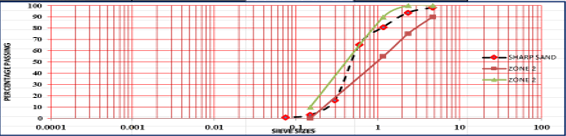
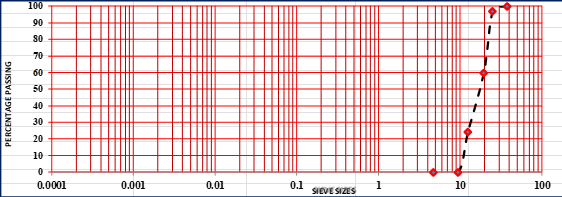
Sieves of sizes 25.0 mm, 19.5 mm, 12.5 mm, 9.5 mm, 9.3 mm, 4.75 mm, 2.36 mm, 1.18 mm, 600 µm, 300 µm, 150 µm and 75 µm were used. Figure 1 and Figure 2 show the results of the sieve analysis for the fine and coarse aggregates, respectively.
3.2Slump of concrete mixtures
The slump values of the concrete mixtures are given in Table 2.
| Water–binder ratio | 0% | 5% | 10% | 15% | 20% |
|---|---|---|---|---|---|
| 0.20 | 65 | 70 | 90 | 45 | 30 |
| 0.23 | 50 | 75 | 70 | 55 | 40 |
| 0.26 | 55 | 60 | 55 | 70 | 40 |
| 0.29 | 45 | 65 | 60 | 50 | 45 |
Column headings give the percentage replacement of cement with GGBS.
3.3Compressive strength test
Concrete cube samples were prepared and tested after curing for 7, 14 and 28 days. The results are presented in Table 3 and are plotted against the percentage replacement of cement with GGBS (5%, 10%, 15% and 20%) in Figure 3, Figure 4 and Figure 5.
| Water–binder ratio | GGBS replacement (%) | 7 days | 14 days | 28 days |
|---|---|---|---|---|
| 0.20 | 0 | 41.6 | 46.3 | 56.6 |
| 5 | 52 | 57.6 | 64.3 | |
| 10 | 57.3 | 60.3 | 68.3 | |
| 15 | 25 | 30 | 40.3 | |
| 20 | 20 | 24 | 34.3 | |
| 0.23 | 0 | 38.6 | 46 | 53.3 |
| 5 | 40.3 | 46.6 | 60.6 | |
| 10 | 45.6 | 50.3 | 64.3 | |
| 15 | 22 | 26 | 32 | |
| 20 | 18 | 14 | 20 | |
| 0.26 | 0 | 35.6 | 40 | 53.3 |
| 5 | 38.6 | 45.3 | 57.3 | |
| 10 | 40.6 | 47.3 | 61 | |
| 15 | 16.6 | 20.6 | 31 | |
| 20 | 12 | 15.3 | 20 | |
| 0.29 | 0 | 30 | 36 | 41.3 |
| 5 | 34.6 | 40 | 54.6 | |
| 10 | 40.3 | 48.6 | 60.3 | |
| 15 | 22.6 | 24.3 | 32 | |
| 20 | 18 | 21 | 29.3 |
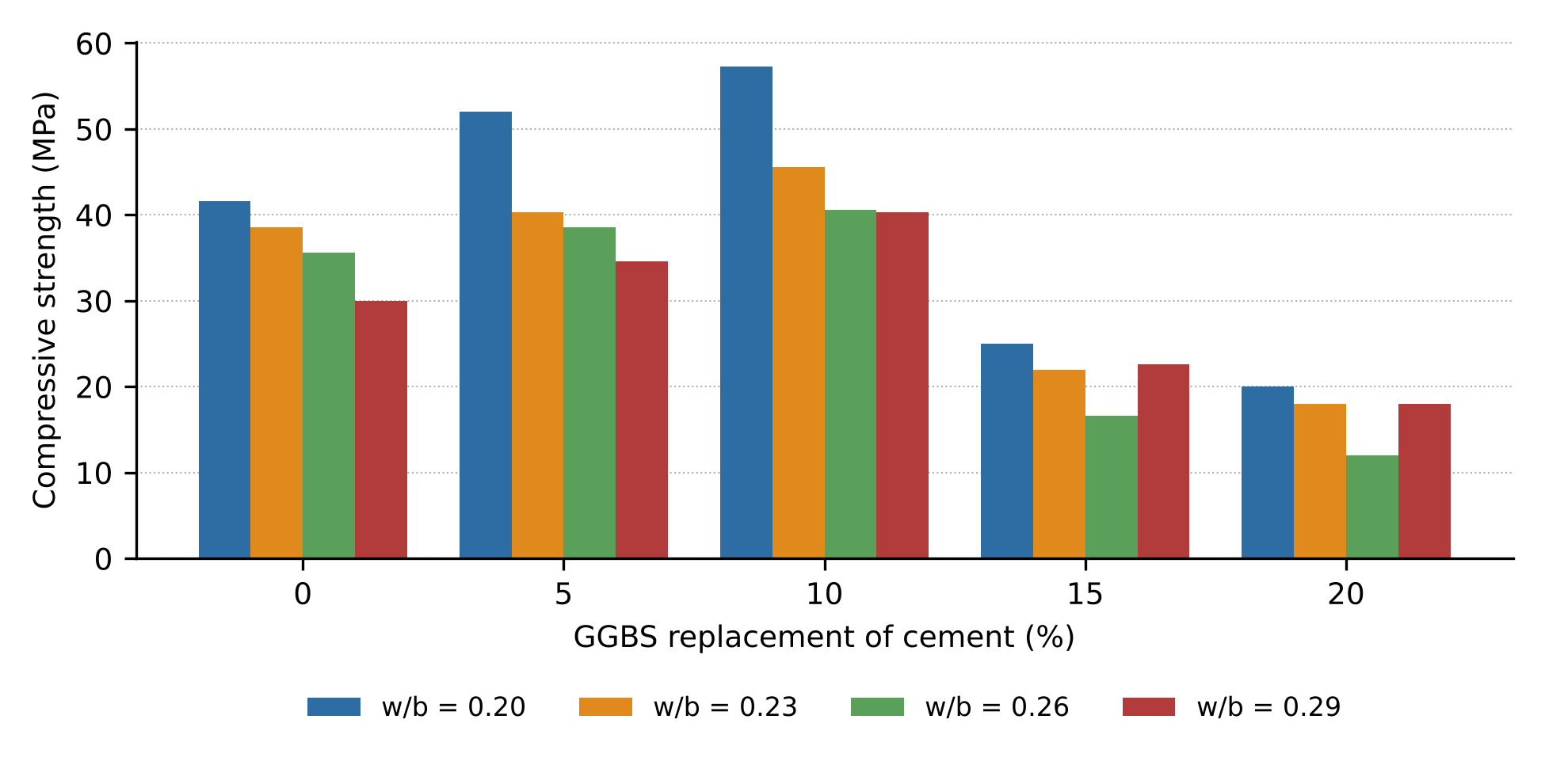
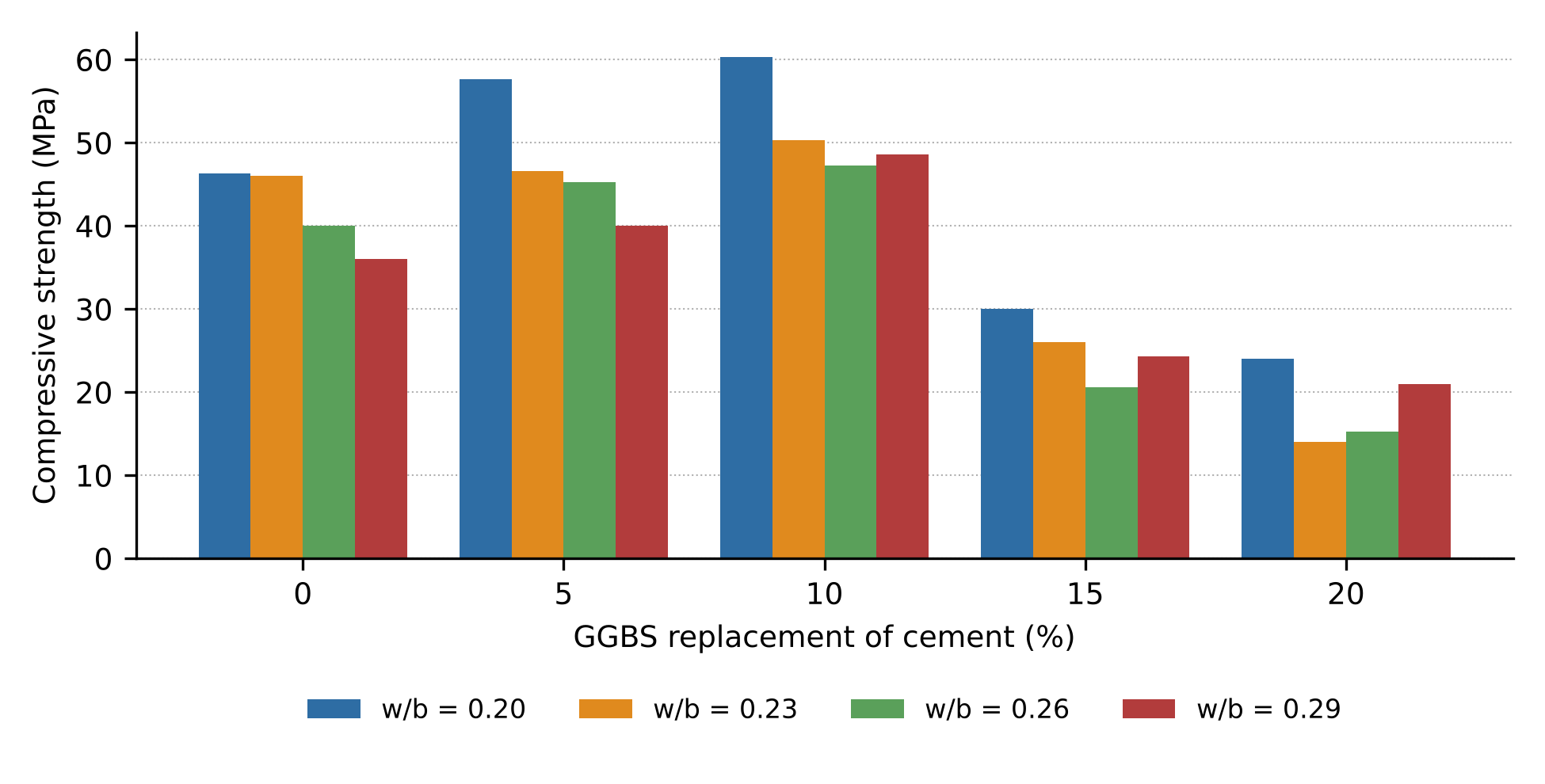
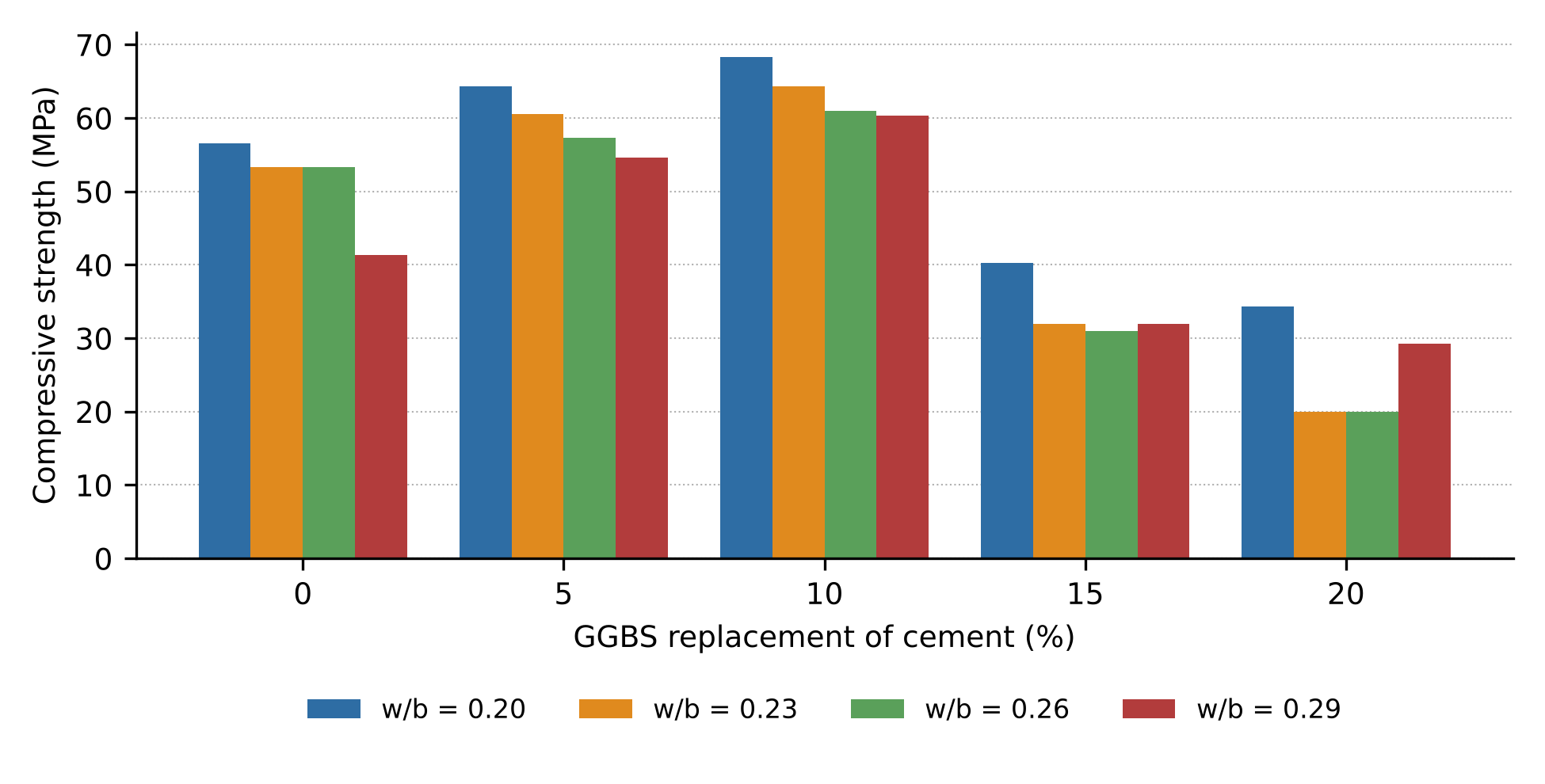
Figure 3, Figure 4 and Figure 5 show the variation of compressive strength with the percentage replacement of cement with GGBS. The highest compressive strength, 68.3 MPa, was recorded for the mix with a water–binder ratio of 0.20 at 10% replacement. This high strength is attributed to the lower water content, which results in better structural integrity (BS EN 933-1:2012).
3.4Split tensile strength test
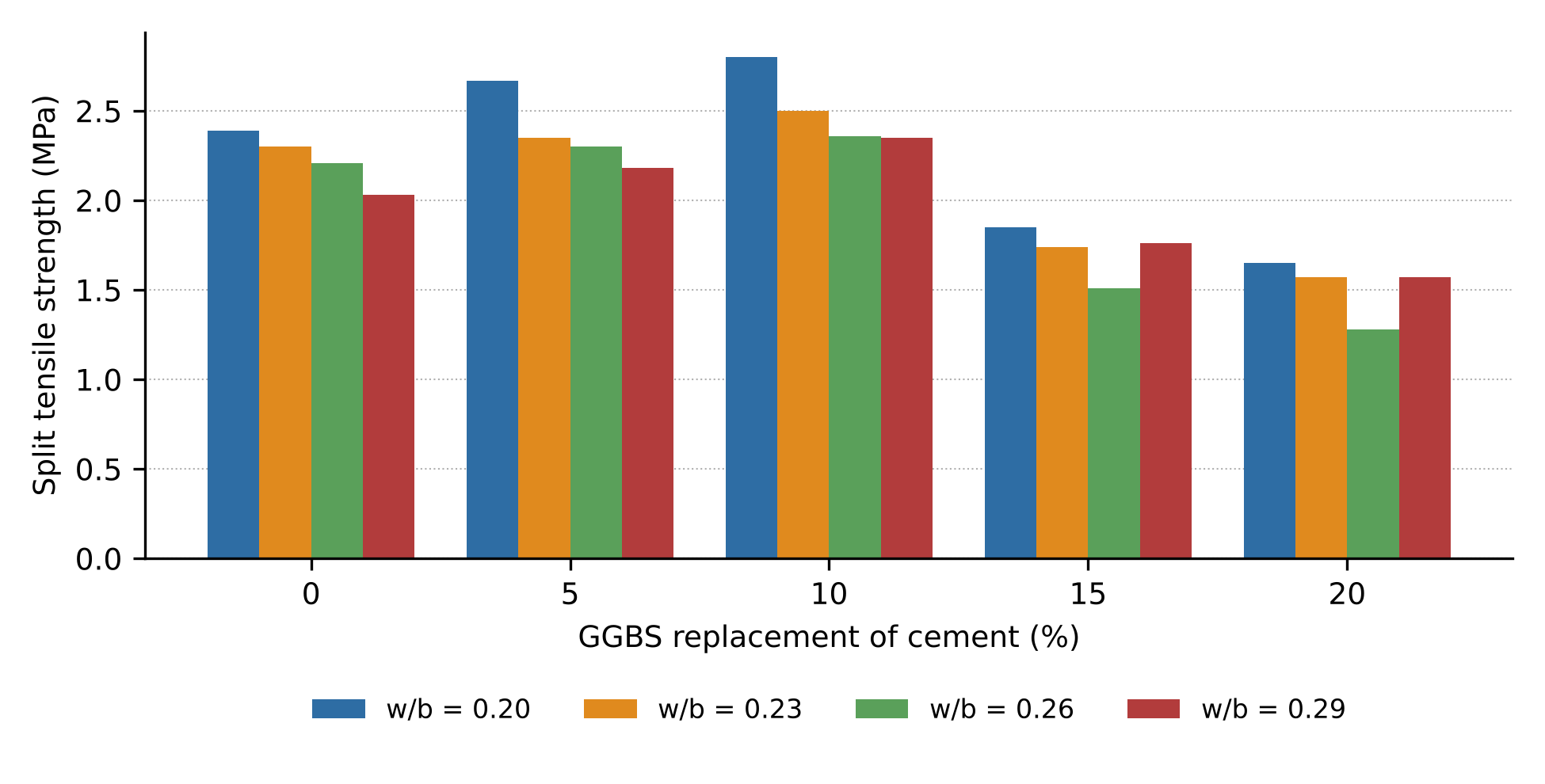
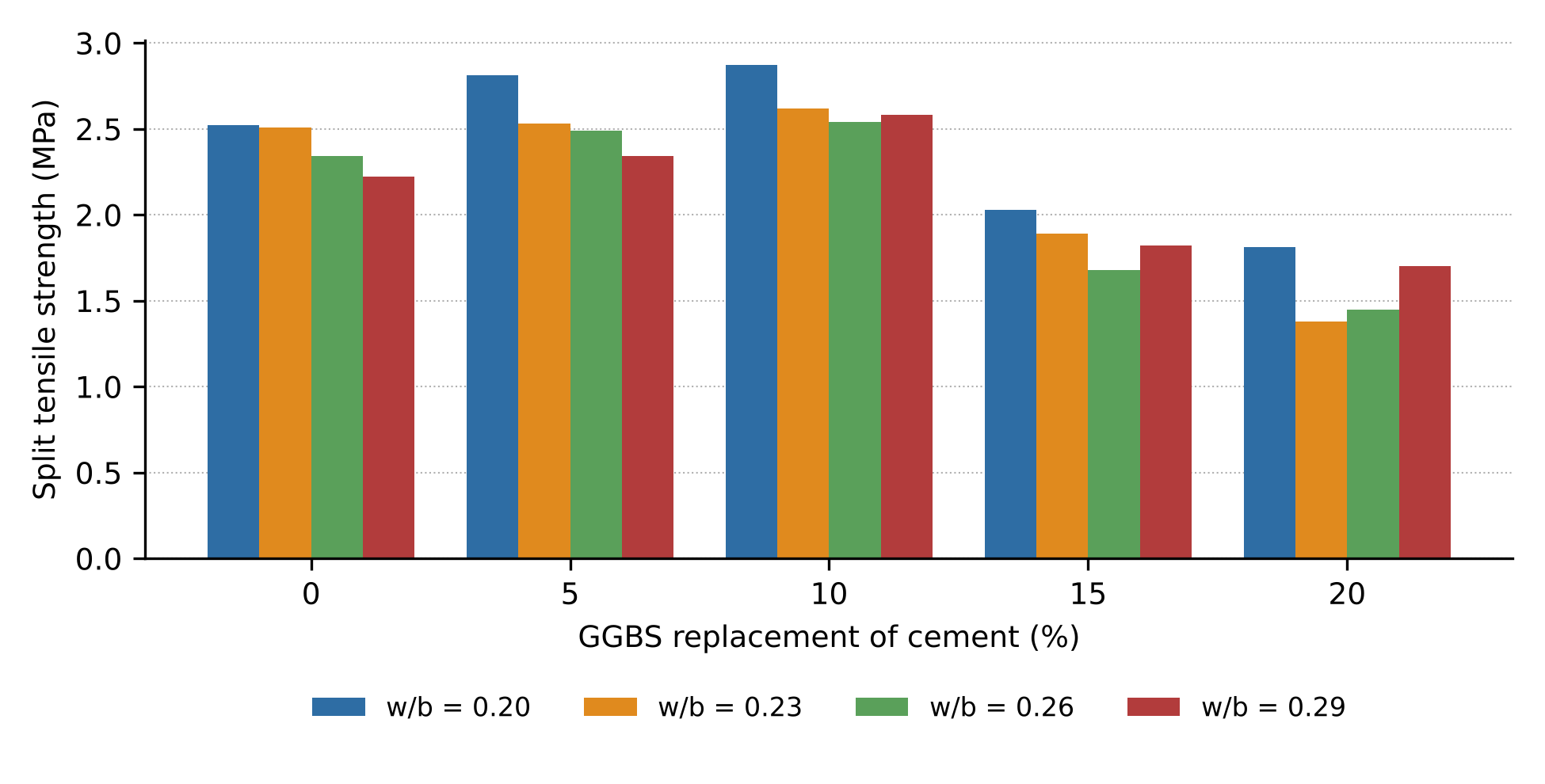
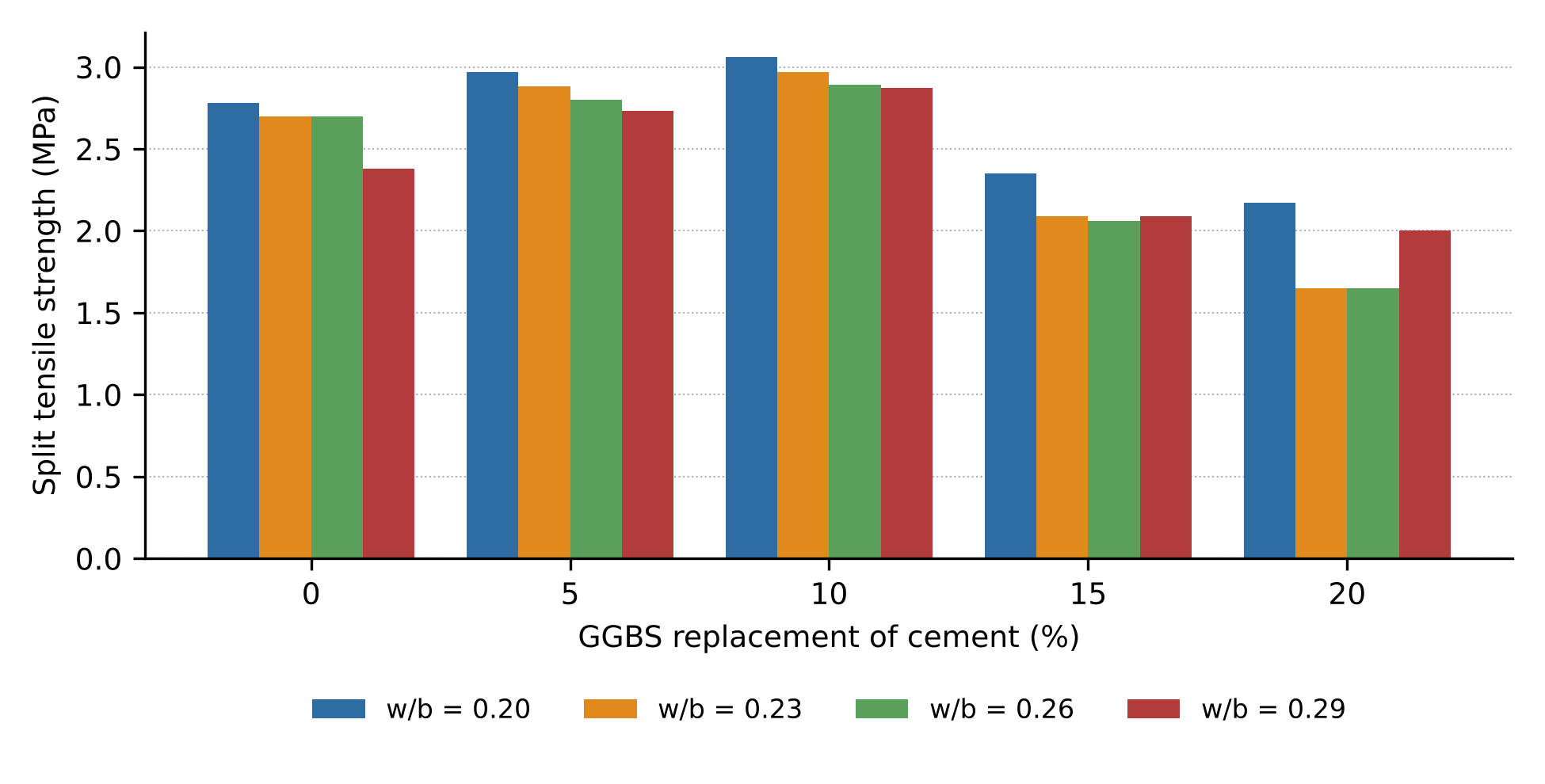
The tensile strength of the concrete was tested on cylindrical specimens after curing, and the results for the different mixes are presented in Table 4, with plots of tensile strength against the percentage replacement of cement with GGBS in Figure 6, Figure 7 and Figure 8. From Table 4, Figure 7 and Figure 8, the split tensile strength reached a maximum of 3.06 MPa at a water–binder ratio of 0.20 and 10% replacement of cement with GGBS.
| Water–binder ratio | GGBS replacement (%) | 7 days | 14 days | 28 days |
|---|---|---|---|---|
| 0.20 | 0 | 2.39 | 2.52 | 2.78 |
| 5 | 2.67 | 2.81 | 2.97 | |
| 10 | 2.80 | 2.87 | 3.06 | |
| 15 | 1.85 | 2.03 | 2.35 | |
| 20 | 1.65 | 1.81 | 2.17 | |
| 0.23 | 0 | 2.30 | 2.51 | 2.70 |
| 5 | 2.35 | 2.53 | 2.88 | |
| 10 | 2.50 | 2.62 | 2.97 | |
| 15 | 1.74 | 1.89 | 2.09 | |
| 20 | 1.57 | 1.38 | 1.65 | |
| 0.26 | 0 | 2.21 | 2.34 | 2.70 |
| 5 | 2.30 | 2.49 | 2.80 | |
| 10 | 2.36 | 2.54 | 2.89 | |
| 15 | 1.51 | 1.68 | 2.06 | |
| 20 | 1.28 | 1.45 | 1.65 | |
| 0.29 | 0 | 2.03 | 2.22 | 2.38 |
| 5 | 2.18 | 2.34 | 2.73 | |
| 10 | 2.35 | 2.58 | 2.87 | |
| 15 | 1.76 | 1.82 | 2.09 | |
| 20 | 1.57 | 1.70 | 2.00 |
4Conclusion and recommendations
This study experimentally investigated the compressive strength of high-strength concrete containing ground granulated blast furnace slag. In the preparation of the concrete samples, GGBS was used as a partial substitute for cement at 5%, 10%, 15% and 20%. From the experimental results and discussion, the following conclusions are made:
- 1. The mix design approach/strategy adopted for this study proved suitable for the development of high strength concrete.
- 2. The optimized mix achieved the required target strength of 60 MPa and above at 28 days, confirming the feasibility of producing high-performance concrete incorporating GGBS.
- 3. Compressive strength testing showed a clear improvement when cement was partially replaced with GGBS up to 10%. Beyond this level, a steady decline was observed.
4.1Recommendations
The following recommendations are made from the study:
- 1. The study demonstrates that replacing cement with GGBS at 10% offers the greatest enhancement in compressive strength. It is therefore recommended that structural concrete requiring both strength gain and durability should adopt this replacement level.
- 2. The use of GGBS in concrete should be kept within the range of replacement levels used in this research, however economical it is to obtain.
- 3. The mechanical performance of GGBS concrete depends largely on the nature of the GGBS. It is therefore recommended that GGBS with better physical properties be used to produce high-strength concrete.
References
- [1]Adewumi A, Aluko O (2021). Effects of sulphate attack on mechanical performance of OPC concrete. Journal of Civil Materials, 15(2), 45–56.
- [2]Agrela F, Cabrera M, Galvín AP, Barbudo A, Ramirez A (2014). Influence of the sulphate content of recycled aggregates on the properties of cement-treated granular materials using sulphate-resistant Portland cement. Construction and Building Materials, 68, 127–134.
- [3]Anwar N, Hosein M, Sutan NM (2023). Performance of Portland cement and sulfate resisting cement concrete representations under chloride and sulfate exposures. IOP Conference Series: Materials Science and Engineering, 1220(1), 012021.
- [4]Baldermann A, Rezvani M, Proske T, Grengg C, Steindl F, Sakoparnig M, et al. (2018). Effect of very high limestone content and quality on the sulfate resistance of blended cements. Construction and Building Materials, 188, 1065–1076.
- [5]Bulatovic V, Melesev M, Radeka M, Radonjanin V, Lukic I (2017). Evaluation of sulphate resistance of concrete with recycled and natural aggregates. Construction and Building Materials, 152, 614–631.
- [6]Camacho JB, Abdelkader SM, Pozo ER, Terrades AM (2014). The influence of ion chloride on concretes made with sulphate-resistant cements and mineral admixtures. Construction and Building Materials, 70, 483–493.
- [7]CEN (2010). EN 15743:2010. Supersulfated cement – Composition, specifications and conformity criteria. Brussels: European Committee for Standardization.
- [8]Ghafoori N, Najimi M, Diawara H, Islam MS (2015). Effects of class F fly ash on sulphate resistance of Type V Portland cement concretes under continuous and interrupted sulphate exposures. Construction and Building Materials, 78, 85–91.
- [9]Gonzalez MA, Irassar EF (1998). Effect of limestone filler on the sulfate resistance of low C3A Portland cement. Cement and Concrete Research, 28, 1655–1667.
- [10]Hou P, Guo Z, Li Q, Zhang X, Liu J, Yang S, Cheng X, Kumar R, Srinivasaraonaik B, Singh LP (2019). Comparison study on the sulphate attack resistivity of cement-based materials modified with nano-SiO2 and normal SCMs: Pore structure and phase composition. Construction and Building Materials, 228, 116764.
- [11]Ibrahim MT, Kolawole J, Singh R (2022). Chemical deterioration of concrete under aggressive environments: A review. Construction Chemistry Review, 9(1), 10–22.
- [12]Karakurt C, Topcu IB (2011). Effect of blended cements produced with natural zeolite and industrial by-products on alkali-silica reaction and sulphate resistance of concrete. Construction and Building Materials, 25, 1789–1795.
- [13]Karthik S, Sudalaimani K (2023). Durability of alkali-activated slag-based concrete in sulphate and acidic environments: A state-of-the-art review. Cleaner Materials, 8, 100196.
- [14]Khan HA, Castel A, Khan MSH, Mahmood AH (2019). Durability of calcium aluminate and sulphate resisting Portland cement based mortars in aggressive sewer environment and sulphuric acid. Cement and Concrete Research, 124, 105852.
- [15]Maes M, De Belie N (2017). Influence of chlorides on magnesium sulphate attack for mortars with Portland cement and slag based binders. Construction and Building Materials, 155, 630–642.
- [16]Mohammed AA, Idris M, Hassan S (2021). Durability response of sulphate-resistant cement composites under varying sulphate concentrations. International Journal of Sustainable Structures, 6(4), 120–134.
- [17]Mostofinejad D, Hosseini SM, Nosouhian F, Ozbakkaloglu T, Tehrani BN (2020). Durability of concrete containing recycled concrete coarse and fine aggregates and milled waste glass in magnesium sulphate environment. Journal of Building Engineering, 29, 101182.
- [18]Nguyen HA, Chang TP, Shih JY, Chen CT (2019). Influence of low calcium fly ash on compressive strength and hydration product of low energy super-sulfated cement paste. Cement and Concrete Composites, 99, 40–48.
- [19]Odetunde O, Musa R, Bello K (2023). Performance of blended sulphate-resistant concrete in simulated aggressive conditions. Case Studies in Construction Materials, 18, e02210.
- [20]Pinto SR, Angulski da Luz C, Munhoz GS, Medeiros-Junior RA (2020). Durability of phosphogypsum-based supersulfated cement mortar external attack by sodium and magnesium sulfate. Cement and Concrete Research, 136, 106172.
- [21]Sotiriadis K, Nikolopoulou E, Tsivilis S, Pavlou A, Chaniotakis E, Swamy RN (2013). The effect of chlorides on the thaumasite form of sulfate attack of limestone cement concrete containing mineral admixtures at low temperature.
- [22]Thomas J (2022). Investigation on durability properties of Ground Granulated Blast Furnace Slag mortar. E3S Web of Conferences, 356, 02007.
- [23]Udoeyo FF, Amah AN, Malachy GA (2023). Acid resistance of concrete containing limestone dust and locust bean pod ash as partial cement replacement. Journal of Civil and Environmental Engineering, 13(2), 1–10.
- [24]Wang D, Zhou X, Meng Y, Chen Z (2017). Durability of concrete containing fly ash and silica fume against combined freezing-thawing and sulphate attack. Construction and Building Materials, 147, 398–406.
- [25]Yusuf O, Onat B (2020). Comparative behavior of OPC and SRC concrete under sulphate exposure. Journal of Structural Durability, 12(3), 87–98.
- [26]Zhang X, Ding Y, Zhang J (2020). Durability of cementitious materials under combined sulfate and acid attack: A review. Materials Today: Proceedings, 39, 738–744.