Farmer-Herder Conflict and Crop Productivity
Perceived Impacts of Crop-Farmer/Cattle-Herder Conflict on Crop Productivity in North-East Senatorial District of Benue State, Nigeria
College of Education, Katsina-Ala, Benue State, Nigeria
Published October 2026
Abstract
The study investigated perception of the people of Benue North-East Senatorial District over impact of farmers/herders conflict on crop productivity in North-East Senatorial District of Benue State. Identifying drivers and rate of the conflict; examining the impact of the conflict on crop productivity; and proffering measures to manage the conflict in order to inform policy statement, are the objectives of the study. Purposive sampling technique was adopted in selecting the four local government areas of the district, namely: Logo, Kwande, Katsina-ala, and Ukum. A sample size of 624 respondents was used for the study. A twenty (20) items structured questionnaire structured by the researcher was used to collect data. Data analysis was done via quantitative and qualitative guides. The study concludes that there is a significant inverse relationship between Farmers/Herders conflict and food productivity in Benue North-East district. The study findings implied: implementation of cattle ranching and anti-open grazing law; establishment of state police; recovery of weapons from locals; provision of free and compulsory formal education, improved security among other policy implications, towards a peaceful coexistence.
Keywords: crop-farmer; cattle-herder; conflict; productivity
1Introduction
All over the world, conflict is a common occurrence amongst humans, and could be said to be normal. However, violent armed conflicts usually lead to effects that could be regarded as unproductive and criminal in nature. “Conflict per se, is not bad: it is perhaps a necessity in the evolution and development of human organizations. But when conflicts degenerate to violent and destructive clashes, they become not only unhealthy but also counter-productive and progress-threatening” (Okoro, 2018 p2).
African continent is being plagued with a violent form of conflict, and this is a current disturbing challenge in Nigeria with particular concern to Benue state, especially in Benue north-east senatorial zone. According to International Institute for Environment and Development (IIED, 2020), Violent conflict is escalating across rural Africa, especially in the West African Sahel, and ‘farmer–herder conflict’ as the root of such crises.
Nigeria has become an epicenter for violent conflict relating to cattle herders and crop farmers. Violent conflict between farmers and herders is not new, but neither is it inevitable. According to Brottem (2021), the surge in farmer-herder violence in Africa has been concentrated in Nigeria, Many contemporary Nigeria communities have experienced several cases of communal crisis. North central Nigeria, the middle-belt region has had its fair share of the conflict between crop farmers and herdsmen. While the violence is spreading to communities across the country, the intensity of violence remains fiercest in Nigeria’s volatile Middle Belt region Bagu and Smith (2017) argues that Communities in Central Nigeria are locked in a worsening cycle of violence between largely Christian farming communities and predominantly Muslim pastoralists, most of whom are ethnic Fulani.
In Benue north-east senatorial district, these conflicts have impacted negatively on the productivity of the peasant crop farmers and the herders alike. Reports of internal displacement of persons abound. Displacement occurs when herdsmen and farmers clash. Host farmers especially women who stayed behind stop going to distant farms for fear of attack by nomads in the bush. Such displaced farmers have become liabilities to other farmers whom they have to beg for food for themselves and their families. This therefore has created a vicious cycle of poverty in such communities. According to Okoro (2018) quoted former Governor of Benue state, Samuel Ortom who said the anti-open grazing law adopted by the government of Benue State received open condemnation from the Miyetti Allah Cattle Breeders Association of Nigeria (MACBAN), which threatened to frustrate any move to enforce the law. According to Ibekwe and Nwankwo (2018), cited in Okoro (2018), 50 persons were killed on March, 20th 2017 when the people of Zaki Biam, Ukum local government area, in Benue State clashed with the herdsmen over the grazing space where Fulani herdsmen claimed belong to them and were not allowed to access it.
Oli et al. (2018) argue that the Tiv people in Ukum, Logo and other towns at the border with Taraba state have recorded about 458 deaths and over 350 communities have been sacked and are now living in IDP camps. Many lives are still being allegedly killed currently in 2026 in some of Katsina-Ala towns sharing border with Taraba state, by Fulani herder militia. Most recently, on 4th and 6th of February, 2026, at least 17 people were reportedly killed by herder terrorists at Abande and Anwase, both in kwande LGA of Benue north-east.
Based on the large scale of violent conflict and its implications for the crises and national security, the study of the perceived impacts of crop-farmer/cattle-herder conflict on crop productivity in Benue north-east becomes very imperative. Therefore, this study sets out to investigate the impacts of Farmers/Herders conflict on crop productivity in the north-east senatorial zone of Benue state.
1.1Background to study
Crop-Farmer/cattle-Herder conflict has been one of the major security threats on African continent. Conflict between farmer and Herder had been in existence for a long time though the rate of occurrence has increased exponentially lately. Seldon and Sumberg (2007) argue that evidence was presented of conflict between farmers and herders in the pre-colonial period. There is also a considerable body of evidence for an increase of conflict within living memory and especially during the post-independence period. This evidence includes farmer and herder testimonies. A significant number of researchers do not sense an increase in the incidence or gravity of farmer/herder conflicts.
In Nigeria, the farmers and Herdsmen crises remain a major national security challenge; a situation where people are killed, injured and displaced from their ancestral homes. Okoro (2019) reports that herdsmen-farmers conflicts in Nigeria between January 2016 and June 2018 occurred 95 times. Most of these clashes between the herdsmen and farmers have resulted to humanitarian catastrophe precipitating human loss. Bagu and Smith (2017) argue that in Northwest Nigeria, criminal gangs are reportedly engaging in organized rural banditry to carryout livestock theft and trade, leading to the displacement of the local (predominantly Muslim) population and livestock theft forcing them to migrate southward. According to Bamidele (2019), Nigeria has become a bandit’s stricken country and is regarded as the hotbed of killings. It must be noted that not only does Nigeria’s national security predicaments make life more perilous for the inhabitants, they also drain the federal and state governments’ resources, inhibit the delivery of public services, unsettle government strategies, discourage potential investors, affect rapid economic growth and hinder political development.
An important dimension to contemporary conflicts between Fulani pastoralists and farmers in Nigeria, and particularly central Nigeria, is the fact that the Fulanis involved in the conflicts have been fully armed upon arrival either in anticipation of a crisis, or with the intention to ignite one. Nomadic pastoralists in the 1960-1980s would arrive in central Nigeria with their families, cattle, machetes, locally made guns for hunting, and sticks for guiding herds and rudimentary defense. Since 2000, nomadic herdsmen have arrived with AK-47 guns and other light weapons dangling under their arms. In this situation, their herds are often deliberately driven onto farms, and they will attack any farmers who attempt to push them out (Odufowokan, 2014).
The Nigerian Federal government does not appear to initiate any forceful objective action towards resolving the conflict. “The deadly conflicts between herdsmen and crop farmers have become one of the major insecurity problems in Nigeria – only second to Boko Haram imperil” (Okoro, 2018).
Benue State Emergency Management Agency (BENSEMA, 2018) reports that 23 attacks of herders/farmers occurred between 2015 and 2017 with deaths toll of 1,351 persons, and 117,771 persons dislodged from their ancestral homes, by herders, to Internally Displaced Persons (IDPs) camps, giving room for the inability of displaced persons to be productively engaged. Such loss of lives has adversely affected farming activities and other related businesses and socio-economic activities, resulting in a drastic reduction in farm outputs, and thus, heightening the fear of hunger.
Already, some crop-farmers in the affected Local Government areas in north-east senatorial district of Benue state like Logo, katsina-ala, Kwande and Ukum, have been displaced from their ancestral homes; abandoning farms for the fear of being attacked by the herdsmen.
Therefore, from the point of view of empirical research, there exists a dearth of empirical study on perception of the victims over the implications of violent crop-Farmer/cattle-Herder conflict on crop productivity, in Benue state, and Benue north-east senatorial district in particular. It is in recognition of this obvious gap that this research is therefore conceived to provide empirical information on the Farmers/Herders conflict and its implications on crop productivity in north-east senatorial zone, Benue state; so that findings of the study could lead to recommendations for implementation for a long lasting conflict management.
1.2Objectives of the research
The broad objective of this study is to ascertain the impacts of Farmers/Herders conflict on crop productivity in Benue north-east senatorial district. However, specifically, the objectives of the research are to:
- 1. Ascertain the rate of violent farmers/herders conflict in Benue north-east senatorial district.
- 2. Identify the drivers of Farmers/Herders conflict in Benue north-east senatorial district.
- 3. Determine the impact of farmers/herders conflict on crops production in Benue north-east senatorial district.
- 4. Identify the measures to resolve and manage farmers/herders conflict in Benue north-east senatorial district.
1.3Research questions
- 1. What is the rate of farmer/herder conflict in Benue north-east senatorial district?
- 2. What are the drivers of Farmer/Herder conflict in Benue north-east senatorial district?
- 3. What are the impacts of farmers/herders conflict on crops production in Benue north-east senatorial district?
- 4. What are the measures to resolve and manage farmers/herders conflict in Benue north-east senatorial district?
2Literature review
2.1Conceptual framework
2.1.1Rate of farmers/herders conflict
All over the world, conflict is one of the most common occurrences between human groups. “Conflict is defined as the pursuit of incompatible interests and goals by different groups” (Francis, 2006). “Conflicts come whenever two or more groups seek to possess the same item, occupy the same space or an exclusive position, play incompatible role, maintain incompatible goals or undertake mutually incompatible means of achieving certain purpose” (Nuhu, 2018).
Generally, conflict is the act of coming into collision, clash or being in opposition with one another. It is also the tension that is experienced when a group of people feel that their needs or desires are likely to be denied or where their language and ethnic values set in (Oluwole & Pinga, 2017; Pinga, 2014).
Conflict seems to occur whenever there is a clash of interests in the course of human individual or group interaction. Onsarigo (2007) also sees conflict as a condition when one party feels that the other party has frustrated or is about to frustrate certain concerns of that one party. It therefore, implies that conflicts exist whenever an action by one person or a group of persons prevents, obstructs and interferes with the desires of a particular individual or a group of people. Agu (2005) attests to Onsarigo’s point of view that conflict manifests when someone has a chance to achieve his or her purpose at the expense of someone else. Conflict, according to Robert (2006), is a turning point that distinguishes the outcome of an event unfavourably between life and death, violence or non-violence and resolution or protracted conflicts. Koeb and Eilson (2016) on the other hand stated that conflict is a disjoined process that results in the disruption or destruction of all bonds of unity that might have previously existed between two disputants.
Herdsmen-Farmers conflict is as old as the existence of man. From religious account, Okoro (2018) traced the origin of herder/farmer conflict from the children (Cain and Abel) of the first man (Adam). Abel was a shepherd and Cain was a farmer according to Bible’s account, however, Cain killed Abel in the field out of jealousy. Okoro (2018) averred that herdsmen-farmer or herder-farmer conflicts are conflicts occurring between peasant farmers or subsistence cultivators and nomadic or trans-human live-stock keepers. Farmers /herders conflict may sometimes escalate along ethno-religious lines. Hussein, et, al (1999) see farmer-herder conflicts as comprising different types of conflicts, including ethnic conflicts, interest conflicts, resource disputes, political action, evictions, killings, cattle raiding and cattle rustling. “Historical record of pre-colonial farmers’ and herders’ conflicts is scanty; however, it has been argued that between 12th and 13th century, there was competition and symbiotic relation between the two groups” (Adebayo, 1991).
2.1.2Drivers of herder/farmers conflict
Herders and farmers had co-existed in the past and even competed for landed resources without violent armed conflict. “In West Africa, herders have had a long history of migrating and establishing relationships with various sedentary farming populations with which they co-exist, cooperate and compete for shared renewable resources” (Cabot, 2017).
ICG (2017) avers that migration and nature of herders’ interaction with farming communities are often influenced by factors such as; individual and communal differences, changes in pastoral and farming systems, lack of social structure to institute cooperation, the decline of water and pasture, climate change and so on. The interaction between settled farmers and herders is inevitable, because the social interaction between them is regarded as fundamental. This however has birthed clashes between herders and their hosts and entangled them in a tussle for land, water and natural resources. Notwithstanding the increased conflict between them in recent times, both parties have enjoyed a history of harmonious and symbiotic relationship characterized by exchange of goods and services (ICG, 2017).
Davidheiser and Luna (1996) identifies colonialism as a driver of the conflict of farmers and herders.
The colonial period was marked by an emergence of modifications in the social and physical landscapes that undermined the cooperative system that existed between the herders and farmers in the north of Nigeria. The changes reduced the pastoralist-farmer compatibility and weakened the informal land tenure and resource use arrangement that was already in place. For example, the colonialists introduced systems of conflict management alien to the locals and thus ineffective. More so, the interest of the colonial administrators were in policies that supported the manipulation of their subjects for different purposes, such as laws regarding land ownership which availed large expanse of land to the Europeans through privatization (Davidheiser and Luna, 1996).
Davidheiser and Luna (1996), maintains that the colonial project reduced indigenous peoples and herders’ control and access to land, thus making the resource scarce and enhancing environmental degradation. Blench (2010) also relates colonialism with farmer herder conflict in Nigeria but however differs a bit when he argues that the colonial period also introduced improved medical knowledge and medicine to man and cattle. “The increased adaptability to diseases and the sense of security during the colonial era also gave impetus for southern expansion of herders who were hitherto in some cases restricted to some areas due to threats of armed raids on their herds” (Blench, 2010). In a related development, Adamu (2007) also observed that colonial policies in some states has led to the seizure of vast tracts and farming lands and turned it into native authority forest reserve and this has been a source of conflict between herdsmen and farmers.
For some researchers, the conflicts are generally resource based but specifically rooted in socio-political cultural and ethno-religious realms. According to SPD (2021), farmers/herders conflict is although mostly an agrarian resource problem, an inaccurate definition of the conflict has turned it into one rooted in political, cultural, and ethno-religious beliefs and other distorted considerations. These narratives and profiles have aided aggressive encroachment and reprisal aggression between the parties leading to mutual hostility and reverse-violent attack.
The conflicts between both groups in recent time is worsened by urbanization, increasing need for farmlands and grazing lands, increased desperation for pasture and water, migration and sedentarization of herders at new, unfamiliar, socio-cultural communities, proliferation of arms, the collapse of the Ruga system and so on. Different from these anthropogenic factors are the natural factors such as climate change. For example, the significant decline in average rainfall in Africa’s arid and semi-arid zone since the 1970’s have been associated with modifications in land tenure and domestic modes of agricultural production (Galaty, 1994; Davidheiser and Luna, 1996).
Resource conflict largely attributed to change in climate pattern, land use, population growth and ethno-religious difference is among the contemporary global challenges. Resource conflicts are disagreements and disputes over access to, control and use of natural resources (FAO, 2000). Brottem (2021) identifies four factors as drivers or causes of farmers/herders conflict in Africa and Nigeria, namely: growing land pressure; theft; social inequality; and conflict of interest and mistrust.
International Centre for Investigative Reporting (ICIR, 2021) identifies some factor as drivers of farmers/herders conflict in Benue state, which includes: Benue State’s Open Grazing Prohibition and Ranches Establishment law enacted in 2017; climatic change or drought; dramatic increase in population and demand for farmland; socio-economic and political conditions.
According to Nwankwo, as reported in ICIR (2021), the condition of land insecurity that is caused by deteriorating environmental conditions and capitalist accumulation of land in the North have engendered a new type of pastoralism, the guerrilla pastoralism. Nwankwo, however, says that although climate change may have caused the herders migration to Benue just like other Southern parts of Nigeria, it has not caused the conflict by asking them to fight. He explains that socio-economic and political conditions play more roles than climate change, even though it causes migration, which is a form of adaptation by the herders. “Thus, climate change is just one of the factors that contribute to conflict but the role of climate change is indirect because places that experience severe climate change-related hazards witness the crisis less than places where the impact of climate change is less (Nwankwo).
2.1.3Impact of crop-farmer/cattle-herders conflict on crops productivity
Herdsmen-farmers conflict is an impediment to attaining food security in Nigeria. Chukwuma (2016) argues that the displacement of farmers by herders from the affected communities, has drastically reduced agricultural production. This has been amply demonstrated by relative shortage of farm produce in the rural and urban markets of central Nigeria. Obasanmi and Enoma (2022) assert that states, traditionally known for farming and abundance food supply, now struggle to meet population demand within their zones and across the country. Obasanmi and Enoma maintains that in Benue, Kaduna, Nasarawa, Kogi, Enugu, Ebonyi, Ekiti and Taraba states, many now find it difficult to procure foodstuffs from local markets, due to low earnings and exorbitant prices or inadequate distribution within the country. In the last one year, according to media reports, many farm workers are leaving their farm and it has great implication for food supplies. It is becoming almost impossible to rear animals, plant seeds or harvest crops as observed by a crop farmer in Benue.
According to ICG (2018), Internal displacements and rising insecurity in Nigeria, have disrupted agriculture in parts of Adamawa, Benue, Nasarawa, Plateau and Taraba states. Many of the herders displaced from communities in Benue state cannot find enough fodder for their herds in neighboring Nasarawa state; hence the cattle graze pastures indiscriminately. In the same vein, farmers are unable to work on their farms for fear of attacks from herders. Consequently, the economy is negatively affected as production and distribution of food is increasingly challenged. Acknowledging the negative impact of the herder/farmer conflict on food productivity in Benue state, Chijioke (2021) observed that:
Agriculture has remained the predominant occupation for the people of Benue State since its creation in 1976. Over 80 per cent of the state’s population engages in food crop production as small-scale farmers on rich arable land spanning over 300 kilometres. Known as the Food Basket of the Nation, Benue grows more soybeans, citrus fruits, mangoes, roots, and tubers than any other state. The state alone accounts for over 70 per cent of Nigeria’s soybean production. It is second only to Kebbi State in rice production with a capacity of 1.5 million metric tons of rice per year. Benue State’s production of yam stood at 2,866 1000 metric tons in 2006, up from 2,854 1000 metric tons the previous year, making it possibly the largest producers of yam in Nigeria. The state remains at the top in the production of cassava. By 2005, its production was 3,548 1000 metric tons, accounting for 11.08 per cent of Nigeria’s production of cassava. The state alone accounts for the production of over 10 varieties of orange. Benue is one of the major contributors to food production and security in Nigeria. Sadly, sustained crises in the state continue to impact its agricultural sector, making it difficult for Nigeria to reach the Sustainable Development Goals (SDG), which seeks sustainable solutions to end hunger in all its forms by 2030, achieve food security and improved nutrition and promote sustainable agriculture (Chijioke, 2021).
It is obvious that the crisis between farmers and herders in Benue state has had an impact on food productivity in the state. Chijioke (2021) further argues that food production ratio in Benue state has since decreased by 45 per cent. Inevitably, this would affect food supply to other parts of the country. Chijioke (2021) further argues that the biggest challenge for the over 600,000 farming population who have abandoned their lands in Benue State is the uncertainty about their future. Some of them return to their farmlands periodically to take care of crops, but they do this at a high personal risk as the same people who forced them to flee might attack again. As farms are abandoned and large quantities of foodstuffs set ablaze by the herdsmen or used as cattle feed, food security is threatened. The Food and Agriculture Organization of the United Nations projects reports that the world population will reach 9.1 billion by 2050. Africa is projected to be home to about 2 billion people by then. Erunke & Aku (2022) attest that over the years, Benue State was regarded as core in terms of agricultural production with high food sufficiency; the government always provided sufficient modern equipment, fertilizer, and herbicide etc. It was on that note that Benue State was tagged the "Food Basket of the Nation" but regrettably, crop production continues to decline which automatically became a threat to food security in the State.
2.1.4Legislation and enforcement on cattle grazing
The Benue state government had, in 2017, enacted the Anti-Open Grazing and Ranches Establishment law; prohibiting open grazing of cattle in the state in order to end the conflict. Yet, the menace of attacks by rampaging armed herdsmen has continued because the herders’ umbrella body known as Miyetti Allah Cattle Breeders Association of Nigeria (MACBAN) vowed to resist the law.
It is important to note that crop farmers also keep livestock alongside their crop farming activities, and while the crop farmers blame herdsmen for destroying their (farmers) crops and smaller livestock, the herders do blame farmers for rustling their (herds) cattle. “The conflicts between farmers and herdsmen have always been characterized by the two parties blaming each other for the crime against another” (Bashir, 2017). “Banditry and cattle rustling have been described as a critical aspect of farmers and herders conflict” (Adekunle & Solagberu, 2010).
Idowu (2017) submits that the violence between herdsmen and farmers has displaced more than 100,000 people in Benue and Enugu States and left them under the care of relatives or in makeshift Internally Displaced Persons (IDPs) camps while many are still struggling to rebuild their lives. The Global Terrorism Index (GTI) placed the Nigeria’s Fulani herdsmen as the world's fourth deadliest militant group for having accounted for about 1,229 deaths in 2014. Amnesty International (2018) argues that Fulani Herdsmen have killed 168 people in Benue state in January, 2018 alone.
2.2Review of empirical literature
2.2.1Drivers of the conflict
Audu (2013) sought to examine the situations that constitute freshwater scarcity and the conditions under which such scarcity engenders violent conflict among crop farmers and cattle herders in northern Nigeria. The sample population consists of 150 crop farmers, 100 cattle herders and 50 respondents from government official, Non-Governmental Organizations (NGOs) and members of the public selected from 3 northern geo-political zones through purposive sampling technique. The research instruments used for data collection were structured questionnaire and semi-structure interview schedule. Data analysis was done using Multiple Regression and Pearson Product Moment Correlation. Findings of the study showed a significant positive relationship between freshwater scarcity and conflicts among crop farmers and cattle herders, and struggle for access to sources of water, and not water scarcity per se, was found to be the most powerful predicator of causes of conflict.
2.2.2Impact of herders-farmers conflicts on crops productivity
Akpaeti and Umoh (2013) examined the impacts of conflict on farm resource productivity in Akwa Ibom State, Nigeria. Data for the study were collected through Multi-stage sampling technique from 114 farmers. Analysis shows that land area, quantity of fertilizer and planting materials as well as location of community are important determinant of farm outputs. The location of the community was found to have negative impact on farm outputs. This indicates the conflict status of a community could influence agricultural output from such community. The farmers were found to be efficient in the use of only family labour.
Okoro (2018) conducted a study on Herdsmen/Farmers conflict and its effects on socio-economic development in Nigeria. The objective of the study was to examine the prevalence of herdsmen-farmers conflict and its effects on socio-economic development in Nigeria. The study adopted qualitative approach to data collection which relies on secondary sources like journals, textbooks, newspapers and online publications. Findings showed that the conflicts have resulted to loss of lives, displacement, destruction of properties etc. The study concluded that the Herdsmen-farmers conflict created food insecurity, distrust and unemployment.
Ibrahim and Adebayo (2021) conducted a study on serious impact of herders-farmers conflicts on the provision of infrastructural facilities in secondary schools and on students’ enrolment in secondary schools in Benue State. The purpose of the study was to ascertain the impact of herders-farmers conflicts on the provision of infrastructural facilities in secondary schools and on students’ enrolment in secondary schools in Benue State.
The result showed that there is a serious impact of herders-farmers conflicts on the provision of infrastructural facilities in secondary schools and on students’ enrolment in secondary schools in Benue State.
Suleiman and Salisu (2022) conducted a study on Effects of Climate Change Induced Farmer-Herder Conflicts on Socio-Economic Development of Farmers in Giwa Local Government Area, Kaduna State, Nigeria . This study was aimed at assessing the effects of climate change induced farmer-herder conflicts on socio-economic development of farmers in Giwa LGA, Kaduna state. The study adopted quantitative approach where structured questionnaire was used to collect primary data from 384 respondents. Data collected were analysed using descriptive statistics (percentages). Findings from the study revealed that rainfall is becoming irregular (71%), there was high incidence of sunshine (74%), increased incidence of drought (59%) and drying up of surface and underground water sources (80%). As a result of the negative effects of climate change in the area, the study also revealed that there were serious conflicts between farmers and herders which causes social and psychological disorders (65%), loss of lives (67%), vandalisation of properties (73%), as well as forced migration and displacement of people (74%).
Afuoku (2010) carried out a study on causes, effects and solution of farmers-nomadic herders conflict in Delta state. The study was conducted with the objectives to investigate the drivers, effects and identify solutions to farmers-nomadic herders' conflict that is very common in many parts of Nigeria. Using simple random and purposive sampling techniques, 80 farmers and 20 nomadic cattle herders were selected respectively from 8 randomly selected communities. Data were collected using structured interview schedule. The causes of such conflict were identified as destruction of crops, contamination of streams by cattle, zero grazing of land, disregard for local traditional authorities, female harassment, harassment of nomads by host communities youths, indiscriminate bush burning, defecation of cattle on roads, cattle theft, and straying of cattle. The socio-economic effects of the conflicts led to reduction in crop yield and income of farmers/nomads displacement of farmers, loss of lives and properties and loss of products in the storage. T-test results showed differences in the responses of farmers and nomads concerning the causes of the conflicts (P less that 0.05). It was then suggested that local development plans should be established to reduce such conflicts.
Abolaji and Ahmed (2022) carried out a study on herdsmen/farmers conflicts and sustainable development in Nigeria. The study was aimed at examining the extent to which farmers/herdsmen clashes affect sustainable development in Nigeria. To collect data, interviews were conducted in some selected states in Nigeria, including Benue, where the scourge of terrorism was felt greatly. The sample size for the interview was 20 where the interviewees were purposively selected based on their experience in the subject matter and questions were asked through focus group discussion. The study found that government insensitivity to the plight of both farmers and herders is responsible for the crises which have negative impact on sustainable development. The study therefore recommends that conflict management mechanisms should be instituted, and also sanctions should be imposed to forestall future conflicts.
Abanyam et al. (2020) conducted a study on the impact of cattle herders and crop farmers conflicts on socio-economic development in Nigeria. This study was aimed at assessing the Impact of Cattle Herders and Crop Farmers Conflict on Socio-Economic Development in Nigeria. Marxist conflict and Tragedy of the common theoretical perspectives were both used in analyzing the study. The study revealed that cattle herders and crop farmer’s conflict result to loss of many lives and property. The conflict is also linked with food insecurity (famine) and high cost of food stuffs leading to deepening hunger and absolute poverty as well as social and political instability as business activities and many schools are closed down. More so, social infrastructural facilities including schools, hospitals, and places of worship, residential houses, roads and even airports are neither destroyed nor occupied by cattle herders’ militias or crop farmer’s refugees.
Therefore, from the point of view of empirical review, there exists a dearth of empirical study findings on perceived impacts of violent Farmer/Herder conflict on crop productivity North-east Senatorial District in Benue state, Nigeria. It is in recognition of this obvious gap that this research is therefore conceived to provide empirical information on the Farmers/Herders conflict and its implications on perceived impacts of violent Farmer/Herder conflict on crop productivity in North-east Senatorial district of Benue state, Nigeria. The study’s findings will provide a comprehensive empirical knowledge on farmer/herder conflict and its impact on crop productivity so that the knowledge could lead to recommendations for implementation for a long lasting conflict management and ensuring a bust crop productivity in the area.
3Methodology
3.1Research design
This study adopted the cross-sectional survey research design which is considered to be best suited for gathering information about the variables of the study from a representative population sample. Thus, information about perceived impacts of crop-farmer/cattle-herder conflict on crop productivity in North-East Senatorial District of Benue State, Nigeria, will be gathered using a representative study sample. The area is a peasantry crop productive and local trade centre for crops like yams, sorghum, millet, rice, cassava, sesame seed, peanuts (groundnuts), soybeans, and cotton, among other crops, and livestock like cattle, goats, sheep, birds, pigs and other livestock raised by the dominant Tiv ethnic group, Fulani, Ibo and other ethnic groups.
3.2Theoretical framework
There are many theoretical explanations for the causes and nature of the herders/farmers conflict in North-East Senatorial District, Benue state, Nigeria. The conflict is best described with the use of Frustration-Aggression Theory (FAT) and Eco-violence Theory (EVT). The two theories appropriately complement each other in the herdsmen and farmers scenario in Nigeria.
3.3Area of the study
The area under study is North-East Senatorial District of Benue State. The area is made up of seven local governments of Logo, Katsina-Ala, Kwande, Konshisha, Ushongo, Ukum and Vandeikya. It is largest of all the senatorial districts in Benue state with a population of about twelve million, five hundred and thirty six, out of a total population of 22 million, (NPC 2006 report). The zone shares borders with Cross-Rivers state in the west, Taraba state in the North, Nasarawa state in the west and Cameroon Republic in the east.
The zone is predominantly an agricultural zone blessed with fertile lush arable land which is favourable for cattle grazing, and also for different crops such as yams, Rice, cassava, groundnut, sweet potatoes and soya beans, amongst other crops and fruits like oranges, mango , palms and nuts, etc, which earns Benue state the title: “the food basket of the nation”. The zone has three ethnic groups as the major occupants (Tiv, and Etulo) and other ethnic group as visitors notably Ibos’, Hausa. Fulani cattle herders also use to come to graze their cattle mostly during dry seasons.
3.4Instruments for data collection
The major instruments for data collection for this study was questionnaire and in-depth interview.
3.4.1Questionnaire
The questionnaire is made up of twenty (20) items, dividing into five (5) sections (A, B, C, D, E,). Section A has seven (7) items, eliciting socio-demographics; section B with two (2) items seeking the rate of farmer/herder conflict in the study area; section C has four (4) items focusing on drivers of the conflict; section D has four (4) is focused on examining the impact of the conflict on food productivity; while possible ways to end the farmer/herder conflict in North-East Senatorial District of Benue State.
3.4.2In-depth interview
In-depth interview themes are also designed in a way to elicit in-depth information and views of participants covering all variables to address the research objectives.
3.4.3Administration of instruments
Questionnaire will be administered to the respondents by myself and Research Assistants who will be properly trained on how to carry out a research work in each of the selected LGA of Benue north-east. I will select Research Assistants who have acquired requisite qualifications (minimum of OND and NCE) and with added advantage of understanding the language and customs of the respondents. This will enable the researcher and the Research Assistants to explain and clarify issues in areas of concerns to the respondents, ensuring them of confidentiality of the information they offer to give. For both questionnaire and in-depth interview, Letter of introduction shall be duly obtained from the College Of Education, Katsina-Ala which would be used to seek permission from the concerned Traditional Rulers, law enforcement agents and others while the study lasts.
3.5Sample and sampling technique
This project elicited primary data which led to empirical findings that is considered be critical to finding lasting solutions to restoring food security in Benue North-East Senatorial District. The sample for this study was drawn from 600 crop farmers, 10 traditional rulers, 4 religious leaders, and 10 personnel of law enforcement agencies selected from the 4 LGAs (Logo, Kwande, katsina-ala and Ukum) that are affected with crises in North-East Senatorial District of Benue State with 156 respondents selected from each LGA. The population was randomly selected, while purposive or judgmental sampling was used to get the actual individual interviewees for the study.
3.6Method of data analysis
Descriptive and inferential statistical tools will be used to present and analyse data collected for the study. Descriptive statistics like frequency and percentages, mean, mode ,median will be presented in tabular form in order to summarize and interpret the data. Inferential statistics like t-test, pearson correlation, ANOVA will be used to test hypotheses and answer research questions. The Statistical Package for Social Sciences (SPSS) will also be used for statistical analysis. Thematic approach will be used to analyse data elicited qualitatively via in-depth interview.
4Results and discussion
The study generates a comprehensive primary data collected from victims of farmers/herders conflict, security agencies, traditional and religious and community leaders to ascertain the rate of farmers/herders conflict on the perceived impacts of Farmers/Herders conflict on crop productivity amongst the people of Benue north-east senatorial district. Study findings revealed that the level of farmers/herders conflict is very high. IDIs also revealed that the conflict between farmers and herders has escalated in recent time. Majority of the respondents maintained that the conflict between farmers and herders in the study area has gotten out of hand recounting that most farmers have lost count of how many times their crops have been destroyed by cattle.
4.1Rate of violent farmers/herders conflict in Makurdi Local Government Area of Benue state, Nigeria
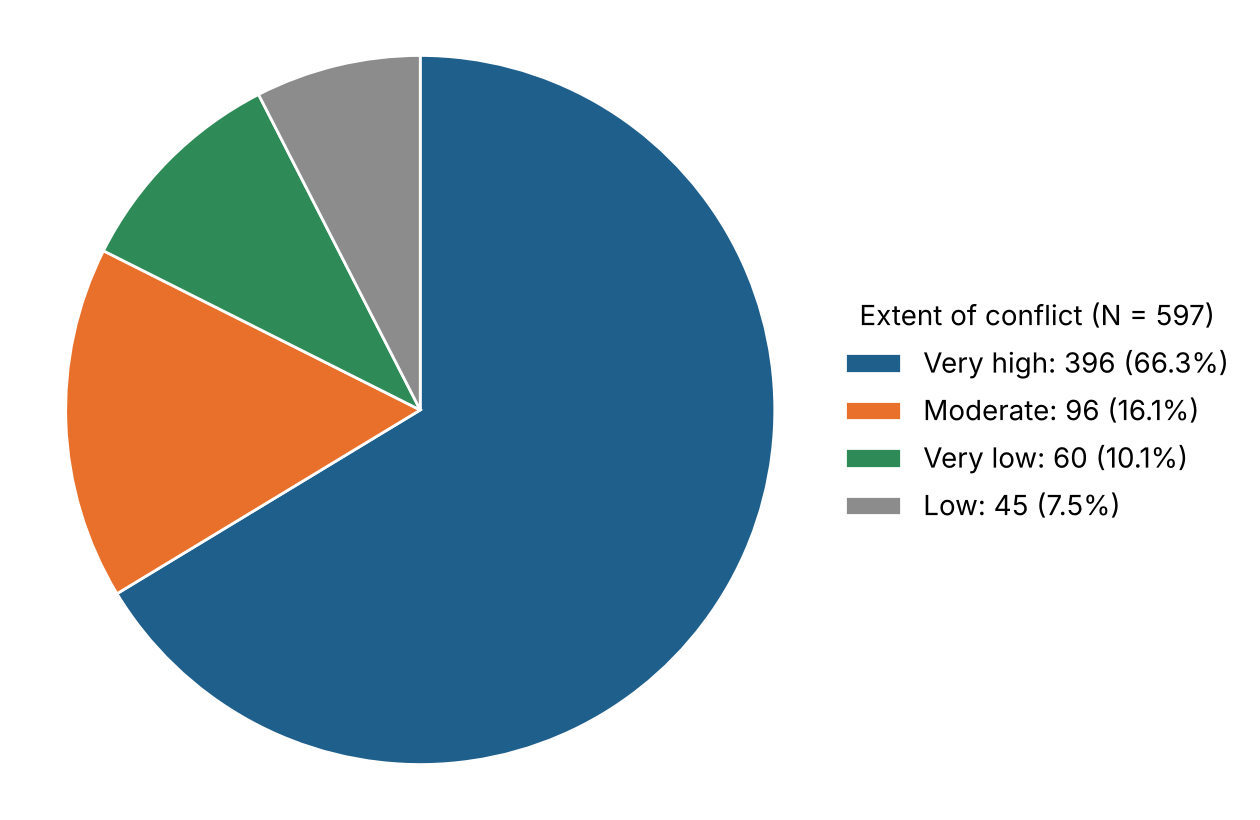
Figure 1 presents data on the extent of farmers/herders conflict in Benue North-East Senatorial Zone. Study findings indicated that 66.3% (396) of the respondents stressed that the level of farmers/herders conflict in Benue North-East Senatorial Zone is very high while 10.1% (60) of the respondents noted that the extent of the conflict is very low, 16.1% (96) of the respondents said the conflict between farmers and herders is moderate and 7.5% (45) of the respondents stressed that the conflict between the two groups is low. The above data reveal that there is a very high level of farmers/herders conflict in Benue North-East Senatorial Zone.
Data was collected from security agencies, traditional and religious leaders to ascertain the rate of farmers/herders conflict in Benue North-East Senatorial Zone. Study findings revealed that the level of farmers/herders conflict in Benue North-East Senatorial Zone is very high.
The IDIs findings revealed that the conflict between farmers and herders has escalated in recent time. Majority of the respondents maintained that the conflict between farmers and herders in the study area has gotten out of hand recounting that most farmers have lost count of how many times their crops have been destroyed by cattle.
4.2Factors responsible for the escalation of farmers/herders conflict in Benue North-East Senatorial Zone, Benue State
In addition to this, in-depth interviews (IDI) with stakeholders all corroborated this claim.
For instance, a traditional ruler at Tse-Ayati, Borikyo Council Ward, Ukum Local Government Area stated thus:
The most frequent complain we receive is the destruction of people’s crops by the Fulani cattle. When they first came, it wasn’t like that. They took them to graze in the day time and sent them back to sleep in the evening….later we saw they weren’t sleeping at all….they grazed at night….then they started putting up foolish behavior….They destroyed people’s belongings just like that…… In fact, crop destruction is a bane over here....it is a very, very big issue that we have to talk about” (IDI, 2025).
Without a doubt, the identification of crop destruction as a major cause of herder-farmer conflict is consistent with (Olabode and Ajibade 2010; Adebayo and Olaniyi, 2008; Turner et al., 2004; Tonah, 2000, 2003, and 2006; and Gefu and Gills, 1990) who have all acknowledged crop destruction as the main cause of herder-farmer conflicts. In fact, Turner et al. (2004) posited that crop destruction was not only restricted to damage to growing crops on the field but also included harvested crops
4.3Impact of farmers/herders conflict on crops production in Benue North-East Senatorial Zone
Data on the impact of farmers/herders conflict on crops production in Benue North-East Senatorial Zone is presented in Table 1:
| Impact | Frequency | Percentage (%) |
|---|---|---|
| Reduced food output | 192 | 32.2 |
| Increased food prices | 144 | 24.1 |
| Displacement and migration | 24 | 4.0 |
| Loss of crops and livestock | 168 | 28.1 |
| Food insecurity and malnutrition | 69 | 11.6 |
| Total | 597 | 100.0 |
Note: Source: Field survey, 2025.
Table 1 presents data on the impacts of farmers/herders conflict on crop production in Benue North-East Senatorial Zone. Study findings indicated that 32.2% (192) of the respondents stressed that reduction in food output is the major impact of farmers/herders conflict in the study area, 24.1% (144) of the respondents pointed to increase in food prices as the major impact of the farmers/herders conflict. Relatedly, 4% (24) of the respondents said displacement and migration has also had an impact on food production as a result of the farmers/herders conflict while 28.1% (168) of the respondents stressed that loss of crops and livestock is the major impact of the farmers/herders conflict on food production in Benue North-East Senatorial Zone and 11.6% (69) of the respondents pointed to food insecurity and malnutrition as the major impact.
| Variable | N | Mean | SD | df | r | Sig. |
|---|---|---|---|---|---|---|
| Farmers/herders conflict | 597 | 4.32 | 1.124 | 376 | 0.541 | 0.001 |
| Food production | 597 | 3.45 | 1.499 |
Note: Source: Field survey, 2026.
The result in Table 2 showed that farmers/herders conflict is statistically related to food production. This is because the significance level (0.001) is less than 0.05. The value of 0.541 implied that there is a positive correlation between farmers/herders conflict and food production in Benue North-East Senatorial Zone. Therefore, there is a significant inverse relationship between Farmers/Herders conflict and food productivity in Benue North-East Senatorial Zone is rejected. IDIs also agreed with the above result as majority of the interviewees also stressed that the conflict between farmers and herders has significantly reduced crops output in the study area. Many farmers are no longer able to cultivate their lands due to fear of attacks, leading to a substantial decrease in crop yields. This reduction in food output not only affects the local food supply but also impacts the livelihoods of those dependent on farming.
Similarly respondents also lamented that the persistent conflict has led to food insecurity not only in Benue North-East Senatorial Zone but the entire State. With less food being produced, prices have risen, making it difficult for many to afford basic necessities. This situation is particularly dire for vulnerable populations, including women and children, who are disproportionately affected by food shortages.
Responding, a 64 year old NKST pastor in Kwande LGA stated thus:
As a result of the farmers/herders conflict, many farmers have been forced to flee their homes and farmlands due to the violence. This displacement means that they are unable to tend to their crops, leading to further losses and decreased food production. The displacement also disrupts the social fabric of our community, exacerbating the overall crisis (IDI, 2026).
Similarly, a 57 year old community leader at Azege village in Logo LGA reiterated:
The destruction of crops, either by cattle or through direct attacks, has resulted in significant losses for farmers. Crops that were ready for harvest are often destroyed, and those that are not yet mature are frequently trampled by cattle. This loss of food crops further compounds the issue of food insecurity and economic hardship faced by farming communities (IDI, 2026)
The study concludes that there is a significant relationship between farmers/herders conflict and food production in Benue North-East Senatorial Zone.
The above findings on the impacts of farmers/herders conflict on food production collaborates the earlier findings of Ukamaka, Danjuma, Mbolle, Achonam & Mbadiwe, 2017, Nweze (2005), Olobatoke & Omowunmi (2017) who in their separate studies found that the farmers/herders conflict is a formidable challenge to economic development, threat to food security and sustainable livelihood of the agrarian communities The implication of the conflicts resulted in the insecurity, displacement, disability and death, poor food production, widespread hunger and malnutrition in the North-Central geo-political zone of Nigeria. Olobatoke & Omowunmi (2017) further stressed that many farmers and herders have lost their lives and herds, while others have experienced declining productivity in their herds. This according to Olobatoke & Omowunmi (2017) implies food security in Nigeria.In addition, Abughdyer (2016) also found that a total of 664.4 hectares (56.4%) of farmland were destroyed in Benue state between 2010-2014 in three local governments of Agatu, Guma and Logo as a result of farmers and herdsmen crises.
4.4Suggested measures to control farmers/herders conflict in Benue North-East Senatorial Zone of Benue State
Establishment of ranches, implementation of anti-open grazing and ranching law, construction of dams, establishment of state police among others were the major solutions suggested by respondents as measures that can reduce the farmers/herders conflict in the study area. Most respondents engaged in IDIs stressed that in 2017, the anti-open grazing law was enacted by the Benue State government; however, the full implementation of the law has been a problem as herders still graze freely around the state encroaching on people’s farmland which escalates the conflict.
Responding, a Village Head at Ikowe Village, Adzendeshi Council Ward, Ukum LGA stated thus:
Since 2017, there have been a law prohibiting open grazing in Benue State, unfortunately the law has not been implemented. Herders still graze freely in every part of the state destroying farmers’ crops and encroaching on their farmlands. The Federal Government should assist the state in terms of providing security personnel that will assist in implementing the law, this will go a long way in controlling the farmers/herders conflict (IDI, 2026)
Furthermore, respondents also mentioned that it was almost impossible to expel the Fulanis and therefore if they could improve their methods they could co-exist with them. The suggestion was to fence the cattle (ranching) so as to avoid the night grazing. Again, they suggested the provision of water for the cattle to avoid the contamination of water bodies meant for human consumption. The herders in this category were of the opinion that improvement should come in the form provision of better equipment that would enhance their operations. The difficulty with this suggestion is the fact that due to the large sizes of herds, provision of kraals and water was going to be problematic. Again, the herders are noted for their nomadic lifestyle. Any attempt to tame them was going to be fiercely opposed.
Establishment of state police was also suggested by respondents. This is premised on the fact that the provision of adequate security in the communities will go a long way to term the conflict. State police officers who will be natives of these communities will be in a better position to tackle the menace. Some of the respondents believed that with the presence of security in each community, the herders would be deterred from perpetrating crime. On the premise that outright evacuation would not help solve this problem, they were of the opinion that police presence would also ensure quick resolution of disputes and prevent the escalation of conflicts. The provision of state police was also going to face logistical challenges as claimed by the police commander. On his part, the DCD asserted that this would be a huge financial burden on the state and might be abused by state governors.
Some respondents suggested that Fulani herdsmen should be evacuated from the district. They believe that the outright evacuation of the Fulani and their cattle would be the best solution to the age old conflict. They believed that any other effort would only suspend the clash and as result the only solution was the outright rejection of the herders. The farmers contended that the herders came from somewhere and therefore should be forced to go back to where they came from.
Additionally some respondents proposed licensing and certification of the herdsmen as a measure to solve the frequent conflict between the two parties. The ECOWAS protocol on transhumance that sought to regulate transhumant pastoralists with International Transhumant Certificate (ITC) would help. Again, the certificates issued by the MOFA in 2003 were a good approach. The farmers believe was that, the herders would be properly screened before they are issued a license to operate and this would help separate the good ones from the bad ones who always foment trouble.
Finally, the payment of compensation was also suggested by some respondents as the best way of solving herder-farmer conflict in the study area. This recommendation is consistent with Hussein (1998) position that when due compensation is paid; it will not only calm nerves but lead to conflict resolution. However, the issue raised by some farmers was how to identify whose cattle destroyed the farm since most of these incidents do happen at night; and also the equivalent compensation to be paid. The farmers went further to allege that when a token is paid, the herders consider that they have bought the entire farm and so becomes the grazing ground for their cattle. The herdsmen on their part accused the farmers of deliberately inflating the value of items destroyed. What is clear from the two parties is how to determine the actual cost of the items damaged.
5Conclusion and policy statement
This study assessed crop-farmer/cattle-herder conflict and its impact as perceived by victims of crops production in Benue North-East Senatorial Zone, Benue State. The specific objectives of the study were to ascertain the rate of violent farmers/herders conflict, to identify the drivers of Farmers/Herders conflict, to ascertain the impacts of Farmers/Herders conflict on crops production, and also to identify measures to end the conflict, in order to inform a policy statement.
Factors associated with open cattle grazing such as land encroachment, destruction of crops, cattle rustling, incessant killings, politics, institutional failure and contamination of water bodies are identified as the major drivers of the farmers/herders conflict in the study area. On the perceived impact of farmers/herders conflict on food production, the study concludes that the conflict has led to reduced crop productivity output, increase in food prices, displacement and migration, loss of crops and, food insecurity and malnutrition.
Respondents however, suggested full implementation of the 2017 Benue State Anti-Open Grazing law, recovery of illegal weapons in the hands of farmers/herders, construction of ranches and dams, establishment of state police among others as the major solutions to control the farmers/herders conflict.
The following recommendations are suggested for proper conflict resolutions between herders and the farmers:
- 1. Implementation of Benue State Anti-Open Grazing Law: The effective implementation of the Benue State anti-open grazing law is crucial in controlling the conflict. This law aims to regulate grazing activities and prevent herders from allowing their cattle to graze on farmlands without permission. Strict enforcement of this law will help reduce clashes between farmers and herders. To this end, the federal government should collaborate with the Benue State government by providing a joint security task force that will help in implementing the Anti-Open Grazing Law, this will go a long way in reducing the farmers/herders conflict in Makurdi Local Government Area, Benue State
- 2. Construction of Ranches: The construction of ranches will provide a designated area for cattle grazing, reducing the likelihood of herders encroaching on farmlands. This will help to minimize conflicts and promote peaceful coexistence between farmers and herders. “Ranches will help to keep the cattle away from farms and reduce the tension between farmers and herders.
- 3. Establishment of State Police: The establishment of state police will enhance security in Makurdi LGA and enable a more effective response to conflicts. State police will be more familiar with the local context and can work closely with community leaders to prevent and resolve conflicts.
- 4. Recovery of Illegal Weapons: The recovery of illegal weapons is essential in reducing the violence associated with farmer-herder conflicts. By disarming individuals and groups, the risk of violent clashes will decrease, and communities will feel safer. “The recovery of illegal weapons will help to reduce the violence and make our communities safer. The government should therefore consider an amnesty programme that will compare criminals to submit their arms for peace deals.
- 5. Formal education for both the herders and the farmers should be encouraged through sensitization using individual and mass communication with the aid of extension agents and radio programmes respectively. Also nomadic education and vocational training schools should be strengthened to inform better ways of cattle rearing and farming practices.
- 6. Governments and communities should jointly cooperate to improve the security situation around the villages with a view to tackling the menace of cattle rustling.
- 7. Farmers and herders should form more cooperatives and associations that can represent their interest and enable them speak as a group. This may reduce the frequency of „jungle justice‟ by seeking redress from relevant authority whenever dispute arose.
- 8. Increased international border patrol during the dry season in order to obtain information on the influx of Udawa and Bukoloji herders from the neighboring countries especially Niger Republic. This will enable the authority to take a proactive decision on how to prevent violent confrontation.
References
- [1]Adelakun OE, Adurogbangba B, Akinbile LA (2015). Socioeconomic effects of farmer-pastoralist conflict on agricultural extension service delivery in Oyo State, Nigeria. Journal of Agricultural Extension, 19(2), 59–70.
- [2]Akpa PA, Akpar T, Fada SA (2023). Infiltration of small arms and light weapons into Benue Valley and its impact on the conflict between pastoralists and farmers. Wukari International Studies Journal, 7(1), 491.
- [3]Akpaeti A, Umoh G (2013). Farm resource productivity in conflict communities: Evidence from the Niger Delta region, Nigeria. Sky Journal of Agricultural Research, 2(3), 28–39.
- [4]Aliyu AS (2015). Causes and resolution of conflict between cattle herders and crop farmers in Katsina State. M.Sc. dissertation, Ahmadu Bello University, Zaria.
- [5]Amao O, Adeagbo TA, Olojede MO, Ogunleye BT, Ogundoyin CO (2018). Effects of Fulani herdsmen conflict on productivity of arable crop farmers in Ibarapa areas of Oyo State. International Journal for Research in Social Science and Humanities, 4(7), 1–12.
- [6]Amnesty International (2018a). Amnesty International reveals how many Nigerians Fulani herdsmen killed in 2018 (30 January 2018).
- [7]Amnesty International (2018b). Harvest of death: Three years of bloody clashes between farmers and herders in Nigeria. Amnesty International.
- [8]Bagu C, Smith K (2017). Past is prologue: Criminality and reprisal violence in Nigeria’s Middle Belt. Washington, DC: Search for Common Ground.
- [9]Baidoo I (2014). Farmer-herder conflicts: A case study of Fulani herdsmen and farmers in the Agogo traditional area of the Ashanti region. M.A. thesis, University of Ghana.
- [10]Blench R (2003). Transformation of conflict between pastoralists and cultivators in Nigeria.
- [11]Blench R (2004). Natural resource conflicts in north-central Nigeria. London: Mandaras.
- [12]Blench R (2010). Conflict between pastoralists and cultivators in Nigeria. Review paper prepared for DFID, Nigeria. Cambridge.
- [13]Brottem L (2020). The growing complexity of farmer-herder conflict in West and Central Africa. Amnesty International Ltd.
- [14]Chukwuma OA (2016). The trajectories and dynamics of herdsmen militancy in central Nigeria. Journal of Humanities and Social Policy, 2(1), 22–30.
- [15]Daily Trust (2019). Why FG is establishing Ruga settlements – Presidency. 1 July 2019. https://www.dailytrust.com.ng/why-fg-is-establishing-ruga-settlements-presidency.html
- [16]Davidheiser M, Luna AM (1996). From complementarity to conflict: A historical analysis of farmer-Fulbe relations in West Africa.
- [17]Davidheiser M, Luna AM (2008). From complementarity to conflict: A historical analysis of farmer-Fulbe relations in West Africa. African Journal on Conflict Resolution, 8(1), 77–104.
- [18]Genyi G (2014). Ethnic and religious identities shaping contestation for land based resources: The Tiv farmers and pastoralists conflicts in central Nigeria. Paper presented at the First Annual International Conference on Ethnic and Religious Conflict Resolution and Peace Building, New York City.
- [19]Gever VC (2014). The mass media and the challenge of peace building between farmers and herdsmen in north central Nigeria. Paper presented at the Keffi International Conference on Politics between Nations: 100 years of Security in Nigeria, 5–7 November 2014, Nasarawa State University, Keffi.
- [20]Gever VC, Essien CF (2019). Newspaper coverage of the herdsmen–farmers conflict in central Tiv Land, Benue State, Nigeria. Media, War & Conflict, 12(1), 102–120.
- [21]Gundu ZA (2017). Opening remarks presented at the International Conference on “Herdsmen and Farmers Conflict: Learning from the Past”, Centre for Research Management, Benue State University, 14–15 March 2017.
- [22]ICG (2014). The security challenges of pastoralism in Central Africa. International Crisis Group.
- [23]ICG (2017). Herders against farmers: Nigeria’s expanding deadly conflict. Africa Report No. 252. International Crisis Group.
- [24]ICG (2018). Stopping Nigeria’s spiralling farmer-herder violence. Africa Report No. 262. International Crisis Group.
- [25]IIED (2020). Farmer–herder conflict in Africa: Re-thinking the phenomenon? IIED working paper. London: International Institute for Environment and Development.
- [26]Keghku T, Alom K, Fanafa D (2019). Herders and farmers conflict and its implication for the 2019 general elections in Nigeria: What can public relations do? American International Journal of Social Science, 8(1), 44. https://doi.org/10.30845/aijss.v8n1p7
- [27]Mikailu N (2016). Making sense of Nigeria’s Fulani-farmer conflict. BBC News. http://www.bbc.com/news/world-africa-36139388
- [28]New York Times (2018). Nigerian herders face threat from farmers competing for land (by D. Searcey, 22 September 2018). https://www.nytimes.com/2018/09/22/world/africa/africa-nigeria-herders-farmers-battle.html
- [29]Nomor DT, Ominyi SO (2021). Impact of herdsmen-farmers’ conflict on small off-farm businesses in Benue State. Journal of Economics and Allied Research, 6(3).
- [30]Nweze NJ (2005). Minimizing farmer-herder conflicts in FADAMA areas through local development plans: Implications for increased crop/livestock productivity in Nigeria. Paper presented at the 30th Annual Conference of the Nigerian Society for Animal Production, 20–24 March 2005.
- [31]Ofem OO, Inyang B (2014). Livelihood and conflict dimension among crop farmers and Fulani herdsmen in Yakurr region of Cross River State. Mediterranean Journal of Social Sciences, 5(8), 512–519.
- [32]Ofuoku AU, Isife BI (2009). Causes, effects and resolutions of farmers-nomadic cattle herders conflict in Delta State, Nigeria. International Journal of Sociology and Anthropology, 1(2), 47–54.
- [33]Okoro JP (2018). Herdsmen/farmers conflict and its effects on socio-economic development in Nigeria. Journal of Peace, Security and Development, 4(1), 143–158.
- [34]Oli NP, Ibekwe CC, Nwankwo IU (2018). Prevalence of herdsmen and farmers conflict in Nigeria. International Journal of Innovative Studies in Sociology and Humanities, 3(1).
- [35]Olu-Adeyemi L (2017). Deprivation, frustration and aggression: An interrogation of Fulani herdsmen terror in Nigeria. Advances in Social Sciences Research Journal, 4(15), 1–13.
- [36]Oxfam (2008). Survival of the fittest: Pastoralism and climate change in East Africa. Oxfam Briefing Paper 116.
- [37]Peel R (2018). Sir Robert Peel’s policing principles. Law Enforcement Action Partnership, U.S.
- [38]Popoola MA, Olawoale SM, Muftau FA (2020). Effect of communal conflict on economic activities in Osun State, Nigeria. Business and Management Research Journal, 10(2), 41–46.
- [39]Premium Times (2018). 17 December 2018. http://www.premiumtimesng.com
- [40]Regional Security Council (2012). A plan for the evacuation of Fulani cattle from Abrewapong, Mankala, Nyamebekyere, Kowereso, Adoniemu, Bebuoso and Brahabebome, all in the Agogo traditional area (pp. v–10). Kumasi, Ghana.
- [41]Shakhnazarov G (1978). The destiny of the world: The socialist shape of things to come. Moscow: Progress Publishers.
- [42]Shettima AG, Tar UA (2008). Farmer–pastoralist conflict in West Africa: Exploring the causes and consequences. Information, Society and Justice, 1(2), 163–184.
- [43]The Punch (2018). 24 December 2018. http://www.punchng.com
- [44]Travils L (2008). Policing in America: A balance of forces. Pearson/Prentice Hall.
- [45]Van’t Hooft K, Millar D, Django S (2005). Endogenous livestock development: Report from a workshop in Cameroon. Compas Magazine, 38–39.