Real Estate Investment Performance
Alternative Real Estate Investment Strategies and Perceived Investment Performance in Emerging Markets: Evidence from Warri, Delta State, Nigeria
1Southern Delta University, Ozoro, Delta State, Nigeria
2Nnamdi Azikiwe University, Awka, Anambra State, Nigeria
Published October 2026
Abstract
This study examined alternative real estate investment strategies and their perceived implications for investment performance in Warri, Delta State, Nigeria. A descriptive cross-sectional survey design was adopted, using 67 responses from property-market stakeholders. Data were collected through structured questionnaires and analysed using descriptive statistics, percentages, rankings and five-point Likert-scale mean scores. The findings revealed that Real Estate Investment Trusts (REITs) had the highest recognition (28.4%), followed by crowdfunding (25.4%), fractional ownership (23.9%) and blockchain-based investment (9.0%). Financial innovation (M = 4.20) and technological advancement (M = 4.01) were the leading drivers. Weak regulation (31.3%) was the major challenge, while stronger government regulation (29.7%) was the leading improvement measure, followed by investor education (21.9%). The study concludes that alternative investment strategies can potentially improve property-investment accessibility and flexibility, but sustainable performance depends on effective regulation, transparency, investor education, reliable technology and cybersecurity. It recommends strengthening regulatory oversight and investor protection to enhance confidence and support sustainable alternative real estate investment in Warri.
Keywords: alternative real estate investment; investment performance; REITs; crowdfunding; fractional ownership; financial innovation; PropTech; Warri; Nigeria
1Introduction
1.1Background to the study
Real estate investment has traditionally involved the acquisition, development, ownership, leasing and management of physical properties for rental income, capital appreciation, wealth preservation and portfolio diversification. However, financial market developments, digital technology, urbanization, globalization and changing investor preferences have transformed participation in property markets. This transformation, driven partly by the financialization of real estate, has encouraged alternative investment strategies such as Real Estate Investment Trusts (REITs), crowdfunding, fractional ownership, private equity, syndication, exchange-traded property funds and blockchain-based tokenisation.
These alternative investment models enable investors to access property-related returns without necessarily purchasing and managing entire properties. They can potentially improve accessibility, diversification, liquidity and investment participation, particularly in emerging markets where high property prices, limited mortgage access and inflation constrain direct ownership. Nevertheless, they also present challenges, including market volatility, regulatory uncertainty, cybersecurity threats, information asymmetry, governance concerns and technological dependence.
In Nigeria, these developments are particularly relevant given the varying levels of property market development across cities. Warri, Delta State, provides an important context for examining alternative real estate investment because of its commercial significance and the influence of economic activity, population growth and investment demand on its property market. However, empirical evidence on alternative investment strategies and their perceived implications for investment performance in Warri remains limited. Consequently, this study examines stakeholders’ perceptions of these investment mechanisms, the factors driving their adoption, the challenges restricting their development, and the institutional and market conditions necessary to enhance their contribution to investment performance. By focusing on Warri, the study provides context-specific insights into alternative real estate investment within Nigeria.
1.2Statement of the problem
Conventional real estate investment requires substantial capital and exposes investors to management responsibilities, illiquidity, transaction costs and location-specific risks. Rising property prices and economic uncertainty have further encouraged the development of alternative investment strategies, including Real Estate Investment Trusts (REITs), crowdfunding, fractional ownership, syndication and blockchain-based investment, which offer potential opportunities for broader participation in property markets.
Despite their potential, these strategies face challenges such as weak regulation, inadequate investor protection, market volatility, cybersecurity risks and limited transparency. These factors may create uncertainty over ownership rights, disclosure, platform accountability and investment decisions. Such challenges are particularly relevant to Warri, where the effectiveness of alternative investment depends on local market conditions, investor awareness, digital infrastructure and regulatory confidence.
The research problem, therefore, lies in the limited empirical evidence on the recognition of alternative real estate investment strategies, the factors driving their development, the challenges affecting their effectiveness and their perceived implications for investment performance in Warri. To address these gaps, the study analyses responses from 67 property-market stakeholders, providing context-specific insights into alternative real estate investment within the city.
1.3Aim of the study
The aim of this study is to examine alternative real estate investment strategies and their perceived implications for investment performance in Warri, Delta State, Nigeria.
1.3.1Specific objectives
The study sought to:
- 1. identify the major alternative real estate investment strategies recognized in Warri;
- 2. assess the factors influencing the adoption and growth of alternative real estate investment strategies in Warri;
- 3. examine the major challenges limiting the effectiveness of alternative real estate investment strategies in Warri;
- 4. assess the perceived implications of alternative investment strategies for real estate investment performance in Warri.
1.4Research questions
- 1. What are the major alternative real estate investment strategies recognized in Warri?
- 2. What factors influence the adoption and growth of alternative real estate investment strategies in Warri?
- 3. What are the major challenges affecting alternative real estate investment strategies in Warri?
- 4. What are the perceived implications of alternative real estate investment strategies for investment performance in Warri?
1.5Research hypotheses
H0: Alternative real estate investment strategies have no statistically significant relationship with perceived real estate investment performance in Warri, Delta State, Nigeria.
H1: Alternative real estate investment strategies have a statistically significant relationship with perceived real estate investment performance in Warri, Delta State, Nigeria.
1.6Significance of the study
The study is relevant to investors in Warri because it provides information about alternative mechanisms for gaining exposure to property investment and the risks associated with them. It may assist investors in comparing accessibility, diversification, liquidity, technological dependence and regulatory exposure.
For property professionals operating in Warri, the findings provide evidence concerning changing patterns of investment behaviour and the increasing integration of real estate with financial technology. This is particularly relevant where developers and investors seek mechanisms that can widen access to capital without relying exclusively on conventional direct ownership.
For policymakers and regulators, the Warri evidence highlights the need for regulatory frameworks capable of protecting investors while allowing financial and technological innovation to develop. Particular attention is required in disclosure, cybersecurity, platform governance, digital ownership and investor protection.
Academically, the study contributes to the limited empirical literature on alternative real estate investment in emerging Nigerian property markets. Its Warri focus provides contextual evidence that can complement studies conducted in Lagos, Abuja and other metropolitan markets.
1.7Scope of the study
The study is geographically focused on Warri, Delta State, Nigeria. Conceptually, it covers REITs, real estate crowdfunding, fractional ownership and blockchain-based real estate investment as the alternative strategies for which quantitative recognition results are reported. It also examines drivers, challenges, improvement measures and perceived investment-performance implications.
2Literature review
2.1Concept of alternative real estate investment
Alternative real estate investment refers broadly to investment mechanisms through which individuals or institutions obtain exposure to property-related returns without necessarily purchasing and managing entire physical properties directly. These mechanisms have emerged in response to the limitations of conventional property investment, including high capital requirements, illiquidity, management responsibilities and geographical restrictions. The growing financialisation of real estate has further encouraged the development of investment structures that allow property interests to be pooled, securitised and incorporated into diversified investment portfolios (Aalbers, 2019; Fuller, 2021).
The major forms of alternative real estate investment include Real Estate Investment Trusts (REITs), crowdfunding, fractional ownership, private equity real estate, syndication, exchange-traded property funds and blockchain-based tokenisation. These mechanisms differ in their legal and financial structures but generally reduce the need for investors to acquire and manage entire properties directly (Baum, 2020; Cumming et al., 2019; Garcia-Teruel & Simón-Moreno, 2021).
In the context of Warri, alternative real estate investment is important because it may provide a link between conventional property ownership and the financial and digital mechanisms through which investors access property-related assets. However, the relevance of these mechanisms depends not only on their potential advantages but also on investor awareness, confidence, regulation, technological development and the characteristics of the local property market.
2.2Major forms of alternative real estate investment
2.2.1Real Estate Investment Trusts (REITs)
REITs are among the established alternative mechanisms for property investment. They enable investors to obtain exposure to income-generating real estate through investment vehicles that hold or finance property assets. Their potential advantages include professional management, portfolio diversification and access to property investment without direct ownership of entire properties. Depending on their structure and market listing, REITs may also offer greater liquidity than direct property ownership (Dabara, 2021; Lim & Ong, 2020; Newell & Marzuki, 2021).
The findings of the present study indicate that REITs were the most recognised strategy among the four explicitly reported categories, accounting for 28.4%. In Warri, this level of recognition suggests that a formalised property-investment vehicle may be more familiar to stakeholders than newer, technology-dependent structures. Nevertheless, recognition alone does not establish actual adoption or superior investment performance.
2.2.2Real estate crowdfunding
Real estate crowdfunding involves pooling funds from multiple investors to finance property acquisition, development or related projects. It can lower individual capital requirements and provide developers with access to a broader pool of investors. However, its effectiveness depends on factors such as investor confidence, digital infrastructure, transparency, project quality and regulatory oversight (Cumming et al., 2019; Perren & Kozlowski, 2019).
The present study found that crowdfunding ranked second among the reported strategies, accounting for 25.4%. Its relatively high level of recognition is relevant to Warri because crowdfunding may widen participation beyond investors who can independently finance an entire property or development project. However, its practical benefits depend on the credibility of the platforms, the quality of the underlying projects and the safeguards available to investors.
2.2.3Fractional ownership
Fractional ownership involves dividing an investment interest in a property among multiple investors. This arrangement can enable individuals to participate in higher-value property assets with lower individual capital commitments. Nevertheless, issues relating to legal ownership, management responsibilities, transferability, resale and exit mechanisms remain important considerations (Baum, 2020; Zolfaghari et al., 2021).
The findings of the present study show that fractional ownership accounted for 23.9%, placing it relatively close to crowdfunding. This suggests that shared participation in property is an important aspect of the alternative-investment landscape among stakeholders connected with Warri. However, the extent to which this recognition translates into actual participation requires further investigation.
2.2.4Blockchain-based real estate investment
Blockchain-based real estate investment represents a technology-driven approach to property investment. Through tokenization, ownership interests or investment rights may be represented digitally, potentially supporting fractional participation and the transfer of investment interests. These applications may improve transaction efficiency and record-keeping, although their effectiveness depends on technological reliability, legal recognition and appropriate regulatory arrangements (Garcia-Teruel & Simón-Moreno, 2021; Zhang & Li, 2023).
In the present study, blockchain-based investment accounted for only 9.0%, making it the least recognized of the four explicitly quantified strategies. This finding suggests a possible gap between the potential applications of advanced property technology and stakeholder recognition in Warri. It does not, however, establish whether the low percentage reflects limited awareness, limited availability or other market-specific constraints.
2.3Drivers of alternative real estate investment
Alternative real estate investment is driven by financial innovation, technological advancement, property prices, investor preferences and economic uncertainty (Baum, 2020; Fuller, 2021). In Warri, financial innovation ranked highest (mean = 4.20), followed by technological advancement (4.01), investor preference (3.62), high property prices (3.53) and economic uncertainty (3.38). These findings identify financial innovation and digital transformation as the strongest perceived drivers, consistent with literature on real estate financialization and property technology (Aalbers, 2019; Baum, 2020).
2.4Challenges of alternative real estate investment
Despite their potential benefits, alternative real estate investment mechanisms face significant institutional, financial and technological challenges. Regulatory uncertainty may create ambiguity concerning ownership rights, investor protection, disclosure requirements, taxation and platform accountability. Cybersecurity risks are particularly relevant to digitally mediated investment structures, where the security of investor information and financial transactions is essential (Baum, 2020; Garcia-Teruel & Simón-Moreno, 2021).
Market volatility presents another challenge, particularly for REITs and other property-linked securities whose market values may fluctuate in response to broader financial conditions. Inadequate disclosure and information asymmetry may also undermine investor confidence and expose investors to inappropriate investment decisions (D’Lima et al., 2022; Lim & Ong, 2020).
The findings from Warri reinforce the importance of these concerns. Weak regulation was the most frequently reported challenge, accounting for 31.3%, followed by market volatility at 20.9%. Cybersecurity risks and lack of transparency each accounted for 16.4%, while low investor awareness recorded 14.9%.
These results suggest that regulatory weaknesses, market uncertainty and information-related concerns are important perceived barriers to alternative real estate investment in Warri. Addressing these challenges may require clearer regulatory provisions, improved disclosure, stronger digital security and more effective investor education.
2.5Alternative investment strategies and investment performance
Real estate investment performance encompasses returns, liquidity, risk and diversification, with alternative strategies offering potential benefits depending on their associated risks (Bianchi et al., 2019; Riaz et al., 2020). REITs may improve liquidity and diversification but remain exposed to market volatility (D’Lima et al., 2022; Newell & Marzuki, 2021). Crowdfunding expands access but involves project and platform risks (Cumming et al., 2019; Perren & Kozlowski, 2019), while fractional ownership may create resale challenges (Zolfaghari et al., 2021). Blockchain-based investment offers transaction efficiency but depends on technological reliability, legal recognition and investor confidence (Garcia-Teruel & Simón-Moreno, 2021; Zhang & Li, 2023). In Warri, alternative investment performance cannot be conclusively established without actual return data; therefore, sustainable outcomes depend on effective regulation, transparency, investor education and sound investment decisions.
2.6Theoretical framework
2.6.1Modern portfolio theory
Modern Portfolio Theory provides a useful framework for explaining the potential role of alternative real estate investments in portfolio diversification. The theory emphasizes the relationship between investment risk and expected return and proposes that investors can improve portfolio outcomes by combining assets with appropriate risk and return characteristics.
Alternative real estate investment strategies may contribute to diversification by providing exposure to property without requiring direct ownership. However, the benefits depend on the relationship between the investment and other portfolio assets, as well as the risks associated with each investment structure (Bianchi et al., 2019; Riaz et al., 2020).
In relation to Warri, this theory provides a basis for examining whether stakeholders perceive alternative property-investment mechanisms as opportunities to broaden investment participation and diversify risk. However, the survey findings alone do not establish the actual risk-adjusted returns or diversification benefits achieved by investors.
2.6.2Financialization theory
Financialization Theory provides a complementary perspective by explaining the increasing integration of real estate into financial markets and the transformation of property from a predominantly physical asset into a financial investment instrument. The development of REITs, property funds, crowdfunding and tokenization reflects this broader transformation in the ways property assets are financed, held and traded (Aalbers, 2019; Fuller, 2021).
This theory is particularly relevant to the findings from Warri because financial innovation recorded the highest mean score among the reported drivers of alternative real estate investment. The result suggests that respondents perceive changes in financial structures and investment mechanisms as important to the development of the local property-investment environment. Financialization Theory therefore helps explain the conceptual relationship between financial innovation and the emergence of alternative property-investment opportunities.
2.7Empirical gap
Existing literature examines alternative real estate investment through financialization, REITs, crowdfunding, property technology and portfolio diversification (Aalbers, 2019; Cumming et al., 2019; Dabara, 2021; Riaz et al., 2020). However, limited location-specific evidence exists on awareness, adoption, drivers, challenges and perceived investment performance in Warri. This study addresses the gap by examining 67 property-market stakeholders to provide context-specific insights without assuming that alternative investment guarantees superior returns.
3Methodology
3.1Research design
The study adopted a cross-sectional descriptive survey design. This design was appropriate because the study sought to obtain information concerning existing investment practices, perceptions, adoption patterns, drivers and challenges without manipulating the study environment.
3.2Population of the study
The population comprised stakeholders directly or indirectly involved in alternative real estate investment in Warri, Delta State, Nigeria. These included real estate investors, property developers, financial analysts, real estate investment professionals, FinTech professionals, and other relevant property-market participants operating within Warri.
3.3Sample size and sampling procedure
The sample size for this study was determined using the Taro Yamane formula. The study focused on stakeholders directly or indirectly involved in alternative real estate investment within Warri, Delta State, Nigeria, including real estate investors, property developers, financial analysts, real estate investment professionals, FinTech professionals, and other relevant property-market participants.
For the purpose of determining the sample size, an accessible population of 80 respondents was adopted, while a 5% level of precision (0.05) was used. The Taro Yamane formula is:
where n is the sample size, N is the population size and e is the limit of tolerable error (5%). Hence:
3.4Sources and instrument of data collection
Primary data were obtained using a structured questionnaire. Secondary information was obtained from relevant academic literature, professional publications, reports and other documentary sources.
The questionnaire covered demographic characteristics; recognition/adoption of alternative investment strategies; factors influencing their growth; challenges affecting their development; implications for investment performance; and measures for improving their effectiveness.
Likert-scale items were measured on a five-point response scale where applicable.
3.5Method of data analysis
The data were presented and analyzed using frequencies, percentages, mean scores, rankings, and bar charts. Frequencies and percentages were employed to summarize the distribution and characteristics of respondents and to present categorical responses in a clear and interpretable manner. Bar charts were used to provide a visual representation of the distribution of responses and to facilitate comparison across the relevant categories and variables.
Mean scores were used to assess respondents’ perceptions and levels of agreement with the statements measured using a five-point Likert scale, while ranking was employed to determine the relative importance or prominence of the assessed factors based on their mean scores. Where percentages were reported in the source data, the values were retained as reported. Similarly, reported mean scores were interpreted in accordance with the five-point Likert-scale measurement framework adopted for the study. This combination of descriptive and graphical techniques provided a systematic and transparent basis for presenting and interpreting the findings.
4Data presentation and analysis
4.1Introduction
This section presented and analyzed the quantitative findings available from the 67 completed responses. The presentation was organized around the study objectives: recognition of alternative investment strategies, drivers of adoption and growth, challenges affecting effectiveness, and measures for improvement. The discussion then connected these findings to perceived investment performance in Warri.
4.2Recognized alternative real estate investment strategies in Warri
The first empirical objective examined the alternative real estate investment strategies recognized by respondents in Warri, Delta State, Nigeria. The findings indicate that Real Estate Investment Trusts (REITs) were the most widely recognized strategy, accounting for 28.4% of the reported responses. This was followed by real estate crowdfunding (25.4%) and fractional ownership (23.9%), while blockchain-based real estate investment (9.0%) recorded the lowest level of recognition among the strategies reported.
The distribution of the reported responses is presented in Table 1, while Figure 1 provides a graphical representation of the relative recognition of the identified alternative real estate investment strategies.
| Rank | Alternative real estate investment strategy | Recognition (%) | Approximate equivalent (n) |
|---|---|---|---|
| 1 | Real Estate Investment Trusts (REITs) | 28.4 | 19 |
| 2 | Real estate crowdfunding | 25.4 | 17 |
| 3 | Fractional ownership | 23.9 | 16 |
| 4 | Blockchain-based real estate investment | 9.0 | 6 |
Source: Field survey, 2026.
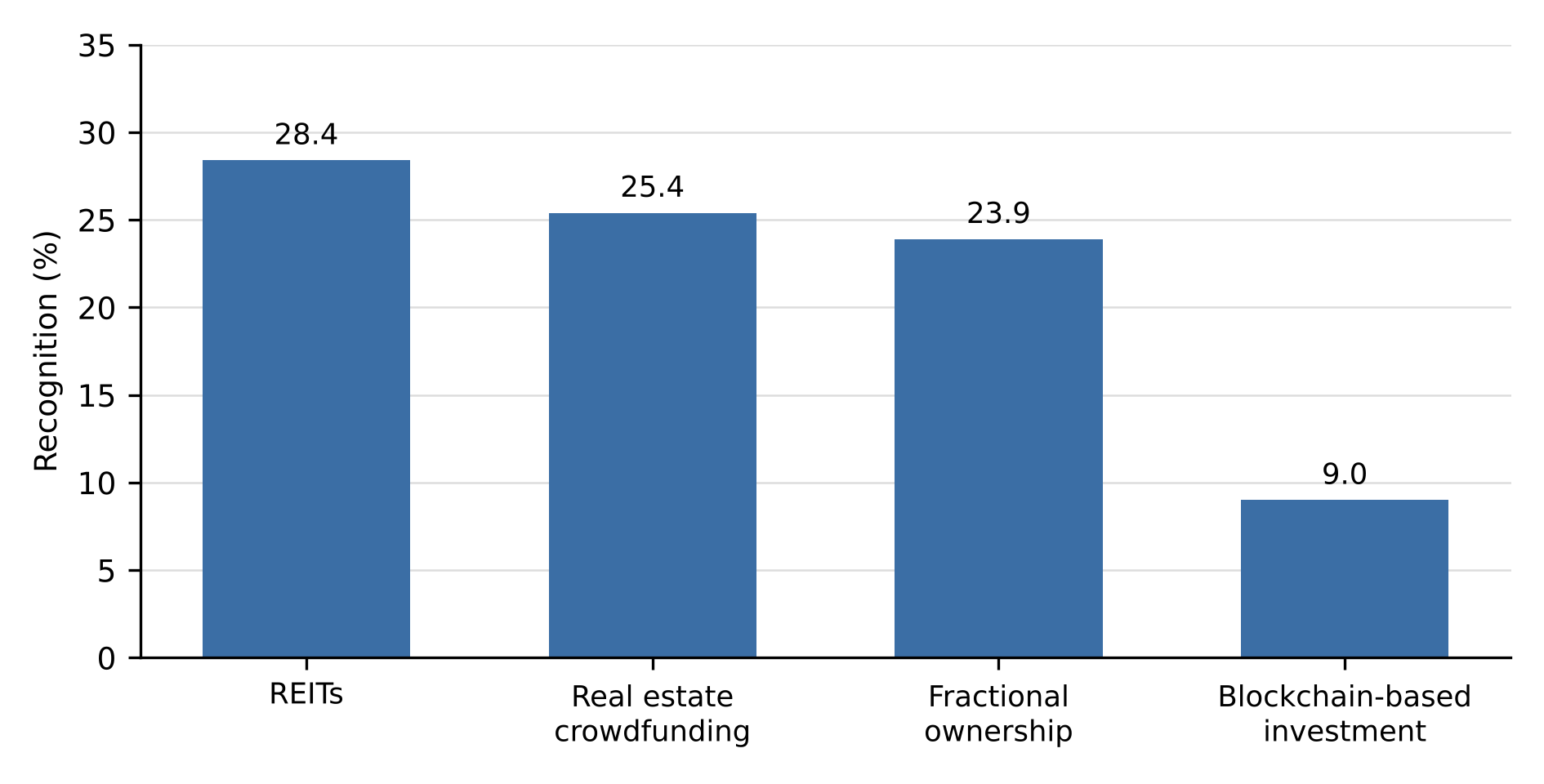
The findings indicate that REITs recorded the highest reported recognition in Warri, possibly because they are a more established and familiar form of indirect property investment. Crowdfunding and fractional ownership also recorded substantial recognition, highlighting the relevance of pooled and shared property-investment models. Blockchain-based investment had the lowest recognition (9.0%), suggesting the need for greater awareness, investor confidence, regulatory clarity and technological readiness. However, the four reported categories account for only 86.7%; therefore, they should not be regarded as an exhaustive representation of all alternative investment strategies recognised by respondents. Figure 1 consequently presents only the four explicitly reported categories.
4.3Factors influencing adoption and growth in Warri
The second objective of the study examined the factors influencing the adoption and growth of alternative real estate investment in Warri. Respondents were asked to rate five identified factors using a five-point Likert scale, with higher mean scores indicating a stronger perceived influence on the adoption and growth of alternative real estate investment (Table 2 and Figure 2).
| Rank | Factor | Mean score |
|---|---|---|
| 1 | Financial innovation | 4.20 |
| 2 | Technological advancement | 4.01 |
| 3 | Investor preference | 3.62 |
| 4 | High property prices | 3.53 |
| 5 | Economic uncertainty | 3.38 |
Source: Field survey, 2026. Note: Mean scores are based on a five-point Likert scale, with higher scores indicating stronger perceived influence. Ranking is based on the magnitude of the reported mean scores.
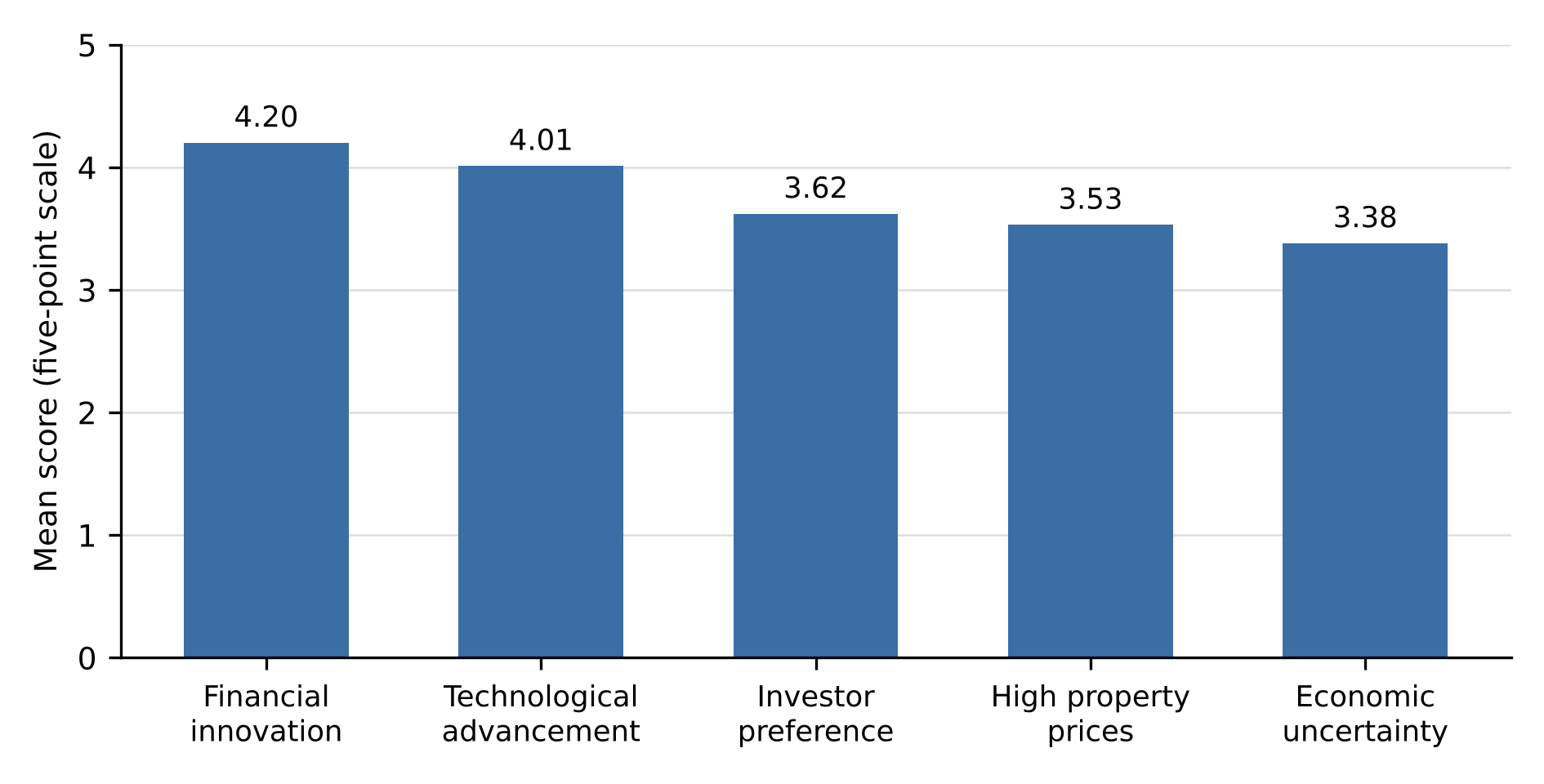
Financial innovation recorded the highest mean score (4.20), followed by technological advancement (4.01), investor preference (3.62), high property prices (3.53) and economic uncertainty (3.38). These findings suggest that alternative real estate investment in Warri is primarily driven by financial and technological innovation, while changing investor preferences and property-market pressures provide additional incentives for adopting more accessible and flexible investment structures.
4.4Challenges affecting alternative real estate investment in Warri
The third objective of the study examined the challenges affecting alternative real estate investment in Warri. Respondents identified several constraints that may hinder the adoption and growth of alternative real estate investment. The reported percentages were used to determine the relative importance of each challenge, while the ranking indicates the position of each challenge in relation to the others. The findings are presented in Table 3 and Figure 3.
| S/N | Challenge | Reported percentage (%) | Rank |
|---|---|---|---|
| 1 | Weak regulation | 31.3 | 1st |
| 2 | Market volatility | 20.9 | 2nd |
| 3 | Cybersecurity risks | 16.4 | 3rd |
| 4 | Lack of transparency | 16.4 | 3rd |
| 5 | Low investor awareness | 14.9 | 5th |
Source: Field survey, 2026.
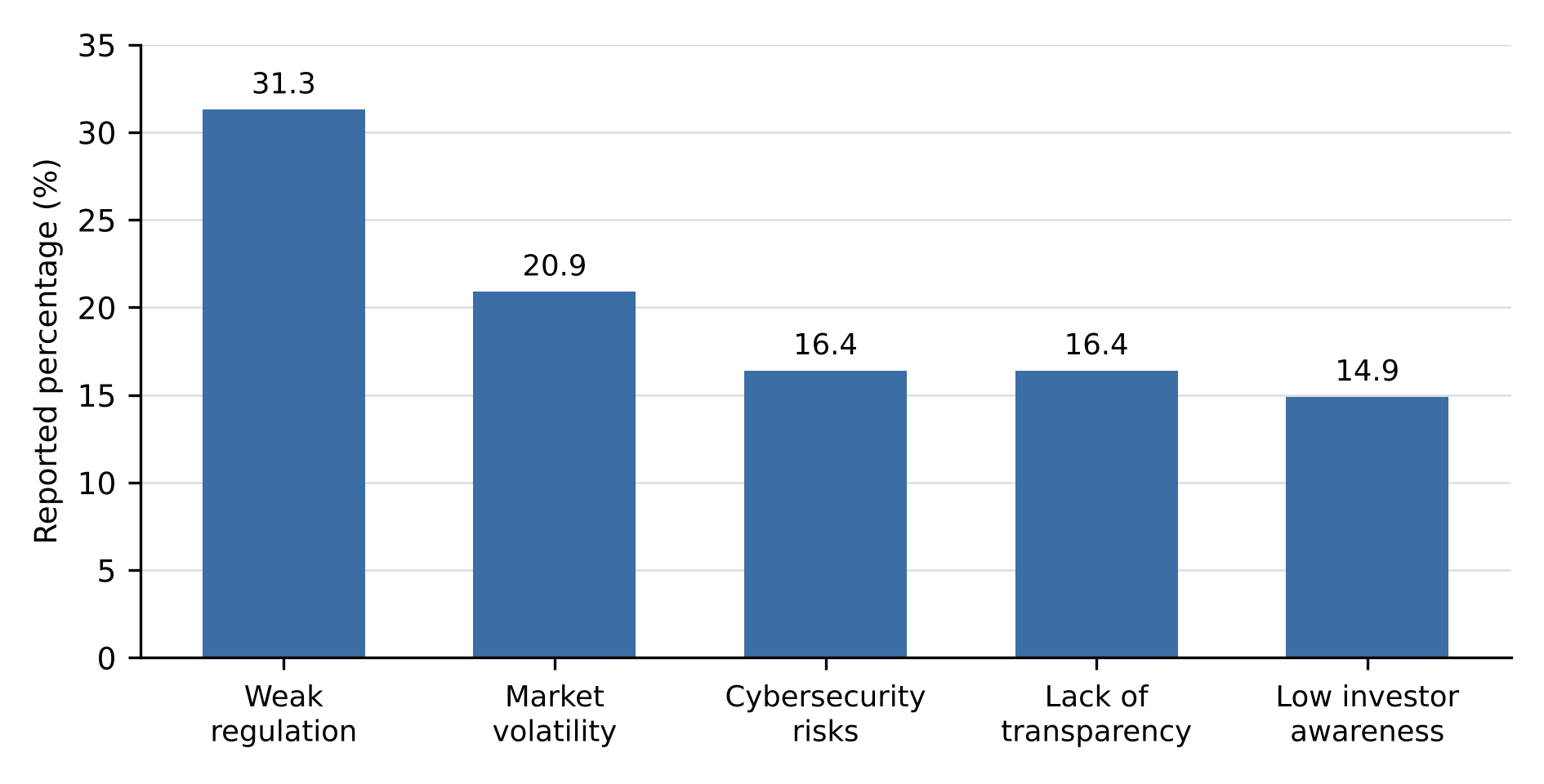
Weak regulation was the leading challenge (31.3%), followed by market volatility (20.9%), cybersecurity risks and lack of transparency (16.4% each), and low investor awareness (14.9%). These findings highlight the importance of effective regulation, investor protection, reliable information disclosure, cybersecurity and investor education. Overall, alternative real estate investment in Warri faces institutional, financial, informational and technological constraints that must be addressed to support investor confidence and sustainable market development.
4.5Measures for improving alternative real estate investment in Warri
The fourth empirical issue concerns measures for improving the effectiveness and sustainability of alternative investment (Table 4 and Figure 4).
| S/N | Improvement measure | Reported percentage (%) | Rank |
|---|---|---|---|
| 1 | Stronger government regulation | 29.7 | 1st |
| 2 | Investor education | 21.9 | 2nd |
Source: Field survey, 2026.
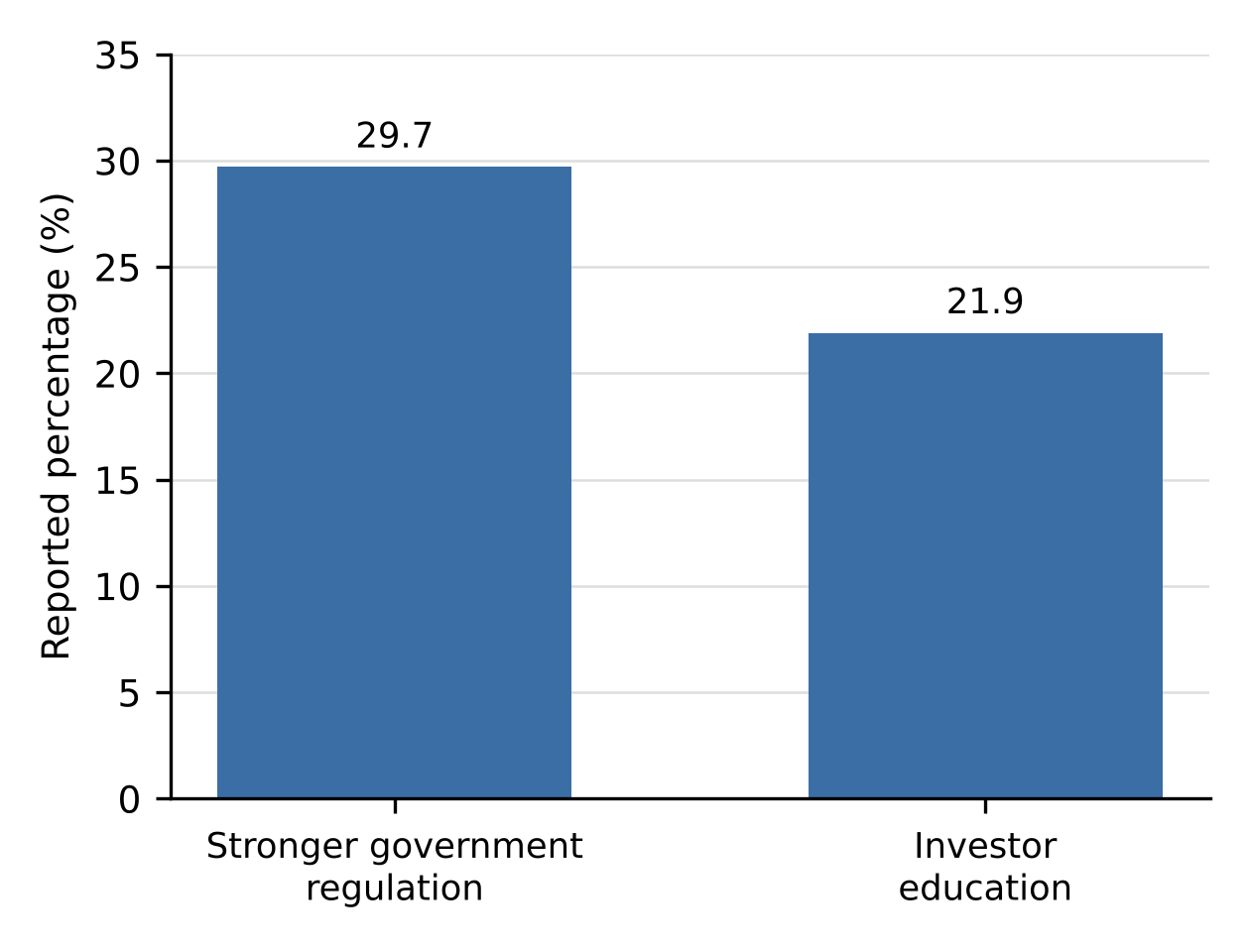
Table 4 presents the reported measures for improving the effectiveness and sustainability of alternative investment. The results indicate that stronger government regulation ranked first, with 29.7%, suggesting that respondents considered effective government regulation an important measure for improving alternative investment practices. Investor education ranked second, with 21.9%, indicating that increasing investors’ knowledge and awareness is also considered important. These findings suggest that strengthening regulatory frameworks and promoting investor education may contribute to improving the effectiveness and sustainability of alternative investment. However, the results reflect the views of the respondents and do not, on their own, establish a causal relationship between these measures and investment sustainability.
4.6Perceived implications for investment performance in Warri
The study views investment performance as multidimensional, encompassing accessibility, diversification, liquidity, transaction efficiency, risk management, and financial returns. The recognition of REITs, crowdfunding, and fractional ownership, alongside strong mean scores for financial innovation and technological advancement, suggests that respondents perceive alternative investment as relevant to property investment in Warri. However, the available data do not provide actual investment returns or a numerical performance index; therefore, claims of statistically significant performance effects cannot be established. Overall, alternative investment may improve accessibility and flexibility, but its performance depends on regulatory protection, technological reliability, market conditions, and the strength of the underlying investment.
4.7Summary of empirical findings
The empirical findings reveal that Real Estate Investment Trusts (REITs) were the most recognized alternative real estate investment strategy in Warri, accounting for 28.4%, followed by crowdfunding (25.4%), fractional ownership (23.9%), and blockchain-based investment (9.0%). Financial innovation emerged as the strongest reported driver of alternative real estate investment, with a mean score of 4.20, followed by technological advancement at 4.01, highlighting the importance of innovation and digital transformation in the property investment sector. However, weak regulation was identified as the leading challenge (31.3%), followed by market volatility (20.9%), while cybersecurity risks and lack of transparency each accounted for 16.4%. Regarding measures for improvement, stronger government regulation ranked first at 29.7%, followed by investor education at 21.9%. Overall, the findings demonstrate the relevance and potential of alternative investment strategies in the Warri property market, while highlighting the need for stronger regulatory frameworks, improved investor awareness, and enhanced transparency. Nevertheless, the available evidence does not establish that adopting alternative investment strategies directly causes superior investment performance.
5Discussion of findings
The findings indicate that alternative real estate investment in Warri is influenced by stakeholder awareness, financial innovation, technological advancement, institutional challenges and investment performance. REITs recorded the highest recognition, followed by crowdfunding and fractional ownership, suggesting familiarity with established investment structures and interest in more accessible property investment opportunities. However, the low recognition of blockchain-based investment may reflect limited awareness, regulatory uncertainty and insufficient technological confidence.
Financial innovation, with a mean of 4.20, emerged as the leading driver of adoption and growth, followed by technological advancement at 4.01. Investor preferences, high property prices and economic uncertainty also contribute to adoption, although to a lesser extent. Despite these opportunities, weak regulation was identified as the major challenge, followed by market volatility, cybersecurity and transparency concerns. These findings highlight the need for clear regulatory frameworks, investor protection, reliable information disclosure and secure digital platforms.
Consequently, stronger government regulation and investor education are essential for sustainable market development. While regulation builds confidence and accountability, investor education helps individuals understand the risks, returns, liquidity and governance of alternative investment options. Overall, these strategies can potentially improve property-market accessibility, diversification and liquidity in Warri. However, recognition and perceived drivers do not establish superior investment performance or causal relationships. Actual performance depends on the interaction between investment structures and the local institutional environment, making effective regulation, technological advancement, transparency, cybersecurity and investor education critical to maximising benefits and managing associated risks.
6Conclusion
This study examined alternative real estate investment strategies and their perceived implications for investment performance in Warri, Delta State, Nigeria. The findings indicate that REITs were the most recognized strategy, followed by crowdfunding and fractional ownership, while blockchain-based investment recorded the lowest recognition. Financial innovation and technological advancement emerged as the leading drivers of adoption, highlighting the influence of financial and digital transformation on the local property market.
However, the development of alternative real estate investment faces challenges, particularly weak regulation, market volatility, cybersecurity risks, lack of transparency and low investor awareness. Stronger government regulation and investor education were identified as the major measures for addressing these challenges. Overall, alternative investment strategies have the potential to improve property-market accessibility, flexibility and diversification in Warri, but their contribution to sustainable investment performance depends on effective regulation, technological reliability and investor confidence. Their adoption does not necessarily guarantee superior returns. Further empirical research using respondent-level data, measurable adoption and performance indices, and correlation and regression analyses is recommended to test the proposed hypotheses and establish the relationships between alternative investment strategies and investment performance.
7Recommendations
Based on the findings, the study recommends strengthening regulatory oversight to ensure clear guidelines for investor protection, disclosure, platform accountability and dispute resolution. Investor education in Warri should also be improved to enhance awareness of REITs, crowdfunding, fractional ownership and emerging digital property-investment models. Furthermore, alternative investment platforms should promote transparency by disclosing project details, ownership structures, fees, risks, expected cash flows, exit mechanisms and governance arrangements, while adopting effective cybersecurity measures to protect investors’ information, accounts and transactions. Responsible financial innovation should be encouraged alongside reliable digital infrastructure and sound governance. Clear procedures for transferring, reselling or withdrawing investments should also be established where applicable, particularly for fractional and pooled investment structures. Finally, further Warri-specific research should collect respondent-level data from investors and property-market stakeholders to statistically assess adoption levels, perceived performance, risk tolerance and actual investment outcomes.
References
- [1]Aalbers MB (2019). Financialization of housing: A political economy approach. Routledge.
- [2]Agava YH, Bello NA, Dairo OE (2022). Real estate investment performance in Nigeria: A review. International Journal of Real Estate Studies, 15(2), 16–31.
- [3]Baum A (2020). PropTech 3.0: The future of real estate. University of Oxford, Saïd Business School.
- [4]Bianchi RJ, Drew ME, Whittaker C (2019). Alternative investments and diversification benefits. Applied Economics Letters, 26(12), 987–992.
- [5]Chambers DR, Black K, Lacey NJ (2018). Alternative investments: A primer for investment professionals. CFA Institute Research Foundation.
- [6]Cumming D, Johan S, Zhang Y (2019). The role of due diligence in crowdfunding platforms. Journal of Banking & Finance, 108, 105661. https://doi.org/10.1016/j.jbankfin.2019.105661
- [7]Dabara DI (2021). Evolution of REITs in the Nigerian real estate market. Journal of Property Investment & Finance, 40(1), 38–48. https://doi.org/10.1108/JPIF-09-2020-0098
- [8]D’Lima W, Lopez LA, Pradhan A (2022). REITs and inflation hedging performance. Journal of Property Investment & Finance, 40(5), 457–475.
- [9]Ekemode BG, Olaleye A (2019). Real estate investment decision-making in Nigeria. Property Management, 37(4), 1–15.
- [10]Emoh FI (2020). Real estate investment trends in developing economies. Nigerian Journal of Real Estate, 15(2), 1–15.
- [11]Fuller GW (2021). Financialization of housing and urban markets. Review of Evolutionary Political Economy, 2, 203–226.
- [12]Garcia-Teruel RM, Simón-Moreno H (2021). Blockchain and real estate digitalisation. Journal of Property, Planning and Environmental Law, 13(2), 144–161.
- [13]Lim J, Ong SE (2020). Real estate investment trusts and market efficiency. Journal of Real Estate Finance and Economics, 60(4), 501–522.
- [14]Marot B (2019). The financialization of housing in contemporary urban markets. Academia.edu. https://mcgill.academia.edu/BrunoMarot
- [15]Newell G, Marzuki MJ (2021). REITs in global property investment portfolios. Journal of Property Research, 38(3), 191–210.
- [16]Oladejo O (n.d.). Studies on property investment valuation and real estate finance in Nigeria.
- [17]Opoko AP, Oluwatayo AA, Amole B, Adeyemi E (2020). Urban real estate market dynamics in Lagos, Nigeria. Environment and Urbanization, 32(2), 371–388.
- [18]Ozioko NC, Udobi AN (2023). Real estate investment challenges under economic uncertainty in Nigeria. International Journal of Research and Innovation in Social Science, 7(7), 1786–1792.
- [19]Perren K, Kozlowski M (2019). Crowdfunding and property finance innovation. International Journal of Housing Markets and Analysis, 12(5), 856–872.
- [20]Riaz U, Burton B, Monk AHB (2020). Alternative real estate investment and portfolio diversification. Journal of Portfolio Management, 46(7), 112–128.
- [21]Udobi AN, Onyejiaka JC, Nwozuzu GC (2018). Performance of property investment in Onitsha, Nigeria. British Journal of Earth Sciences Research, 6(2), 21–32.
- [22]Zhang Y, Li X (2023). Blockchain tokenization in real estate markets. Technological Forecasting and Social Change, 189, 122320.
- [23]Zolfaghari M, Kabiri H, Asadi R (2021). Fractional ownership and real estate democratization. Property Management, 39(6), 741–758.