Pharmacy
Formulation, Optimization and Evaluation of Delayed Release Tablets of Esomeprazole Magnesium
1Department of Pharmaceutics, Institute of Professional Studies, College of Pharmacy, Gwalior, Madhya Pradesh, India
2Institute of Professional Studies, College of Pharmacy, Gwalior, Madhya Pradesh, India
Published October 2026
Abstract
The objective of the current investigation was to formulate delayed release tablets of Esomeprazole that could control the release of the drug thereby reducing its dosing frequency and improving the bioavailability. The objective was accomplished by preparation of the matrix tablets using HPMC K4M, carbopol 940 and Eudragit RLPO as the matrix forming polymers. The angle of repose for all formulations was found to be within the range from 23°13 to 28°15. This indicates that good flow property of powder blend. The bulk density and tapped density values were found to be within the range from 0.54 to 0.60 and 0.63 to 0.71 respectively. The Hausner’s ratio values were found to be within the range from 6.35 to 21.13. The friability of all formulation was in the range of 0.37% to 0.52% and the weight variation was in the range of 1.7 to 2.8 %. Swelling study was performed on all the formulation for 9 h and was found to be in the range of 1.32 to 5.22. The highest degree of swelling was achieved by F8 that contained equal concentration of HPMC K4M, carbopol 940 and Eudragit RLPO. The formulations F1, F2, F3 and F4 could not control the release for even up to 8 h. On the other hand, the formulation F5 was able to release almost 100% of the drug at the end of 10th whereas formulations F6 and F7 released 100% drug at the end of 11th hour.
Keywords: formulation; optimization; delayed release tablet; esomeprazole magnesium
1Introduction
Drug delivery technologies are the formulation technologies that modify drug release profile, absorption, distribution and elimination for the benefit of improving product efficacy and safety, as well as patient convenience and compliance.
One would always like to have ideal drug delivery systems that will possess two main properties:
- It will be a single dose for the whole duration of treatment.
- It will deliver the active drug directly at the site of action.
Esomeprazole magnesium is a proton pump inhibitor (PPI) widely used in the treatment of gastroesophageal reflux disease (GERD), peptic ulcers, and other acid-related disorders. It suppresses gastric acid secretion by inhibiting the H⁺/K⁺-ATPase enzyme in gastric parietal cells. However, esomeprazole is susceptible to degradation in the acidic environment of the stomach; therefore, a delayed-release formulation is required to protect the drug and ensure its release in the intestine.
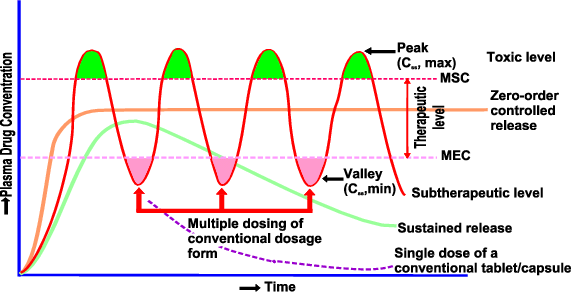
1.1Plasma concentration–time profile
The plasma concentration–time profile is a graphical representation of the change in drug concentration in blood plasma with time after drug administration (Figure 1).
1.2Oral controlled-release formulations
Oral controlled-release formulations are pharmaceutical dosage forms designed to release a drug gradually over an extended period after oral administration. They maintain therapeutic drug concentrations in the blood for a prolonged duration, reduce dosing frequency, improve patient compliance, and minimize fluctuations in drug levels.
These formulations use mechanisms such as diffusion, dissolution, erosion, and osmosis to control drug release. Common examples include controlled-release tablets, capsules, matrix systems, and osmotic drug delivery systems.
1.2.1Types of oral controlled-release formulations
Matrix systems. The drug is uniformly dispersed within a polymeric matrix. Drug release occurs through diffusion, polymer swelling, or erosion. Common polymers include hydroxypropyl methylcellulose (HPMC) and ethyl cellulose.
Reservoir systems. The drug core is surrounded by a rate-controlling polymeric membrane. The coating regulates drug release by controlling the movement of the drug into the surrounding gastrointestinal fluids.
Osmotic systems. These formulations use osmotic pressure to control drug delivery through a small opening in a semipermeable membrane. Drug release can be relatively consistent under suitable conditions.
Multilayer tablets. Different layers contain different drug quantities or release-controlling excipients. They may provide an initial dose followed by prolonged release or separate incompatible ingredients.
2Materials and methods
2.1Materials
The materials used and their sources are listed in Table 1.
| S. no. | Item | Source of procurement |
|---|---|---|
| 1 | Esomeprazole | Gift Sample from Edmund Healthcare |
| 2 | HPMC K4M | Oxford Chemicals |
| 3 | Eudragit | Yarrow Pharmaceuticals |
| 4 | Carbopol 940 | Oxford Chemicals |
| 5 | Methanol | Rankem |
| 6 | Ethanol | MSW Chemicals |
| 7 | Hydrochloric acid | Rankem |
| 8 | Magnesium Stearate | Oxford Chemicals |
| 9 | Sodium dihydrogen phosphate | Oxford Chemicals |
| 10 | Dipotassium hydrogen phosphate | Oxford Chemicals |
2.2Preformulation studies
2.2.1### organoleptic properties
A small quantity of pure Esomeprazole powder was taken in a butter paper and viewed in well illuminated place to observe its color; the taste and odor were observed using tasting and smelling the drug.
2.2.2### solubility analysis
Solubility of Esomeprazole was determined in water, methanol, ethanol, 0.1N hydrochloric acid. Solubility studies were performed by shaking small amount of Esomeprazole in test tubes containing the solvent and observing for undissolved particles (if any).
2.2.3### drug excipient compatibility studies by FT-IR
IR spectra of drug, polymer and drug and polymers, individual excipients, drug and polymers and excipients were obtained using FT-IR. Spectra were recorded for pure drug, pure excipients, and physical mixture of drug and polymer, drug, polymer and excipients.
2.2.4### standard curve of Esomeprazole
The maximum absorption of Esomeprazole was observed at 295 nm. The calibration curve was obtained using different concentrations of the drug at the above wavelength.
2.2.5### preparation of stock and standard solution
The stock solution was freshly prepared by dissolving 100 mg of Esomeprazole in 10 ml of phosphate buffer pH 6.8 in a 100 ml volumetric flask and then made up the solution up to the mark using the same buffer for obtaining the solution of strength 1000 µg/mL (stock I). 10ml of this solution is diluted to 100 ml with pH 6.8 buffer to obtain a solution of strength 100 µg/mL (stock II).
2.2.6### preparation of various concentrations
10 ml stock solution was taken from stock II and volume made up to 100 ml by using pH 6.8 buffer to obtain 10µg/ml. From this solution withdraw 2, 4, 6, 8, 10 ml of solution into the 10 ml volumetric flask and volume made up to 10 ml by using pH 6.8 buffer to get the solutions of 2, 4, 6, 8, 10µg/ml.
2.3Formulation of Esomeprazole delayed release tablets
A 23 factorial approach was used for preparing eight formulations in various combinations of the matrix forming polymers. Each polymer (independent variable) was used as two levels, high and low or presence and absence (Table 2).
| Factor | Level | |
|---|---|---|
| High (+) | Low (−) | |
| HPMC K4M | 10% | 3.33% |
| Carbopol 940 | 10% | 3.33% |
| Eudragit RLPO | 10% | 3.33% |
The formulation of the matrix tablets was performed using direct compression method by employing HPMC K4M, carbopol 940 and Eudragit RL/PO as the matrix forming polymers (Table 3). Magnesium stearate was used as the lubricant in 2.5% concentration of total weight of the polymers and Esomeprazole.
The quantity of the drug, matrix forming polymers and all other excipients was accurately weighed and passed through sieve no. 22. The ingredients were mixed together manually using tumbling action in large poly bags. The powder blend was again passed through sieve no. 22 and mixed with magnesium stearate. The blend was evaluated for precompression parameters and compressed into 5 mm tablets using single punch tablet punching machine.
| Ingredients (mg) | F1 | F2 | F3 | F4 | F5 | F6 | F7 | F8 |
|---|---|---|---|---|---|---|---|---|
| Esomeprazole | 40 | 40 | 40 | 40 | 40 | 40 | 40 | 40 |
| HPMC K4M | - | 40 | - | 20 | - | 20 | - | 13.33 |
| Carbopol 940 | - | - | 40 | 20 | - | - | 20 | 13.33 |
| Eudragit RLPO | - | - | - | - | 40 | 20 | 20 | 13.33 |
| Magnesium stearate | 1.0 | 1.0 | 1.0 | 1.0 | 1.0 | 1.0 | 1.0 | 1.0 |
2.4Evaluation of precompression blends
Angle of repose, Carr’s Index, Bulk density, Tapped density and Hausner’s ratio were determined to assess the flow ability of the prepared granules.
2.4.1Angle of repose
Angle of repose was determined by using funnel method. Accurately weighed amount of blend was taken in funnel. The height of the funnel was adjusted in such a way that the tip of the funnel just touches the heap of the pile. The blends were allowed to flow through the funnel freely on to the surface. The diameter of powder cone was measured and the angle of repose was calculated using the following formula:
Where, h is the height of the pile; θ is the angle of repose; and r is the radius of the heap
2.4.2Bulk density
Bulk density is the ratio between a given mass of powder and its bulk volume. Apparent bulk density was determined by pouring the weighed granules into a graduated cylinder via funnel and measuring the volume. Density was calculated using the formula:
Where, ρb is the bulk density; M is the mass of the microspheres and Vb is the volume occupied by the microspheres.
2.4.3Tapped density
Tapped density is the ratio between a given mass of powder and the constant or final volume of powder after tapping. It was determined by tapping a graduated cylinder containing a known mass of granules for a fix number of taps until the powder volume has reached a constant value. The tapped density was computed using the formula:
where ρt is the tapped density and Vt is the tapped volume.
2.4.4Hausner’s ratio
Hausner’s ratio was calculated from the bulk and tapped density using the formula:
2.4.5Percent compressibility (Carr’s index)
Compressibility is an important measure that can be obtained from the bulk and tapped densities. The flow ability of the granules was measured by the application of compressibility index given by the equation:
where Vf is the volume of the sample after tapping and V0 is the volume before tapping.
2.5Evaluation of delayed release tablets
The tablets were evaluated for in process and finished product quality control tests i.e. appearance, thickness, weight variation, hardness, friability, swelling index, dissolution study.
2.5.1Hardness test
The hardness of the formulated tablets was tested using Monsanto type hardness tester. Three tablets from each batch of formulation were randomly taken and the force required to break the tablets was measured using hardness tester.
2.5.2Friability test
The friability test of the formulations was performed using a Roche type friability test apparatus. Twenty tablets were initially weighed (Winitial) and transferred into friabilator. The friabilator was operated at 25 rpm for 4 minutes or run up to 100 revolutions. The tablets were weighed again (Wfinal). The percentage friability was then calculated by the formula.
2.5.3Weight variation test
20 tablets were randomly taken and weighed to calculate the average weight of the tablets. Each of these tablets was individually weighed and the difference from average weight was calculated. The percent weight variation was calculated to determine the deviation from the average weight.
2.5.4Thickness
The thickness of randomly selected tablets from each batch of formulation was measured using a digital vernier caliper.
2.5.5Drug content
Five tablets from each formulation were weighed to determine the average weight. These tablets were crushed in a mortar then the amount of powder equivalent to 10 mg of drug was dissolved in 0.1M HCl and volume was made up to 100 ml using 0.1M HCl. 10ml of the filtrate was made up to 100ml with 0.1M HCL. 10µg/ml solution was prepared from the above solution and analyzed for drug content.
2.5.6In vitro dissolution
The USP type II paddle apparatus with a paddle speed of 50 rpm was used for dissolution testing for the formulated matrix tablets. The dissolution media used consisted of 900 mL of phosphate buffer pH 6.8 and distilled water. 5 mL of samples were collected at time points of every hour until 12 h and the media was replenished with the same volume of fresh media. The free drug concentration was estimated using a UV spectrophotometer at a wavelength of 295 nm.
2.5.7Swelling index
One tablet from each formulation was kept in a Petri dish containing phosphate buffer pH 7.2. At the end of 2 h, the tablet was withdrawn, kept on tissue paper and weighed. The weighing was continued for every 2 hr, till the end of 9 h. The % weight gain by the tablet was calculated by formula
where S.I. is the swelling index, Mt is the weight of the tablet at time t and M0 is the weight of the tablet at time zero.
3Results and discussion
3.1Preformulation studies
3.1.1Organoleptic properties
The organoleptic properties were observed using the sense organs. The results observed are reported in Table 4.
| Test | Specification | Observation |
|---|---|---|
| Color | White to off white | White |
| Odor | Odorless | Odorless |
| Taste | Bitter | Bitter |
| Appearance | Amorphous | Amorphous |
3.1.2Solubility analysis
Esomeprazole was found to be soluble in water and 0.1N HCl, slightly soluble in ethanol, methanol. Esomeprazole is reported to be class III drug according to the BCS classification and the freely soluble nature suggests similarly.
3.1.3Calibration curve of Esomeprazole
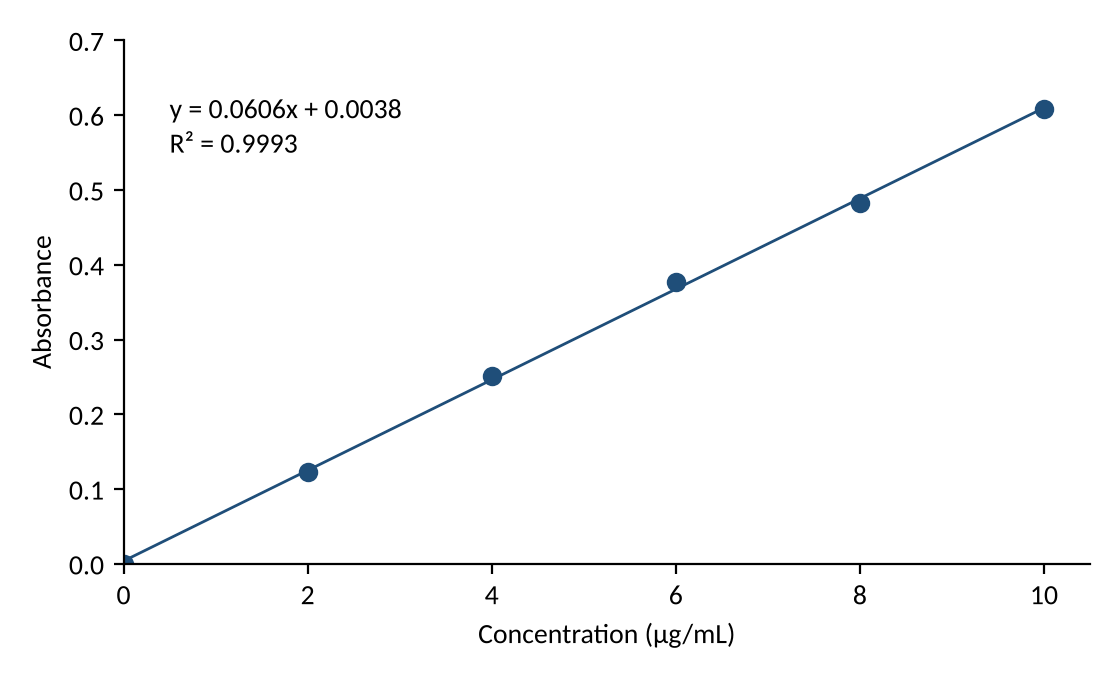
The λmax of esomeprazole in phosphate buffer pH 6.8 was observed to be 295 nm. Calibration curve of Esomeprazole was obtained by plotting absorbance at 295 nm in phosphate buffer pH 6.8 versus concentration (µg/ml) (Table 5 and Figure 2).
| Concentration (µg/mL) | Absorbance |
|---|---|
| 0 | 0 |
| 2 | 0.123 |
| 4 | 0.251 |
| 6 | 0.377 |
| 8 | 0.482 |
| 10 | 0.608 |
The linear regression analysis for the calibration curve was Abs = 0.0606(conc) + 0.0038, with a coefficient of determination (R2) of 0.999.
3.1.4Drug–polymer compatibility study
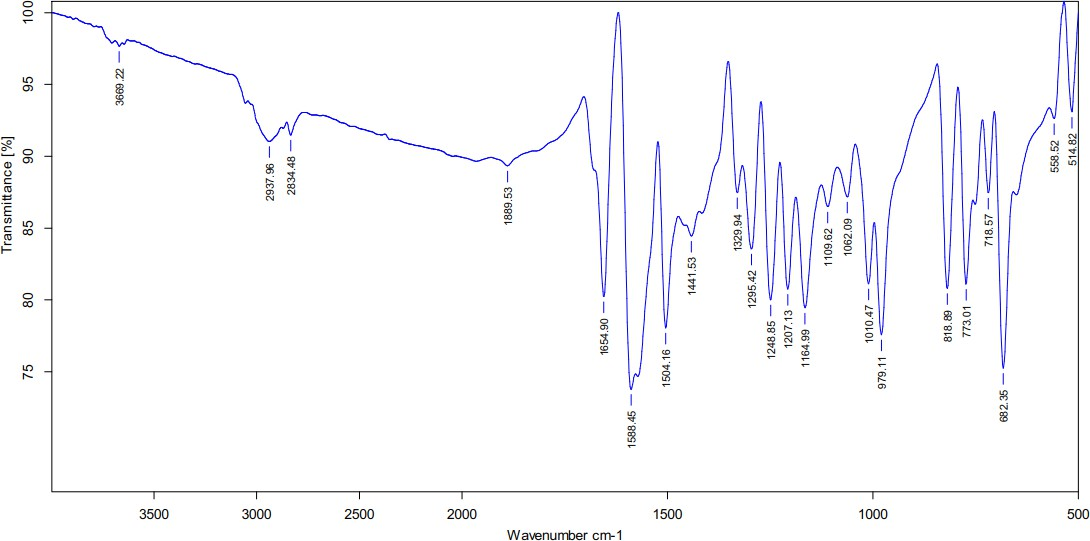
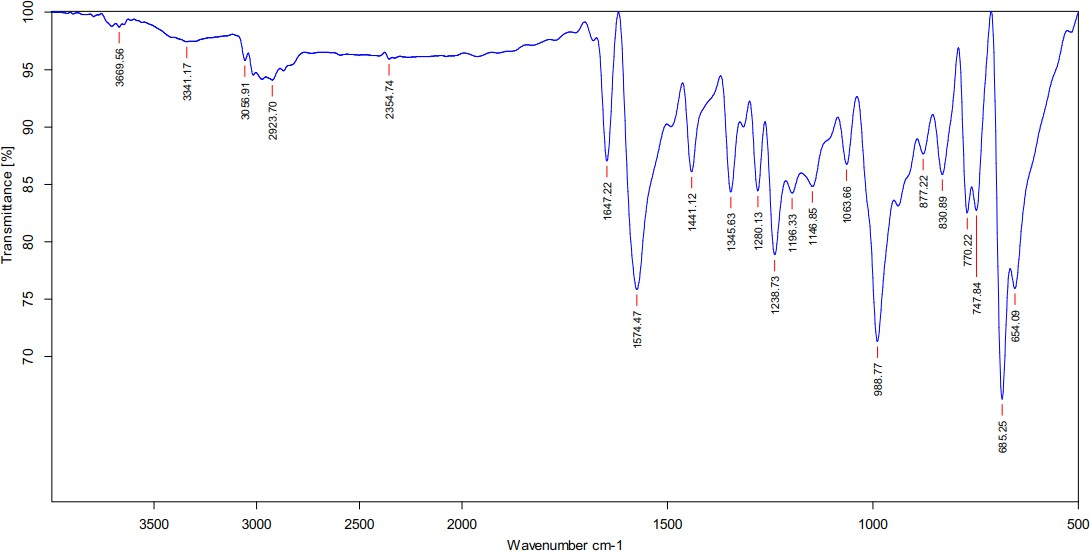
The FTIR spectra of the pure drug and physical mixture of drug and excipient were recorded in between 400-4000 wave number (cm-1).
The peak at 3669.22 cm-1 in the spectra of the pure Esomeprazole corresponds to N-H (stretching) (Figure 3). The peak at 1010.47 cm-1 could be assigned to S=0 (stretching), the peak at 1164.99 cm-1 may be assigned for C-O-C (stretching). The drug and polymers employed were found to be compatible as similar peaks were observed in the physical mixture of drug and polymers with slight differences (Figure 4).
3.2Precompression blend characterization
All these parameters indicate that the powder blend had good to fair flow property and is suitable for compression into tablets (Table 6). The compressibility index for formulations exhibited good compaction characteristics of the blends.
| Formulation code | Angle of repose (°) | Bulk density (g/mL) | Tapped density (g/mL) | Carr’s index (%) | Hausner’s ratio |
|---|---|---|---|---|---|
| F1 | 27.61 | 0.58 | 0.65 | 10.77 | 1.12 |
| F2 | 26.32 | 0.57 | 0.70 | 18.57 | 1.23 |
| F3 | 27.23 | 0.54 | 0.64 | 15.63 | 1.19 |
| F4 | 28.15 | 0.60 | 0.67 | 10.45 | 1.12 |
| F5 | 27.34 | 0.59 | 0.63 | 6.35 | 1.07 |
| F6 | 27.25 | 0.56 | 0.71 | 21.13 | 1.27 |
| F7 | 26.13 | 0.56 | 0.63 | 11.11 | 1.13 |
| F8 | 26.61 | 0.57 | 0.68 | 16.18 | 1.19 |
3.3Evaluation of matrix tablets
The tablets were evaluated for appearance, thickness, hardness, weight variation, friability, swelling index, in vitro buoyancy and dissolution study (Tables 7 and 8).
| Formulation code | Thickness (mm) | Hardness (kg/cm2) | Weight variation (%) | Friability (%) | Swelling index | Drug content (%) |
|---|---|---|---|---|---|---|
| F1 | 5.01 | 4.5 | 1.9 | 0.37 | 1.32 | 98.3 |
| F2 | 4.98 | 4.0 | 2.1 | 0.39 | 2.25 | 98.5 |
| F3 | 5.01 | 4.0 | 2.1 | 0.51 | 2.42 | 98.4 |
| F4 | 4.99 | 4.5 | 1.7 | 0.45 | 3.26 | 98.7 |
| F5 | 4.98 | 4.5 | 2.3 | 0.44 | 3.37 | 98.5 |
| F6 | 5.02 | 4.0 | 2.8 | 0.38 | 3.52 | 98.9 |
| F7 | 5.01 | 4.5 | 2.5 | 0.52 | 4.58 | 98.7 |
| F8 | 5.03 | 4.5 | 2.1 | 0.51 | 5.22 | 98.6 |
| Time (h) | Cumulative release (%) | |||||||
|---|---|---|---|---|---|---|---|---|
| F1 | F2 | F3 | F4 | F5 | F6 | F7 | F8 | |
| 0 | 0.00 | 0.00 | 0.00 | 0.00 | 0.00 | 0.00 | 0.00 | 0.00 |
| 1 | 15.80 | 21.30 | 24.50 | 27.30 | 15.10 | 6.20 | 8.10 | 8.60 |
| 2 | 28.60 | 33.40 | 36.20 | 40.50 | 26.40 | 13.20 | 16.20 | 15.70 |
| 3 | 41.30 | 45.60 | 48.70 | 52.40 | 35.30 | 23.30 | 27.10 | 25.10 |
| 4 | 60.40 | 62.10 | 66.10 | 70.10 | 43.40 | 35.50 | 38.40 | 34.30 |
| 5 | 76.40 | 78.30 | 80.50 | 83.20 | 51.70 | 41.70 | 46.30 | 40.50 |
| 6 | 81.10 | 84.70 | 91.80 | 99.50 | 63.20 | 50.10 | 58.20 | 48.90 |
| 7 | 94.60 | 97.90 | 100.10 | 98.30 | 75.40 | 61.20 | 73.10 | 59.70 |
| 8 | 100.10 | 97.10 | 98.60 | 96.40 | 87.90 | 75.10 | 88.30 | 68.30 |
| 9 | 96.50 | 96.30 | 97.40 | 94.80 | 94.60 | 84.80 | 96.90 | 79.40 |
| 10 | 94.10 | 94.90 | 95.80 | 91.60 | 100.80 | 97.60 | 99.90 | 90.50 |
| 11 | 93.20 | 94.10 | 95.10 | 90.10 | 98.40 | 100.30 | 99.10 | 98.70 |
| 12 | 90.10 | 93.10 | 94.60 | 88.50 | 98.10 | 100.10 | 98.60 | 100.10 |
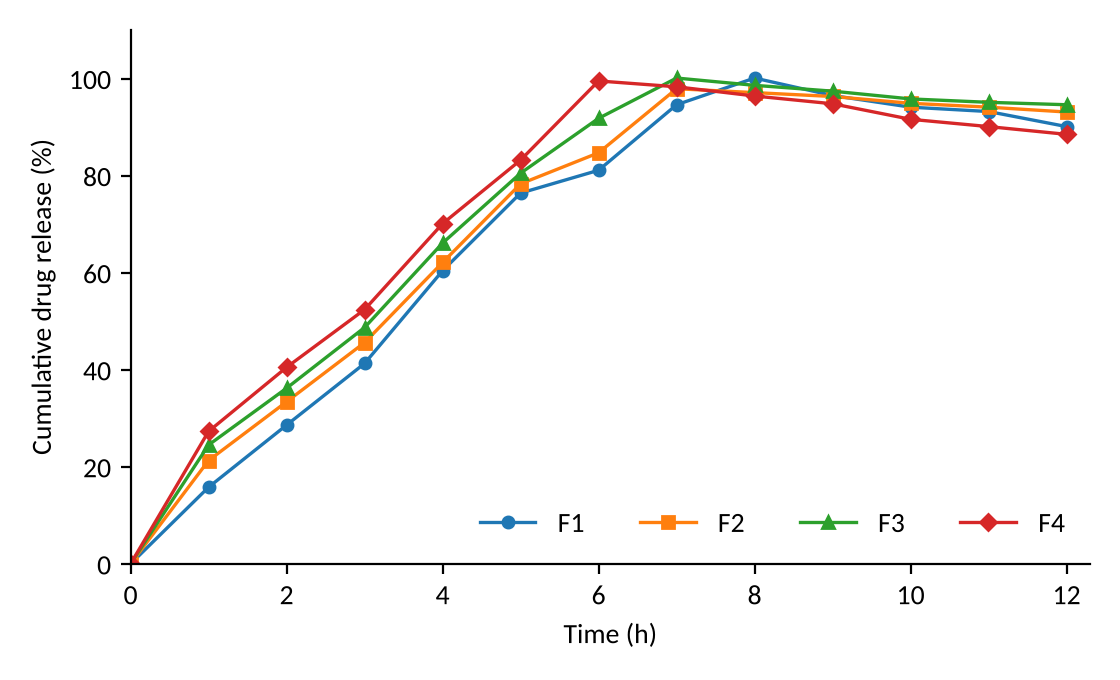
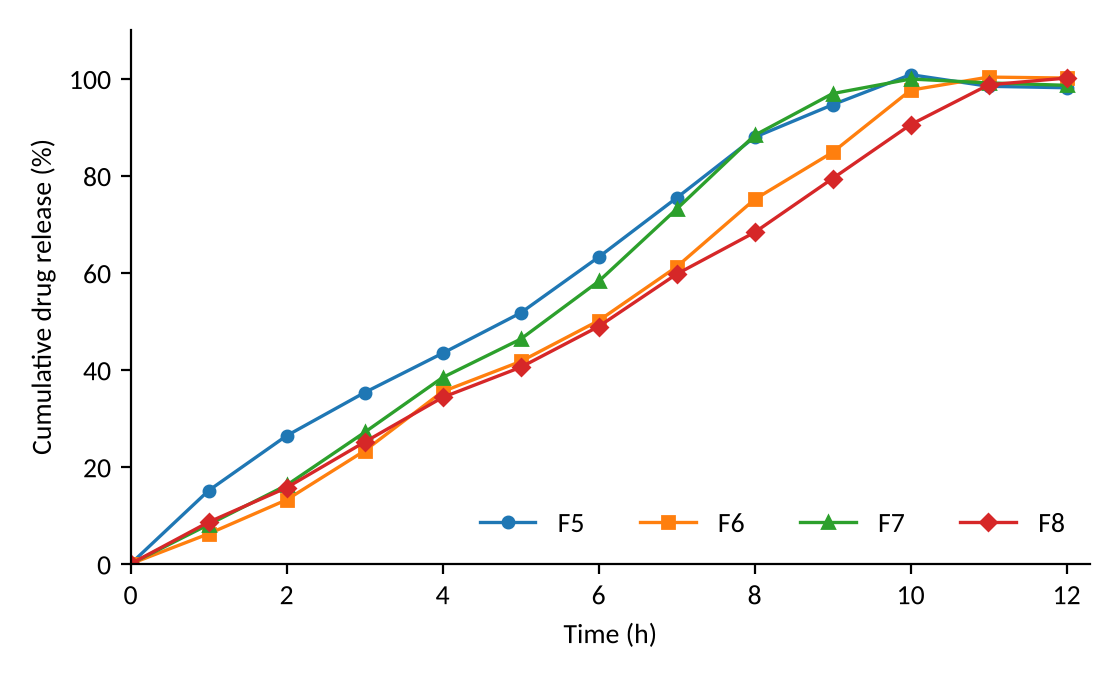
A plot of % cumulative drug release versus time for matrix tablet formulations is shown in Figures 5 and 6.
4Summary and conclusion
4.1Summary
The objective of the current investigation was to formulate delayed release tablets of Esomeprazole that could control the release of the drug thereby reducing its dosing frequency and improving the bioavailability. The objective was accomplished by preparation of the matrix tablets using HPMC K4M, carbopol 940 and Eudragit RLPO as the matrix forming polymers.
The precompression blend prepared was evaluated for the micromeritic properties in order to ascertain the compressibility characteristics of the blend. The angle of repose for all formulations was found to be within the range from 23°13 to 28°15. This indicates that good flow property of powder blend. The bulk density and tapped density values were found to be within the range from 0.54 to 0.60 and 0.63 to 0.71 respectively. The Hausner’s ratio values were found to be within the range from 6.35 to 21.13.
The thickness of all formulation was ranged in between 4.98 to 5.03 mm. while the hardness of the formulations ranged from 4.0 kg/cm2 and 4.5 kg/cm2. The friability of all formulation was in the range of 0.37% to 0.52% and the weight variation was in the range of 1.7 to 2.8 %.
Swelling study was performed on all the formulation for 9 h and was found to be in the range of 1.32 to 5.22. The highest degree of swelling was achieved by F8 that contained equal concentration of HPMC K4M, carbopol 940 and Eudragit RLPO.
The formulations F1, F2, F3 and F4 could not control the release for even up to 8 h. On the other hand, the formulation F5 was able to release almost 100% of the drug at the end of 10th whereas formulations F6 and F7 released 100% drug at the end of 11th hour. The formulation F8, on the other hand was able to sustain the drug release for entire 12 hours of the study. The results lead to conclusion that the formulation F6, F7 and F8 were the best formulation that exhibited the desired sustained release, tablet qualities as well as the swelling properties that are desired by a matrix tablet.
4.2Conclusion
The results obtained from the study indicate that use of HPMC K4M, carbopol 940 and Eudragit RLPO in equal ratio as the matrix forming substance could help in achieving sustained release over a longer duration and help in reducing the dose as well as frequency of administration of the medicaments. Further in vivo release studies are needed to support for the conclusion of the present investigation.
References
- [1]Vyas SP, Khar RK. Controlled drug delivery: Concepts and advances. 1st ed. New Delhi: Vallabh Prakashan; 2002.
- [2]Chien YW. Novel drug delivery systems. 2nd ed. New York: Marcel Dekker; 1982.
- [3]Brahmankar DM, Jaiswal SB. Biopharmaceutics and pharmacokinetics: A treatise. 10th ed. New Delhi: Vallabh Prakashan; 2007. p. 399.
- [4]Li X, Jasti BR. Design of controlled release drug delivery systems. 1st ed. McGraw-Hill Professional; 2005.
- [5]Jantzen GM, Robinson JR. Sustained and controlled-release drug delivery systems. Modern Pharmaceutics. 1995;121(4):501–502.
- [6]Altaf AS, Friend DR. MASRx and COSRx sustained-release technology. In: Rathbone MJ, Hadgraft J, Roberts MS, editors. Modified-release drug delivery technology. New York: Marcel Dekker; 2003. p. 996.
- [7]Gwen MJ, Joseph RR. In: Banker GS, Rhodes CT, editors. Modern pharmaceutics. New York: Marcel Dekker; 1996;72(3):575.
- [8]Borgquist P, Körner A, Larsson A. A model for the drug release from a polymer matrix tablet – effects of swelling and dissolution. J Control Release. 2006;113:216–225.
- [9]Zalte HD, Saudagar RB. Review on sustained release matrix tablet. Int J Pharm Biol Sci. 2013;3(4):17–29.
- [10]Remington: The science and practice of pharmacy. 21st ed. Vol 1. Wolters Kluwer Health (India); 2006. p. 939–964.
- [11]Chugh I, Seth N, Rana AC, Gupta S. Oral sustain release drug delivery system: An overview. Int Res J Pharm. 2012;3(5):57–62.
- [12]Bhargava A, Rathore RPS, Tanwar YS, Gupta S, Bhaduka G. Oral sustained release dosage form: An opportunity to prolong the release of drug. Int J Adv Res Pharm Bio Sci. 2013;3(1):7–14.
- [13]Modi SA, Gaikwad PD, Banker VH, Pawar SP. Sustained release drug delivery system. Int J Pharma Res Dev. 2011;2(12):147–160.
- [14]Gupta MM, Ray B. A review on: Sustained release technology. Int J Ther Appl. 2012;(8):1–23.
- [15]Al-Zidan RN, Majeed SM, Al-Shaheen MK. Fabrication and evaluation of oral multi-particulate tablets of proton pump inhibitors: Esomeprazole as a model. Sys Rev Pharm. 2020;11(11):487–492.
- [16]Yadav K, Singhai AK, Nayak A. Formulation of esomeprazole sustained release tablets using natural polymers. Int J Pharm Pharm Res. 2020;19(3):545–565.
- [17]Sumeet Reddy D, Gudas GK. Formulation and evaluation of floating tablets of esomeprazole. Int J Pharm Anal Res. 2017;6(4):754–761.
- [18]Naveen Kumar Y, Sreekanth J, Reddy PVC. Formulation development and in vitro evaluation of esomeprazole controlled release tablets by using various grades of Eudragit polymers. Indo Am J Pharm Res. 2017;7(1):7431–7439.
- [19]Naveen Kumar Y, Sreekanth Y. Formulation development of controlled release formulation of esomeprazole sodium tablets. Indo Am J Pharm Sci. 2015;2(5):955–960.
- [20]RK, Rao PM, Sivasankar R, Valli B. Formulation and evaluation of esomeprazole magnesium dihydrate multiple unit particulate system (pellets) as a delayed release dosage form. Int J Res Dev Pharm Life Sci. 2014;3(2):935–942.
- [21]Malik D, Singh I. Formulation and evaluation of press coated tablets of esomeprazole for colonic delivery. Asian J Pharm. 2012;6:252–258.
- [22]Suja C, Sismy C. Formulation and evaluation of sustained release dosage forms of norfloxacin. Int J Pharm Sci Nanotech. 2018;11(6). https://doi.org/10.37285/ijpsn.2018.11.6.6
- [23]Ahmed M, Ahamed SK, Dewan SMR, Moghal MR. Development of sustained release matrix tablets of ramipril and evaluation of polymer effect on in-vitro release pattern. Int J Pharm Sci Res. 2013;4(3):1039–1045.
- [24]Ahsan M, Abbas N, Hussain A, Saeed H, Shah PA, Mohammad S, et al. Formulation optimization and in-vitro evaluation of oral floating captopril matrix tablets using factorial design. Trop J Pharm Res. 2015;14(10):1737–1748.
- [25]Ovenseri AC, Michael UU. Formulation and evaluation of effervescent floating matrix tablets of a biguanide using Grewia mollis gum. Asian J Appl Sci. 2019;12(2):91–98.
- [26]Kumar A, Singh S, Sharma G, Sharma S, Verma A, Kaur R, et al. Formulation, optimization and evaluation of gastro-retentive floating microspheres of norfloxacin. Asian J Med Pharm Sci. 2013;3(23):12–17.
- [27]Ramesh Y, Balachandra P, Chinnaiah S. Formulation and evaluation of floating microspheres of norfloxacin. Res J Chem Environ Sci. 2013;1(4):18–28.
- [28]Venkateswarlu K, Preethi JK, Sai Kiran BS. Formulation development and in-vitro evaluation of floating tablets of ciprofloxacin HCl. Asian J Pharm. 2016;10(4):271–278.
- [29]Saha RN, Sajeev C, Sahoo J. A comparative study of controlled release matrix tablets of diclofenac sodium, ciprofloxacin hydrochloride, and theophylline. Drug Deliv. 2001;8:149–154.
- [30]Pasa G, Choudhury PK, Panigrahi G. Formulation design and optimization of oral floating matrix tablets of ciprofloxacin HCl by using HPMC and xanthan gum with experimental design. Asian J Pharm Res Dev. 2018;6(6):23–35.
- [31]Malipeddi VR, Awasthi R, Dua K. Formulation and evaluation of controlled-release matrix systems of ciprofloxacin. Polym Med. 2017;47(2):101–106.
- [32]Varshosaz J, Tavakoli N, Roozbahani F. Formulation and in vitro characterization of ciprofloxacin floating and bioadhesive extended-release tablets. Drug Deliv. 2006;13:277–285.