Parasite
Studies on Some Aspects of the Epidemiology of Giardiasis Among Primary School Age Children in Lokoja, Kogi State
Department of Biological Sciences, Federal University Lokoja, Lokoja, Kogi State, Nigeria
Published October 2026
Abstract
Giardiasis, caused by Giardia intestinalis is a common intestinal parasitic disease and a major public health concern in low- and middle-income countries. School aged children are particularly vulnerable due to poor hygiene, unsafe water and inadequate sanitation. In Nigeria, infection rates vary by region and are influenced by environmental, socioeconomic and behavioral factors (Magaji et al., 2021). The purpose of this study was to ascertain the prevalence of Giardia intestinalis and evaluate related environmental risk factors in Lokoja primary school students. Four hundred students from public and private primary schools were chosen using a multistage sampling technique as part of a cross-sectional study design. Structured questionnaires were used to gather sociodemographic data and evaluate eating patterns, sanitation practices, water sources, environmental exposures, and giardiasis knowledge. Direct saline and Lugol's iodine wet mount microscopy were used to collect and analyze stool samples in order to identify cysts and trophozoites. Statistical analysis was performed using chi-square tests to determine associations between infection and potential risk factors at a significance level of p < .05. Giardia intestinalis was found to be moderately endemic in the study population, with an overall prevalence of 9.25%. Younger children, especially those between the ages of five and seven, had higher infection rates. The use of untreated water sources, open defecation habits, the presence of stagnant water near residential areas, and inadequate awareness of prevention and transmission were all found to be significantly associated with infection (p <.05). Children who lived in locations with inadequate drainage systems or ate fruits and vegetables that had not been adequately cleaned showed a higher risk of infection. These results highlight how important water quality and environmental sanitation are to maintaining transmission dynamics.
Keywords: giardiasis; Giardia intestinalis; prevalence; WASH; sanitation
1Introduction
In low- and middle-income nations where poverty, inadequate sanitation, and a lack of access to clean water are still prevalent, intestinal parasite illnesses remain a major health concern in the worldwide community. Giardiasis, which is caused by the protozoan flagellate Giardia intestinalis (also known as Giardia lamblia or Giardia duodenalis), is one of the most important causative protozoan aetiologies of diarrhoeal disease in the world. Giardiasis has a high rate of transmission and is linked to child health, nutrition, and cognitive development, making it a neglected tropical disease of major health concern, according to WHO (2017).
An estimated 200 million individuals worldwide are thought to contract symptomatic giardiasis annually, with children under the age of 15 accounting for a sizable portion of these illnesses (WHO, 2024). This is particularly true in places with inadequate sanitation facilities and where the primary supply of drinking water is untreated surface water. The most frequent way for them to spread is by the fecal-oral pathway, where they are consumed as infectious cysts from tainted hands, food, or drink. Another prevalent means of person-to-person transfer is overcrowding in places like nursery schools and schools. (Audu et al., 2024).
The cyst form of Giardia can spread throughout a population because it is very tolerant of environmental influences and can survive for extended periods of time in damp settings.
Due to behavioral and environmental factors, school-aged children are especially vulnerable to giardiasis. Children at this developmental stage frequently play outside, interact closely with other kids, and may not practice good hand hygiene. Additionally, children in the majority of underdeveloped countries consume unfiltered water and eat fruits and vegetables that have not been properly cleaned, putting them at further danger (Nwachukwu et al., 2025). Recurrent or chronic infections can cause poor growth, weight loss, malabsorption, vitamin deficiencies, and cognitive impairment, all of which can have a negative effect on academic performance and potential lifetime output. (Magaji et al., 2021).
In sub-Saharan Africa, the problems of intestinal parasitic infections are still endemic, even with the efforts to control them. In Nigeria, specifically, inconsistent prevalence rates are still being reported in the various geopolitical locations. The prevalence rates reported in studies in northern and southern Nigeria were ranging between 10 and more than 30 percent according to the level of environmental sanitation, socioeconomic status, and system of water supply (Magaji et al., 2021). The rural populations and peri-urban settlements are usually affected by the increased rate of infections, because of the use of wells, streams and rivers to obtain domestic water.
The environment risk factors such as poor waste disposal system, stagnant water, open defecation, overcrowding, and poor hygiene practices have central role in the epidemiology of giardiasis.
Thus, the purpose of this study was to identify prevalence and the level of Giardia intestinalis infection among primary school children in Lokoja and to examine the environmental and behavioral factors that are at risks of infection. The results should add to the current knowledge on intestinal parasitic infection in Nigeria and offer evidence for interventions to prevent and contain infection in the study area.
2Materials and methods
2.1Study area
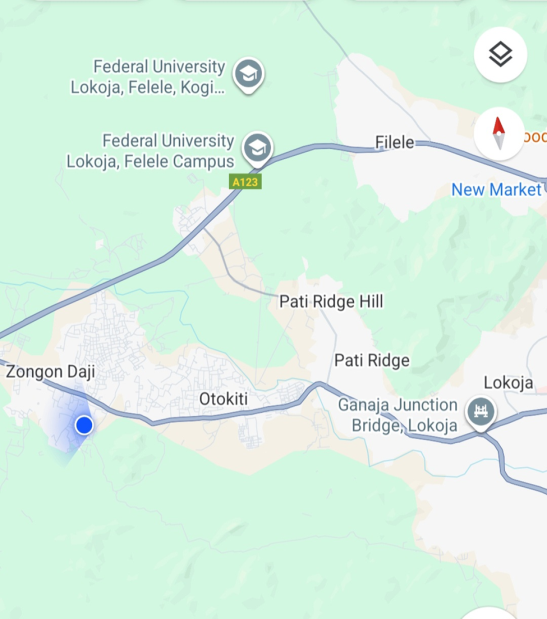
The study was carried out in Kogi State's Lokoja primary schools. Lokoja is located at 6.7333° east of the meridian and 7.8023° north of the equator. It is roughly 390 km northeast of Lagos and 165 km southwest of Abuja. In addition to the city's numerous suburbs, including Felele, Adankolo, Otokiti, and Ganaja, residential areas range in density. March 20th is often the hottest day of the year in Lokoja, with an average yearly high temperature of 38.2°C (100.8°F). The study area is shown in Figure 1.
2.2Determination of sample size
According to Daniel (1988), a single population proportion formula was used to calculate the sample size, as in Equation (1):
where n is the sample size, Z the Z score corresponding to the 95% confidence interval (1.96), D the margin of error (5%) and P the expected prevalence of G. lamblia infection in the study area. Since no prevalence of G. lamblia infection had been reported in the study area, P = 50% was used to maximize the sample size. Accordingly, n = (1.96)2 × 0.5 × (1 − 0.5) / (0.05)2 = 384.
To account for potential non-response or incomplete data, it is common to increase the sample size by 10–20%. With an anticipated non-response rate of 10%, the final sample size was obtained from Equation (2):
where N is the final sample size and n the sample size from Equation (1): N = 384 / (1 − 0.1) = 384 / 0.9 = 426.7 ≈ 427.
2.3Data collection
Structured questionnaires were administered to collect data on:
- age and sex;
- water source;
- sanitation type;
- presence of stagnant water;
- dietary habits; and
- knowledge of giardiasis.
2.4Stool examination
Fresh stool samples were collected from each participant using sterile, wide-mouthed, leak-proof specimen containers that were properly labeled with unique identification codes corresponding to questionnaire data. Participants were instructed on how to collect adequate stool samples without contamination by urine or water. Samples were transported to the laboratory within two hours of collection to preserve parasite morphology and ensure diagnostic accuracy.
Macroscopic examination was first conducted to observe stool consistency, color, presence of mucus, and visible blood. Stool consistency was categorized as formed, semi-formed, or watery. Watery or loose stools were carefully examined due to the higher likelihood of detecting motile trophozoites in fresh samples (Cheesbrough, 2009). Macroscopic characteristics were recorded systematically for each sample.
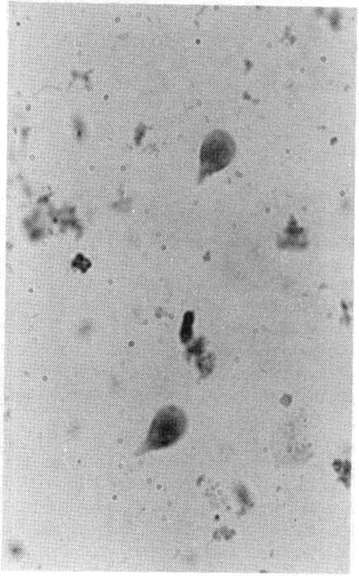
Microscopic examination was performed using the direct wet mount technique. A small portion of stool (approximately 1–2 mg) was emulsified in a drop of normal saline (0.85% NaCl) on a clean glass slide and covered with a coverslip. The saline wet mount was primarily used to detect motile trophozoites of Giardia intestinalis. A second preparation was made using Lugol’s iodine solution to enhance visualization of cyst morphology, including internal structures such as nuclei and axonemes. Slides were examined under light microscopy using ×10 objective lens for scanning and ×40 objective lens for detailed identification. Giardia intestinalis trophozoites seen on microscopy are shown in Figure 2.
2.5Study design
This study adopted a cross-sectional descriptive design to determine the prevalence of Giardia intestinalis infection among school children. A cross-sectional study was appropriate as it allows for the collection of data at a single point in time, providing a snapshot of the prevalence of the infection.
2.6Inclusion and exclusion criteria
Inclusion criteria: children aged 3–10 years who were enrolled in the selected public and private schools in Lokoja and whose parents or guardians gave informed consent were included in the study.
Exclusion criteria: children who were seriously ill or had received treatment for giardiasis within the previous two weeks were excluded.
2.7Ethical considerations
Ethical approval for the study was obtained from the Kogi State Ministry of Health and the respective school authorities. Informed consent was obtained from the parents or guardians of the children before data collection. Participation in the study was voluntary, and the confidentiality of the participants’ information was strictly maintained.
3Results
3.1Prevalence of Giardia intestinalis infection among primary school children in Lokoja
The objective of this study was to determine and compare the prevalence of Giardia intestinalis infection among primary school children in Lokoja metropolis. The findings from the parasitological examination revealed a considerable burden of giardiasis within the study population, reinforcing the fact that intestinal protozoan infections remain a persistent public health concern in the area. Out of the 400 stool samples collected and examined, 37 tested positive for Giardia intestinalis, representing a detectable level of transmission among school-aged children. Moreover, the analysis also revealed the presence of other parasitic organisms, such as Ascaris lumbricoides and Strongyloides stercoralis, indicating that co-infection with multiple intestinal parasites is still prevalent among children in this environment. These results underscore the urgent need for sustained deworming interventions, improved sanitation, and health education campaigns within schools and communities to reduce the risk of infection and reinfection. The distribution by type of school is given in Table 1.
| School | Number examined | Number positive (%) |
|---|---|---|
| Public | 291 | 23 (7.90) |
| Private | 109 | 14 (12.84) |
| Total | 400 | 37 (9.25) |
The overall prevalence was calculated with Equation (3):
Prevalence rate = (37 / 400) × 100 = 9.25%. Therefore, the overall prevalence of Giardia intestinalis is 9.25%.
The main sources of drinking water reported by the respondents are given in Table 2.
| Source | Frequency | Percent |
|---|---|---|
| Borehole | 42 | 10.5 |
| Well water | 150 | 37.5 |
| Pipe water (treated) | 42 | 10.5 |
| River/stream | 103 | 25.8 |
| Sachet | 63 | 15.8 |
| Total | 400 | 100.0 |
The data on the main sources of drinking water among respondents reveals that well water is the most commonly used source, with 150 out of 400 participants (or 37.5%) relying on it. This is followed by river or stream water, used by 103 individuals (or 25.8%), and sachet water, used by 63 respondents (15.8%). Both borehole water and treated pipe-borne water are the least used, with only 42 participants each (10.5%) reporting them as their main drinking water source.
In relation to this study on the prevalence of Giardia intestinalis among school-aged children in Lokoja, these findings are highly significant. A large proportion of respondents depend on untreated or potentially contaminated water sources, such as wells and rivers, which are known to harbor parasites like Giardia, especially when sanitation is poor and human waste contaminates the environment.
Only a small percentage of participants (21% combined) have access to relatively safer options like treated pipe water or boreholes. The widespread reliance on unprotected water sources increases the likelihood of ingesting water contaminated with cysts of Giardia, thereby elevating the risk of giardiasis among children who are particularly vulnerable due to weaker immunity and hygiene practices.
Table 3 shows the types of toilet used in relation to health history (ever diagnosed with a parasitic infection).
| Toilet type | Yes | No | Total |
|---|---|---|---|
| Flush toilet | 5 | 44 | 49 |
| Pit latrine | 56 | 191 | 247 |
| Open defecation | 21 | 83 | 104 |
| Total | 82 | 318 | 400 |
Pearson χ2 = 3.908, df = 2, p = 0.142.
The cross-tabulation shows the relationship between the type of toilet facility used and whether respondents have ever been diagnosed with a parasitic infection. Out of the 49 respondents who use flush toilets, only 5 reported having been diagnosed with a parasitic infection, while the remaining 44 had not. Among those who use pit latrines, 56 out of 247 reported a past diagnosis of parasitic infection, and 191 had not. For those who practice open defecation, 21 out of 104 had been diagnosed with a parasitic infection, while 83 had not. These figures suggest that individuals using pit latrines or practicing open defecation appear more frequently diagnosed with parasitic infections compared to those using flush toilets.
To determine whether this observed difference is statistically significant, a chi-square test was conducted. The Pearson chi-square value was 3.908 with 2 degrees of freedom and a p-value of 0.142. Since the p-value is greater than the commonly accepted threshold of 0.05, the test result indicates that there is no statistically significant relationship between the type of toilet facility used and being diagnosed with a parasitic infection in this dataset.
3.2Presence of stagnant water in relation to gastrointestinal treatment
| Stagnant water source | Received treatment (yes) | No treatment (no) | Total |
|---|---|---|---|
| Yes | 80 | 209 | 289 |
| No | 50 | 61 | 111 |
| Total | 130 | 270 | 400 |
Pearson χ2 = 11.022, df = 1, p = 0.001.
The cross-tabulation in Table 4 explores the relationship between the presence of stagnant water near respondents' residences and whether they have received treatment for gastrointestinal issues in the past six months. Among the 289 respondents who reported the presence of a stagnant water source, 80 had received treatment for gastrointestinal issues, while 209 had not. In contrast, out of the 111 respondents who indicated that there was no stagnant water source nearby, only 50 had undergone treatment for gastrointestinal issues, while 61 had not.
This distribution suggests that those living near stagnant water are more likely to have required treatment for gastrointestinal problems within the past six months. To determine if this observed association is statistically significant, a chi-square test was performed. The Pearson chi-square value was 11.022 with 1 degree of freedom and a p-value of 0.001.
4Discussion
The current research established the prevalence and the environmental risk factors of Giardia intestinalis infection in primary school children in Lokoja, Kogi State, Nigeria. The entire prevalence of 9.25% demonstrates that there is moderate endemicity in the study population. This prevalence is lower compared to the numbers in the selected regions in Nigeria, where the prevalence has exceeded 15 percent to 30 percent, but it still indicates a pattern of transmission that should not be neglected by the people in charge of the health sector (Magaji et al., 2021). The difference in the prevalence of the studies can be explained by the differences in the environmental sanitation, method of diagnosis, climatic conditions, and socioeconomic levels.
The increased rates of infection in younger children (5–7 years) are in line with the earlier epidemiology studies that have shown that early school-aged children are especially susceptible to intestinal parasitic infections (Nwachukwu et al., 2025). Children in early childhood stages are characterized by poor hand hygiene, outdoor activities, and hand to mouth activities which are known to promote fecal to oral transmission. Moreover, Giardia immunity can be partially acquired with age because of repeated exposures, which may be the reason that the prevalence among older children is relatively low.
In this study, sex did not show a statistically significant relationship with infection. The result of this finding is consistent with a number of previous studies that found no gender-specific differences in the prevalence of giardiasis (Ngwamah et al., 2024). The lack of sex disparity implies that the exposure risk in the study area is being more significantly affected by environmental and behavioral factors than biological differences.
The source of water became one of the key factors of infection. The children who used untreated water sources especially river and hand dug well water recorded very high infection rates. This finding supports the international trends that giardiasis is a waterborne disease (World Health Organization [WHO], 2017). The most common sources of contamination of surface water bodies include open defecation, agricultural runoffs, flooding, and poor waste disposal systems. The confluence of the Rivers Niger and Benue at Lokoja and the annual flooding can lead to the pollution of the local water sources. They have reported similar correlations between untreated water use and protozoan infections in other Nigerian and African studies (Magaji et al., 2021; Nwachukwu et al., 2025).
Another factor that was also significant in the pattern of infection was sanitation practices. Even though not all of the sanitation variables were statistically significant, a higher rate of infection was seen in children who practiced open defecation or used pit latrines. Lack of sanitation facilities adds to the environmental pollution by infective cysts thus supporting the cycle of transmission. Poor sanitation has been well established in the literature to cause intestinal parasitic infections (Obebe et al., 2026). The continued use of open defecation in some of the Lokoja areas can thus be a major loophole in the fight against infection.
Infection was strongly linked to environmental conditions including surrounding of homes with stagnant water. Stagnant water can serve as a source of protozoan cyst and cause indirect exposure via contaminated surfaces or vectors. The tropical weather and the seasonal rainfall distribution in Lokoja provide favourable conditions for cyst survival. It is known that Giardia cysts can live in wet conditions and last for a long time, which puts more people at risk of spreading this infection (WHO, 2017). These results are consistent with the epidemiologic triad model, which focuses on the interaction of the host susceptibility, the environmental conditions and the infectious agent in the occurrence of the disease.
Dietary patterns also created a risk of infection. The children who fed on raw or poorly washed fruits and vegetables were more likely to test positive for Giardia intestinalis. Produce that has been contaminated may be a source of cyst transmission especially when it has been irrigated with unclean water or when it has been touched in poor hygienic conditions. This observation agrees with the earlier researches that have indicated food hygiene practices to be associated with intestinal parasitic infections (Onah et al., 2023). The danger of foodborne transmission is heightened in these situations in which the quality of water is not known and food is sold in the streets.
References
- [1]Bethony J, Brooker S, Albonico M, Geiger SM, Loukas A, Diemert D, Hotez PJ (2006). Soil-transmitted helminth infections: Ascariasis, trichuriasis, and hookworm. The Lancet, 367(9521), 1521–1532. https://doi.org/10.1016/S0140-6736(06)68653-4
- [2]Garcia LS (2007). Diagnostic medical parasitology (5th ed.). ASM Press.
- [3]Magaji PJ, Mohammed AA, Musa H (2021). Prevalence of gastrointestinal parasites among primary school children in Kaduna State, Nigeria. American Journal of Health, Medicine and Nursing Practice, 6(1), 1–17.
- [4]Ngwamah JS, Kayode VO, Saleh R, Audu PA (2024). Prevalence of gastrointestinal parasitic infection among primary school pupils in Lokoja, Kogi State, Nigeria. Science World Journal, 19(3).
- [5]Nwachukwu JC, Anyalogbu EAA, Nwachukwu AA (2025). Haematological and biochemical alterations in school-aged children infected with Giardia lamblia and Plasmodium spp. in Owerri West, Imo State, Nigeria. Archives of Current Research International, 25(9), 356–365.
- [6]Nxasana N, Baba K, Bhat VG (2013). Prevalence of intestinal parasites in rural and urban communities in South Africa. Annals of Medical and Health Sciences Research, 3(4), 511–516.
- [7]Obebe OO, Oloche SE, Adeusi OL, Salami OL (2026). Molecular detection of Giardia and Cryptosporidium infections among asymptomatic Nigerian children using multiplex real-time PCR. Acta Tropica, 274, 107972.
- [8]Onah IE, Nwafor OE, Okwor JI, Eze SC, Haruna SA, Ugwuanyi NF (2023). Prevalence of Giardia lamblia infection among pupils and students from selected schools in Nsukka Metropolis, Nigeria. Nigerian Journal of Parasitology, 44(1), 262–270.
- [9]Saleh R, Audu PA, Ngwamah JS (2024). Evaluation of gastrointestinal parasitic infection among primary school pupils in Lokoja, Kogi State, Nigeria. BIMA Journal of Science and Technology, 8(2A), 22–33.
- [10]Tijani MK, Köster PC, Guadano-Procesi I, George IS, Abodunrin E, Adeola A, Dashti A, Bailo B, González-Barrio D, Carmena D (2023). High diversity of Giardia duodenalis assemblages and sub-assemblages in asymptomatic school children in Ibadan, Nigeria. Tropical Medicine and Infectious Disease, 8(3), 152. https://doi.org/10.3390/tropicalmed8030152
- [11]World Health Organization (2017). Soil-transmitted helminth infections. https://www.who.int/news-room/fact-sheets/detail/soil-transmitted-helminth-infections