Computer Science
The Impact of AI and ICT on the Economic Development of Some West African Countries
Department of Computer Science, Faculty of Computing Sciences, University of Port Harcourt, Port Harcourt, Nigeria
Published October 2026
Abstract
This study examined the fundamental association between Artificial Intelligence, Information and Communication Technology (ICT) and economic growth in some West African countries. The study acquired data from the International Telecommunication Union (ITU) for the selected countries and analysed these data sets for comparison. The findings of the study show that countries with high investment in AI and ICT have better economies, with high GDP as compared to countries that have little or no investment in both. We used several variables such as mobile telephony penetration rates, rate and number of other several ICT acquisitions; these data were acquired from the International Telecommunication Union (ITU) and world development indicators from the World Bank databases. Our findings went further to show that two major telephone systems, the fixed telephone line and mobile phone penetration together are highly able to promote economic growth. This shows that ICT is a catalyst when it comes to economic development of nations and their economies. It also shows that while some variables could improve economies or lead to arithmetic growth, AI and ICT will give rise to geometric growth. The West African countries should prioritize the allocation of resources to the development of the various ICT infrastructure and artificial intelligence digital tools, while minimizing the negative effects of inflation and government wasteful consumption.
Keywords: ICT infrastructure; artificial intelligence; telephony; big data; internet
1Introduction
The progress that the West African countries will make from this twenty first century and beyond will depend greatly on how it adopts the technology of ICT and AI. Every government in West Africa has a duty of creating a favourable environment for businesses to thrive. The whole world is creating opportunities that were formerly not heard of, and for West Africa to take advantage of it, it has to admire and copy what others are doing. If investors around the world see Africa (this includes West Africa) as an investment hub and destination as postulated by David (2013), due to the availability of markets in terms of population, and emerging markets in terms of a higher rate of return on investment, then it will only amount to lapses on the part of various government if they fail to harness the many available resources, both human and economic. While artificial intelligence is using tools like ChatGPT and AI art generators in shaping the future of humanity across nearly every industry, it is also known for being a major driver of emerging technologies like big data, robotics and IoT, not to mention generative AI, garnering mainstream attention; it will no doubt continue to act as a technological innovator for the foreseeable future. Information and Communication Technology (ICT) is a particularly significant contributor to modern economies. It changes the scope of doing things wherever it was introduced. ICT brings about improved efficiencies in the performance of tasks; it allows for a decentralized work environment and goes ahead to give firms in remote locations opportunities to be involved in global activities.
There are two broad technologies that define ICT, and they are telephony (particularly mobile telephony) and the Internet. New and recent technologies had added more tools to telephone and internet. For the great importance the African Union (AU) places on ICT, it has come up with the idea of recognising its values by institutionalizing a continental development strategy called Agenda 2063. AU has repeatedly made reference to this agenda, noting that it will highly connect Africa. The need to have ICT as a tool of business, social interaction and governance is highly regarded by the union. Today, nations and institutions are grappling with the issue of acquisition of ICT. There is hardly an office, factory or home that you access today without seeing a piece of ICT or two. The demand is increasing by the day; sophistication is also bringing out the beauty of ICT tools; coupled with the duties that are as important as life itself, there is no choice item in an office, home or factory that is better than ICT tools. As we have seen today, having witnessed the roles ICT and AI are playing in both rural and urban cities, we now observe that both are good enablers of improved efficiencies in the performance of tasks; it allows for decentralised work and gives firms in remote locations opportunities to involve themselves in global value chains. One can ascertain that ICT has brought about globalization of West Africa – in both trade and commerce. With it you can connect people, events, businesses and cultures. AI has come to add more to it. This study, its findings and the policy briefing map out the current state of ICT infrastructure on the continent and suggest practical recommendations to improve upon it.
2Review of related works
According to Lee et al. (2017), in just less than two past decades, countries have been able to make broader connectivity than had been possible before now, as a result of ICT. The impact that innovation and technology expansion have been having on economic development has long been recognised. ICT brings information closer to the people, it forms a new communication method, and reformats productive processes; it improves the efficiency of many different financial activities. With the ever-growing fast growth of ICT and telecommunications, Internet users have been growing the world over, Africa inclusive. The Broadband Commission for Sustainable Development made a remark that shows that half the world's population may be connected to the internet before the end of 2019 or a little after that year (International Telecommunication Union, 2018). Even in relatively advanced economies, it is only in the mid-nineties that evidences started showing how computers have been a driving force in economic development. As reported by (Oliner and Sichel, 1994) it was found out that ICT had contributed highly to economic growth in the 1990s when they used computer hardware, software and telecommunication equipment along with capital and labour as inputs in an empirical study, their study before 1990 did not give such evidence; this was corroborated by (Jorgenson and Stiroh, 2000) when their study also showed that IT was very pivotal in economic growth of the United States as computers and other related equipment were used in the system. Maneejuk and Yamaka (2020) opined that ICT as a major source of communication helps commerce to thrive and be more transnational as it plays a considerable role in driving globalisation and the growth of the economy; while Andrianaivo and Kpodar (2011) in their own study believed that ICT contributed significantly to the economic growth of African countries over the period 1988–2007, this they opined is as a result of the use of a wide range of ICT indicators, including mobile phone and fixed telephone diffusion rates. According to them, statistics show that, in Africa alone, expansion in telephone, personal computer, and internet subscribers have been witnessing great growth since the 1990s. Currently, mobile phone penetration has surpassed that of fixed line coverage. The coverage of mobile cellular networks is around 55 percent of the population in most of the African countries before 2001, and more than 80 percent of the population in these countries between 2002 and 2007. According to Tcheng et al. (2007) ICT development is never measured as a consequence of economic development but it is considered a factor in economic growth. They explained further with three characteristics of ICT, which are (1) ICT add to the improvement and to the development of new commodities and processes, (2) ICT are everywhere in most business sectors and (3) ICT improves constantly and then reduces the costs of doing business for the users. Most people in the West African sub-region by year 2002 will be having online banking as against visiting the banking halls (FinMark Trust, 2009). The Global System for Mobile Communications Association (GSMA, 2008) postulated that by 2012 there will be 1.7 billion unbanked customers; this figure will rather be depending on mobile banking. According to Thomas (2023), approximately 44 percent of companies are looking to make serious investments in AI and integrate it into their businesses, while out of 9,130 patents received by IBM inventors in 2021, 2,300 were AI-related.
ICT has been an aid to people of West Africa as it is a form of access to deposits and loans and an enabler to execute various financial transactions, such as storing and transferring money and payment of bills, it also allows for improved information dissemination through mobile phones, which ultimately will substantially improve information acquisition for depositors and financial institutions and enhance monitoring (Bahrini and Qaffas, 2019).
In terms of job creation, ICT plays a major role in bringing development. According to Datta and Agarwal (2004) ICT has direct economic benefit, which it brings through increased employment, as it comes with increase in job demand. It has an indirect impact through social returns. The social impact of ICT, though a topic of itself, is enormous. To explain the direct effect of ICT better, Lewin and Sweet (2005) gave more insight in a study and opined that the said effects can come from the supply side - the supply of telecommunication services. Their study showed that the supply of telecommunication networks generates employment for a host of communities that is not limited to manufacturers, administrators, network builders, system managers. The opportunities are also available in the employment through new retailing networks. It has brought new techs and jobs, jobs that were hitherto not known before the coming of ICT like cabling technicians, fibre optics technicians, repairers of all sorts became jobs that needed people to be employed.
Obed-Ojukwu and Onungwe (2025) in their research work on ‘The knowledge and utilization of ICT tools in healthcare delivery among Health centre workers in Port Harcourt metropolis’ opined that there is a poor level of knowledge of all health worker in universities in Rivers State towards information, communication and technology. They said that, it is imperative to sustain and expand its initiatives. Their work recommended that Health Educators and Health promotors should enhance ICT awareness campaigns: like organize events, create posters, and distribute brochures to raise awareness about the importance of ICT and develop ICT related content like create blog posts, videos, and social media content to educate users about ICT concepts and best practices.
Apart from all the aforementioned values derived from ICT, it has brought a special advantage to not only West Africa, but the entire Africa. ICT has a special relevance in West Africa in the sense that it compensates in no small measure for our lack in other infrastructures (Roztocki and Weistroffer, 2009). If investors around the world see Africa as an investment hub and destination as postulated by David (2013), due to the availability of markets in terms of population, and emerging markets in terms of a higher rate of return on investment, then it will only amount to lapses on the part of various government if they fail to harness the many available resources, both human and economic.
3Methodology
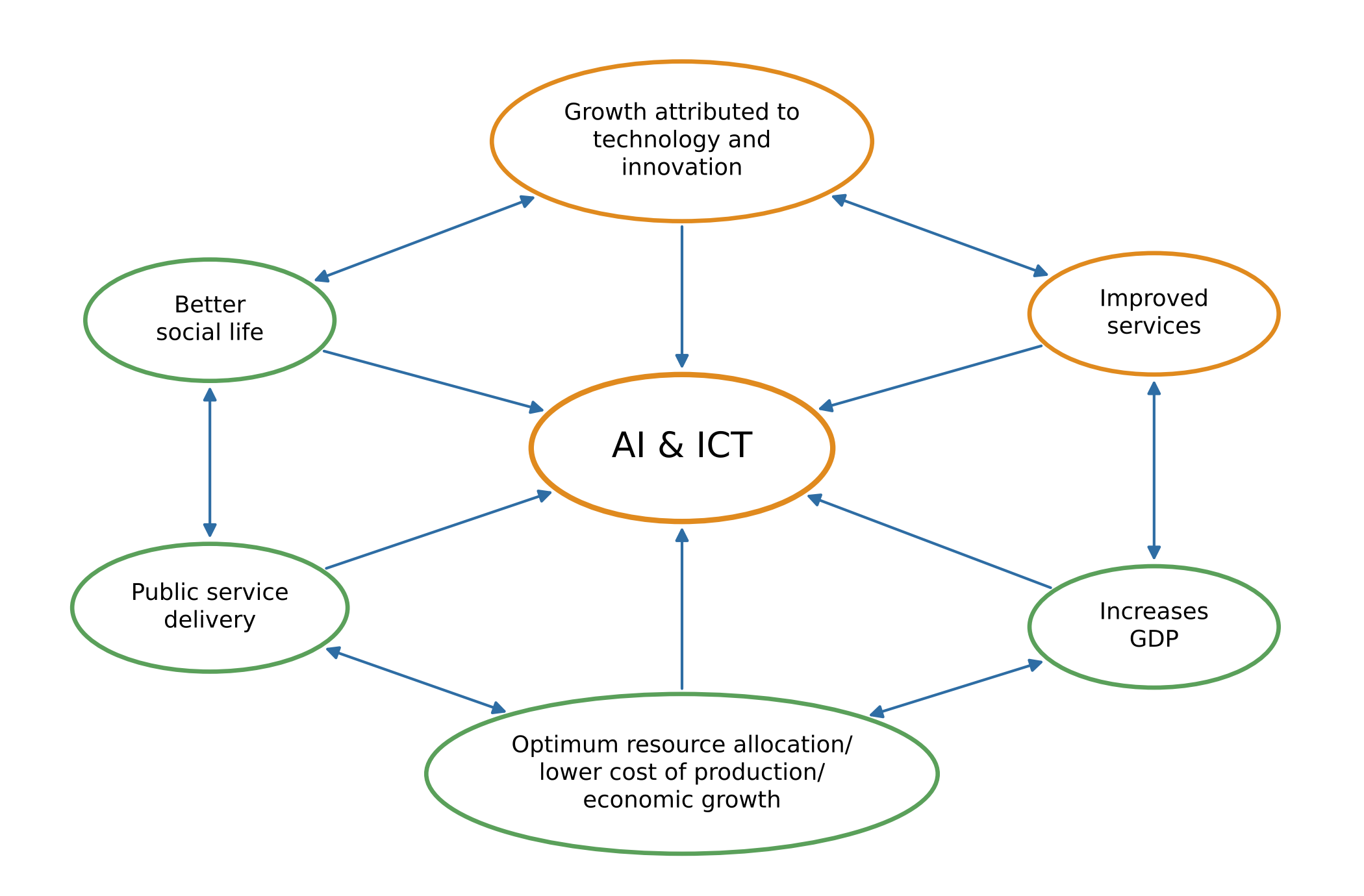
This research uses an in-depth descriptive statistical technique to relay the performance of ICT and Artificial Intelligence penetration, economic growth and development in West Africa. Figure 1 is used to display the aforementioned relationship. The list of 16 West African countries is as shown in Table 1. All the datasets used in this study were for selected periods ranging from 1998 to 2023 and explored for analysis in which a valid conclusion was drawn. The scope of this study was determined by the availability of data and the data were sourced from various secondary issues. In cases where data in few West African countries were missing for reasons, were also stated.
| No. | Country | No. | Country |
|---|---|---|---|
| 1 | Benin | 9 | Liberia |
| 2 | Burkina Faso | 10 | Mali |
| 3 | Cape Verde | 11 | Mauritania |
| 4 | Gambia | 12 | Niger |
| 5 | Ghana | 13 | Nigeria |
| 6 | Guinea | 14 | Senegal |
| 7 | Guinea-Bissau | 15 | Sierra Leone |
| 8 | Ivory Coast | 16 | Togo |
Economic growth (increased GDP/output), social life, increased output, increased employability and economic development depicted in Figure 1 (as seen in improved living standards/structural change) are distinct but interdependent processes. Growth provides the resources for development (via taxes and income that is highly dependent on output, encouraged by technology), while development (education, health, infrastructure) drives future growth. However, growth does not guarantee development, as inequality or pollution can occur without progress in quality of life. The Figure also shows the overall relationship between AI/ICT penetration into West Africa, the various economic growth therein and developmental outcome associated with technological input. The causal effect flows from AI/ICT (mobile communication, fixed-line telephony and Internet access) to economic growth (real G.D.P. and G.D.P. per capita) and economic development.
4Prospects and impact of ICT on West African markets
We tried to showcase how AI and ICT has helped to advance and develop economies in West Africa, and proved that digitalization is now recognized as a key determinant of innovation capacity and productivity growth in the region. AI and ICT are both acting as primary drivers of economic growth and development by enhancing productivity, fostering innovation, and optimizing resource allocation. AI-driven automation lowers manufacturing and service costs, while ICT infrastructure enables digital transformation, improving GDP growth, financial inclusion, and public service delivery. ICT brings about fast and accurate information, this can also be at real time; almost every activity is done today using ICT, from the government sector to private enterprises and from individuals to institutions, almost everyone and everything is dependent on its enabling structures and systems. Information and Communications Technology is now a part of our daily lives; it is playing astounding roles in our lives although we probably never stop to think too much about it, the rise in the acquisition of mobile and fixed telephone lines in West Africa is shown in Figure 2.
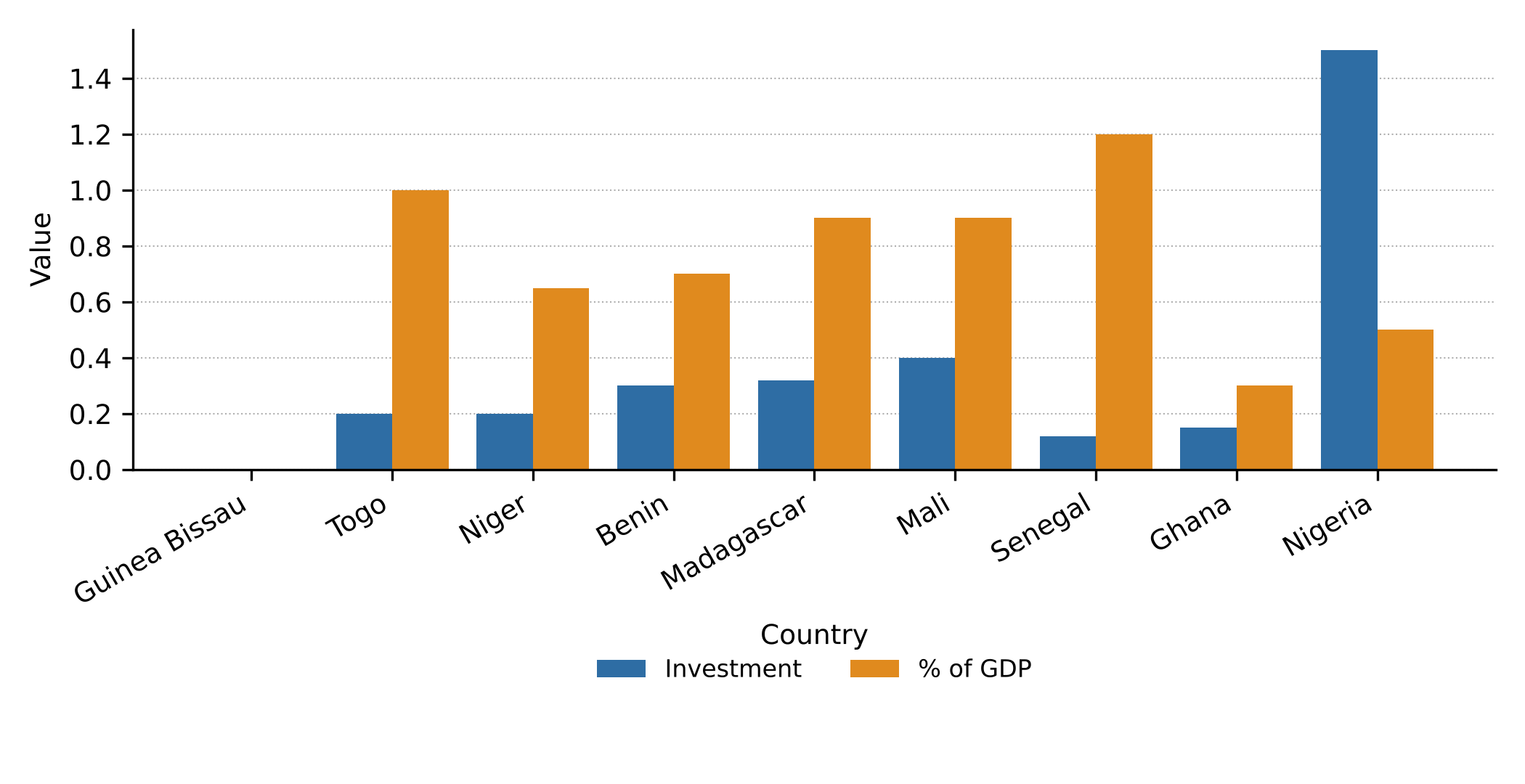
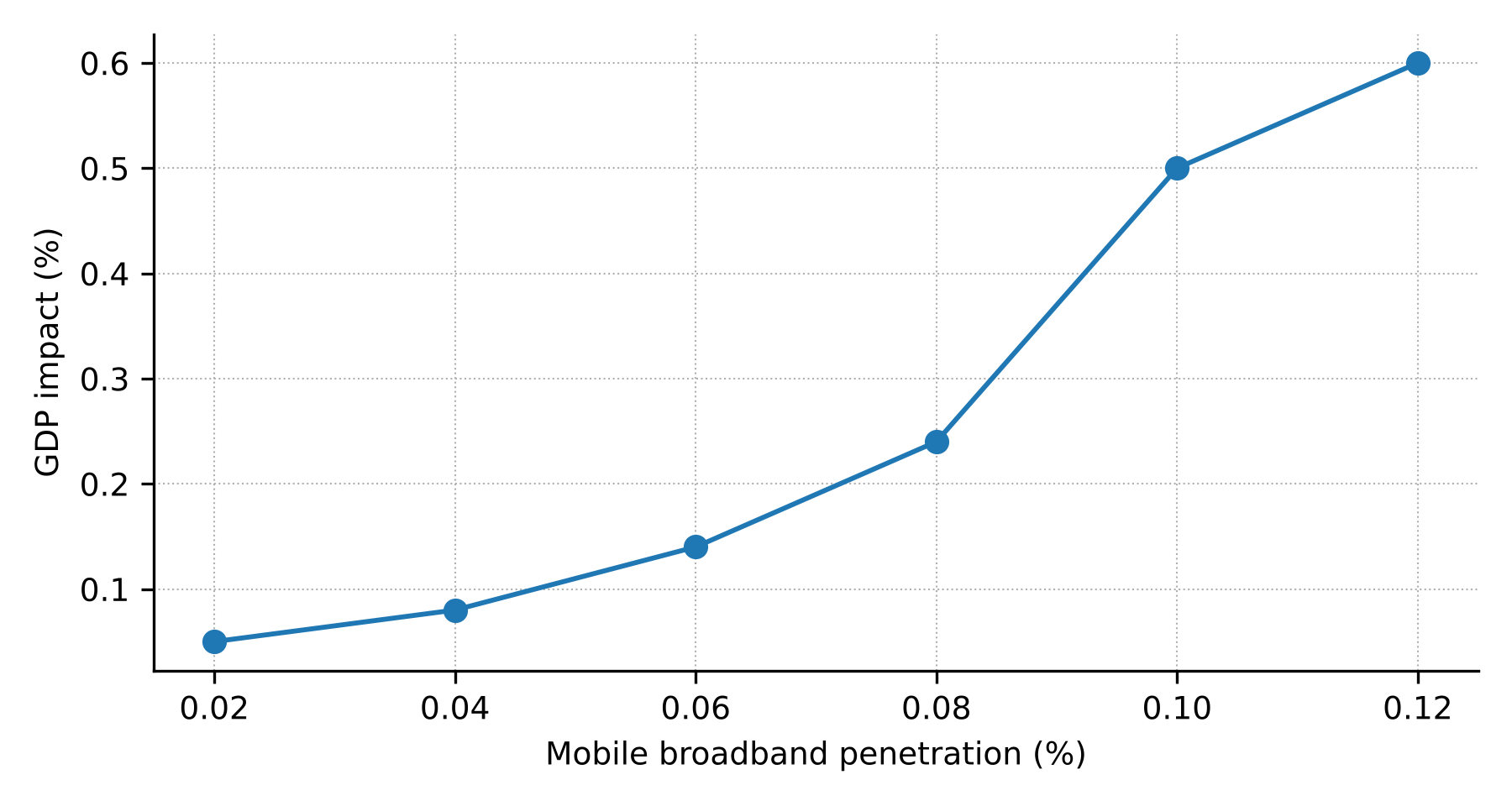
Figure 2 shows the telecommunication investment in dollars of the various West African countries and the percentage of the GDP of the countries that were invested-how those investments are related to their annual GDP in terms of percentage. In terms of trade, commerce and globalization, all entities worth their salt have an online presence for the sole purpose of trading goods efficiently and quickly. Figure 2 showed the extent to which West African countries have invested in AI and ICT, the resultant effect in GDP growth also showed that there is relative improvement, the effect on West African businesses has been on a steady increase since the year 2002. Quoting a 2019 study by IHS Markit, a London-based American-British leading source of critical information, what we are seeing today is a tip of an iceberg, as the introduction of 5G will enable $13.2 trillion of global economic output which is put at 7.4% of global GDP by year 2035. In summary, trade and commerce has had the highest impact from ICT. It has helped most of the countries that recognized its values as well as have invested in it to progress economically. It has abridged the countries and has fuelled the growth of countries’ GDP and jumped-grown manufacturing growth by 4%. Figure 3 shows how investments in broadband is helping the growth of the Senegalese economy as far back as 2018 when this evaluation was carried out.
5Prospects and impact of AI on West African markets
Many institutions in West Africa are investing billions into artificial intelligence with the hope of reaping back from such huge investments considering the fact that the African AI market is valued at $4.5 billion in 2025 and projected to reach $16.53 billion by 2030, they are hopeful of unlocking efficiencies, better risk management and new growth opportunities. The aim of this study is to find out if such huge spending is yielding or hopeful of yielding the desired dividends, either now or in the near future. Nigeria leads the rest of West African countries with an investment of $520 million in equity funding in 2024 alone, it has over 400 AI firms. Nigeria has emerged as West Africa’s undisputed AI leader, boasting over 400 AI firms and reclaiming its position as Africa’s top venture capital destination with $520 million in equity funding in 2024. The country’s National AI Strategy, launched in August 2024, positions Nigeria as “West Africa’s AI hub and model for Africa’s economic growth,” developed through collaboration with 120 global AI experts. A few individual AI firms have invested in health and banking services, the country has supported their effort with a $1.5 million AI fund and partnerships with Google for an additional ₦100 million start-up fund. Having said so much about West Africa, it is lagging behind when contextually laid side-by-side other parts of Africa and the rest of the world, statistics shows that on the 2023 government AI readiness index by Oxford Insights, most northern African countries are rated in the order of Morocco (0.56), Egypt (0.53), and Tunisia (0.47) showing that they significantly outperform most West African countries (see Table 2) with ratings such as Mauritius 61 and Senegal 91, even Ghana that is currently hosting Google’s African AI research centre and Senegal that is hoping to train 90,000 of its citizens did not do well with such ratings. Nigeria is leading the West African countries on the 2026 Government AI Readiness Index, globally Nigeria is placed 72nd. Nigeria is closely followed by Ghana, which is 85th in the world. Senegal, Côte d'Ivoire, and Benin are also highlighted as improving, with Senegal ranked 9th in Africa, 97th globally. The 2023 AI readiness index scores are given in Table 2.
| World ranking | Country | Region | Total score |
|---|---|---|---|
| 61 | Mauritius | Sub-Saharan Africa | 53.2671 |
| 77 | South Africa | Sub-Saharan Africa | 47.82152 |
| 84 | Rwanda | Sub-Saharan Africa | 45.38674 |
| 91 | Senegal | West Africa | 42.58345 |
| 97 | Benin | West Africa | 41.37192 |
| 103 | Nigeria | West Africa | 39.87877 |
| 119 | Cape Verde | West Africa | 36.29976 |
| 141 | Ghana | West Africa | 32.58404 |
| 154 | Gambia | West Africa | 30.25154 |
| 158 | Togo | West Africa | 29.68553 |
| 165 | Mali | West Africa | 27.44683 |
| 166 | Guinea | West Africa | 27.44381 |
| 168 | Mauritania | West Africa | 27.09355 |
| 175 | Sierra Leone | West Africa | 24.82503 |
| 176 | Niger | West Africa | 24.70831 |
| 179 | Guinea-Bissau | West Africa | 24.11486 |
| 182 | Liberia | West Africa | 22.24371 |
Note: Ivory Coast was not listed.
Even the situation in Ghana, which hosts Google’s African AI research centre, and Senegal, committed to training 90,000 citizens in data science by 2028, highlights how much ground West Africa must cover.
From Table 2 it is obvious that Mauritius had the highest AI readiness index with a score of 53.2671, followed by South Africa with index of 47.82152. The first West African country is Senegal with an index of 42.58345, Liberia is at the bottom with an index of 22.24371. A few other African countries outside of West Africa were added to showcase how West African countries compare to Northern and Southern countries that seem to be ahead in the race. These countries were able to achieve at least an average index of above 22 artificial intelligence access penetrations in the year of the study 2023.
5.1Internet access subscription
The rate of internet subscription in West Africa is depicted in Figure 4, while the rate of getting mobile and fixed telephone lines is depicted in Figure 5.
From Figure 4, showing percentage change in internet usage in West Africa between 2000 and 2021 by country, the internet usage in West Africa grew at high rates. Togo had the greatest growth, topping the list with an increase of 912 percent, followed by São Tomé and Príncipe whose internet usage rose by 882 percent. The data also show that other West African countries with the highest rates are Cape Verde, Mali, and Nigeria, with an internet penetration above 60 percent.
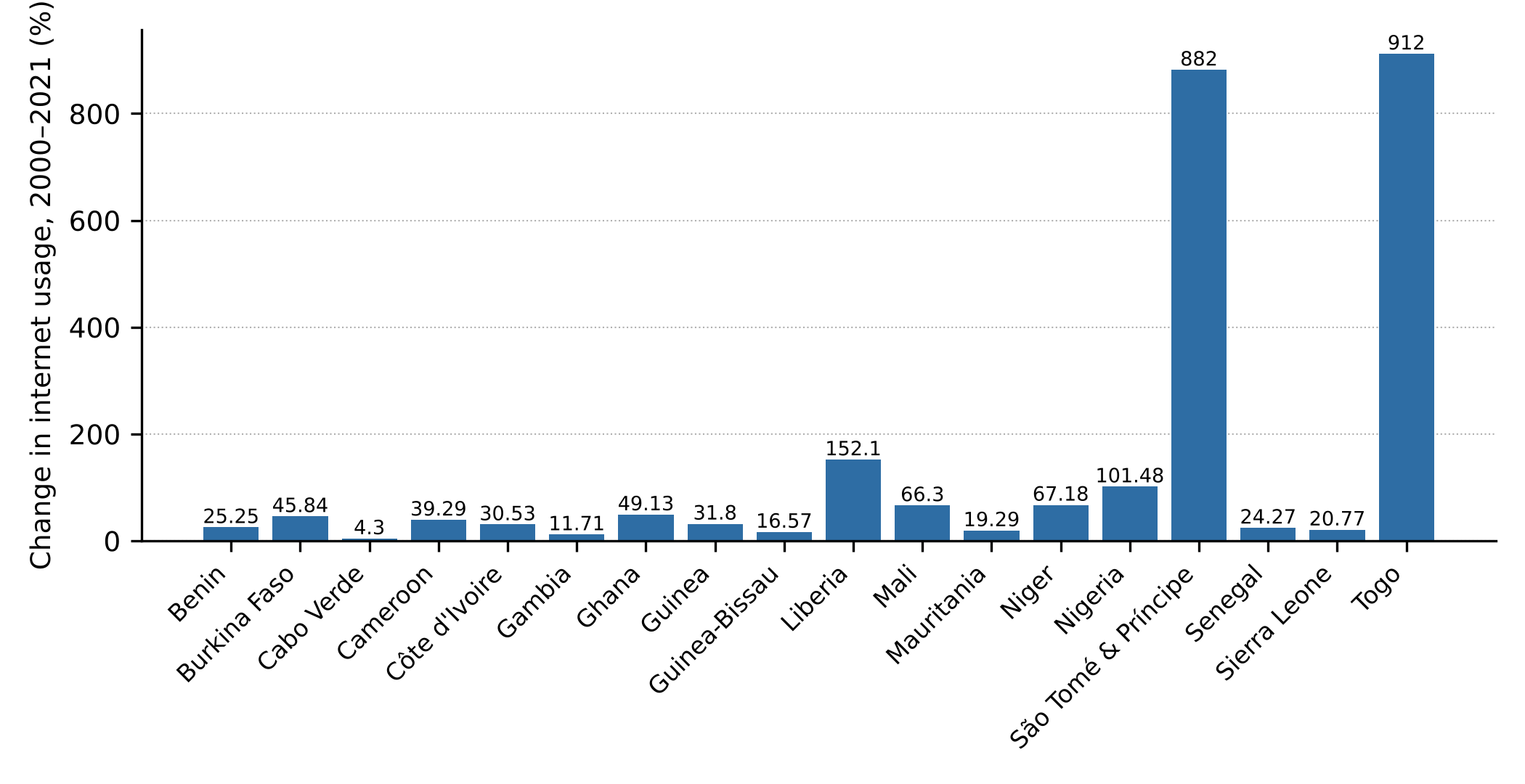
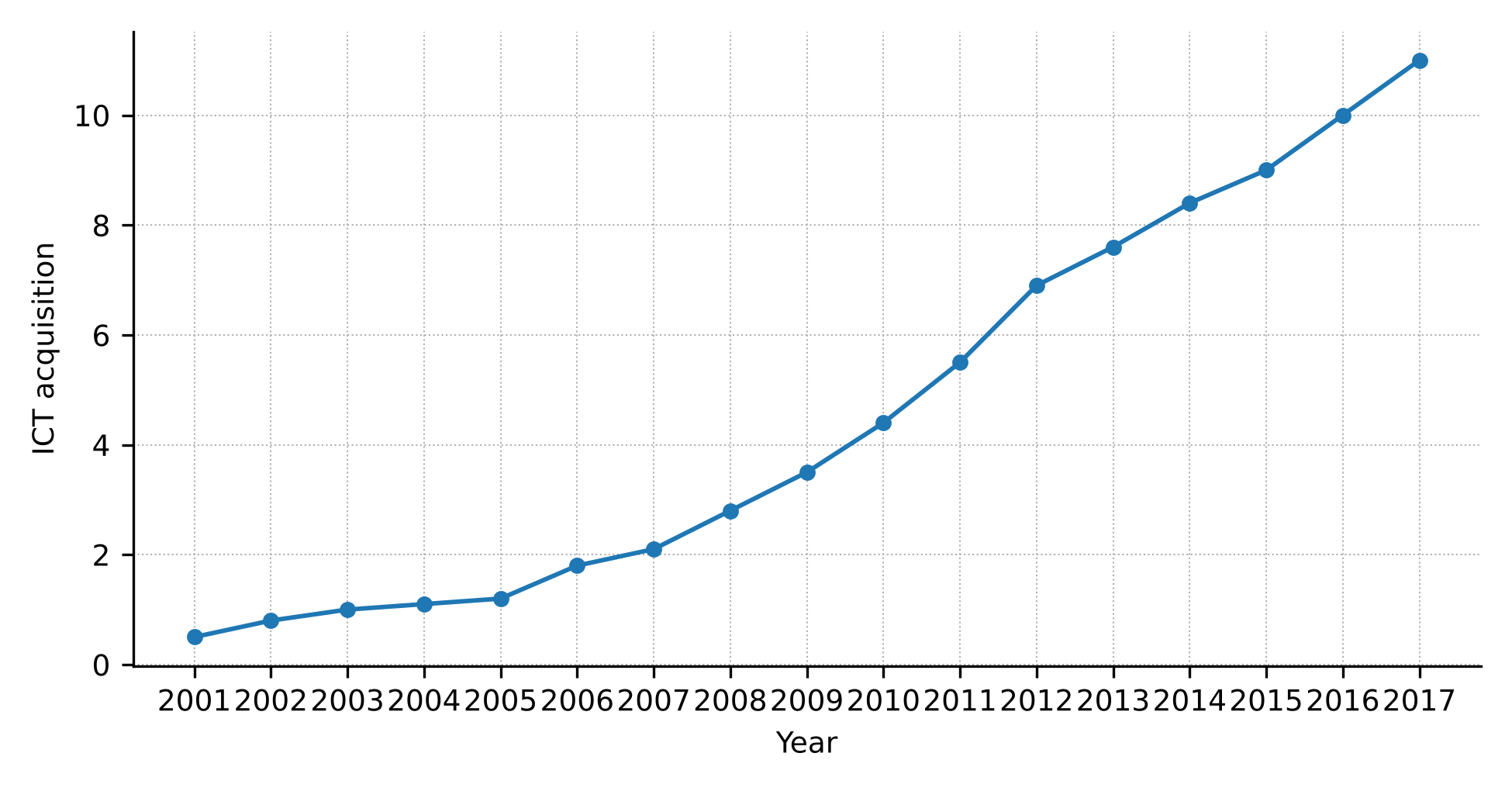
Figure 4 shows a great improvement in the penetration of Internet access in West Africa from the year 2000 to 2024 using the average index. Our major interest is in the comparison between internet penetration and economic development in West Africa. Looking at Figure 2, it is evident that there is a correlation between investment in AI, ICT and resultant economic development.
6Economic growth performance in West Africa
The annual growth of the economic activities in Africa is used to quantify the size of the West African countries in terms of value of all goods and services produced within the period under review. This study measures economic growth with G.D.P. at market prices of constant 2025 U.S. Dollar. The G.D.P. at the purchaser’s price is the sum of gross value added by all resident producers in the economy, plus any product taxes and minus any subsidies not included in the value of the products.
7Impact of telecommunication on economic growth and development in West Africa
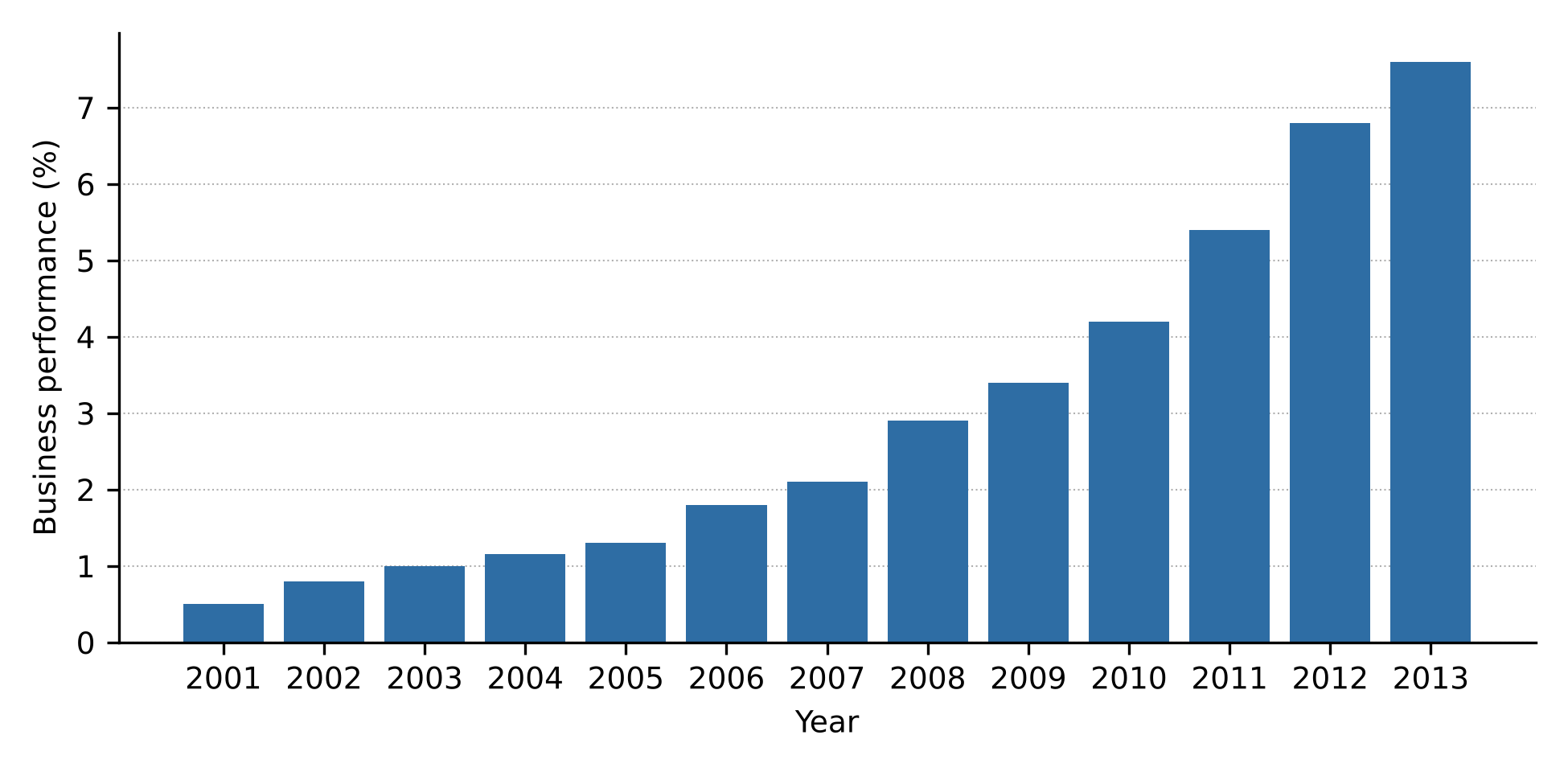
Increased access to ICT and their use by businesses have a significant impact in explaining enhanced business performance, which in turn improves the capability of the businesses to generate growth outcomes. That in turn contributed to the regional development of business in the West African sub-regional countries in which the ICT technologies were put in use. The effect of the liberalisation of the telecommunications sector has increased small business’ access to ICT in West Africa, which in turn has improved the capability of small businesses to link up with new markets and business networks. In addition, the influence of using ICT in business processes enhances business performance (it leads to competitive advantage and increased profitability) of both small and big businesses and the increased access and innovative use of telephony enhances the capability of these businesses to contribute to the regional development of their business locations. Taking an example with Nigeria, the liberalisation of the telecom industry in 1999 has increased sales and performances of businesses. Figure 6 shows the outcome of business performance since 2001, with the introduction of telecommunication.
7.1Impact of ICT on economic growth
The impact of ICT in West Africa would be seen when the internet usage, acquisition, and growth is compared with the growth of the various economies under discussion. In doing that emphasis must be laid in the fact that some of the countries are in extremely diverse regions, composed of low, lower-middle, upper-middle, and high-income countries – some of which are fragile or conflict-affected – while some are made of small states characterized by a small population, limited human capital, and a confined land area. Yes, it can be said that they are endowed with rich natural resources and some are the world’s largest free trade area, the sub-continent has the potential to forge a new development path, harnessing the potential of its resources and people.
Figure 4 shows that between 2000 and 2021, internet usage in West Africa grew at high rates. In Togo, the growth rate reached 912 percent, representing the country with the highest increase. In São Tomé and Príncipe, internet usage rose by 882 percent. Data on internet users in Africa show that the West African countries with the highest rates are Cape Verde, Mali, and Nigeria, with an internet penetration above 60 percent. Having seen the growth of the internet in these twenty-one (21) years it will be good to look at the economic growth in these countries in these years to compare the two figures in each of the countries.
Economic growth in many West African countries has varied over the years 2000 to 2023. According to Africa’s most recent economic update, while growth in Sub-Saharan Africa is projected to slow to 2.5% in 2023, from 3.6% in 2022, due mainly to rising conflict and violence across the region exerting dampening effect on economic activity, with climate shocks poised to exacerbate this fragility, West Africa economy was expected to grow at 3.3% in the year 2023 alone as against the East Africa that was set to record a growth rate of 1.8% in the same year. Whatever that brought about the growth may not be limited to the ICT awareness alone, but will not be far from it. Looking at the beliefs of scholars, it is evident that ICT penetration is a big boost to economic developments.
8Results and discussion
Countries in the West African sub-region must realize that the entire world is going online and cannot be left behind; they should as well know that even as globalization is being propelled by rapid technological innovations of ICT, they should understand that it is not the only technological force that drives globalization. Even as many of us are aware that we live in a rapidly changing world, but most of us are still not conscious of the speed of change and the interconnections between the many technological and other changes that are affecting our daily lives and that will have a profound effect on our future; we needed this awareness to meet up with what others are doing. We should realize and quickly too that without this consciousness, it is going to be difficult to fully understand our present predicament and proffer effective solutions that will ensure that we have at least a standing place in a future world – economically and otherwise.
Since we have seen that ICT is the gateway to the more desired modern development and is a major driver of modern economies, our aims for now should be to be more focussed on investments that expand the technological capability of member states in West Africa. Each country should gear up towards institutional development, invest more in Research and Development (R&D), and venture more capital for innovative initiatives, and focus on an educational curriculum that prepare our graduates for the challenges of better nation building.
Each member nation must include in their programs the transformation of the public sector to meet the global challenge of managing a private sector led economy. The provision of enabling environment is and should be the priority of each member state. It should not be left out in the hands of private entities. When the private sector is well guided and adequate infrastructure is put in place, then the economy and people within will start to blossom. If the private sector is moving on fine, and relating well with the government, it is then we can expect service delivery, businesses in all the sectors to move smoothly; from there, creative networking of the various initiatives within the member countries can help to catalyse the preparedness of the private sector, civil society and government for the good of all.
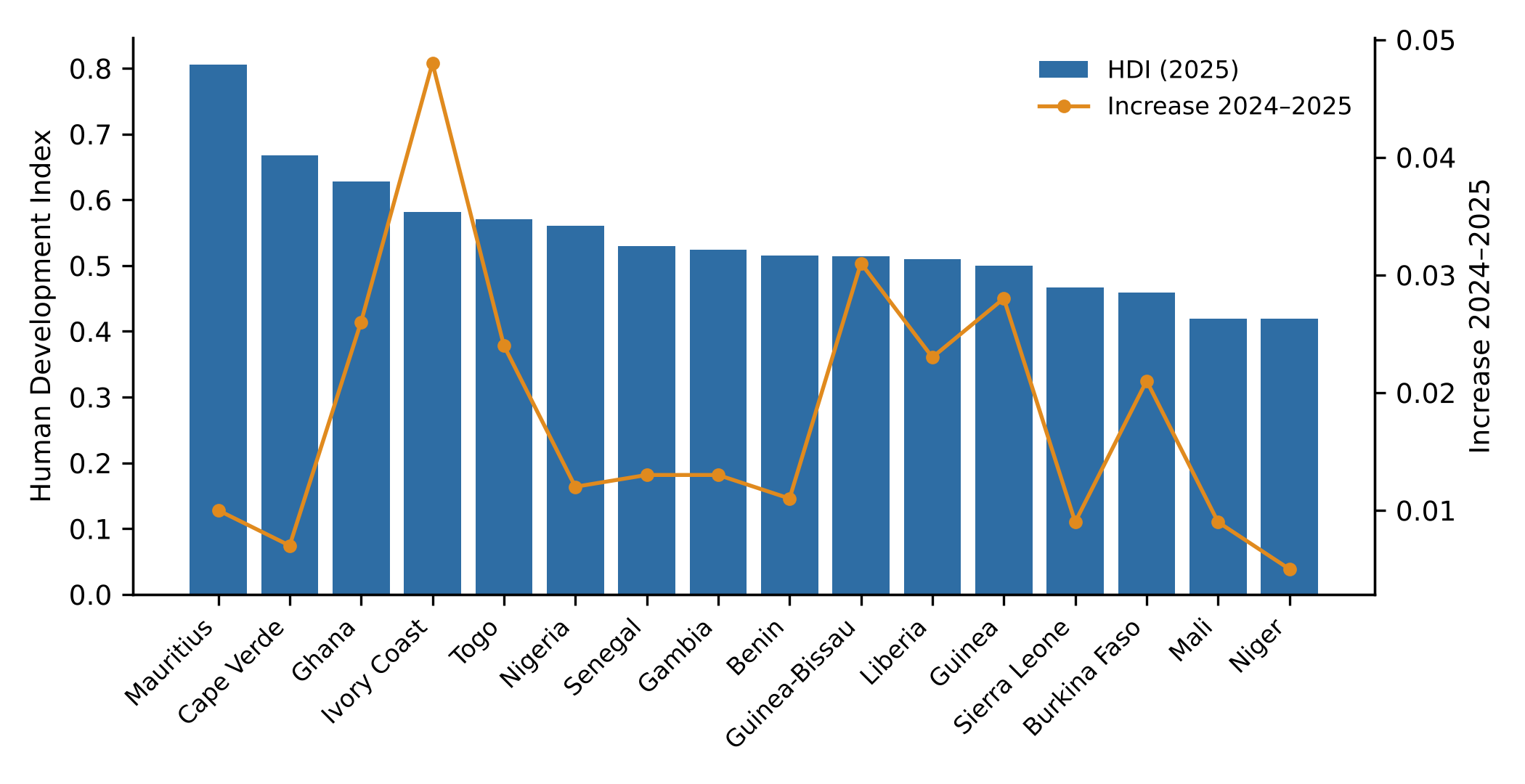
The digital revolution brought about by ICT offers nations in West Africa and other African countries the unique opportunity of actively participating in the world's latest developmental revolution, and go ahead and reap from its gains (see Table 3 and Figure 7).
| Regional rank | World rank | Country | Index | Increase 2024–2025 |
|---|---|---|---|---|
| 1 | 73 | Mauritius | 0.806 | 0.010 |
| 2 | 135 | Cape Verde | 0.668 | 0.007 |
| 3 | 143 | Ghana | 0.628 | 0.026 |
| 4 | 157 | Ivory Coast | 0.582 | 0.048 |
| 5 | 161 | Togo | 0.571 | 0.024 |
| 6 | 166 | Nigeria | 0.560 | 0.012 |
| 7 | 169 | Senegal | 0.530 | 0.013 |
| 8 | 170 | Gambia | 0.524 | 0.013 |
| 9 | 173 | Benin | 0.515 | 0.011 |
| 10 | 174 | Guinea-Bissau | 0.514 | 0.031 |
| 11 | 177 | Liberia | 0.510 | 0.023 |
| 12 | 179 | Guinea | 0.500 | 0.028 |
| 13 | 185 | Sierra Leone | 0.467 | 0.009 |
| 14 | 186 | Burkina Faso | 0.459 | 0.021 |
| 15 | 188 | Mali | 0.419 | 0.009 |
| 16 | 188 | Niger | 0.419 | 0.005 |
8.1Discussion of results and findings
Comparing the table containing the AI/ICT investment and the Human development index in West Africa shows that there is a relationship between them. While Mauritius has the highest AI/ICT investment from the figure, it also has the highest index. The same scenario goes on in the other West African countries. This information age has created new wealth and has sustained one of the largest and unbroken growths in some economies; some of those sustained economies are in North America and Europe. Countries in the West African sub region can key into that and enjoy the benefit inherent thereby. The very few and biggest beneficiaries have always been countries that are quick to identify the premeditated relevance of Information Technology (IT) in the rapid transformation of national economic development. Recently, ICT has contributed greatly to developing and establishing the economies of Asia in the league of newly developed economies. West African countries especially thus have the choice to either convert their population plus their low-wage economy into a strong IT powerhouse in global terms {as a net producer of IT products and services} or it could once again dash hopes of the black race by sitting on the bench and ending up as merely a large market for the consumption of IT products and services that in turn feeds the already booming economies of wiser countries. They have the needed manpower, the universities have been churning out well-prepared graduates in their numbers in recent years, and these trained university graduates could be harnessed and put into good use. This was what the Asian tigers did that have blossomed the economies there.
West African countries should draw up National IT Policies for their various countries and define the road map of what they want out of this present revolution and try to find out how they intend to achieve the set-out objectives. There is great potential for sister states in West Africa and even beyond, other African countries for local development of IT Brainpower for later 'export' to lessen or remove the IT skills gap in North America and Europe. There is the need for local manufacture of hardware components as well as local development of software. What is now needed is to take the technology a step further by encouraging the local production of some of the components used for systems building - components such as Computers, Motherboards, Modems, Monitors, Casing/Power Supplies, Keyboards/Mice and Add-in Cards. Such successes were exhibited by countries like India and Pakistan with similar handicaps as ours, but today such countries have achieved greater successes from export of ICT professionals to Europe and North America. We should note that no genuine foreign entrepreneur will come in to successfully develop this sector for us; we have to put certain policies in place to attract foreign investors to develop our regions further. There are certain initiatives that must come from local operators; their job is to set the ball rolling while awaiting foreign investment. The foreign investors come in only when policies and initial infrastructure have been properly defined and established; they (foreign investors) only come to supplement local initial investment. The trend all over the world is to move from national monopoly in the ownership and management of the sector, aimed at deregulation and privatization. It opens up the sector to private investors in order to engender healthy competition, add more wealth to the economy, resulting in greater efficiency, improvement in the quality-of-service delivery, lowering of cost of production, leveraging better prices and general consumer satisfaction.
9Conclusion
This study provides a comprehensive insight for policymakers regarding the relevance of ICT in boosting economic growth through the advantages of technology expansion. It has shown the relationship between ICT and economic growth in the aforementioned West African countries; however future studies should refocus the problem statement on other regions and apply the recent data in such studies. The results of this study confirm that ICT, including mobile phone development, contributes significantly to economic growth in the various West African countries that were involved in the study. Most retailers that were interviewed brought to the fore the advantages they receive from the use of ICT; such advantages include reduction in both risk and cost of travelling to get goods and services rendered to customers. Today, rather than travelling long distances to get goods, you engage your suppliers via telephones or emails; the same applies when you want to sell same goods to your customer, you simply reach them through same means. This has highly reduced risk of travelling; it has also reduced the cost of doing business. Finally, for the West African countries as a whole to benefit from the ICT as a driver of economic growth, policymakers should enact several important policies that will allow for the development of their sectors; they should provide more convenient regulatory institutional environments, increase economic openness, prioritize the allocation of resources to the development of the various ICT infrastructure, and minimize the negative effects of inflation and government wasteful consumption.
References
- [1]Andrianaivo M, Kpodar K (2011). ICT, financial inclusion, and growth: Evidence from African countries. IMF Working Paper No. 11/73. Washington, DC: International Monetary Fund.
- [2]Bahrini R, Qaffas AA (2019). Impact of information and communication technology on economic growth: Evidence from developing countries. Economies, 7(1), 21. https://doi.org/10.3390/economies7010021
- [3]Datta A, Agarwal S (2004). Telecommunications and economic growth: A panel data approach. Applied Economics, 36(15), 1649–1654.
- [4]David OO (2013). The effect of investment in telecommunication on economic growth: Evidence from Nigeria. International Journal of Advancements in Research & Technology, 2(1), 1–23.
- [5]Endsley MR, Garland DJ (2000). Theoretical underpinning of situation awareness: A critical review. In: Situation Awareness Analysis and Measurement. Mahwah, NJ: Lawrence Erlbaum Associates.
- [6]FinMark Trust (2009). FinScope South Africa 2009. Johannesburg: FinScope.
- [7]GSMA (2008). Understanding financial regulation and how it works. Technical Report. London: Global System for Mobile Communications Association.
- [8]International Telecommunication Union (2018). Measuring the Information Society Report 2018, Vol. 1. Geneva: ITU Publications.
- [9]Jorgenson DW, Stiroh KJ (2000). Raising the speed limit: U.S. economic growth in the information age. Brookings Papers on Economic Activity, 2000(1), 125–236.
- [10]Lee SO, Hong A, Hwang J (2017). ICT diffusion as a determinant of human progress. Information Technology for Development, 23(4), 687–705.
- [11]Lewin D, Sweet S (2005). The economic impact of mobile services in Latin America. Technical Report for the GSMA, GSM Latin America and AHCIET. London: GSMA.
- [12]Maneejuk P, Yamaka W (2020). An analysis of the impacts of telecommunications technology and innovation on economic growth. Telecommunications Policy, 44(10), 102038. https://doi.org/10.1016/j.telpol.2020.102038
- [13]Naderpour M, Nazir S, Lu J (2015). The role of situation awareness in accidents of large-scale technological systems. Process Safety and Environmental Protection, 97, 13–24. https://doi.org/10.1016/j.psep.2015.06.002
- [14]Nguyen T, Lim CP, Nguyen ND, Gordon-Brown L, Nahavandi S (2019). A review of situation awareness assessment approaches in aviation environments. IEEE Systems Journal.
- [15]Obed-Ojukwu LE, Onungwe HO (2025). The knowledge and utilization of ICT tools in healthcare delivery among health center workers in Port Harcourt metropolis. Advance Journal of Science, Engineering and Technology, 10(2).
- [16]Oliner SD, Sichel DE (1994). Computers and output growth revisited: How big is the puzzle? Brookings Papers on Economic Activity, 1994(2), 273–334.
- [17]Riley JM, Endsley MR, Bolstad CA, Cuevas HM (2006). Collaborative planning and situation awareness in army command and control. Ergonomics, 49(12–13), 1139–1153.
- [18]Roztocki N, Weistroffer HR (2009). Research trends in information and communications technology in developing, emerging and transition economies. Roczniki Kolegium Analiz Ekonomicznych, 20, 113–127.
- [19]Tcheng H, Huet JM, Viennois I, Romdhane M (2007). Telecoms and development in Africa: The chicken or the egg? Convergence Letter No. 8.
- [20]Thomas M (2023). The future of AI: How artificial intelligence will change the world.