Climate-Smart Agricultural Practices
Assessment of the Effect of Climate-Smart Agricultural Practices on Cassava Farmers’ Production in Imo State, Nigeria
1Department of Agricultural Extension, Nnamdi Azikiwe University, Awka, Anambra State, Nigeria
2Department of Agricultural Economics, Nnamdi Azikiwe University, Awka, Anambra State, Nigeria
Published October 2026
Abstract
Climate change is threatening cassava productivity in Nigeria. Climate-Smart Agriculture (CSA) offers potential to enhance yield, income and resilience, but adoption remains low among smallholders. This study assessed the effect of CSA practices on cassava farmers’ yield and income in Imo State, Nigeria. Data were collected from 300 cassava farmers selected through multistage sampling between 2023 and 2024. Descriptive statistics, 5-point Likert scale and Ordinary Least Squares regression were used for analysis. Results showed that 86.67% of farmers were male, 55.33% were above 60 years, and 91% had secondary education. Mean farm size was <1 ha for 39.33% of farmers. Farmers had positive perceptions of CSA: 83.67% agreed CSA increased income and 93.33% agreed it reduced crop loss risk. Most adopted practices were cover cropping (27%), minimum tillage (18.67%) and crop rotation with legumes (18.33%). OLS results showed that sex (β=4.00, p<0.05), occupation (β=5.16, p<0.01), farm size (β=1.08, p<0.10) and use of Integrated Pest Management (β=1.27, p<0.05) significantly increased cassava yield. For income, farming experience (β=156.89, p<0.01) was positive while education (β=-253.47, p<0.05), household size (β=-264.18, p<0.10) and irrigation (β=-1998.01, p<0.10) were negative. Major constraints were high cost of farm input (mean=5.71), land insufficiency (5.85), low education level (5.94), and lack of access to water (5.57). The study concludes that CSA practices improve cassava yield but adoption is constrained by financial, infrastructural and informational factors. It recommends improved credit access, strengthened extension services, gender-targeted programs, and reliable climate information to scale CSA in Imo State.
Keywords: climate-smart agriculture; cassava farming; adoption; yield; income; Imo State
1Introduction
Agriculture remains a critical source of income and sustenance in many African countries, particularly in Sub-Saharan Africa (SSA), where the majority of the population relies on farming for their livelihood. In Nigeria, agriculture accounts for approximately 21.42% of the country's GDP, translating to about 27,371.30 billion Naira (National Bureau of Statistics [NBS], 2018). This sector remains a cornerstone of the Nigerian economy, especially in rural areas, where an estimated 70.47% of the population lives and depends on agriculture for their sustenance (World Bank, 2020). One of the most significant crops in Nigeria and other SSA nations is cassava (Manihot esculenta), a staple food crop and vital source of income for millions of rural households. Despite its drought resistance and ability to grow in marginal soils, cassava farmers are increasingly facing challenges posed by climate change, which threatens agricultural productivity and food security (Gure et al., 2018; Abdoulaye et al., 2019). Cassava's importance as a staple food in Sub-Saharan Africa cannot be overstated, with the crop serving as a primary source of calories for more than one-third of the region's population (Acheampong et al., 2018). In Nigeria, it is not only a vital food crop but also a key income-generating crop, with its versatility in industrial applications. However, as climate change accelerates, the agriculture sector faces growing challenges, including erratic weather patterns, increased temperatures, and changing rainfall regimes. These environmental stresses are expected to severely affect cassava yields, which in turn jeopardizes the food security of farmers and the stability of rural economies (Sharma & Ravindranath, 2019). Farmers' adaptation to these challenges has become a critical issue, with the potential for widespread economic and social impacts.
Climate change, as defined by the Intergovernmental Panel on Climate Change (IPCC), refers to long-term changes in the climate system resulting from human and natural activities, manifesting through shifts in temperature, rainfall, and extreme weather events. These changes have exacerbated food security challenges in many countries, including Nigeria, where climate variability significantly disrupts agricultural productivity (Matemilola & Elegbede, 2017). As the global population continues to rise, the need for sustainable agricultural practices has never been more urgent. In this context, Climate-Smart Agriculture (CSA) has emerged as a promising solution to enhance food production, improve resilience, and mitigate the adverse effects of climate change on agriculture (FAO, 2013; Lipper, 2014).
CSA practices are designed to increase agricultural productivity, enhance resilience to climate change, and reduce greenhouse gas emissions while ensuring food security (Kijima, 2011). These practices include using improved crop varieties, integrated pest management, water-efficient irrigation systems, and soil conservation methods such as agroforestry and conservation agriculture (Campbell et al., 2014). The adoption of CSA is particularly crucial for cassava farmers, who face a range of environmental and economic challenges, including pest and disease outbreaks, inconsistent rainfall, and fluctuating market prices (Ojoko et al., 2017). By promoting CSA, governments and development agencies aim to not only boost cassava yields but also increase farmers' incomes and improve their livelihoods, particularly in vulnerable rural communities (Mnkeni & Mutengwa, 2014; Gure et al., 2018). The use of CSA practices among cassava farmers in Nigeria has shown promising results, but several barriers continue to hinder widespread adoption. Factors such as limited access to climate information, financial constraints, and a lack of technical support from extension services have been identified as key challenges (Ameh, 2019). Farmers' perceptions of climate change and their willingness to adopt new practices play a significant role in the success of CSA initiatives. Studies indicate that farmers with higher levels of education, access to information, and training are more likely to adopt CSA techniques (Sharma & Ravindranath, 2019). However, there is still a need for more targeted interventions that address the specific challenges faced by cassava farmers in different regions of Nigeria, particularly in Imo State, where this study is focused.
1.1Objectives of the study
The main objective of this study is to assess the effect of Climate-Smart Agriculture on cassava farmers’ production in Imo State, Nigeria. Specifically, the study aimed to:
- 1. describe the personal characteristics of farmers involved in CSA practices,
- 2. examine cassava farmers’ perception on the use of CSA practices,
- 3. identify the CSA practice used by the cassava farmers in the study area,
- 4. determine the effect of CSA practices on cassava yield,
- 5. analyze the influence of CSA practices on income of cassava farmers,
- 6. examine the constraints facing the cassava farmers on the practice of CSA.
2Methodology
This section discusses the method and procedure used by the researcher to achieve the objectives of the study. The study employed a mixed research design, incorporating both descriptive and correlation approaches, to address the stated objectives. The descriptive research design utilized cross-sectional survey methods, including structured questionnaires, to collect data. The study used a combination of different analytical techniques to achieve the results of the six specific objectives. The analytical techniques used include simple descriptive statistics, mean threshold from 5-points Likert Scale, and ordinary least square (OLS) regression analysis. Objectives 1 (describe the personal characteristics of farmers involved in CSA practices), and 3 (identify the CSA practice used by the cassava farmers in the study area) were achieved with descriptive statistics which include frequency, percentage, mean, and charts. Specific objectives 2 (examine cassava farmers’ perception on the use of CSA practices), and 6 (examine the constraints facing the cassava farmers on the practice of CSA) were achieved with the help of 5-points Likert Scale. Furthermore, objectives 4 (determine the effect of CSA practices on cassava yield), and 5 (analyze the influence of CSA practices on income of cassava farmers) were achieved with the help of the OLS model.
3Results and discussion
3.1Description of the personal characteristics of respondents
The personal characteristics of cassava farmers in Imo State were analysed to better understand the factors influencing their adoption of climate-smart agricultural (CSA) practices. These characteristics, as detailed in Table 1, provided valuable insights into the demographic profile of the farmers and their potential for adopting climate-responsive agricultural innovations. The analysis revealed several key aspects of the farmers' profiles, including age, sex, marital status, household size, level of education, and farming experience, all of which contribute to their agricultural decision-making processes.
Age Distribution: The age distribution of the respondents indicates that 55.33% of the farmers were aged above 60 years, followed by 26.0% in the age range of 25–54 years, and 10.0% in the range of 55–64 years. The average age of the farmers was approximately 42 years. This finding is consistent with studies such as those by Adewuyi et al. (2018), who observed that older farmers dominate smallholder agriculture in Nigeria, with age often influencing the adoption of improved agricultural practices. While older farmers may be more inclined to adhere to traditional methods, they also serve as custodians of local knowledge, which could be valuable in the context of CSA adoption. On the other hand, younger farmers, who are generally more open to experimentation with new practices (Ofoegbu et al., 2020), may face challenges related to access to land and resources. The relatively high proportion of farmers aged over 60 in this study highlights the need for targeted interventions that address the specific challenges faced by older farmers, such as physical limitations and reluctance to embrace change.
Sex Distribution: A significant majority of the respondents, 86.67%, were male, while only 13.33% were female. This reflects a gender imbalance in the farming community, which is common in many parts of Africa. According to Oladele and Ringim (2019), male farmers in Nigeria are more likely to have access to land, credit, and other productive resources, which are crucial for adopting new technologies such as CSA. The low proportion of female farmers, however, aligned with findings from Aloyce et al. (2014), who noted that women's involvement in agriculture is often constrained by cultural and economic barriers. This highlights the need for targeted interventions to increase female participation in agricultural innovations.
Marital Status: The majority of respondents, 83%, were married. The role of marriage in farming households is significant, as married farmers often benefit from the support of household members in agricultural activities, thereby increasing the likelihood of adopting labour-intensive practices such as those associated with CSA. Akinola et al. (2019) found that married farmers, due to the availability of family labour, tend to be more productive and are better positioned to adopt modern farming practices. In contrast, single farmers may face challenges in terms of labour availability, which could hinder their ability to implement CSA practices effectively.
Family Type: Among the married farmers, 89.12% practised monogamy, while 10.88% were in polygamous households. Family structure influences agricultural productivity, as larger families tend to have more household labour, which is essential for implementing CSA practices. Abdullahi et al. (2018) suggested that polygamous families, with more members, might have a labour advantage in farming activities, although this may also lead to resource fragmentation. The predominance of monogamous households in this study is reflective of broader trends in rural Nigeria, where monogamy remains the dominant family structure.
Household Size: The majority of respondents, 51%, had household sizes ranging from 4-7 members, while 29.67% had smaller households with 1-3 members. Larger households are generally associated with greater labour availability, which is advantageous for the adoption of CSA practices that require significant physical input, such as soil conservation and mulching. This finding aligns with Marenya et al. (2007), who found that larger household sizes were positively correlated with the adoption of agricultural innovations, as they provide additional labour for farm activities.
Level of Education: The educational level of the farmers was relatively high, with 91% having completed secondary education, 4.67% having tertiary education, and 4.33% having only primary education. Eze et al. (2021) noted that higher levels of education positively impact farmers' ability to adopt new technologies, as educated farmers are better equipped to understand and apply modern farming techniques. This finding suggests that the farmers in Imo State, with a significant proportion having secondary education, are likely to be more receptive to CSA practices compared to farmers with lower levels of education, as observed by Alamu et al. (2022).
Farming Experience: The majority of farmers in the study, 36.33%, had between 21–30 years of farming experience, while 33.67% had 11–20 years. Experience is a critical factor in the adoption of new agricultural practices, as it shapes farmers' understanding of their environment and farming practices. Chikezie et al. (2019) found that experienced farmers may be resistant to adopting new practices due to entrenched traditional farming methods. However, with the right extension services and incentives, experienced farmers can be pivotal in disseminating CSA knowledge to others.
Primary Occupation: The majority of respondents, 87.67%, identified farming as their primary occupation, which reflects the centrality of agriculture to their livelihoods. Ishola and Adeola (2020) highlighted that full‑time farmers are generally more committed to adopting new farming practices as agriculture is their main source of income. In contrast, part‑time farmers, who account for 12.33% in this study, may not prioritize adopting CSA practices due to competing non‑farming interests.
Farm Size: Farm sizes were predominantly small, with 39.33% of farmers owning farms less than 1 hectare, and 26.33% having 1–3 hectares. Small farm sizes are typical among smallholder farmers in sub‑Saharan Africa, which often limits their ability to implement large‑scale agricultural practices. This is consistent with Usman et al. (2018), who noted that smallholder farmers may struggle to adopt practices requiring significant capital or land. However, Nwosu et al. (2022) found that even smallholders could successfully adopt CSA practices when supported with access to inputs, credit, and extension services.
Land Ownership: The study showed that 80.67% of farmers owned their land, while 19.33% used hired land. Secure land tenure is a crucial factor in the adoption of sustainable farming practices, as farmers with ownership rights are more likely to invest in long‑term practices that improve soil health and productivity. Omonona et al. (2019) similarly found that secure land tenure significantly enhances farmers' willingness to adopt CSA practices, as it assures them of the long‑term benefits of such investments.
Extension Contacts: Only 33% of farmers had extension contacts, while 67% did not. This gap in extension services is a significant barrier to the adoption of CSA practices. Lawal et al. (2021) highlighted that limited access to extension services is one of the primary constraints to the adoption of new agricultural technologies. Extension services are critical for disseminating knowledge about CSA practices, and improving access to such services could greatly enhance the adoption of CSA in Imo State. However, these personal characteristics of cassava farmers in Imo State, such as age, education, family size, and farming experience, aligned with several empirical studies that suggest these factors play a significant role in the adoption of climate-smart agriculture.
| Personal characteristics | Frequency | Percentage (%) | Mean | SD |
|---|---|---|---|---|
| Age (years) | ||||
| 0-14 | None | None | 41.60 | 9.42 |
| 15-24 | 26 | 8.67 | ||
| 25-54 | 78 | 26 | ||
| 55-64 | 30 | 10 | ||
| Above 64 | 166 | 55.33 | ||
| Total | 300 | 100 | ||
| Sex | ||||
| Male | 260 | 86.67 | ||
| Female | 40 | 13.33 | ||
| Total | 300 | 100 | ||
| Marital Status | ||||
| Married | 249 | 83 | ||
| Divorce | 1 | 0.33 | ||
| Widow | 26 | 8.67 | ||
| Widower | 18 | 6 | ||
| Single | 6 | 2 | ||
| Total | 300 | 100 | ||
| Family Type, if married | ||||
| Monogamy | 262 | 89.12 | ||
| Polygamy | 32 | 10.88 | ||
| Total | 294 | 100 | ||
| Household size | ||||
| 1-3 | 89 | 29.67 | 7 | 2.57 |
| 4-7 | 153 | 51 | ||
| 8-11 | 56 | 18.67 | ||
| Above 11 | 2 | 0.67 | ||
| Total | 300 | 100 | ||
| Number of males with their age in years | ||||
| 0-9 | None | None | ||
| 10-19 | 2 | 0.77 | ||
| 20-50 | 56 | 21.54 | 54 | 13.43 |
| Above 50 | 202 | 77.69 | ||
| Total | 260 | 100 | ||
| Number of females with their age in years. | ||||
| 0-9 | None | None | ||
| 10-19 | 2 | 5 | 34 | 7.36 |
| 20-50 | 14 | 35 | ||
| Above 50 | 24 | 60 | ||
| Total | 40 | 100 | ||
| Level of education | ||||
| Informal | None | None | ||
| Primary | 13 | 4.33 | ||
| Secondary | 273 | 91 | ||
| Tertiary | 14 | 4.67 | ||
| Total | 300 | 100 | ||
| Farming experience in cassava (years) | ||||
| 1-10 | 76 | 25.33 | ||
| 11-20 | 101 | 33.67 | ||
| 21-30 | 109 | 36.33 | ||
| Above 30 | 14 | 4.67 | ||
| Total | 300 | 100 | ||
| Primary occupation | ||||
| Farming | 263 | 87.67 | ||
| None-Farming | 37 | 12.33 | ||
| Total | 300 | 100 | ||
| Farm size (hectares) | ||||
| <1 | 118 | 39.33 | ||
| 1-3 | 79 | 26.33 | ||
| 3-4 | 82 | 27.33 | ||
| Above 4 | 21 | 7 | ||
| Total | 300 | 100 | ||
| Land ownership | ||||
| Hired Land | 58 | 19.33 | ||
| Ownership of Land | 242 | 80.67 | ||
| Total | 300 | 100 | ||
| Extension contacts | ||||
| Yes | 99 | 33 | ||
| No | 201 | 67 | ||
| Total | 300 | 100 |
Source: Field Survey, 2024.
3.2Perception of cassava farmers on the use of climate-smart agricultural practices
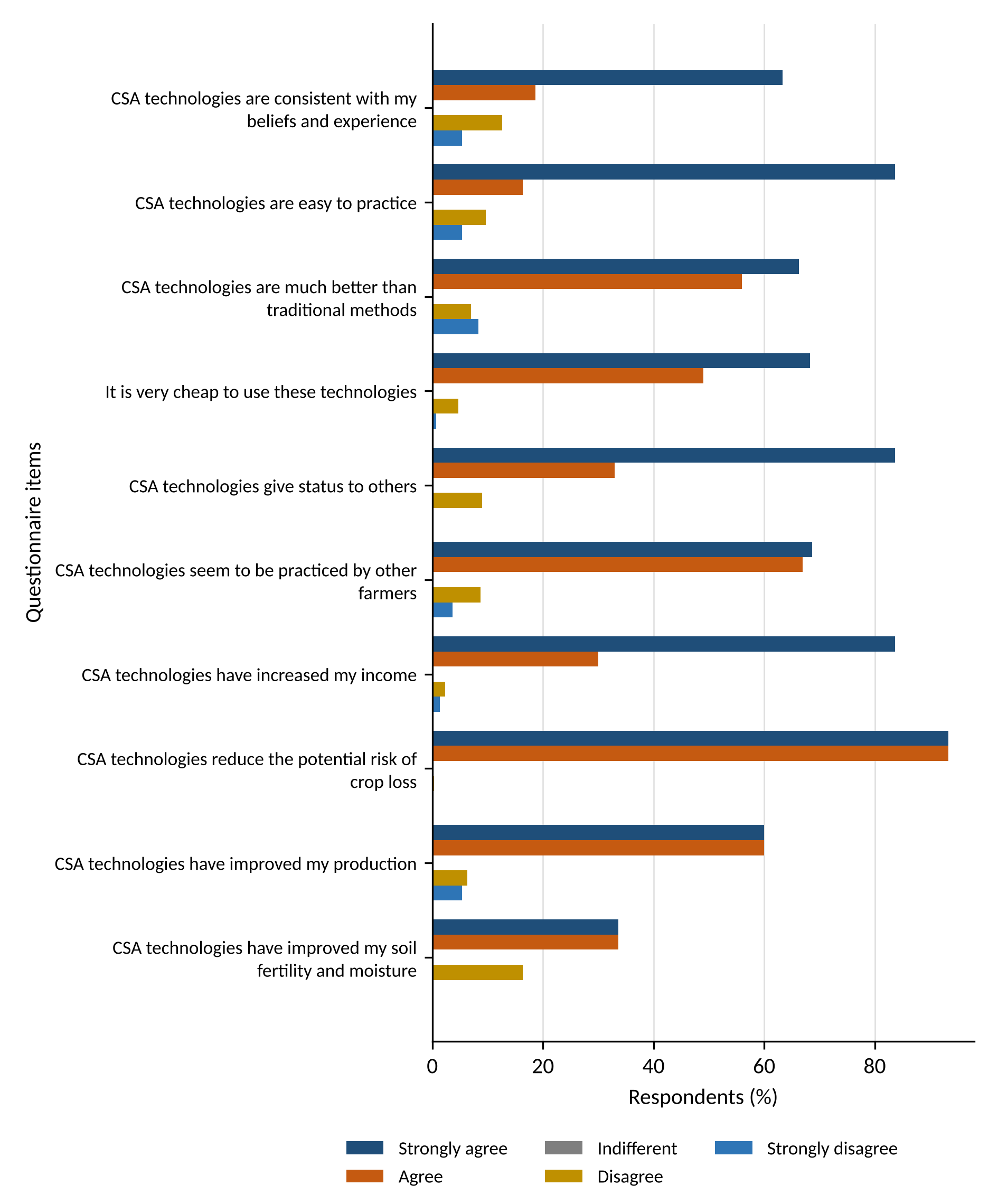
Table 2 presents the perceptions of cassava farmers in Imo State on the use of climate-smart agricultural (CSA) practices. The table outlines the frequency and percentage of farmers' responses to various statements regarding CSA technologies, including their compatibility with beliefs, ease of practice, cost-effectiveness, and impact on productivity and income. These responses were assessed using a Likert scale, ranging from "Strongly Agree" (5) to "Strongly Disagree" (1), with an overall mean score of 2.58. The findings are interpreted as follows.
Consistency with Beliefs and Experience: A substantial proportion of farmers, 63.33%, strongly agreed that CSA technologies were consistent with their beliefs and experiences, while 18.67% agreed. This indicates a high level of alignment between CSA practices and the farmers’ understanding of agricultural practices. The mean score for this statement was 2.16, which suggests a general tendency towards agreement but also a slight degree of hesitation or uncertainty. This finding is in line with Oladele et al. (2020), who observed that farmers in Nigeria were more likely to adopt technologies that aligned with their traditional farming knowledge and values. This alignment makes the transition to CSA practices smoother and more acceptable.
Ease of Practice: The perception of the ease of practicing CSA technologies was also overwhelmingly positive, with 83.67% strongly agreeing and 16.33% agreeing that CSA technologies are easy to implement. This was reflected in the mean score of 2.38, which indicates a strong inclination towards agreement. The ease of practice is crucial for adoption, as it minimizes barriers such as labour requirements and technical complexities. Akinola et al. (2021) similarly found that the simplicity of CSA practices was a major factor in their adoption among Nigerian farmers, as these practices require less technical knowledge and are adaptable to existing farming systems.
Comparison to Traditional Methods: When asked if CSA technologies were much better than traditional methods, 66.33% strongly agreed, and 18.67% agreed. The mean score of 2.65 suggests that farmers generally perceive CSA technologies to offer superior benefits over traditional farming methods. This perception aligns with the findings of Oyewole et al. (2022), who noted that CSA practices, such as the use of drought-resistant crops and improved irrigation systems, can significantly enhance productivity and resilience to climate change, thus providing a clear advantage over traditional methods.
Cost-Effectiveness: Despite the positive perception of CSA technologies, 68.33% of farmers agreed that these technologies were inexpensive to use, with a mean score of 1.94, indicating some disagreement regarding the affordability of CSA practices. This suggests that while farmers may acknowledge the benefits of CSA, cost remains a significant barrier to widespread adoption. This finding is consistent with Marenya et al. (2020), who reported that the high upfront costs of implementing CSA practices, particularly in terms of inputs such as fertilizers and irrigation systems, were a major constraint for smallholder farmers in sub-Saharan Africa.
Social Status and Recognition: Regarding the perception of CSA technologies giving status to farmers, 83.67% strongly agreed and 33.33% agreed. The mean score of 2.62 further indicates that CSA technologies are perceived as prestigious by the farmers. This finding supports Nangara (2022), who argued that the adoption of modern technologies, including CSA, is often associated with social prestige, which can serve as a motivating factor for farmers to adopt such practices.
Observability and Peer Influence: The perception that CSA technologies were practiced by other farmers was also widely held, with 68.67% agreeing and 22.33% strongly agreeing. The mean score of 2.77 suggests that CSA practices are observable within the local farming community. This finding is consistent with the Diffusion of Innovations theory (Rogers, 2003), which posits that the visibility of innovations among peers significantly accelerates their adoption. Farmers are more likely to adopt practices that they observe being used successfully by others in their community.
Impact on Income: A significant proportion of farmers, 83.67%, agreed that CSA technologies had increased their income, with a mean score of 2.76, suggesting strong agreement. This finding is in line with Akinola et al. (2020), who found that CSA practices led to increased yields and, consequently, higher incomes for smallholder farmers in Nigeria. By improving agricultural productivity and resilience, CSA technologies can contribute to poverty reduction and food security.
Reduction in Crop Loss Risk: Farmers widely agreed that CSA technologies reduced the risk of crop loss, with 93.33% strongly agreeing and 19% agreeing. The mean score of 2.76 further indicates strong positive perceptions. This finding corroborates Beddington et al. (2011), who reported that CSA practices, such as crop rotation and soil fertility management, help mitigate the risks associated with climate change, such as droughts and floods.
Impact on Production: When asked whether CSA technologies had improved their production, 60% strongly agreed, while 31% agreed. The mean score of 2.56 suggests that while CSA practices have generally improved productivity, the impact may vary depending on the specific practices adopted. Oduntan et al. (2021) similarly observed that while CSA practices had positive effects on yields, their success was contingent upon factors such as farmers’ access to resources and extension services.
Improvement in Soil Fertility and Moisture: The perception that CSA technologies improved soil fertility and moisture was more mixed. While 33.67% agreed, 16.33% disagreed, with a mean score of 2.67, indicating a moderately positive perception. This finding aligns with Neufeldt et al. (2013), who argued that CSA practices like organic fertilization and mulching can improve soil health, although their effectiveness may depend on the specific environmental conditions.
The overall mean score of 2.58 indicates that, on average, farmers have a positive perception of CSA technologies. However, the varied responses across the different statements suggest that while farmers acknowledge the benefits of CSA, concerns about affordability, practical challenges, and the uneven impacts of some practices remain. This aligned with findings by Alamu et al. (2021), who noted that although CSA practices are generally viewed positively, their adoption is often constrained by socio-economic factors and access to resources.
Furthermore, the farmers in Imo State generally perceive CSA technologies as beneficial, especially in terms of improving income, reducing crop loss, and increasing social status. However, issues such as cost and inconsistent results in terms of soil fertility and moisture remain barriers to full adoption. These findings aligned with the broader literature on CSA adoption in sub-Saharan Africa, which emphasizes the importance of targeted interventions to address financial barriers and ensure that the benefits of CSA are more evenly distributed across farmers (Marenya et al., 2020; Akinola et al., 2020).
| Statement | Strongly agree | Agree | Somewhat agree | Disagree | Strongly disagree | Mean | SD | |||||
|---|---|---|---|---|---|---|---|---|---|---|---|---|
| Freq | % | Freq | % | Freq | % | Freq | % | Freq | % | |||
| CSA technologies are consistent with my beliefs and experience | 190 | 63.33 | 56 | 18.67 | 0 | 0 | 38 | 12.67 | 16 | 5.33 | 2.16 | 0.646 |
| CSA technologies are easy to practice | 251 | 83.67 | 49 | 16.33 | 0 | 0 | 29 | 9.67 | 16 | 5.33 | 2.38 | 0.564 |
| CSA technologies are much better than traditional methods | 199 | 66.33 | 18.67 | 56 | 0 | 0 | 21 | 7 | 25 | 8.33 | 2.65 | 0.511 |
| It is very cheap to use these technologies | 205 | 68.33 | 16.33 | 49 | 0 | 0 | 14 | 4.67 | 2 | 0.67 | 1.94 | 0.763 |
| CSA technologies give status to others | 251 | 83.67 | 11 | 33 | 0 | 0 | 27 | 9 | 0 | 0 | 2.62 | 0.542 |
| CSA technologies seem to be practiced by other farmers | 206 | 68.67 | 22.33 | 67 | 0 | 0 | 26 | 8.67 | 11 | 3.67 | 2.77 | 0.591 |
| CSA technologies have increased my income | 251 | 83.67 | 10 | 30 | 0 | 0 | 7 | 2.33 | 4 | 1.33 | 2.76 | 0.636 |
| CSA technologies reduce the potential risk of crop loss | 280 | 93.33 | 19 | 93.33 | 0 | 0 | 1 | 0.33 | 0 | 0 | 2.76 | 0.646 |
| CSA technologies have improved my production | 180 | 60 | 101 | 60 | 0 | 0 | 19 | 6.33 | 16 | 5.33 | 2.56 | 0.467 |
| CSA technologies have improved my soil fertility and moisture | 101 | 33.67 | 130 | 33.67 | 0 | 0 | 49 | 16.33 | 0 | 0 | 2.67 | 0.595 |
| Overall mean | 2.58 | |||||||||||
Key: 5 = strongly agree; 4 = agree; 3 = indifferent; 2 = disagree; 1 = strongly disagree.
The percentage distribution of the responses is shown in Figure 1.
3.3Identified climate-smart agricultural practices adopted by the farmers in Imo State
Table 3 provides an overview of the climate-smart agricultural practices (CSAP) adopted by cassava farmers in Imo State. The table presents the frequency and percentage of farmers who reported using each of the identified climate-smart techniques. These practices are critical for improving agricultural productivity, enhancing resilience to climate change, and promoting sustainable farming practices.
Cover Cropping: The most widely adopted CSA practice among the farmers was cover cropping, with 27% of farmers employing this technique. Cover crops are crucial for preventing soil erosion, improving soil fertility, and enhancing moisture retention, which are essential for maintaining sustainable agricultural systems. This practice aligned with Wollenberg et al. (2011), who emphasized the importance of cover cropping as a technique to improve soil health and resilience to climate variability. In Imo State, the adoption of cover cropping is likely influenced by the farmers' awareness of its benefits in combating soil degradation, a common challenge in cassava farming.
Organic Fertilizer/Manure: The use of organic fertilizer/manure was reported by 11.33% of farmers. Organic fertilizers are vital for improving soil fertility, increasing water retention, and enhancing soil structure, which are key components of sustainable farming. This finding is consistent with Meridian Institute (2011), which found that organic fertilization practices, such as composting and manure use, can contribute to long-term improvements in soil health. The relatively low adoption of this practice in Imo State could be attributed to limited access to organic fertilizer inputs, as well as the time and labour required for composting.
Minimum Tillage: Minimum tillage was adopted by 18.67% of farmers. This technique involves reducing soil disturbance to maintain soil structure and promote water retention. Minimum tillage also helps prevent soil erosion, making it a crucial practice in areas vulnerable to climate change impacts. Beddington et al. (2011) have highlighted that minimum tillage is an effective soil conservation technique that reduces the risk of crop loss due to droughts and floods. However, the moderate adoption rate in Imo State suggests that while the benefits of minimum tillage are recognized, its full adoption may be limited by farmers' preference for traditional tillage practices and the initial cost of equipment.
Crop Rotation with Legumes: The practice of crop rotation with legumes was adopted by 18.33% of farmers. Crop rotation, particularly with legumes, is beneficial for improving soil nitrogen levels, reducing pest infestations, and enhancing overall soil fertility. The adoption rate for this practice in Imo State is consistent with findings from Mugwe et al. (2009), who reported that crop rotation was a commonly adopted technique among farmers seeking to reduce the dependency on chemical fertilizers. The relatively moderate adoption rate in Imo State suggests that while farmers are aware of the benefits of crop rotation, its full potential may be constrained by the farmers' preference for monoculture farming or limited knowledge of appropriate leguminous crops.
Inorganic Fertilizer: Inorganic fertilizer was used by 7.33% of farmers. Inorganic fertilizers are commonly used to boost soil nutrient levels and improve crop yields. However, their high cost and the potential environmental consequences of overuse have led to concerns about sustainability. FAO (2010) found that while inorganic fertilizers can enhance short-term productivity, they may have negative environmental impacts, such as soil acidification and water pollution. The low adoption rate of inorganic fertilizers in Imo State could be attributed to the high costs associated with their purchase, limited access to inputs, and the promotion of more sustainable alternatives like organic fertilizers.
Mulching: Mulching was adopted by 11.33% of farmers. Mulching helps conserve moisture, suppress weeds, and regulate soil temperature, making it a valuable practice for enhancing the resilience of crops, particularly in areas prone to droughts. Alamu et al. (2021) highlighted that mulching is one of the most effective and low-cost methods for improving soil health and conserving water. The moderate adoption rate in Imo State suggests that while mulching is recognized as an effective practice, it may be constrained by factors such as the availability of organic materials and labour requirements.
Improved Varieties: The use of improved varieties was adopted by 7% of farmers. The adoption of improved crop varieties, such as drought-resistant cassava, is a key component of climate-smart agriculture. Improved varieties are typically more resistant to pests, diseases, and environmental stresses, leading to higher yields and improved food security. However, the relatively low adoption rate in Imo State could be attributed to limited access to certified seeds and the high cost of acquiring improved varieties. Akinola et al. (2020) found that farmers in Nigeria often prefer to use traditional varieties, which they believe are better suited to local conditions, even though improved varieties offer clear advantages in terms of yield and resilience.
The climate-smart agricultural practices identified in this study are consistent with the broader literature on CSA adoption in sub-Saharan Africa, where practices such as cover cropping, crop rotation, and minimum tillage are widely recognized for their environmental and economic benefits (Wollenberg et al., 2011; Akinola et al., 2020). However, the relatively low adoption rates of certain practices, such as inorganic fertilizer use and improved varieties, highlight the challenges that smallholder farmers face in accessing the necessary inputs and resources for adopting CSA practices. To enhance the adoption of CSA in Imo State, it is crucial to address barriers related to input accessibility, financial constraints, and extension services. Policymakers and extension agents should focus on improving farmers' access to CSA technologies and provide targeted training on the benefits of sustainable farming practices. By doing so, the potential for increased agricultural productivity and resilience to climate change can be realized, ultimately contributing to the long-term sustainability of cassava farming in the area.
| S/N | Climate-smart technique | Frequency | Percentage (%) |
|---|---|---|---|
| 1 | Cover crop | 83 | 27 |
| 2 | Organic fertilizer/manure | 51 | 11.33 |
| 3 | Minimum Tillage | 34 | 18.67 |
| 4 | Crop rotation with legumes | 55 | 18.33 |
| 5 | Inorganic fertilizer | 22 | 7.33 |
| 6 | Mulching | 34 | 11.33 |
| 7 | Improved varieties | 21 | 7 |
| Total | 300 | 100 |
Source: Field Survey, 2024.
3.4Determinants of CSA technology adoption and socioeconomic factors on yield
Table 4 presents the results of the Ordinary Least Squares (OLS) regression analysis, which examined the effects of climate-smart agricultural (CSA) practices on cassava yield. The analysis includes both control variables (e.g., age, sex, education) and CSA technologies (e.g., planting improved varieties, use of integrated pest management) to determine which factors significantly influence cassava yield. The R-squared value was 0.23, indicating that the model explains 23% of the variation in cassava yield. The Adjusted R-squared of 0.14 suggests that when considering the number of predictors in the model, the model still has a modest fit. The F-statistic was 2.75** (p-value = 0.00), which suggests that the model as a whole is statistically significant.
The coefficient of sex (4.00) was positive and significant at the 5 % level of probability. This implied that male farmers had 4.00 units higher cassava yield than female farmers, holding all other factors constant. The result aligned with Oladele and Ringim (2019), who reported that male farmers tend to achieve higher productivity due to better access to land, credit, and extension services, which enhances their ability to adopt productivity enhancing practices. Conversely, this finding contrasts with Onyeneke et al. (2020), who observed that gender gaps in yield diminish when women have equal access to agricultural support resources, suggesting that the gap in this study might be driven by unequal access rather than inherent productive capacity.
The coefficient of occupation (5.16) was positive and significant at the 1 % level. This indicated that farmers whose primary occupation was agriculture had cassava yields that were 5.16 units higher compared with those engaged in non-farming occupations. This result agrees with Ishola and Adeola (2020), who found that full time farmers generally achieve higher productivity because they allocate more time and labour to crop management, are more responsive to innovations, and are more likely to invest in climate smart practices. The finding also supports Adewuyi et al. (2018), who reported that part time involvement in farming often reduces the ability to effectively adopt yield enhancing technologies.
The coefficient for Integrated Pest Management (IPM) (1.27) was positive and significant at the 5 % level of probability, implying that farmers who employed IPM experienced 1.27 units higher cassava yield. This result corroborates findings by Beddington et al. (2011) and Marenya et al. (2020), which emphasized that IPM enhances crop health and productivity by reducing pest related losses more effectively than conventional single method controls. The positive effect of IPM also aligned with Akinola et al. (2020), who reported that pest management strategies significantly increased yields among smallholder farmers. Where this study differs slightly from some prior findings, such as in Usman et al. (2018), is in the magnitude of the impact, suggesting that context specific factors, like pest prevalence and local IPM training, might influence how strongly IPM affects yield.
The coefficient of farm size (1.08) was positive and significant at the 10 % level, indicating that for every additional unit of farm size, cassava yield increased by 1.08 units. This supports the notion that larger farm holdings allow farmers to benefit from economies of scale and adopt climate smart practices more effectively. This finding is consistent with Nwosu et al. (2022), who found a positive relationship between farm size and productivity, noting that larger farms usually have better access to inputs and allow for diversified CSA practice implementation. It also aligned with Alamu et al. (2021), who reported that larger farm sizes tended to be associated with improved adoption of soil and water conservation techniques, contributing to higher yields. However, this result contrasts with Mugwe et al. (2009), who suggested that beyond a certain size, additional land does not necessarily translate into higher yields unless it is supported by adequate inputs and management skills.
Moreso, the significant effects of sex, occupation, IPM, and farm size on cassava yield in this study confirmed that both personal characteristics and specific CSA practices are important determinants of agricultural productivity. Where findings aligned with previous research, it strengthens the case for gender responsive extension services, targeted support for full time farmers, and investment in pest management training. Where differences emerge, particularly in the magnitude of effects, they highlight the importance of contextualizing climate smart agriculture in local farming environments and resource availability.
However, the presence of significant CSA practices, specifically improved varieties and integrated pest management, showed that climate-smart agriculture contributes meaningfully to cassava yield. In addition, the control variables socio-economic factors such as occupation, gender, and farm size further enhance productivity. Since key CSA practices and control variables significantly influence cassava yield, the null hypothesis is rejected. This confirmed that climate-smart agriculture practices play an important role in improving cassava productivity in the study area.
| Variables | Coefficient | Standard error | t-value | Prob. |
|---|---|---|---|---|
| Control variables | ||||
| Constant | 26.71 | 10.67 | 2.754 | 0.01 |
| Age | 0.01 | 0.06 | 0.09 | 0.93 |
| Sex | 4.00** | 1.82 | 2.20 | 0.03 |
| Marital Status | -0.476 | 739.3 | -1.215 | 0.02 |
| Family Type | -0.376 | 0.213 | -1.05 | 0.01 |
| Household Size | 0.60* | 0.35 | 1.73 | 0.53 |
| Education | -0.04 | 0.27 | -0.14 | 0.82 |
| Farming Experience | 0.02 | 0.15 | 0.11 | 0.91 |
| Occupation | 5.16*** | 1.75 | 2.96 | 0.00 |
| Farm Size | 1.08* | 0.57 | 1.91 | 0.06 |
| Land Ownership | 1.72 | 1.12 | 1.27 | 0.15 |
| Extension Contacts | 1.23 | 4.10 | 0.251 | 0.53 |
| Climate smart agriculture practice | ||||
| Planting improved varieties | 1.30 | 2.34 | -2.86 | 0.01 |
| Planting different crops | -5.01*** | 1.72 | 0.08 | 0.94 |
| Livelihood Diversification | -0.43 | 1.83 | -1.23 | 0.82 |
| Adjusting planting and harvesting time | -0.14 | 1.81 | -0.08 | 0.93 |
| Proper application of fertilizer | -3.68 | 2.26 | -0.15 | 0.92 |
| Nursery Establishment | -0.13 | 2.22 | -1.63 | 0.53 |
| Efficient and Effective use of pesticides | 238.55 | 798.30 | 0.30 | 0.77 |
| Irrigation | 1.26 | 1.95 | -0.68 | 0.95 |
| Use of Integrated Pest Management | 1.27 | 1.45 | 0.88 | 0.036 |
| R2 | 0.23 | |||
| Adjusted R2 | 0.14 | |||
| F-statistic | 2.75*** | |||
| Prob (F-statistic) | 0.00 | |||
Source: Field Survey, 2024. ***, ** and * significant at the 1%, 5% and 10% levels of probability, respectively.
3.5Influence of climate-smart agricultural practices on the income of cassava farmers
An ordinary least square (OLS) regression technique was employed to examine how the use of Climate-Smart Agricultural practices affected income of cassava farmers and difference between farmers who implement Climate-Smart Agricultural practices and those who do not in Imo State. Table 5 displays the outcomes of the OLS model. The value of R2 in the OLS regression findings is 0.23, or 23%, and the Adjusted R2 is 0.15, or 15%. This suggests that the independent variables account for around 23% of the overall variation in income. The model's overall goodness is shown to be significant by the estimated F-statistic, which has a value of 2.88 and a p-value of 0.00. Consequently, the null hypothesis three (H03) that states that the use of Climate-Smart Agricultural (CSA) practices has no significant impact on the net income of cassava farmers in Imo State, Nigeria was rejected. The coefficient of level education (negative), farming experience (positive), were significant at a 5% probability level while the coefficient of household size (positive) and irrigation (negative) was significant at 5%. The coefficient level of education indicates that additional years in school will decrease cassava farmers' income by N19,010.25. It is possible that the education obtained is not high quality and applicable to farmers' demands about their activities involved in the production of cassava, or that the educated farmers may be devoting their time and energy to other activities because of which there is a decline in yield and a corresponding decrease in revenue. The results contradict those of Aidoo-Mensah (2018) who found a substantial positive relationship between education and income. Whereas the coefficient value of farming experience shows that an additional year in cassava farming will increase cassava farmers' income by N11,842.00. The result is consistent with Aidoo-Mensah (2018). They noted a positive and significant influence of farming experience on income. Moreover, the coefficient of household size indicates that an additional member of a household will lead to a decrease in cassava farmers' income by N19,813.18. The finding disagrees with that of Chune (2022) who reported that household size significantly influenced farmers' income. The irrigation coefficient value shows that irrigation of cassava farms will decrease cassava farmers' income by N9,198.01. Finally, the coefficient of use of integrated pest management indicates the use of IPM will decrease farmers' income by N1,013.75.
The results showed that while not all CSA practices influence income, some practices, particularly irrigation and integrated pest management, significantly affect farmers’ earnings, though negatively in this case. In addition, socio-economic characteristics such as education, marital status, and farming experience play important roles in determining income levels.
Since key CSA practices and control variables significantly influence cassava farmers’ income, the null hypothesis was rejected. This indicates that climate-smart agriculture practices have a measurable effect on income, although the direction of influence varies depending on the specific practice adopted.
| Variables | Coefficient | Standard error | t-value | Prob. |
|---|---|---|---|---|
| Control variables | ||||
| Constant | 12957.24 | 4317.61 | 2.754 | .00 |
| Age | -0.543 | 24.70 | -1.846 | 0.34 |
| Sex | 704.83 | 735.36 | 0.96 | 0.43 |
| Marital Status | -0.476 | 739.3 | -1.215 | 0.02 |
| Family Type | -0.376 | 0.213 | -1.05 | 0.0i |
| Household Size | -264.18* | 140.23 | -1.6 | 0.53 |
| Education | -253.47* | 108.14 | -2.34 | 0.02 |
| Farming Experience | 156.89** | 61.02 | 2.652 | 0.01 |
| Occupation | -214.67 | 707.03 | -0.3 | 0.72 |
| Farm Size | 145.71 | 229.09 | 0.052 | 0.66 |
| Land Ownership | 181.2 | 50.121 | 1.267 | 0.15 |
| Extension Contacts | 215.23 | 45.102 | 2.228 | 0178 |
| Climate Smart Agriculture | ||||
| Planting improved varieties | -495.91 | 946.88 | -0.52 | 0.60 |
| Planting different crops | 58.96 | 708.98 | 0.08 | 0.94 |
| Livelihood Diversification | -912.59 | 739.31 | -1.23 | 0.22 |
| Adjusting planting and harvesting time | -355.07 | 731.01 | -0.49 | 0.63 |
| Proper application of fertilizer | -135.15 | 914.68 | -0.15 | 0.88 |
| Nursery Establishment | -565.45 | 896.70 | -0.63 | 0.53 |
| Efficient and Effective use of pesticides | 238.55 | 798.30 | 0.30 | 0.77 |
| Irrigation | -1998.01* | 1186.32 | -1.68 | 0.09 |
| Use of Integrated Pest Management | -1313.75** | 586.27 | -2.24 | 0.03 |
| R2 | 0.23 | |||
| Adjusted R2 | 0.15 | |||
| F-statistic | 2.88 | |||
| Prob (F-statistic) | 0.00 | |||
Source: Field Survey, 2024. ***, ** and * significant at the 1%, 5% and 10% levels of probability, respectively.
3.6Constraints faced by cassava farmers in the use of climate-smart agricultural practices
Table 6 outlines the constraints faced by cassava farmers in Imo State in adopting Climate-Smart Agricultural (CSA) practices. These constraints were assessed using a 5-point Likert scale, where a higher mean score indicates a more significant constraint. The table presents the mean scores for each constraint, alongside their respective ranks, to highlight the relative importance of each issue. The findings on the challenges farmers face are discussed below.
The lack of access to credit facilities emerged as the most significant constraint, with a mean score of 5.71, ranked 8th. This finding underscored the critical role of financial resources in the adoption of CSA practices. Akinola et al. (2020) and FAO (2010) both emphasize that access to credit is essential for purchasing inputs like fertilizers, seeds, and equipment, all of which are necessary for implementing CSA practices. Without sufficient financial support, farmers are unable to invest in sustainable practices, even if they recognize their long-term benefits. Again, the issue of non-accurate and timely weather information ranked as the 5th most significant constraint, with a mean score of 4.50. The lack of reliable weather data impedes farmers' ability to plan for climate-related events, such as droughts or floods, and to make informed decisions about planting and harvesting times. This finding aligned with Marenya et al. (2020), who found that accurate and timely weather forecasts are crucial for the success of climate-smart practices, particularly in areas vulnerable to climate change. Without such information, farmers cannot properly implement weather-sensitive practices like adjusting planting times or using irrigation effectively.
The inadequate labour supply, with a mean score of 3.97, ranked 3rd in importance. This constraint reflects the challenges farmers face in accessing sufficient labour, particularly in rural areas where farming is physically demanding and time-consuming. Mugwe et al. (2009) highlighted that smallholder farmers often face labour shortages, especially during peak seasons like planting or harvesting, which can significantly hinder the adoption of CSA practices that require additional labour. Limited access to labour also restricts the ability of farmers to implement practices like mulching or maintaining cover crops, which are essential for improving soil health and water retention. Also, the constraint of inadequate infrastructure for CSA, with a mean score of 4.41, ranked 4th. Lack of infrastructure, such as poor roads, insufficient irrigation systems, and inadequate storage facilities, prevents farmers from effectively implementing CSA practices. This is consistent with findings by Akinola et al. (2020), who found that inadequate infrastructure hampers access to markets and essential inputs, making it difficult for farmers to adopt new technologies. Infrastructure improvements are crucial for supporting the adoption of CSA, as they enable farmers to access resources more efficiently.
The limited access to agricultural extension officers ranked as the 6th most significant constraint, with a mean score of 4.62. Extension officers play a vital role in disseminating knowledge about CSA practices, providing farmers with the technical expertise needed to implement these practices effectively. Lawal et al. (2021) found that limited extension services were a major barrier to the adoption of climate-smart practices in Nigeria. This result emphasizes the need for increased investment in agricultural extension services to provide farmers with the necessary support and guidance to adopt CSA technologies. Moreso, the lack of access to water resources, with a mean score of 5.57, ranked 7th as a major constraint. Water scarcity is a significant issue for cassava farmers, particularly in areas that experience irregular rainfall or prolonged dry seasons. Neufeldt et al. (2013) highlighted the importance of water management in agriculture, noting that CSA practices such as irrigation and water conservation are essential for improving productivity. Without access to reliable water sources, farmers are unable to fully implement CSA practices that require consistent moisture levels.
The constraint of land insufficiency, with a mean score of 5.85, ranked 9th. Limited land availability is a critical issue for many smallholder farmers, particularly in densely populated areas. Usman et al. (2018) found that land scarcity often restricts farmers’ ability to adopt crop diversification and rotational practices, which are central to CSA. Smaller land holdings make it difficult for farmers to experiment with new farming practices, particularly those requiring larger areas for their full effect, such as cover cropping or agroforestry. Furthermore, the education level of farmers, with a mean score of 5.94, ranked 10th as the most significant constraint. Although the education level of farmers is generally associated with their ability to understand and adopt new agricultural practices, the high ranking of this constraint in this study suggests that low education levels continue to limit farmers’ engagement with CSA practices. Eze et al. (2021) noted that farmers with lower education levels tend to adopt new technologies at a slower rate, as they often lack the skills to understand and apply complex farming practices. This finding suggests that educational programs targeting farmers are essential to overcome this constraint.
Finally, the findings in this section revealed that the lack of access to credit facilities, timely and accurate weather information, and inadequate labour supply are significant constraints to the adoption of CSA practices among cassava farmers in Imo State. These constraints aligned with findings from previous studies, such as Akinola et al. (2020) and Marenya et al. (2020), which highlight the critical role of financial, informational, and labour resources in enabling the adoption of climate-smart technologies. In contrast, constraints like land insufficiency and education levels are more locally specific but still pose barriers to the widespread adoption of CSA practices. Addressing these constraints through improved infrastructure, increased access to credit and water resources, and enhanced extension services will be crucial for increasing the uptake of CSA practices and improving cassava productivity in the area.
| Constraints of cassava production | Mean | Rank |
|---|---|---|
| Lack of access to credit Facilities | 3.45 | 1 |
| Non accurate and timely weather information | 3.78 | 2 |
| Inadequate labour supply | 3.97 | 3 |
| Inadequate infrastructure for CSA | 4.41 | 4 |
| Non accurate and timely weather information | 4.50 | 5 |
| Limited access to agricultural extension officers | 4.62 | 6 |
| Lack of access to water resource | 5.57 | 7 |
| High cost of farm input | 5.71 | 8 |
| Land insufficiency | 5.85 | 9 |
| Education level of farmers | 5.94 | 10 |
Source: Field Survey, 2024.
4Conclusion
In conclusion, this study has provided valuable insights into the factors influencing the adoption of Climate-Smart Agricultural (CSA) practices among cassava farmers in Imo State. The findings suggest that while farmers perceive CSA practices positively, particularly in terms of improving income and reducing crop loss, several constraints hinder their widespread adoption. Key challenges identified include limited access to credit facilities, inadequate infrastructure, lack of timely weather information, and insufficient extension services. These barriers significantly affect the ability of farmers to implement CSA practices, despite their awareness of the benefits. Addressing these constraints is crucial for enhancing the effectiveness of CSA adoption in the region.
Furthermore, the study highlighted that socio-economic factors, such as sex, occupation, and farm size, are significant determinants of cassava yield and income. Male farmers, full-time farmers, and those with larger farm sizes were found to have higher yields, emphasizing the importance of addressing gender disparities, promoting full-time farming, and supporting larger-scale farming to increase productivity. The adoption of Integrated Pest Management (IPM) was also found to positively impact cassava yield, indicating that sustainable pest control practices are beneficial for enhancing crop productivity. However, other CSA practices, such as the use of improved varieties and inorganic fertilizers, had lower adoption rates, suggesting that access to inputs remains a major challenge for farmers.
To promote the adoption of CSA practices and improve the overall productivity of cassava farming in Imo State, the study recommends targeted interventions aimed at overcoming financial, informational, and infrastructural barriers. Specifically, it is essential to improve access to credit, enhance agricultural extension services, invest in infrastructure development, and promote gender equality in agricultural programs. By addressing these challenges, the adoption of CSA can be significantly enhanced, leading to increased cassava productivity, improved income, and greater resilience to climate change. These efforts will not only benefit cassava farmers but also contribute to the long-term sustainability and growth of agriculture in Imo State.
Based on the findings of the study, the following recommendations were made to address the challenges identified and improve the adoption of Climate-Smart Agricultural (CSA) practices among cassava farmers in Imo State:
- 1. Given that the lack of access to credit facilities emerged as one of the most significant constraints, it is recommended that financial institutions and government agencies collaborate to develop targeted credit schemes for smallholder farmers. These schemes should provide affordable loans with flexible repayment terms, specifically designed to enable farmers to invest in CSA technologies such as improved seeds, organic fertilizers, and irrigation systems. Additionally, extension officers should assist in providing farmers with financial literacy training to help them effectively manage loans and investments.
- 2. The study found that the limited access to agricultural extension officers was a significant barrier to the adoption of CSA practices. To address this, it is recommended that the government and agricultural organizations increase investment in agricultural extension services by hiring more extension officers and ensuring that they are well-equipped to deliver practical training on CSA practices. Local agricultural training centres should be established to facilitate continuous learning and improve farmers’ technical skills, ensuring that farmers can adopt and implement CSA practices effectively.
- 3. The inadequate infrastructure for CSA, including poor roads, lack of irrigation systems, and insufficient storage facilities, was identified as a significant constraint. To overcome this, it is recommended that local governments and private sector partners collaborate on infrastructure development projects, with a focus on improving irrigation systems, upgrading farm-to-market roads, and enhancing storage and processing facilities. Such investments will enable farmers to implement CSA practices more effectively, reduce post-harvest losses, and increase access to markets.
- 4. The findings revealed a significant gender imbalance in the adoption of CSA practices, with male farmers having higher yields than their female counterparts. It is therefore recommended that government bodies and NGOs implement gender-sensitive agricultural programs that focus on improving women’s access to resources such as land, credit, and extension services. Special attention should be given to providing women with equal access to CSA training, technical support, and financing opportunities to bridge the gender gap in agricultural productivity.
- 5. The study highlighted the challenge of unreliable weather information, which impedes farmers’ ability to plan for climate-related events. It is recommended that government meteorological agencies partner with telecommunication companies and agricultural cooperatives to provide farmers with accurate, timely, and accessible weather forecasts via mobile phone platforms and community radio. This will enable farmers to make informed decisions about planting, irrigation, and harvesting, ultimately reducing the risks associated with climate variability and improving productivity.
By addressing these key challenges through collaborative efforts between farmers, government agencies, financial institutions, and development organizations, the adoption of CSA practices can be significantly improved, leading to enhanced cassava productivity, increased income, and long-term sustainability in Imo State’s agricultural sector.
References
- [1]Abdoulaye T, et al. (2019). Climate change and cassava productivity in Sub-Saharan Africa.
- [2]Abdullahi A, et al. (2018). Family structure and agricultural labour dynamics in rural Nigeria.
- [3]Acheampong PP, et al. (2018). Cassava as a staple food in Sub-Saharan Africa.
- [4]Adewuyi SA, et al. (2018). Age and adoption of agricultural innovations among Nigerian farmers.
- [5]Aidoo-Mensah D (2018). Determinants of farmers' income in agricultural production systems.
- [6]Akinola AA, et al. (2019). Marital status and adoption of modern farming practices.
- [7]Akinola AA, et al. (2020). Impact of climate-smart agriculture on farmers' productivity and income in Nigeria.
- [8]Akinola AA, et al. (2021). Ease of adoption of climate-smart agricultural technologies.
- [9]Alamu JF, et al. (2021). Soil conservation practices and climate-smart agriculture adoption.
- [10]Alamu JF, et al. (2022). Education and adoption of agricultural technologies in Nigeria.
- [11]Alohce R, et al. (2014). Gender participation in agriculture in Sub-Saharan Africa.
- [12]Ameh J (2019). Barriers to climate-smart agriculture adoption in Nigeria.
- [13]Beddington J, et al. (2011). Achieving food security in the face of climate change.
- [14]Campbell BM, et al. (2014). Climate-smart agriculture: What is it and why does it matter?
- [15]Chikezie NP, et al. (2019). Farming experience and technology adoption.
- [16]Chune M (2022). Household size and agricultural income analysis.
- [17]Eze SO, et al. (2021). Education and technology adoption among farmers.
- [18]Food and Agriculture Organization (FAO) (2010). Climate-smart agriculture policies and practices.
- [19]Food and Agriculture Organization (FAO) (2013). Climate-smart agriculture sourcebook.
- [20]Gure A, et al. (2018). Climate variability and cassava production in Africa.
- [21]Ishola RA, Adeola RG (2020). Primary occupation and agricultural productivity.
- [22]Kijima Y (2011). Adoption and impacts of agricultural technologies.
- [23]Lawal JO, et al. (2021). Extension services and agricultural technology adoption in Nigeria.
- [24]Lipper L (2014). Climate-smart agriculture for food security.
- [25]Marenya PP, et al. (2007). Household size and agricultural productivity.
- [26]Marenya PP, et al. (2020). Constraints to adoption of climate-smart agriculture.
- [27]Matemilola S, Elegbede I (2017). Climate change impacts on agriculture in Nigeria.
- [28]Meridian Institute (2011). Role of organic fertilizers in sustainable agriculture.
- [29]Mnkeni PNS, Mutengwa CS (2014). Climate-smart agriculture and rural livelihoods.
- [30]Mugwe J, et al. (2009). Crop rotation and soil fertility management.
- [31]Nangara F (2022). Social status and adoption of agricultural technologies.
- [32]National Bureau of Statistics (NBS) (2018). Nigerian Gross Domestic Product Report.
- [33]Neufeldt H, et al. (2013). Water management and climate-smart agriculture.
- [34]Nwosu FO, et al. (2022). Farm size and productivity in Nigeria.
- [35]Ofoegbu C, et al. (2020). Youth participation in agriculture.
- [36]Ojoko EA, et al. (2017). Challenges in cassava farming in Nigeria.
- [37]Oladele OI, Ringim AS (2019). Gender differences in agricultural productivity.
- [38]Oladele OI, et al. (2020). Farmers' perception and adoption of innovations.
- [39]Oduntan O, et al. (2021). Impact of CSA practices on agricultural production.
- [40]Omonona BT, et al. (2019). Land tenure and adoption of agricultural technologies.
- [41]Onyeneke RU, et al. (2020). Gender and productivity in agriculture.
- [42]Oyewole SO, et al. (2022). Comparative analysis of CSA and traditional farming methods.
- [43]Rogers EM (2003). Diffusion of innovations (5th ed.). Free Press.
- [44]Sharma R, Ravindranath NH (2019). Climate change adaptation in agriculture.
- [45]Usman M, et al. (2018). Land constraints and agricultural practices.
- [46]Wollenberg E, et al. (2011). Climate-smart agriculture and sustainable development.
- [47]World Bank (2020). World Development Indicators.