Predictive Analytics
Dynamic Churn Prediction and Value-Aware Customer Retention in E-Commerce
Published October 2026
Abstract
Customer retention is essential for business profit in the cut-throat world of e-commerce. Nevertheless, classic customer churn prediction techniques tend to implement static batch learning models that require periodic retraining and are concentrated only on prediction accuracy and do not pay enough attention to the financial side of things. In this paper, an intelligent approach to identify potential at-risk customers based on a dynamic and value-centric model is introduced. The suggested method is based on using RFM criteria and customer behavioural patterns to give an insight into customer activity and purchasing behaviour. Incremental learning through stochastic gradient descent (SGD) decreases the need for full retraining by continually adjusting the model parameters as new observations arrive, thus solving the limitations associated with static learning. SHapley Additive exPlanations (SHAP), which illustrates the contribution of each feature in every possible outcome, increases the interpretability of the model. A combination of both probability of attrition and customer value is used by Value-Aware Prioritization in assessing the Expected Financial Loss, thus ensuring that the available retention efforts are focused on customers with more financial impact. Risk levels and customer value are then converted into suitable retention actions via a rule-based decision engine. By including adaptive learning, transparent decision support, and financially informed prioritisation, the suggested framework provides e-commerce companies with a workable solution to turn churn analysis into a continuous customer retention strategy.
Keywords: customer churn prediction; e-commerce; online learning; SHAP; RFM analysis; value-aware prioritization
1Introduction
E-commerce has expanded quickly. This has made the importance of customer loyalty crucial. Customer retention has become one of the most important determinants of business success. Disengaged customers can be identified through transactions and behaviours. It helps enterprises find out who might be churning and take corrective action to retain them.
Most of the churn prediction models rely on machine learning but still have the problem of static batch learning. It means that they require periodic training as the behaviour of the consumers changes. The accuracy of the prediction itself will not provide any explanation for the reason behind customer churn or allow the classification of the client according to the cost he or she might create. Not all at-risk customers are alike, or else you risk spending your efforts to retain customers in vain.
The purpose of the work is to develop an updated and customer value-based churn prediction model. Incremental learning, along with explainable AI, is integrated into RFM profiles. This combination addresses the main limitations of traditional models. The RFM dimensions are shown in Figure 1.
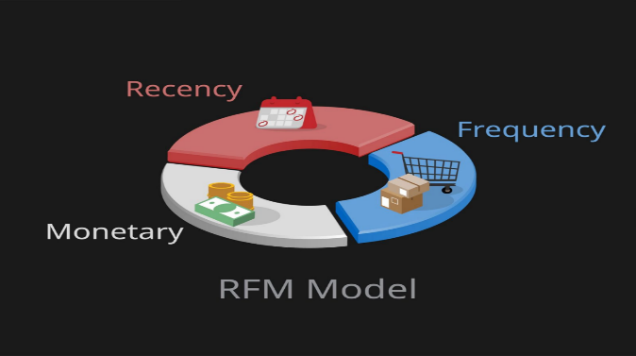
A classifier using SGD is iteratively trained based on additional data input. SHAP is used to analyse the contribution of each feature to the prediction.
While you would expect the typical models to end with the identification of potential leavers, this particular model uses the concepts of value-aware prioritisation and financial loss to assess the at-risk clients in terms of their potential cost to the organisation. The next element works as a decision-making engine based on rules, which directly links retention actions to the risk and value information. The main benefit is related to the fact that the model moves beyond the traditional focus on churn prediction and becomes focused on making decisions. It is flexible, easy to understand, and relatively inexpensive.
2Literature review
Machine learning has been utilized in the e-commerce industry for behavior analysis, customer segmentation, and customer attrition prediction. For churn categorization, Alshamsi [1] used customer segmentation, SMOTE, Decision Tree, Random Forest model, and Logistic Regression. Random Forest model turned out to be the best solution. The research also determined important churn drivers and suggested their future use together with real-time marketing systems. Nevertheless, it does not provide any possibility for SHAP explanations and incremental learning. Chang [2] used clustering, random forests, gradient boosting decision trees and logistic regression to examine e-commerce live streaming churn and emphasise the significance of consumer characteristics and behaviour in churn research. Additionally, it carried out client segmentation for focused advertising. Shobana et al. [3] combined machine learning with business information and customized retention tactics including customer-value analysis based on RFM/PEN. Xiahou and Harada [4] showed the usefulness of customer segmentation for improving classification performance by combining K-means segmentation with SVM-based churn prediction. These pieces emphasize the significance of value-based analysis, consumer traits, and purchasing patterns. Nevertheless, as new observations become available, their methodologies do not offer an integrated mechanism to continuously update churn prediction. Various machine learning models including Decision Tree, Random Forest, Logistic Regression, LightGBM, and XGBoost have been examined by Li [5].
The SMOTE technique has been utilized to balance the dataset in this research work. Furthermore, SHAP and LIME have been utilized in this research to improve the interpretation of the proposed model. For a broader outlook on the problem, see Panchal [6]. The methods examined do not demonstrate the same integration of incremental learning, interpretable prediction, financial-risk prioritization, and retention decision support within a single framework, despite the fact that these studies collectively demonstrate the value of forecasting, segmentation, RFM analysis, and explainability. The research proposal integrates RFM and behavioural profiling, SGD-based incremental learning, SHAP explanations, Expected Financial Loss, and rule-based decision engines based on the results.
In addition to predicting high customer turnover probability, the framework considers their possible financial impact, which aids in the prioritization of suitable retention strategies. Thus, integrating adaptive churn estimation, model interpretability, customer value, and actionable retention support into a unified e-commerce framework is the primary contribution.
Table 1 compares the proposed framework with existing studies.
| Ref. | Main approach | Important contribution | Main limitation/gap | How the present work extends it |
|---|---|---|---|---|
| [1] | Customer segmentation + SMOTE + Decision Tree, Logistic Regression and Random Forest | Identifies important churn factors and compares traditional ML models | Static learning; no implemented incremental learning or SHAP-based explanation; real-time marketing integration is suggested as future work | Implements SGD-based incremental learning, SHAP explanations, Expected Financial Loss and a decision engine in one framework |
| [2] | Clustering + Logistic Regression + Random Forest + GBDT for live-streaming e-commerce | Captures behavioral differences between customer groups and supports targeted marketing | Focused specifically on live-streaming commerce; model adaptation is periodic rather than incremental | Provides a general e-commerce framework with continuous/incremental updating and value-based prioritization |
| [3] | SVM + hybrid recommendation + RFM/PEN customer-value classification | Combines churn prediction with personalized retention and customer-value analysis | Does not implement SGD incremental learning or SHAP-based individual explanations; value classification is separate from a dynamic prediction loop | Integrates dynamic learning + SHAP + financial-loss prioritization + retention decision rules |
| [4] | K-means segmentation + SVM/LR churn prediction | Uses customer segmentation and longitudinal behavioral information to improve prediction | Prediction remains conventional and does not include online model updating or explicit financial-risk prioritization | Moves from segmentation and prediction toward adaptive prediction and value-aware intervention |
| [5] | LR, RF, XGBoost, LightGBM + SMOTE + SHAP/LIME | Strong predictive performance and model interpretability | Static dataset; no incremental learning or explicit financial-value prioritization | Combines incremental SGD learning with SHAP and Expected Financial Loss rather than focusing only on predictive performance |
| [6] | ML + big-data analytics + predictive customer-retention perspective | Provides a broader theoretical view of ML and big-data applications in churn prediction | Primarily theoretical/broad; does not provide the same integrated operational framework | Provides an implementable end-to-end architecture connecting prediction, explanation, financial prioritization, and retention decisions |
| Proposed work | RFM + behavioral features + SGD + SHAP + Expected Financial Loss + rule-based decision engine | Integrates adaptive prediction, interpretability, customer value and retention action | Requires stronger experimental validation on genuinely sequential/new data | — |
3Methodology
3.1Proposed methodology
Consumer profiling, understanding how the models operate, determining when clients might cease doing business with us, and determining whether to retain customers based on their value are all components of our current strategy. In order to generate customer profiles, we first cleaned up the consumer data, which comprised numbers and classifications. We then used this data to paint a picture of each customer's personality based on their transactions and behavior. We looked at RFM criteria, such as what customers regularly buy, how they buy from us, how recently they made a transaction, and how much they spend.
We are training a classifier with stochastic gradient descent. We are using our training data, which has been accumulated over time. As labelled data becomes available, we incrementally fit the model using partial_fit. Finally, we use SHAP to understand and clarify how each component affects the probability that a customer would leave. We use SHAP to explain how each attribute influences the churn likelihood. We can calculate the customer's risk using an estimate of their value to us and the expected turnover likelihood. Our rule-based decision engine uses financial values and the likelihood of customer turnover to decide the optimal line of action for keeping the client. The overall architecture and workflow are shown in Figure 2.
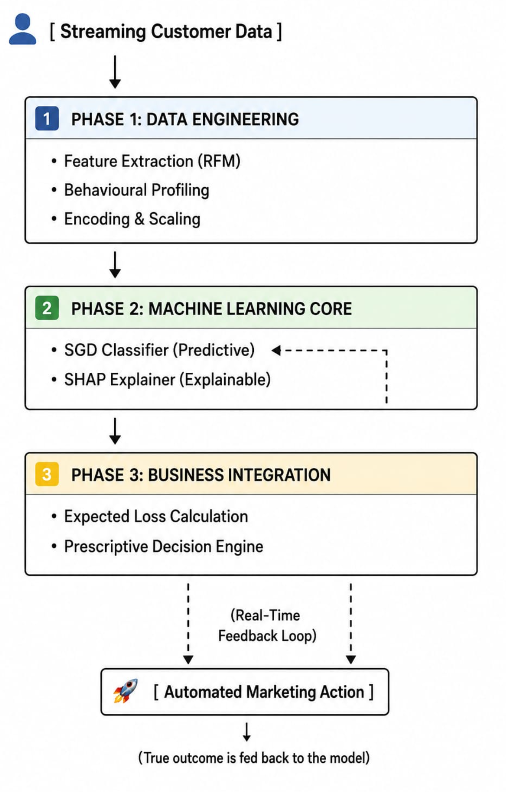
3.2Mathematical model
The predictive model for the suggested study utilizes real-time behavioural data records for predicting customer defections. The prediction model employs the stochastic gradient descent (SGD) optimization algorithm designed for the logistic regression model, which predicts the likelihood of churn probability. Given a pre-processed customer feature vector Xi, consisting of RFM and behavioural variables, the predicted churn probability ŷi is determined using equation (1):
where W represents the dynamically calculated weight vector for each of the features, while b represents the bias component.
To transform the above probability into practical business insight, a deterministic mathematical framework of Value-aware Prioritization is used. For an individual customer, the expected financial loss E[L] is the product of the estimated probability of churn and a customer lifetime value proxy (equation (2)):
In equation (2), M is the monetary variable, i.e. the accumulated cashback of the customer, which leads the prediction process to be orientated to the financial risk.
This model, in contrast to static models, adjusts itself dynamically to changes in the behavior pattern using an online learning approach. Once the actual churn outcome y ∈ {0, 1} is known, the system adjusts its parameters to reduce the logarithmic loss. The rule used to update the weights from step t to the next step t + 1 is given in equation (3):
Here, η is the dynamic learning rate and ∇J is the gradient of the log-loss error; this update ensures that the model will always be mathematically dynamic depending on the current data.
4Results
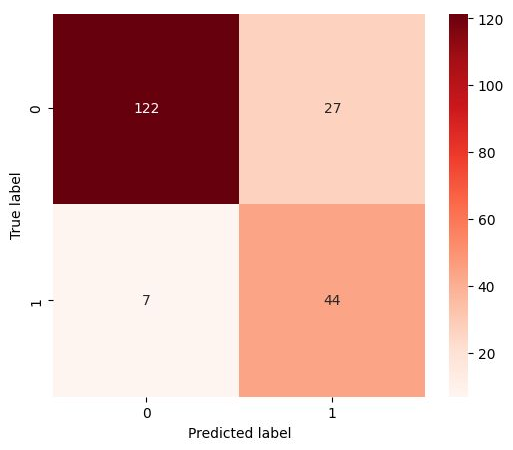
We think that incorporating modifications, understanding the causes of customer attrition, and focusing on what matters most with our approach could be a smart way to keep customers when they purchase online. The performance of our model was evaluated with respect to the following criteria: F1-Score, ROC-AUC, Accuracy, Precision, Recall, and the confusion matrix.
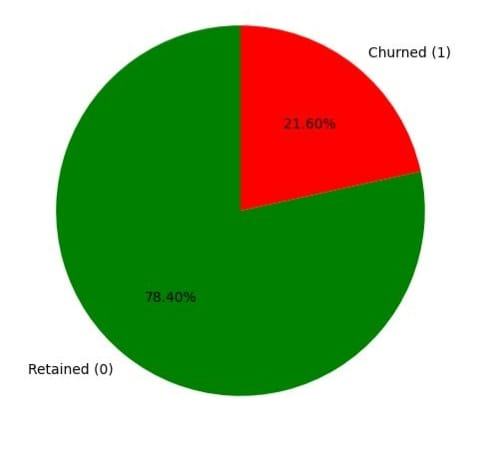
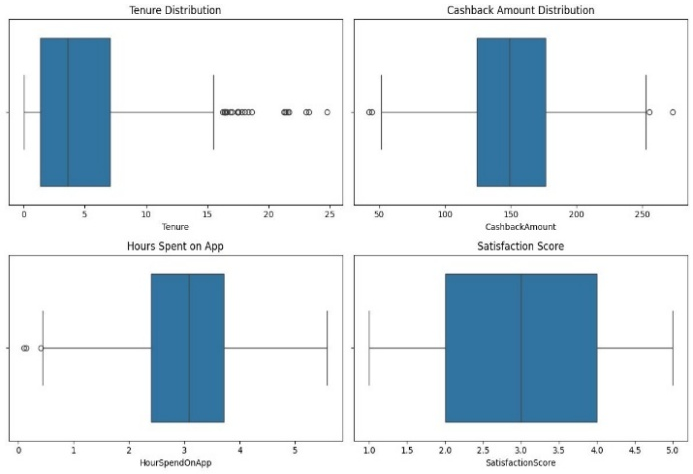
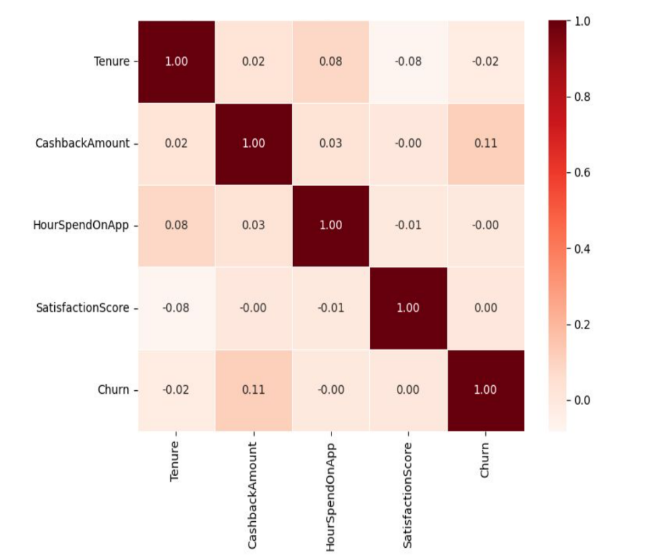
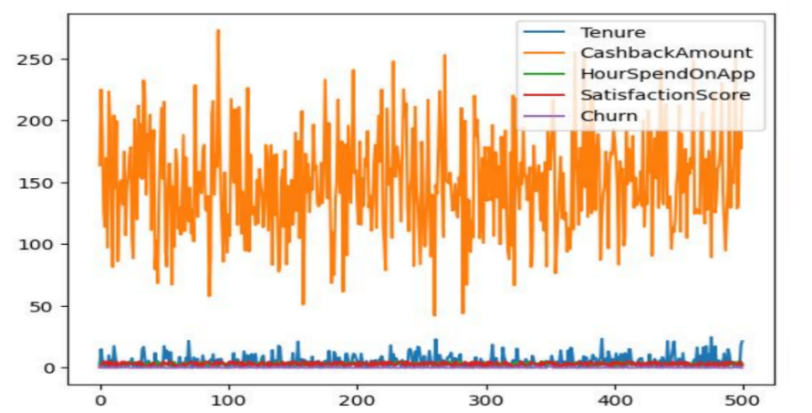
Finally, SHAP analysis identified the specific traits that are most helpful in forecasting a person's churn. Additionally, we may find out more about a few behavioural and transactional features with high values that might be connected to the churn risk of our modelled individuals. Using the expected turnover probability and a "value money proxy," Value-Aware Prioritization is enabled when ranking for individuals who represent the greatest overall risk to financial harm. Adding the monetary component to the ranking process in addition to the classification one is an alternative generalization for conventional classification and churn prediction. The churn distribution, the distributions of selected variables, the correlations between variables, the confusion matrix and the trends of selected customer features are shown in Figure 3, Figure 4, Figure 5, Figure 6 and Figure 7, respectively, and the classification results are given in Table 2.
| Class | Precision | Recall | F1-score | Support |
|---|---|---|---|---|
| 0 (retained) | 0.95 | 0.82 | 0.88 | 149 |
| 1 (churned) | 0.62 | 0.86 | 0.72 | 51 |
| Accuracy | 0.83 | 200 | ||
| Macro average | 0.78 | 0.84 | 0.80 | 200 |
| Weighted average | 0.86 | 0.83 | 0.84 | 200 |
Values transcribed from the classification report supplied as an image.
5Conclusion
A dynamic framework for e-commerce customer attrition prediction and retention priority based on value was presented in this study. The system combines behavioural and RFM-related characteristics with an incremental learning strategy based on SGD that enables sequential model changes when fresh labelled observations become available. By displaying each feature's contribution to the churn forecasts, SHAP analysis improves interpretability. Additionally, the Expected Financial Loss method uses a monetary value proxy rather than just turnover likelihood to evaluate consumers based on their possible financial exposure. It additionally makes use of a rule-based decision engine for the correlation of retention recommendations with the outcome predictions. In conclusion, the proposed solution extends the conventional churn analysis process through an integration of adaptively predicting, explainable, customer valuing, and retention aiding decision making.
6Future work
This framework can be utilised to explain predictions, ensure value-oriented retention, and facilitate learning; however, there is room for improvement in many ways. The following methods may be considered to further develop the suggested field of study:
- Real-Time Application: Modify the model such that it suits real-time e-commerce and facilitates the continuous processing of customer requests.
- Detection of Concept Drift: Discover changes in customer behaviour using automation tools and perform model adaptation when the data distribution has changed.
- Customer Lifetime Value (CLV): A more comprehensive measure of CLV must be developed, taking into account not only the monetary benefits associated with purchases and their frequency but also the cost of retaining customers as well as their future revenue potential.
- Incremental Learning Advanced: Comparison between SGD and other incremental and ensemble learning approaches in relation to changing customer behaviour.
References
- [1]Alshamsi SA. Customer churn prediction in e-commerce sector [master’s capstone project]. Dubai: Rochester Institute of Technology, RIT Dubai; 2022.
- [2]Chang M. E-commerce live streaming data-based customer churn prediction [master’s thesis]. Rotterdam: Erasmus School of Economics, Erasmus University Rotterdam; 2023. Available from: http://hdl.handle.net/2105/66734
- [3]Shobana J, Gangadhar C, Arora RK, Renjith PN, Bamini J, Chincholkar YD. E-commerce customer churn prevention using machine learning-based business intelligence strategy. Measurement: Sensors. 2023;27:100728. https://doi.org/10.1016/j.measen.2023.100728
- [4]Xiahou X, Harada Y. B2C e-commerce customer churn prediction based on K-means and SVM. Journal of Theoretical and Applied Electronic Commerce Research. 2022;17(2):458–75. https://doi.org/10.3390/jtaer17020024
- [5]Li J. Machine learning-based customer churn prediction: an analysis of e-commerce data. International Journal of Computer Applications. 2024;186(48):22–5. https://doi.org/10.5120/ijca2024924140
- [6]Panchal NM. Theoretical perspectives on customer churn prediction in e-commerce using machine learning and big data analytics. SSRN [Preprint]. 2025. Available from: https://ssrn.com/abstract=7013501