Electrical Engineering
The Effect of Natural Corrosion Inhibitors on Mild Steel Used in Electrical Equipment Casings and Conductors in Hydrochloric Acid (HCl) Environments: A Study Using Hexalobus crispiflorus Stem Bark Extract
Department of Electrical/Electronic Engineering, Federal Polytechnic Ngodo-Isuochi, Abia State, Nigeria
Published October 2026
Abstract
Corrosion of mild steel components remains a significant challenge in electrical and industrial applications, particularly under acidic conditions, where material degradation can compromise structural integrity, operational reliability, and service life. This study investigated the corrosion inhibition performance of Hexalobus crispiflorus stem bark extract on electroplated mild steel exposed to hydrochloric acid (HCl) environments. The study adopted an explanatory research strategy supported by an experimental methodology. Mild steel coupons were electroplated and subsequently subjected to yellow passivation treatments, while fresh Hexalobus crispiflorus stem bark was processed into a fine powder and applied at concentrations of 2, 4, and 6 g. HCl solutions of 0.02, 0.04 and 0.06 M were prepared as the corrodent media. Gravimetric weight-loss measurements were conducted at ambient temperature over exposure periods ranging from 2 to 8 days using passivated specimens. Corrosion rate, inhibition efficiency, and surface coverage were determined, while the adsorption characteristics of the inhibitor were evaluated using the Langmuir, Temkin, Freundlich, and El-Awady adsorption isotherm models. The results showed that the weight loss of the mild steel decreased with increasing inhibitor concentration from 2 to 6 g compared with the uninhibited control. The Hexalobus crispiflorus extract achieved a maximum inhibition efficiency of 40.59% at 6 g concentration using the yellow-passivated mild steel specimen. The inhibition efficiency was influenced by both inhibitor concentration and the concentration of the corrosive medium. The adsorption behaviour of the biomass on the plated mild steel surface was found to conform more closely to the El-Awady, Temkin, and Freundlich adsorption isotherms than to the Langmuir model, based on their comparatively higher coefficients of determination. The findings demonstrate the potential of Hexalobus crispiflorus stem bark extract as an environmentally friendly corrosion inhibitor for mild steel and provide a basis for further investigation under varying temperature conditions.
Keywords: Hexalobus crispiflorus; corrosion inhibition; mild steel; hydrochloric acid; plant extract; weight loss; adsorption isotherm; electrical equipment
1Introduction
Corrosion of metallic materials remains a persistent problem in engineering applications because of its effect on material integrity, service life and operational reliability. The problem becomes more pronounced when metals are exposed to aggressive chemical environments such as hydrochloric acid (HCl), where the interaction between the metal surface and the surrounding medium can result in progressive material deterioration. Corrosion is generally understood as the chemical or electrochemical deterioration of a material as a result of its interaction with the environment (Razzaq, 2025; Fehintola, 2026). For metallic components, this deterioration may result in loss of material, reduction in mechanical strength and eventual failure when adequate preventive measures are not provided.
Mild steel is widely employed in engineering because of its relatively low cost, availability and favourable mechanical properties. Its use extends to the fabrication of metallic structures and equipment, including components associated with electrical installations. However, the same material characteristics that make mild steel economically attractive do not eliminate its susceptibility to corrosion. In acidic environments, particularly those containing hydrochloric acid, the metal surface can undergo rapid degradation. Such deterioration is of particular concern where mild steel forms part of equipment enclosures, support structures, frames and other metallic components whose continued integrity is necessary for safe and reliable operation.
One approach commonly adopted to improve the resistance of mild steel to environmental attack is surface treatment. Electroplating provides a means of depositing a protective metallic layer onto the steel surface, while subsequent passivation can further modify the surface and improve its resistance to corrosive attack. Nevertheless, protective coatings and passivation treatments may not completely prevent corrosion when the treated material is exposed to sufficiently aggressive conditions. Consequently, the use of corrosion inhibitors remains an important complementary method for reducing the rate at which corrosive reactions occur at the metal–solution interface.
Corrosion inhibitors are substances introduced into a corrosive environment in relatively small quantities to reduce the rate of corrosion. Their protective action may involve adsorption of inhibitor molecules onto the metal surface, formation of a protective film, or modification of the anodic and cathodic reactions responsible for corrosion. Organic compounds containing heteroatoms and other active functional groups are particularly important because their molecules can interact with metallic surfaces and form a barrier between the metal and the corrosive medium. However, the effectiveness of an inhibitor must be considered alongside its environmental impact, availability and cost.
The search for environmentally acceptable corrosion inhibitors has therefore increased interest in natural products, particularly extracts obtained from plants. Plant-based inhibitors offer several potential advantages, including renewable availability, relatively low cost, biodegradability and reduced environmental concerns when compared with some conventional synthetic inhibitors. Previous investigations have shown that plant extracts can inhibit the corrosion of mild steel in acidic media, with their effectiveness often associated with the adsorption of naturally occurring organic constituents onto the metal surface (Ojike et al., 2026; Al-Btoush et al., 2026; Chandela et al., 2026). The composition of such extracts, including compounds containing oxygen, nitrogen, sulphur and other functional groups, can influence their interaction with the metal and consequently their corrosion-inhibiting performance.
Among the plant materials that warrant investigation is Hexalobus crispiflorus, a member of the Annonaceae family that is found in parts of Nigeria and other regions of Africa. The plant has been reported to contain bioactive constituents such as glycosides, saponins and steroids (Okhale et al., 2016). Its availability in Nigeria, together with the presence of potentially active phytochemical constituents, provides a basis for investigating its stem bark as a possible source of a natural corrosion inhibitor. Despite the increasing body of research on plant-derived corrosion inhibitors, the application of Hexalobus crispiflorus stem bark extract for protecting electroplated and passivated mild steel in hydrochloric acid environments remains insufficiently explored.
The behaviour of a plant-derived inhibitor at a metal surface can also be examined through adsorption studies. When inhibitor molecules interact with the metal surface, the resulting surface coverage can provide useful information about the mechanism through which corrosion protection occurs. Adsorption isotherm models such as Langmuir, Freundlich, Temkin and El-Awady can therefore be used to establish the relationship between inhibitor concentration and surface coverage and to provide an indication of the nature of inhibitor–metal interactions. Such analysis is particularly useful in determining whether the observed reduction in corrosion is consistent with a defined adsorption process.
Against this background, this study investigates the corrosion inhibition effect of Hexalobus crispiflorus stem bark extract on electroplated mild steel exposed to hydrochloric acid environments. The investigation considers passivated and non-passivated mild steel specimens and examines their behaviour at different HCl concentrations and inhibitor quantities using the gravimetric weight-loss method. The study evaluates corrosion rate, inhibition efficiency, and surface coverage, and examines the inhibitor's adsorption behaviour using the Langmuir, Freundlich, Temkin, and El-Awady adsorption isotherm models. The study aims to determine the extent to which Hexalobus crispiflorus stem bark extract can reduce the corrosion of plated mild steel in acidic conditions and, consequently, assess its potential as a simple, affordable, and environmentally preferable corrosion-control option for mild-steel components relevant to electrical engineering applications.
2Literature review
2.1Corrosion of mild steel in engineering applications
According to Okon et al. (2025), corrosion is the slow degradation of a substance caused by chemical or electrochemical contact with its surroundings. In engineering practice, corrosion is more than just a metal loss issue; it may impact a component's mechanical integrity, appearance, dependability, and functional performance.
Of particular relevance to electrical engineering is the loss of surface properties such as electrical conductivity, which may affect the performance of metallic contacts and other conductive or supporting components. Corrosion can also result in equipment damage, increased maintenance requirements and premature replacement of components.
Iron and mild steel corrosion is essentially an electrochemical process that involves the metal's anodic oxidation and related cathodic processes. While the liberated electrons take part in cathodic processes, iron loses electrons in the anodic area and enters the surrounding solution as ferrous ions. In the end, these activities cause the steel surface to deteriorate and corrosion products to develop (Razzaq, 2025; Hameed et al., 2022).
Because hydrogen ions are readily available in acidic settings, the corrosion process may become more noticeable. According to the reviewed literature, temperature, surface condition, contaminants, and pH all have an impact on the pace of attack, and the type of the metal and the surrounding environment are important elements that govern corrosion.
These effects are significant for electrical engineering applications because metallic components may be needed to preserve surface-functional and structural characteristics while in operation. Corrosion-induced deterioration of steel components can reduce their strength and, where metallic surfaces are involved in electrical connections, adversely affect conductivity and reliability. The need to control corrosion is therefore relevant not only to general structural applications but also to the durability and dependable operation of electrical equipment and associated installations.
2.2Mild steel and surface protection
Because of its comparatively low cost, availability, ductility, toughness, machinability, and weldability, mild steel is frequently utilized in engineering. It is employed in the manufacture of structural shapes, sheets, pipelines, equipment and other engineering components (Anitha et al., 2025). These characteristics also make it suitable for several supporting and enclosure-related applications in electrical engineering. Its major limitation, however, is its susceptibility to corrosion when exposed to aggressive environments.
Surface treatment is one of the approaches used to improve the resistance of mild steel to environmental degradation. Electroplating involves depositing one metal over another through an electrolytic process, with the deposited layer providing protection as well as other desirable surface characteristics. Metals such as zinc, nickel, chromium, copper and silver may be used for plating, depending on the intended application. The quality and effectiveness of the deposited layer depend on appropriate preparation of the steel surface and control of the plating process.
Passivation provides an additional means of reducing the susceptibility of a metallic surface to corrosion. It involves the formation or restoration of a protective surface layer that reduces the interaction between the underlying metal and its environment. Therefore, in the case of treated steel, passivation can serve as an additional line of defense against corrosive assault. Even after surface treatment, corrosion can still occur, especially if the material is exposed to extremely acidic conditions. Inhibitors and other additional corrosion-control techniques become necessary as a result.
2.3Corrosion inhibitors and their relevance to electrical equipment
According to Emmanuel (2024), corrosion inhibitors are compounds that slow down the pace at which a metal deteriorates in a corrosive environment. Adsorption of ions or molecules onto the metal surface, alteration of anodic or cathodic reactions, decrease of reactive species diffusion, or creation of a protective barrier are some of the ways they may work. Because inhibitor molecules can occupy active areas on the metal surface and restrict direct contact between the metal and corrosive media, adsorption is especially significant, according to Chandela et al. (2026).
Because compounds containing heteroatoms, such as oxygen, nitrogen, and sulfur, may interact with metallic surfaces through their accessible electron pairs and π-electrons, organic inhibitors have drawn a lot of interest. According to Okuma et al. (2023) and Pinsuwan (2022), these interactions can reduce the anodic and/or cathodic processes that cause corrosion by encouraging adsorption and the development of a protective coating. Molecular structure, functional groups, electron density, molecule size, solubility, and the intensity of an organic inhibitor's contact with the metal surface all affect how effective it is.
Research on organically derived alternatives has been prompted by concerns about toxicity, expense, and environmental impact, even though synthetic inhibitors can offer good corrosion protection. The increased interest in low-cost, non-toxic, and ecologically friendly corrosion-inhibition methods was observed by Dube-Johnstone et al. (2023). Plant extracts are especially appealing since they come from renewable biological sources and include a number of organic components that can interact with metal surfaces.
2.4Hexalobus crispiflorus as a natural corrosion inhibitor
Hexalobus crispiflorus is a member of the Annonaceae family and is found throughout Africa, especially Nigeria. The plant is referred to by several names in the area, such as "apara joke" in Yoruba and "oji ogoda" in Igbo. According to earlier phytochemical findings, the plant contains steroids, saponins, and glycosides (Stanislas et al., 2023). These naturally occurring constituents provide a reasonable basis for investigating the plant as a potential source of corrosion-inhibiting compounds.
The organic components of H. crispiflorus may adsorb onto the mild-steel surface and create a protective layer, which is why it may be useful in corrosion control. A coating like this might lessen the steel's direct contact with hydrochloric acid, which would lessen metal breakdown. Its availability as a natural material also makes the plant worthy of investigation as an alternative to some synthetic inhibitors, particularly where environmental considerations and local availability are important.
2.5Previous studies on plant-based corrosion inhibition
Plant extracts have the ability to prevent mild-steel corrosion in acidic settings, according to many research. For instance, Ugi et al. (2026) used weight-loss, potentiodynamic, and electrochemical impedance methods to study the methanolic extract of Ammi visnaga seeds in 1 M HCl. According to the study, the corrosion rate dropped as the extract content increased, with a 90% inhibitory efficacy at 1.0 g/L. The extract's adsorption behavior followed the Langmuir isotherm, and it was shown to function primarily as an anodic mixed inhibitor.
Badawi and Fahim (2021) examined the ability of extracts from guava, bananas, and almonds to prevent low-carbon steel from corroding in HCl and H2SO4 solutions. According to the study, inhibition efficacy improved as inhibitor concentration increased but decreased as temperature increased. Guava extract demonstrated the highest overall inhibitory efficiency in HCl, reaching 79.79%, and the adsorption behavior was determined to be compatible with the Langmuir isotherm.
Similarly, Ramalingam et al. (2026) investigated the capacity of extracts from Solanum trilobatum, Ocimum sanctum, and Aegle marmelos to inhibit mild steel corrosion in 1 N HCl. Their research showed that the plant extracts acted as mixed-type inhibitors using weight-loss, electrochemical, and hydrogen-permeation methods. The extracts usually followed the Langmuir adsorption isotherm, with Ocimum sanctum producing the greatest inhibitory effectiveness of 99.6% at 6.0% v/v concentration.
These studies establish the potential of plant materials as corrosion inhibitors in acidic media. However, the reviewed works largely focus on untreated mild steel and different plant species. There is comparatively limited information in the reviewed literature on the use of Hexalobus crispiflorus stem bark extract specifically for corrosion control of electroplated and passivated mild steel in hydrochloric acid, which is the focus of the present study.
2.6Knowledge gap and relevance to electrical engineering
According to the literature, corrosion is still a significant problem for materials, and several methods for controlling it include passivation, metallic coatings, protective coatings, and chemical inhibitors. Prior research has demonstrated that plant extracts may lower the rate of mild steel corrosion in acidic settings, and that temperature, adsorption behavior, inhibitor concentration, and corrosive medium concentration can all affect how effective they are.
However, the combined effects of electroplating, passivation, and Hexalobus crispiflorus stem bark extract on mild steel subjected to HCl are not well covered in the reviewed literature. From the standpoint of electrical engineering, this gap is significant because corrosion of metallic equipment components can jeopardize surface condition, structural integrity, and, in certain cases, electrical contact performance. With a focus on its capacity to lessen corrosion under carefully regulated acidic circumstances, the current study investigates Hexalobus crispiflorus stem bark extract as a natural corrosion inhibitor for plated mild steel in hydrochloric acid.
As a result, the study offers an experimental foundation for evaluating whether a widely accessible, plant-derived material can enhance current surface-protection techniques and contribute to more ecologically friendly corrosion-control strategies for mild-steel components pertinent to electrical engineering applications.
3Materials and methods
3.1Materials and study location
The study employed electroplated mild-steel coupons and Hexalobus crispiflorus stem bark as the principal materials. The experimental work was conducted at the Scientific Equipment Development Institute (SEDI-E), Enugu, while the electroplating of the mild-steel specimens was carried out at J.B.O. Engineering Company, Nkpor, Onitsha, Anambra State. Analytical-grade hydrochloric acid (HCl), distilled water, ethanol and acetone were used during the preparation and treatment of the specimens. Other materials and laboratory equipment included a digital weighing balance, oven, beakers, measuring cylinders, round-bottom flask, filter paper, funnel, emery paper, containers and other routine laboratory accessories.
3.2Preparation and surface treatment of mild steel
Mild-steel sheets obtained from SEDI-E, Enugu were mechanically cut into coupons measuring 3 cm × 3 cm with a thickness of 0.15 cm. A small hole was made at the upper section of each coupon to facilitate suspension during exposure to the test solution. The coupons were degreased in an alkaline medium to remove oil and surface contaminants, rinsed thoroughly with distilled water and subsequently subjected to zinc electroplating.
During electroplating, the mild-steel coupon served as the cathode, while a zinc bar served as the anode. The plating process was maintained for approximately 5 min. Following plating, the specimens were divided into three groups. One group was treated with a yellow passivating electrolyte containing trivalent salts, while another was treated with a blue passivating electrolyte containing divalent salts. The third group received no post-plating passivation and served as the non-passivated specimen. The treated specimens were rinsed, dried and preserved in a desiccator prior to corrosion testing.
This treatment arrangement was adopted to permit comparison of the corrosion behaviour of zinc-plated mild steel under different surface conditions. Such comparison is relevant to electrical engineering applications in which metallic components may require surface protection to maintain structural integrity and service performance in corrosive environments.
3.3Preparation of Hexalobus crispiflorus stem bark extract
Fresh Hexalobus crispiflorus stem was collected from Oji River, Enugu State. The stem bark was separated according to its observed reddish and brownish portions, washed thoroughly and air-dried for approximately 6 h. Further drying was carried out in a digital oven at 35°C for 8 h to reduce moisture while retaining the active constituents considered potentially responsible for the inhibitory action. The dried reddish bark was mechanically pulverised using a ceramic mortar and subsequently sieved to obtain a fine powder. The resulting material was measured into separate portions of 2, 4 and 6 g for preparation of the inhibitor test solutions.
3.4Preparation of HCl–Hexalobus crispiflorus test media
Three concentrations of hydrochloric acid, namely 0.02, 0.04 and 0.06 M, were prepared with distilled water. For each test condition, 150 mL of the appropriate HCl concentration was added to the corresponding quantity of H. crispiflorus stem bark powder (2, 4 or 6 g). The mixtures were stirred and allowed to leach for 24 h to facilitate the transfer of soluble constituents from the plant material into the acidic medium. Each mixture was subsequently filtered using filter paper and a glass funnel, and the filtrate obtained was used as the inhibitor-containing corrosive medium for the corrosion tests.
The resulting test media therefore provided different combinations of HCl concentration and H. crispiflorus inhibitor concentration for evaluating the corrosion response of the plated mild-steel coupons.
3.5Corrosion evaluation
The prepared mild-steel specimens were exposed to the different inhibitor-containing HCl media under controlled laboratory conditions. The investigation compared the behaviour of the non-passivated, blue-passivated and yellow-passivated zinc-plated specimens at the different concentrations of H. crispiflorus and HCl.
The corrosion response was assessed gravimetrically through changes in specimen weight following exposure. The weight-loss measurements were used to determine the corrosion behaviour of the plated mild steel and to establish the effectiveness of H. crispiflorus stem bark extract in reducing corrosion. The resulting observations provided the basis for comparing the protective performance of the inhibitor under the different surface-treatment and acidic-medium conditions.
The experimental design was therefore directed specifically at establishing whether H. crispiflorus stem bark extract can provide additional protection to electroplated mild steel in an acidic environment and whether its effectiveness varies with inhibitor concentration, HCl concentration and the passivation condition of the plated surface.
3.6Method of data evaluation
3.6.1Gravimetric (weight-loss) test
The gravimetric test was conducted at ambient temperature. The plated mild-steel coupons were initially weighed and suspended in 150 mL of HCl solution (0.02–0.06 M) contained in 250 mL plastic cups. The specimens were retrieved at two-day intervals for 8 days, cleaned with absolute ethanol and a bristle brush, rinsed with distilled water, dried with acetone and oven-dried for 5 min before cooling in a desiccator and reweighing. The procedure was repeated with Hexalobus crispiflorus stem bark extract concentrations of 2–6 g. The difference between the initial and final weights was recorded as weight loss and used to determine the corrosion rate under the different acid and inhibitor concentrations (Al Kiey et al., 2024). The corrosion rate was calculated using Equation (1):
where mpy is mils per year, W is the weight loss (g), r is the density of the specimen (g cm−3), A is the surface area of the specimen (cm2) and t is the exposure time (days).
Surface coverage and inhibition efficiency were calculated using Equations (2) and (3), respectively:
where W1 is the weight loss of the plated mild steel in the absence of the inhibitor and Wo is the weight loss of the plated mild steel in the presence of the inhibitor.
3.6.2Adsorption isotherm and equilibrium studies
The nature of processes between inhibitor and the surface of the mild steel metal can be provided by the adsorption isotherms. It was found that the experimental data obtained from weight loss measurement could fit into already existing adsorption isotherm models. The data obtained from the experiment at each temperature was fitted into several adsorption isotherm models which include: Langmuir, Freundlich, Temkin and El-Awady.
3.6.2.1Langmuir isotherm model
This model relates the surface coverage (θ) to inhibitor concentration. The linear form of the Langmuir isotherm model is given by Equation (4):
where C is the inhibitor concentration, θ is the surface coverage and Kads is the equilibrium constant for the adsorption process.
3.6.2.2Freundlich adsorption isotherm model
The linear form of the Freundlich isotherm is expressed as Equation (5):
where θ is the surface coverage, Kf is the Freundlich constant related to the adsorption process and C is the inhibitor concentration.
3.6.2.3Temkin adsorption isotherm model
This adsorption model relates the surface coverage of the inhibitor molecules on the surface of the plated mild steel with the logarithm of the inhibitor concentration. The linear form of the isotherm model is given by Equation (6):
where θ is the surface coverage, a is the Temkin interaction parameter, C is the inhibitor concentration and Kads is the equilibrium constant for the adsorption process.
3.6.2.4El-Awady adsorption isotherm model
This is a thermodynamic–kinetic model, with the linear form given in Equation (7):
where θ is the surface coverage, Kads is the equilibrium constant for the adsorption process, C is the inhibitor concentration and 1/y is a constant.
Tables and charts were used to present and analyse the results, using Microsoft Office and other relevant application software.
4Data presentation and analysis
4.1Corrosion inhibition analysis
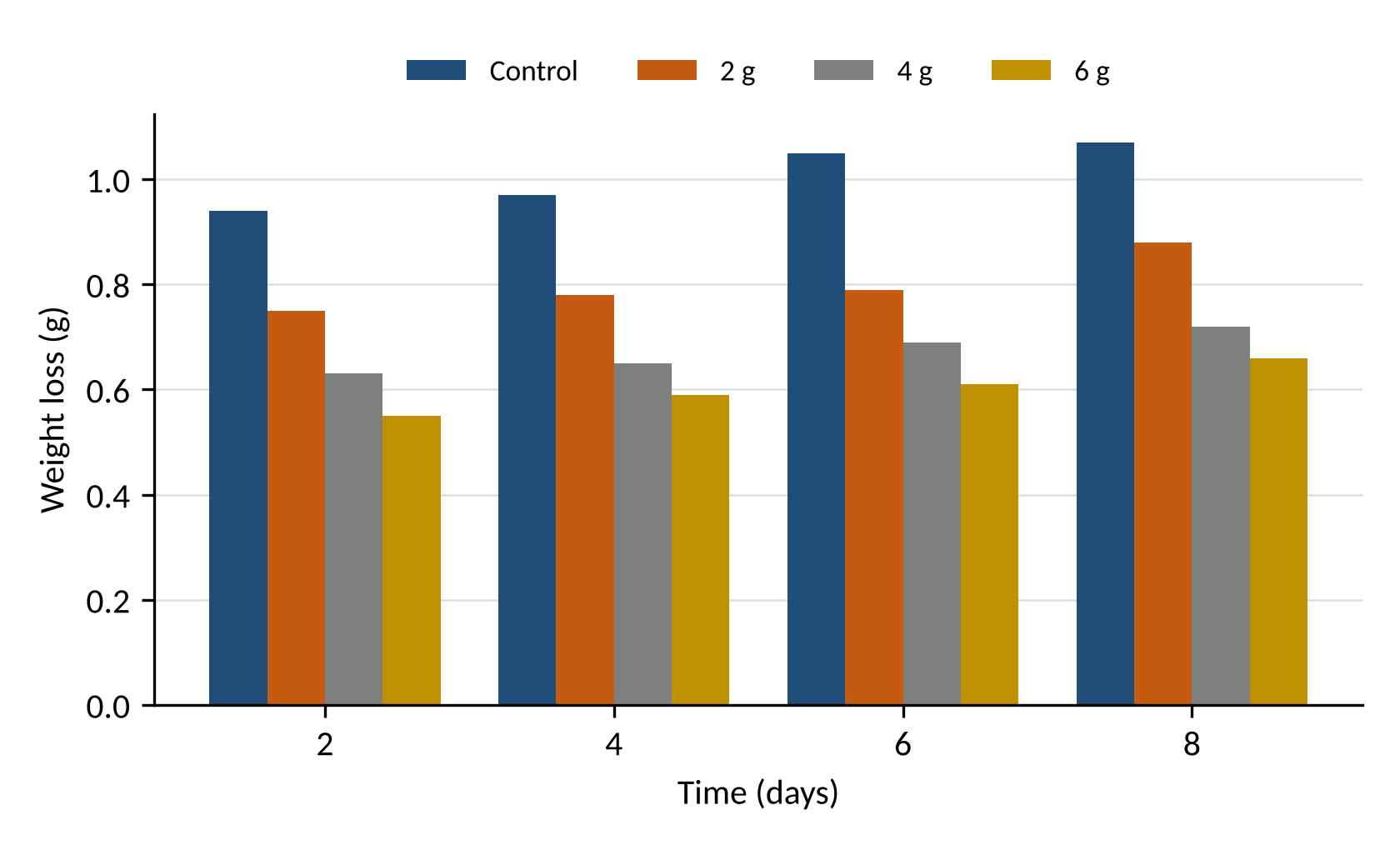
Table 1 shows the empirical results of the experiment carried out using yellow passivated metal at ambient temperature using different grammage (2 g, 4 g, 6 g) of the inhibitor (Hexalobus crispiflorus) in 0.02 M of concentrations of the corrodent (HCl) for the duration of 2 to 8 days, and Table 2 gives the corresponding weight loss.
| Biomass (g) | Initial coupon weight (g) | 48 h | 96 h | 144 h | 192 h |
|---|---|---|---|---|---|
| Control | 46.58 | 45.64 | 44.67 | 43.62 | 42.55 |
| 2 | 47.25 | 46.50 | 45.72 | 44.93 | 44.05 |
| 4 | 47.88 | 47.25 | 46.60 | 45.91 | 45.19 |
| 6 | 46.93 | 46.38 | 45.79 | 45.18 | 44.52 |
| Biomass (g) | 48 h | 96 h | 144 h | 192 h |
|---|---|---|---|---|
| Control | 0.94 | 0.97 | 1.05 | 1.07 |
| 2 | 0.75 | 0.78 | 0.79 | 0.88 |
| 4 | 0.63 | 0.65 | 0.69 | 0.72 |
| 6 | 0.55 | 0.59 | 0.61 | 0.66 |
Likewise, Figure 1 shows the graph of the tabulated results of the weight loss test of the yellow passivated metal at ambient temperature using 2 g, 4 g and 6 g of the inhibitor in 0.02 M of concentrations of the HCl for the 2 to 8 days experimental time.
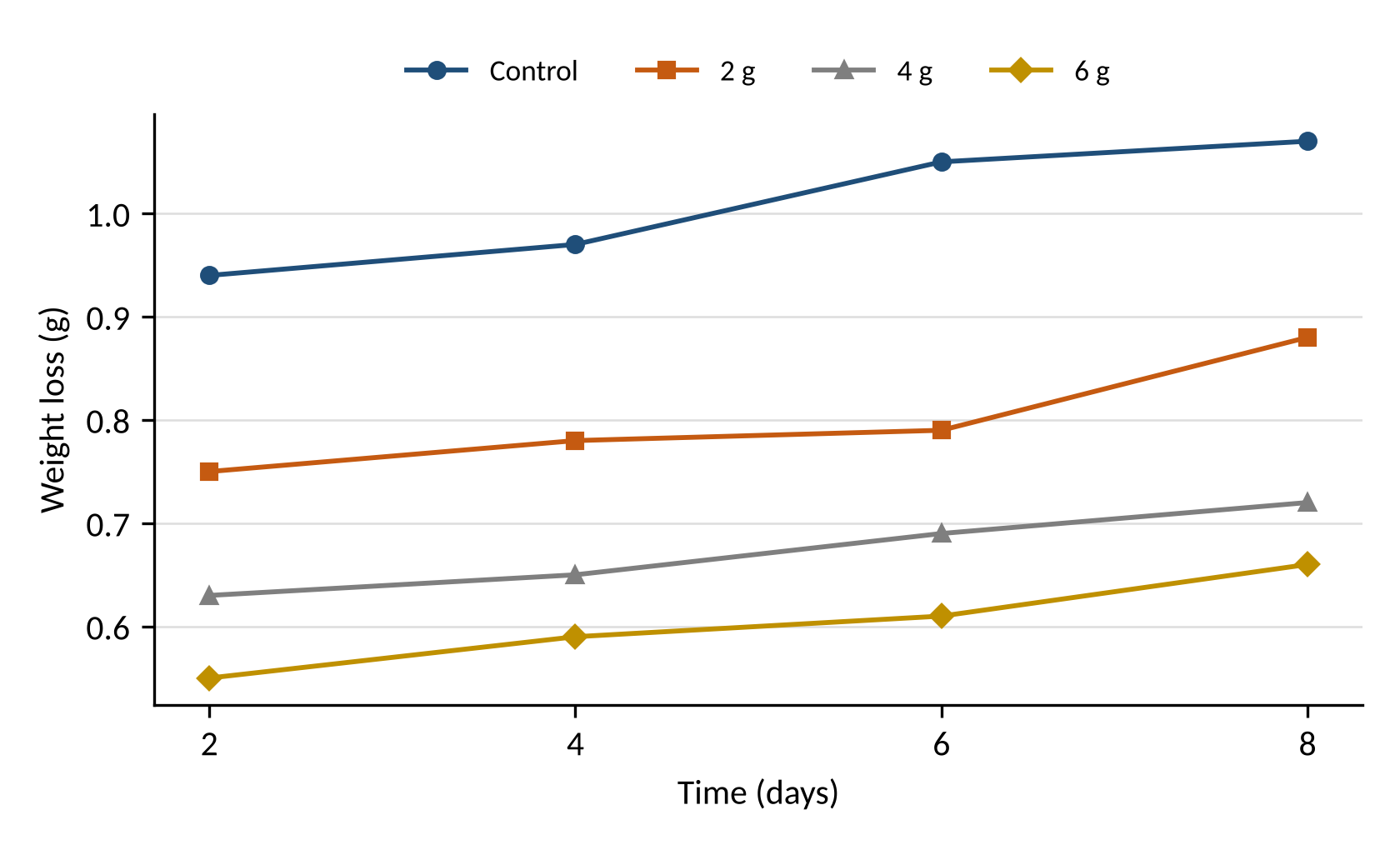
Figure 2 presents the chart of the weight loss test result of the yellow passivated metal at ambient temperature comparing the effects of the 2 g, 4 g and 6 g quantities of the inhibitor in 0.02 M HCl for the period of 2 to 8 days.
As established in the research design, the experiment was conducted using different concentrations of hydrochloric acid (HCl) as the corrosive medium. For the results presented in this section, a fixed HCl concentration of 0.04 M was used. Table 3 presents the experimental results obtained for the yellow-passivated mild-steel specimens at ambient temperature, using 2 g, 4 g and 6 g of Hexalobus crispiflorus stem bark extract. The specimens were exposed to the inhibitor-containing HCl medium for periods ranging from 2 to 8 days to assess the effect of inhibitor concentration and exposure time on the corrosion behaviour of the treated mild steel.
| Biomass (g) | Initial coupon weight (g) | 48 h | 96 h | 144 h | 192 h |
|---|---|---|---|---|---|
| Control | 49.45 | 48.34 | 47.19 | 45.97 | 44.70 |
| 2 | 48.73 | 47.77 | 46.80 | 45.77 | 44.69 |
| 4 | 49.27 | 48.42 | 47.54 | 46.60 | 45.63 |
| 6 | 47.83 | 47.10 | 46.33 | 45.51 | 44.66 |
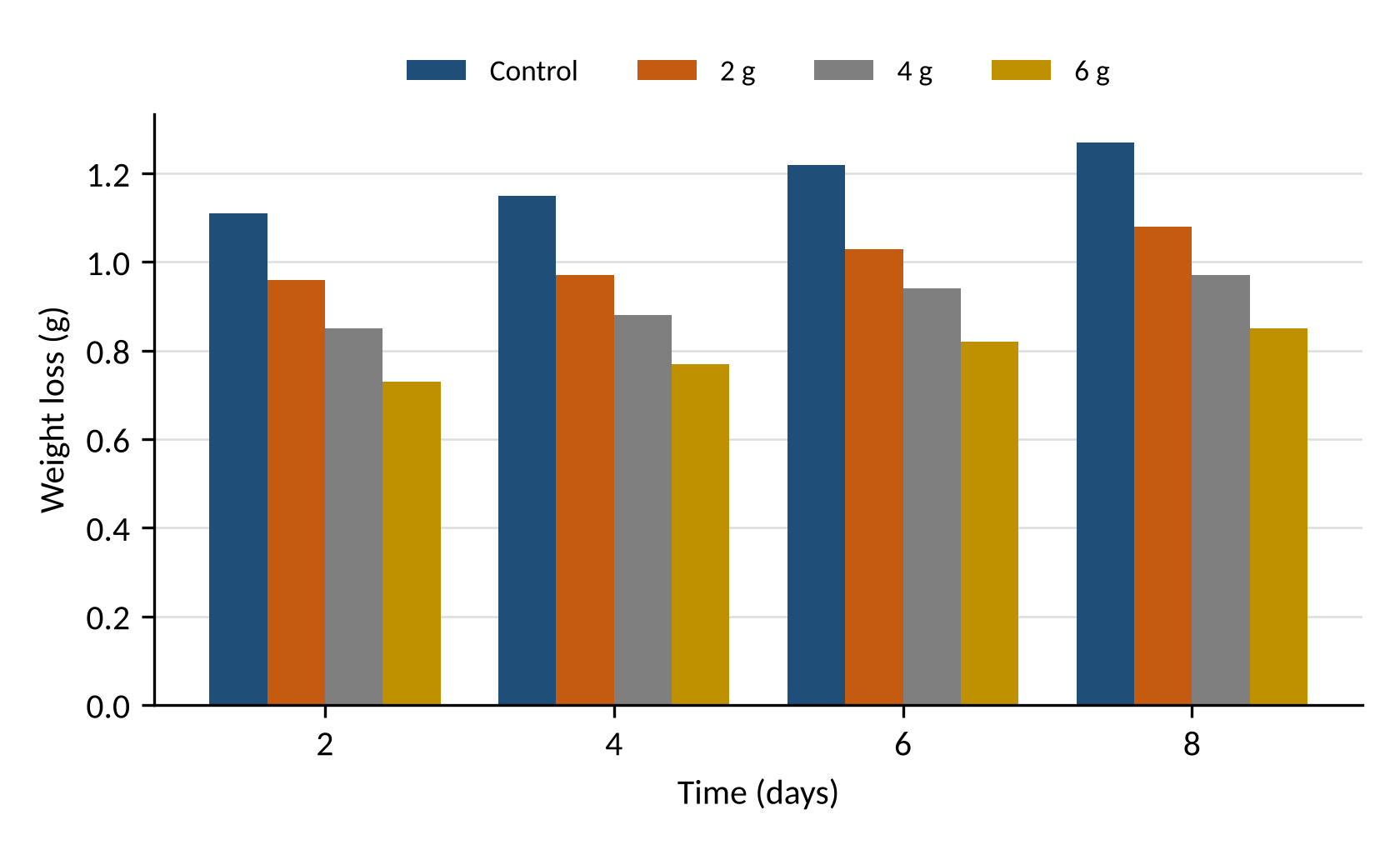
The gravimetric test of the yellow passivated metal at an ambient temperature using 2 g, 4 g and 6 g of the inhibitor in 0.04 M HCl for the 2 to 8 days interval is presented in Table 4.
| Biomass (g) | 48 h | 96 h | 144 h | 192 h |
|---|---|---|---|---|
| Control | 1.11 | 1.15 | 1.22 | 1.27 |
| 2 | 0.96 | 0.97 | 1.03 | 1.08 |
| 4 | 0.85 | 0.88 | 0.94 | 0.97 |
| 6 | 0.73 | 0.77 | 0.82 | 0.85 |
Figure 3 shows the graph of the tabulated results of the gravimetric test of yellow passivated metal at an ambient temperature using 2 g, 4 g and 6 g of the inhibitor (Hexalobus crispiflorus) in 0.04 M of concentrations of the corrodent (HCl) for the duration of between 2 to 8 days.
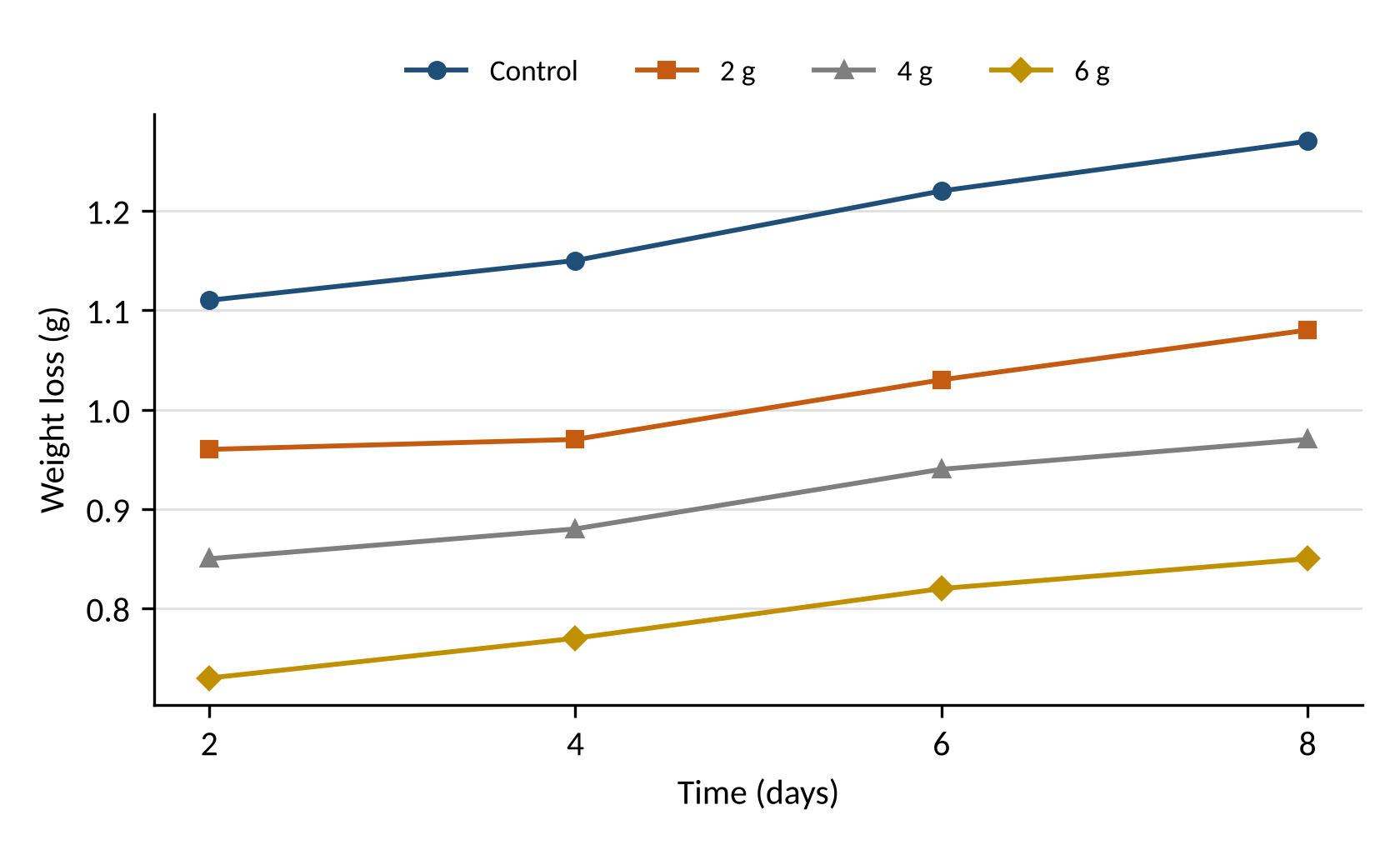
Figure 4 presents the chart of the weight loss test result of the yellow passivated metal at ambient temperature comparing the effects of the 2 g, 4 g and 6 g quantities of the inhibitor in 0.04 M HCl for the period of 2 to 8 days.
As established in the research design, the experiment was conducted using different concentrations of hydrochloric acid (HCl) as the corrosive medium. For the results presented in this section, a fixed HCl concentration of 0.06 M was used. Table 5 presents the experimental results obtained for the yellow-passivated mild-steel specimens at ambient temperature, using 2 g, 4 g and 6 g of Hexalobus crispiflorus stem bark extract. The specimens were exposed to the inhibitor-containing HCl medium for periods ranging from 2 to 8 days to assess the effect of inhibitor concentration and exposure time on the corrosion behaviour of the treated mild steel.
| Biomass (g) | Initial coupon weight (g) | 48 h | 96 h | 144 h | 192 h |
|---|---|---|---|---|---|
| Control | 48.28 | 47.07 | 45.80 | 44.51 | 43.16 |
| 2 | 48.21 | 47.16 | 46.08 | 44.91 | 43.68 |
| 4 | 48.75 | 47.82 | 46.84 | 45.82 | 44.75 |
| 6 | 48.53 | 47.68 | 46.79 | 45.88 | 44.94 |
The weight loss test of the yellow passivated metal at an ambient temperature using 2 g, 4 g and 6 g of the inhibitor in 0.06 M HCl for the 2 to 8 days interval is presented in Table 6.
| Biomass (g) | 48 h | 96 h | 144 h | 192 h |
|---|---|---|---|---|
| Control | 1.21 | 1.27 | 1.29 | 1.35 |
| 2 | 1.05 | 1.08 | 1.17 | 1.23 |
| 4 | 0.93 | 0.98 | 1.02 | 1.07 |
| 6 | 0.85 | 0.89 | 0.91 | 0.94 |
Figure 5 shows the graph of the tabulated results of the gravimetric test of yellow passivated metal at an ambient temperature using 2 g, 4 g and 6 g of the inhibitor (Hexalobus crispiflorus) in 0.06 M of concentrations of the corrodent (HCl) for the duration of between 2 to 8 days.
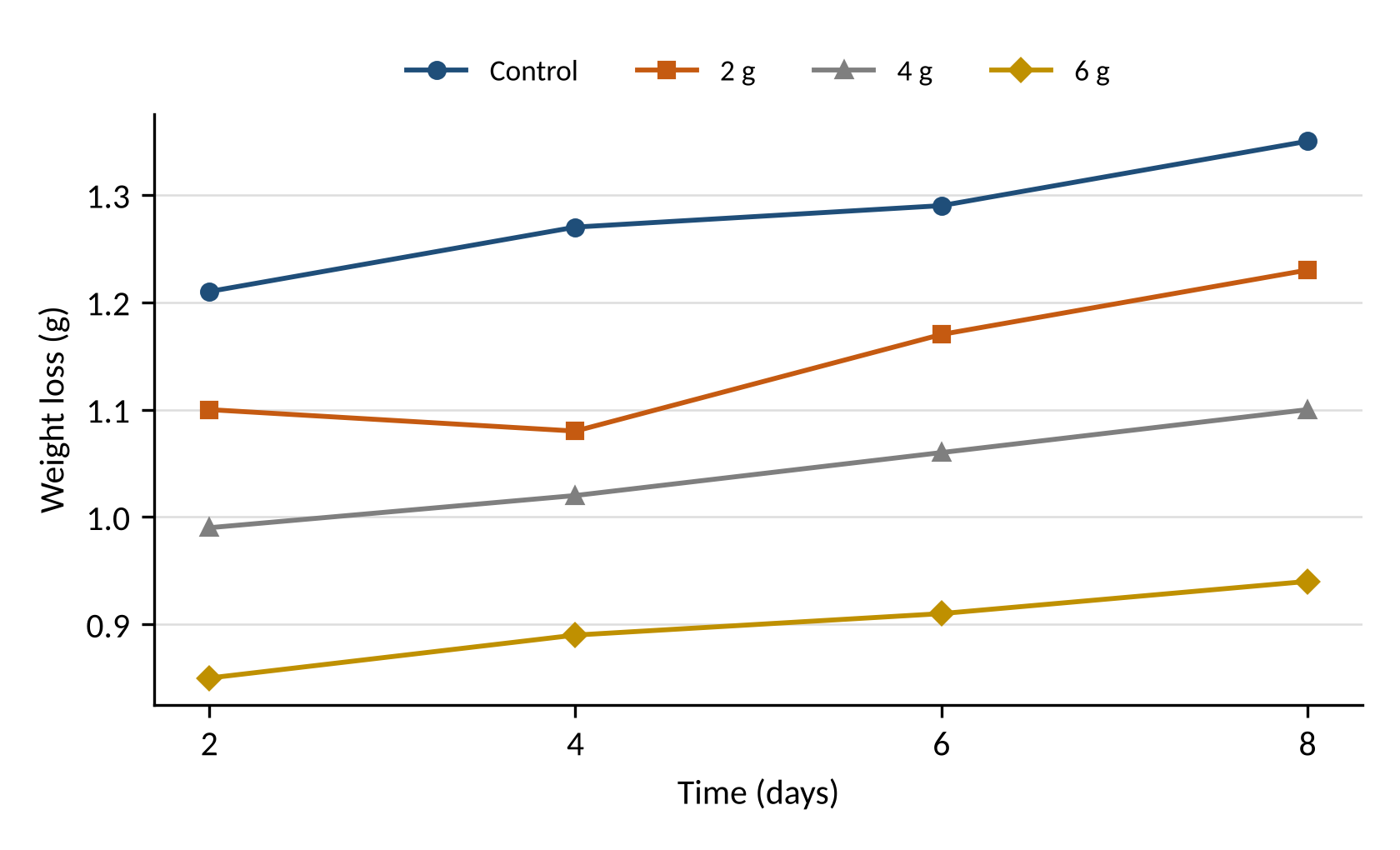
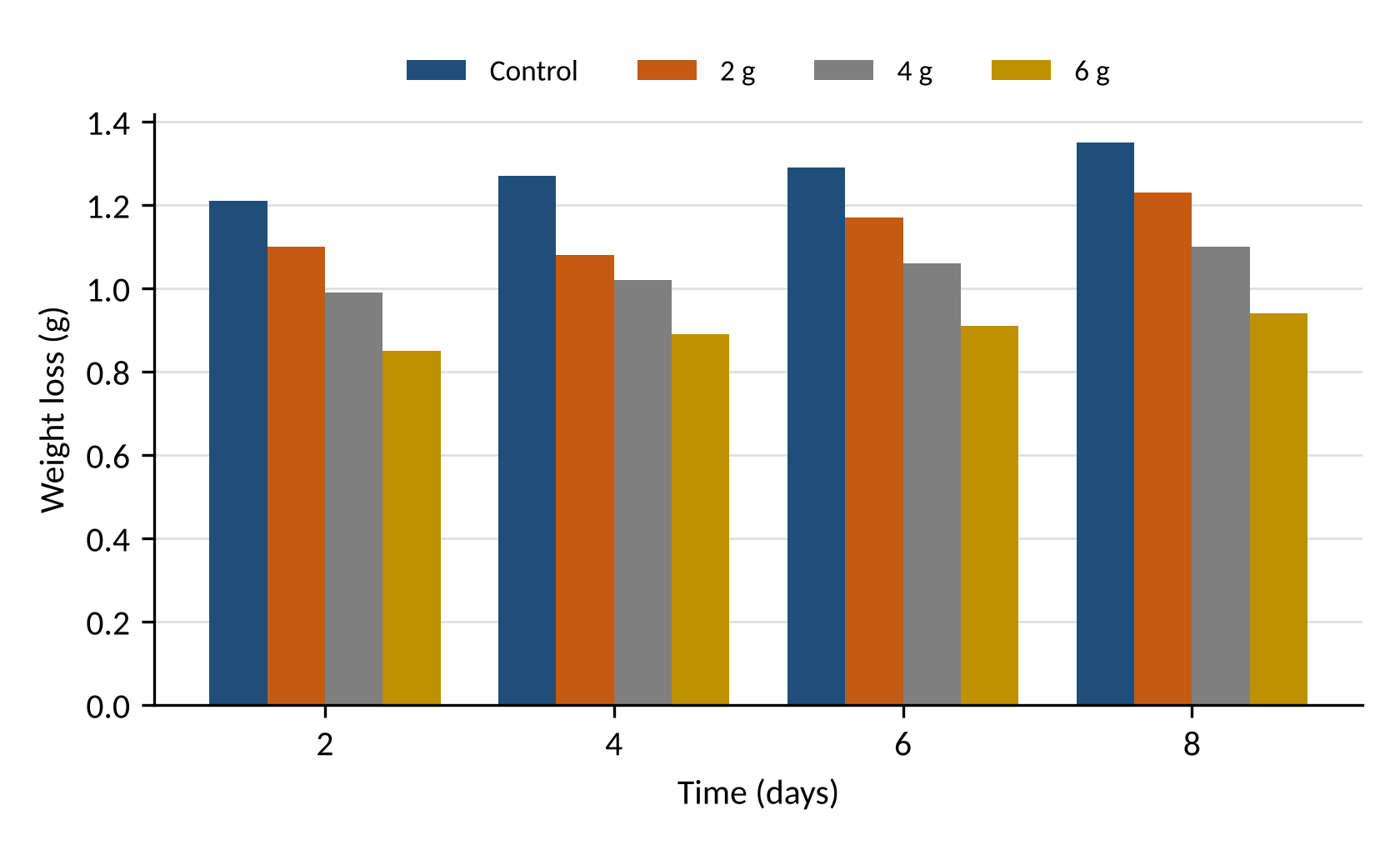
Figure 6 presents the chart of the weight loss test result of the yellow passivated metal at ambient temperature comparing the effects of the 2 g, 4 g and 6 g quantities of the inhibitor in 0.06 M HCl for the period of 2 to 8 days.
4.2Discussion of gravimetric (weight loss) results
The gravimetric results presented in Figures 1–6 show that the weight loss of the yellow-passivated, zinc-plated mild steel decreased with increasing Hexalobus crispiflorus concentration from 2 to 6 g and with prolonged immersion from 2 to 8 days compared with the blank. This indicates that the extract inhibited corrosion of the plated mild steel in the different HCl environments. The observed inhibition is attributed to the adsorption of phytochemical constituents of the extract onto the metal surface, where they block active corrosion sites and reduce further acid attack. Increasing inhibitor concentration consequently enhanced surface coverage and provided greater protection against corrosion.
4.3Corrosion rate analysis
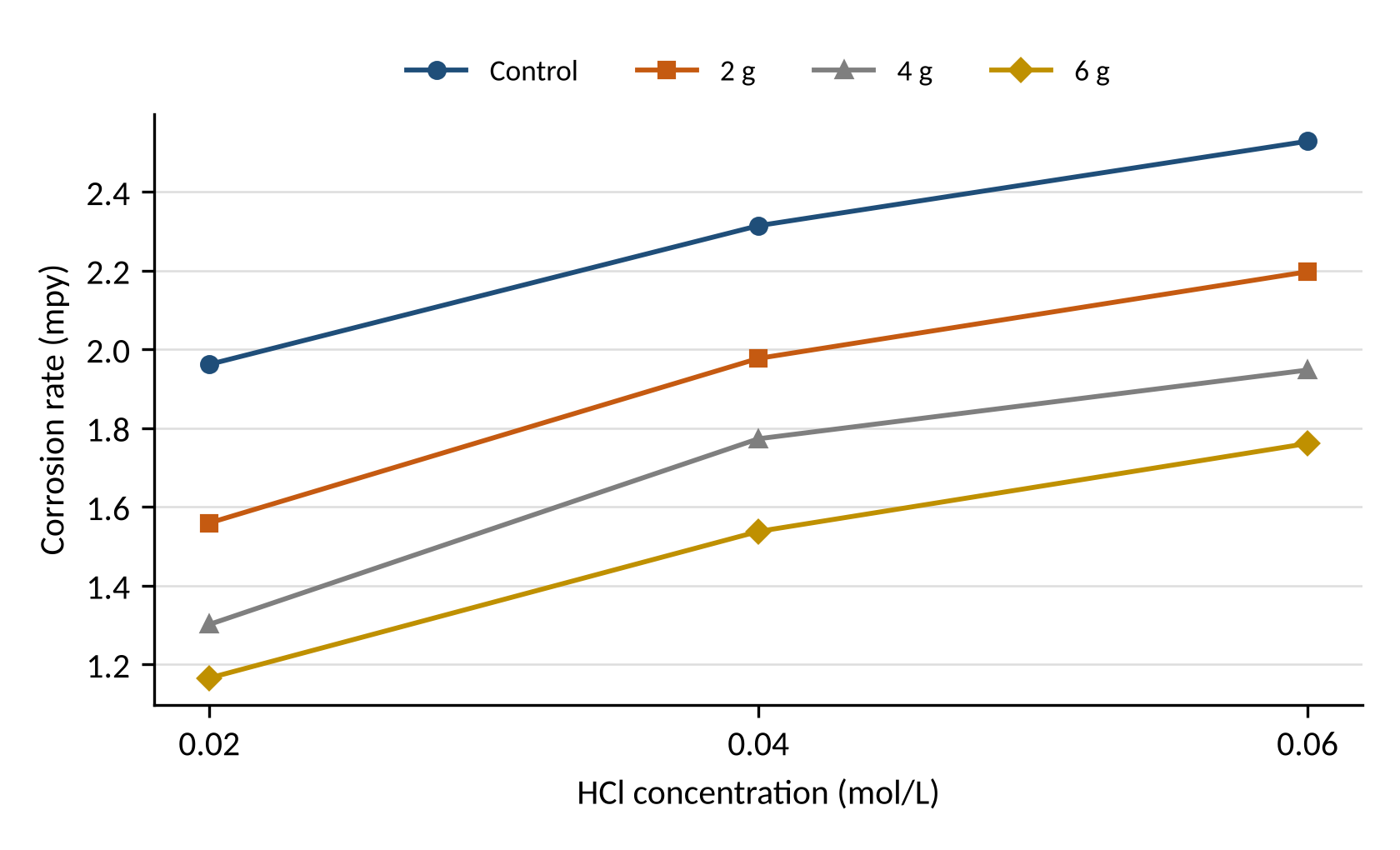
Corrosion rate analysis was used to evaluate the effectiveness of the proposed inhibitor. Table 7 and Figure 7 present the corrosion-rate results and corresponding graphs for the yellow-passivated zinc-plated mild steel exposed to different concentrations of Hexalobus crispiflorus stem bark extract (2, 4 and 6 g) in varying concentrations of HCl (0.02, 0.04 and 0.06 M).
| Inhibitor | 0.02 M | 0.04 M | 0.06 M |
|---|---|---|---|
| Control | 1.9623 | 2.3146 | 2.5291 |
| 2 g | 1.5596 | 1.9775 | 2.1977 |
| 4 g | 1.3018 | 1.7734 | 1.9479 |
| 6 g | 1.1657 | 1.5380 | 1.7614 |
4.3.1Discussion of corrosion rate results
Table 7 and Figure 7 show the tabulation and plot of corrosion rate against inhibitor concentration for the corrosion of plated mild steel in 0.02–0.06 M HCl. They show that the corrosion rate decreases as the concentration of the inhibitor increases and also the corrosion rate increases as the concentration of the corrosive environment increases.
4.3.2Study of the inhibition efficiency and surface coverage
The previous section assessed the effectiveness of the inhibitor proposed through the process of corrosion rate approach. Here, the efficiency of the proposed corrosion inhibitor is analyzed through the process of conducting an inhibition efficiency and surface coverage test. Tables 8–10 show the results of the experiment carried out using yellow (YPM) metal of different grammage (2 g, 4 g and 6 g) of the inhibitor in different concentrations (0.02 M, 0.04 M and 0.06 M) of the corrodent (HCl).
| Inhibitor | θ of YPM | I (%) of YPM |
|---|---|---|
| Control | 0 | 0 |
| 2 | 0.2079 | 20.79 |
| 4 | 0.3366 | 33.66 |
| 6 | 0.4059 | 40.59 |
| Inhibitor | θ of YPM | I (%) of YPM |
|---|---|---|
| Control | 0 | 0 |
| 2 | 0.1513 | 15.13 |
| 4 | 0.2353 | 23.53 |
| 6 | 0.3361 | 33.61 |
| Inhibitor | θ of YPM | I (%) of YPM |
|---|---|---|
| Control | 0 | 0 |
| 2 | 0.1172 | 11.72 |
| 4 | 0.2188 | 21.88 |
| 6 | 0.2969 | 29.69 |
Note: YPM, yellow-passivated metal; θ, surface coverage; I, inhibition efficiency.
The inhibition efficiency and surface coverage increased with inhibitor concentration but decreased as the corrodent concentration increased. The highest inhibition efficiency of 40.59% was recorded with 6 g of the inhibitor in 0.02 M HCl on the yellow-passivated metal (Table 8). This indicates that inhibition occurs mainly through the adsorption of inhibitor molecules or ions onto the mild steel surface.
5Conclusion
The aim of this study, which was to investigate the corrosion inhibition effect of Hexalobus crispiflorus stem bark extract on yellow-passivated mild steel in hydrochloric acid, was successfully achieved. An explanatory research strategy and experimental approach were adopted, using inhibitor grammages of 2 g, 4 g and 6 g in 0.02 M, 0.04 M and 0.06 M HCl over an immersion period of 2 to 8 days. Gravimetric (weight loss), corrosion rate, inhibition efficiency, surface coverage and adsorption isotherm studies were conducted to evaluate the performance of the extract as a corrosion inhibitor.
The results showed that weight loss and corrosion rate generally decreased with increasing inhibitor concentration, while higher concentrations of the corrodent increased the corrosion rate. Similarly, inhibition efficiency and surface coverage improved with increasing inhibitor concentration but declined as the HCl concentration increased. The highest inhibition efficiency of 40.59% was recorded with 6 g of the inhibitor in 0.02 M HCl, confirming that Hexalobus crispiflorus stem bark extract has appreciable potential for reducing the corrosion of yellow-passivated mild steel in acidic environments.
Acknowledgments
The authors sincerely appreciate the Tertiary Education Trust Fund (TETFund) for its valuable support and financial assistance towards the successful completion of this research work. The funding provided made it possible to carry out this study and to contribute to knowledge in the field. The authors are grateful for TETFund's continued commitment to promoting research and development in tertiary institutions.
References
- [1]Al Kiey SA, El-Sayed AA, Khalil AM (2024). Controlling corrosion protection of mild steel in acidic environment via environmentally benign organic inhibitor. Colloids and Surfaces A: Physicochemical and Engineering Aspects, 683, 133089. https://doi.org/10.1016/j.colsurfa.2023.133089
- [2]Al-Btoush T, Aljbour SH, Al-Awamleh MA, Badarneh SN (2026). Investigation of Salvia officinalis as a natural corrosion inhibitor for mild steel in sulfuric acid. Research Journal of Chemistry and Environment, 30(6).
- [3]Anitha M, Nivetha G, Vahith RA, Abuthahir SS (2025). Evaluation of anti-corrosive effect of Dalbergia latifolia on aluminium steel immersed in hydrochloric acid solution. Ecology, Environment and Conservation, 31, S419.
- [4]Badawi AK, Fahim IS (2021). A critical review on green corrosion inhibitors based on plant extracts: Advances and potential presence in the market. International Journal of Corrosion and Scale Inhibition, 10(4), 1385–1406. https://doi.org/10.17675/2305-6894-2021-10-4-2
- [5]Chandela L, Shukla SK, Singh SK, Lal B, Ji G (2026). Natural dyes as eco-friendly corrosion inhibitors: A sustainable approach to metal protection. Zaštita Materijala.
- [6]Dube-Johnstone NM, Tshishonga U, Mnyakeni-Moleele SS, Murulana LC (2023). Investigation of synthesized ethyl-(2-(5-arylidine-2,4-dioxothiazolidin-3-yl) acetyl) butanoate as an effective corrosion inhibitor for mild steel in 1 M HCl: A gravimetric, electrochemical, and spectroscopic study. Heliyon, 9(4), e14753. https://doi.org/10.1016/j.heliyon.2023.e14753
- [7]Emmanuel JK (2024). Corrosion protection of mild steel in corrosive media, a shift from synthetic to natural corrosion inhibitors: A review. Bulletin of the National Research Centre, 48(1), 26. https://doi.org/10.1186/s42269-024-01181-7
- [8]Fehintola EO (2026). Trend and pattern of studies on corrosion and corrosion science: Fundamentals of corrosion science and application of artificial intelligence and machine learning. Journal of Pure and Applied Sciences (Science Forum), 26(3).
- [9]Hameed W, Rashid K, Khadom A (2022). New developments in inhibition of the sweet environment in a variety of corrosive media: A review. Engineering and Technology Journal, 40(9), 1117–1130.
- [10]Ojike PC, Ezeugo JO, Ifediorah EI (2026). Experimental synthesis, characterisation, and inhibition evaluation of green corrosion inhibitors using bio-extracts. Acta Chemica Malaysia, 10(1), 20–27.
- [11]Okhale SE, Tijani AY, Ezugwu BO (2016). Assessment of antiproliferative potential of Hexalobus crispiflorus (Annonaceae). British Biotechnology Journal, 15(3), 1–7.
- [12]Okon K, Ekeke IC, Maduabuchi CA, Ayogu II, Akalezi CO (2025). Corrosion inhibition of mild steel and aluminium using extracts of Vernonia amygdalina: A review. Nexus Future Materials, 2(1), 154–166.
- [13]Okuma SO, Ogagavwodia EO, Obaseki M, Nwaeju CC (2023). Kinetic and thermodynamic assessment of the potency of Irvingia gabonensis plant extract as an eco-friendly inhibitor for mild steel in an acidic environment. European Journal of Materials Science and Engineering, 8(3), 142–155.
- [14]Pinsuwan K (2022). Value-added curable precursors derived from oxidized products of post-consumer high density polyethylene milk bottles.
- [15]Ramalingam M, Damotharan D, Vanaraj R, Mayakrishnan P, Kim IS (2026). Green corrosion inhibitors for mild steel in HCl medium: A comprehensive review on plant-based alternatives. Journal of Adhesion Science and Technology, 1–41.
- [16]Razzaq S (2025). Corrosion and corrosion control: An introduction to corrosion science and engineering (4th ed.).
- [17]Stanislas A, Armel NF, Noël KJ, Jean-Laurent SM (2023). Qualitative, quantitative composition and evaluation of the antioxidant activity of polar extracts of stem bark of Hexalobus crispiflorus A. Rich (Annonaceae family): Central African species.
- [18]Ugi BU, Oji NN, Ugi FB, Ugi DU, Tamunotonye GT (2026). Corrosion inhibitor potential of tropical milkweed (Asclepias curassavica) plant leaf extracts for reinforced bars in chloride concentrated environment. Journal of Applied Sciences and Environmental Management, 30(2), 481.