Film Studies
Semiotics Content Analysis of Nina the Starry Bride Anime Series
Department of Visual Communication, Hindusthan College of Arts and Science, Coimbatore, Tamil Nadu, India
Published October 2026
Abstract
This study presents a Visual Semiotics Analysis and Content Analysis of Nina the Starry Bride anime, focusing on how the design of romantic characters communicates ideals of attraction, personality and relationship roles. Fifteen figures from Nina the Starry Bride anime were examined as visual signs through Visual Semiotics Analysis and Content Analysis, with attention to colour, clothing, facial expression, body position, space and light. Cultivation Theory and Social Cognitive Theory served as the theoretical framework, and earlier research on parasocial bonds, identification and fictional ideals was used to interpret the readings. The analysis revealed a consistent visual pattern: pink tones, soft light and large blue eyes marked the heroine as innocent and gentle; dark blue, white and gold marked the male characters as calm and high in rank; and red and gold interiors, concealed faces and small hidden gestures signalled wealth, power and secrecy. The study is exploratory and interpretive. No viewers were surveyed, so the findings indicate possible links between character design and relationship expectations rather than proven effects. It is also noted that no earlier study has tested whether specific design features relate to expectations about attraction, communication, loyalty and emotional support, which marks a direction for future research with viewers.
Keywords: Semiotics; Anime; Character design; Content Analysis; Relationship Expectations; Parasocial Relationships
1Introduction
Anime started as a Japanese art form, but today people all over the world watch it, and a big reason is the characters (Archana et al., 2026; Napier, 2005). In love stories, the way a character is drawn does a lot of work. A face, a coat, a colour or a look can indicate who the person is and how they would treat a partner, even before anyone speaks. Big shiny eyes, soft pink hair, a cold stare and a gold belt are all small signs, and viewers read them without even trying.
This paper reads those signs in one work, Nina the Starry Bride anime. The researcher examined 15 figures from Nina the Starry Bride anime (Figures 1 to 15) through Visual Semiotics Analysis and Content Analysis and asked what each figure communicates through colour, clothes, faces, space and light. This was then connected to a bigger question: can the way romantic characters are designed be linked to what viewers expect from real relationships?
This question matters because nobody is born with relationship expectations. They are learned from family, friends, culture and the stories people watch, and very idealistic expectations have been linked to disappointment later (Segrin & Nabi, 2002). Fans even use words like “waifu” and “husbando” for fictional characters they see as ideal partners. People are curious about this, but curiosity is not proof. Studies show that being attached to fictional characters is common and often meaningful for the person (Archana et al., 2026; Schramm et al., 2024). Still, very few studies ask how this attachment connects to what viewers want from real partners, and even fewer look at the visual design of the characters.
Two theories guide this paper. Cultivation Theory says that watching the same kinds of messages again and again shapes how people see the world (Gerbner et al., 1980, 2002). Social Cognitive Theory says people pick up attitudes and behaviour by watching and identifying with models, and that includes characters in media (Bandura, 1986, 2001). Both were made outside anime fandom, so they are applied carefully here. Together they help trace one chain: character design, then how viewers see and identify with the character, then what they expect from real relationships.
Before this, most anime research looked at parasocial relationships, which are one-sided bonds with media figures (Horton & Wohl, 1956), and at what those bonds do for feelings. A recent review found that identification, personality, long-term watching and a sense of belonging help build these bonds (Archana et al., 2026). Other studies suggest that looks, personality and feeling similar to a character each play a different part in attraction (Leshner et al., 2025), and that a fan’s fictional ideal and real-life ideal can be linked (Wang & Teoh, 2026). These findings are useful, but most come from one-time surveys where people describe themselves, so they cannot prove that anime shapes relationship expectations.
So this paper is honest about what it can do. Using Visual Semiotics Analysis and Content Analysis, it reads 15 figures of Nina the Starry Bride anime as signs, it uses the earlier studies to understand them, and it keeps three things apart: what other studies found, what the theories suggest, and what is only being read from the figures. No one was surveyed and no viewer data were collected. The word “influence” in the research questions and objectives means a possible link, not a proven cause.
The focus is romantic and relationship-based character design in Nina the Starry Bride anime, analysed through Visual Semiotics Analysis and Content Analysis. Appearance, clothes, faces and expressions are examined, together with what they say about attraction, personality, emotional support, loyalty and romance. The paper moves through a review of the literature, the methodology, the findings and discussion, and the conclusion.
2Review of literature
Napier (2005) reads anime the way people read films and books, by looking closely at its images and stories, and this helped make anime a serious subject to study. Many writers then say that romantic anime gives viewers a picture of beauty, personality and emotional closeness. That sounds right, but it is a reading of the shows, not a result from studying viewers, so it is treated that way here.
Lamarre (2009) looks at anime as a special way of making images, paying attention to movement, depth and how the picture is built, not only the story. His way of thinking provides words for discussing how faces, bodies and backgrounds are made. He did not test how viewers’ relationship expectations form, so using his ideas for that purpose is an extension by the researcher, not his claim.
McCloud (1993) explains that cartoons get stronger by being simpler. When a drawing keeps only the key features, the feeling in it becomes clearer and easier to remember. This fits anime well: a simple face with big eyes shows emotion at a glance. It may also explain why stylized characters feel memorable and sometimes ideal. McCloud wrote about comics, not anime or romance, so this is a stretch, but it gives a good reason to treat design as more than decoration.
In this paper, “design” means the look of the character (appearance, body shape, clothes, face and expression) and also the personality that stories usually attach to that look, such as the caring, loyal or supportive partner. Viewers rarely react to looks alone. They react to a mix of look, manner and role.
Horton and Wohl (1956) described para-social interaction as the feeling of a face-to-face bond with someone on screen. Later work separates parasocial interaction, which happens while watching, from parasocial relationships, which are longer bonds that stay after the show ends (Schramm et al., 2024). Cohen (2001) described identification, where the viewer takes the character’s point of view, and kept it separate from liking, feeling similar and parasocial interaction. This matters here because identifying means stepping into the character’s place, while a parasocial bond treats the character like a partner or friend.
Ramasubramanian and Kornfield (2012) studied U.S. fans of Japanese shōjo anime. They found that wishing to be like a heroine and feeling a bond with her went together. Fans admired heroines for being smart, kind and bold, and some copied their attitudes. A review of 281 studies on parasocial topics from 2016 to 2020 found that most were about social media and real people, and that the samples were mostly young and female (Schramm et al., 2024). So fictional and anime characters are only a small part of the evidence.
Archana et al. (2026) did the biggest review so far. They screened 710 records and kept nine studies on parasocial bonds with anime characters, with participants aged 18 to 60. They found that identification, personality, long-term watching and a sense of belonging help build the bonds, and that the outcomes include emotional regulation, coping, stress relief, self-discovery and buying intention. Eight studies were cross-sectional and one was qualitative, and the authors warn that the evidence is small and mostly about younger adults. Two points matter for this study. First, partner expectations are not listed as an outcome, so the question addressed here is mostly untouched. Second, the review says mixing up fiction and reality might sometimes mean unrealistic expectations, but it says this as a possibility, not a finding.
Kakarla and Aiswarya (2024) interviewed eight people aged 18 to 25 who scored high on a parasocial scale (Archana et al., 2026). Their themes were shared values with the character, role modelling, coping and community. One theme was about relationship expectations: several people said they looked for the same qualities in real people that their favourite characters had. This is the closest anime-based evidence found by the researcher, but the group was tiny and very engaged, and it shows what people think happened, not measured change.
Tan and Chung (2023) surveyed viewers of the romantic comedy Kaguya-sama: Love Is War. They found that a catastrophizing style and high arousal went with more problematic use, pleasure went with less, and life satisfaction made no difference. It shows that feelings about romantic anime differ and can carry risks for some people. But it did not measure partner expectations and only looked at one series.
Qualitative work shows that romantic and sexual attraction to fictional characters is a real experience for some people (Karhulahti & Välisalo, 2021). Leshner et al. (2025) surveyed 977 anime fans who had a favourite “waifu” or “husbando”. Most were men, around 26 years old, found in online communities. A character’s looks went with sexual attraction, while personality and feeling similar went with emotional connection. All three went with love. Men reported more sexual attraction and women more emotional connection. This supports the first objective of this study because it shows looks and personality work in different ways. But it is a one-time survey with a mostly male and Western group, and it says nothing about real-partner expectations.
Wang and Teoh (2026) came closer. In a survey of 302 people of different sexual identities and orientations, they compared the traits of fictional crushes with the traits of ideal real partners. The two sets were linked, most clearly in social status. The authors say fictional characters may shape ideal partner preferences, but they also note that differences in warmth and attractiveness may show that people keep fiction and reality apart. Two cautions: the study was correlational, so people may just pick crushes who look like what they already want, and it covered fictional fandoms in general, not anime design.
Outside anime, the link between media and relationship expectations depends on the genre. Segrin and Nabi (2002) surveyed 285 never-married university students. Watching a lot of TV overall went with less idealistic marriage expectations, but watching romantic shows such as romantic comedies and soap operas went with more idealistic ones, and idealistic expectations went with plans to marry. The authors also said people who already hold idealistic views may choose romantic shows, instead of being shaped by them.
Cultivation research in general keeps finding links between media and worldview, but questions remain about how big they are, whether they are real effects, who is most affected, and whether they still hold in new media (Morgan et al., 2012). These questions fit anime well because viewers pick among many genres and platforms. So total anime hours are not enough. Romantic content and identification with specific characters need to be measured separately.
| Claim | Status | Basis |
|---|---|---|
| Viewers form parasocial bonds with anime characters; identification, personality and long-term viewing go with stronger bonds. | Reported in the studies reviewed; mostly cross-sectional. | Archana et al. (2026); Kakarla & Aiswarya (2024) |
| Among fans with a favourite romantic character, looks go with sexual attraction, and personality and similarity go with emotional connection. | Reported in one large cross-sectional survey; needs repeating. | Leshner et al. (2025) |
| Traits of fictional crushes are linked to traits of ideal real-life partners. | Reported in one online survey; correlational; not only anime. | Wang & Teoh (2026) |
| Romantic-genre TV viewing goes with idealistic marriage expectations. | Reported for television, not anime; direction unclear. | Segrin & Nabi (2002) |
| Simple, stylized designs make characters expressive and memorable, and may help idealization. | Theory drawn from comics and animation studies. | McCloud (1993); Lamarre (2009) |
| Repeated viewing of idealized anime characters changes real-life partner expectations. | Proposed by theory; untested; cause unknown. | Gerbner et al. (1980, 2002); Bandura (1986, 2001) |
| Specific design features (body proportions, clothing, expressions) relate to expectations about communication, loyalty and emotional support. | Not yet tested in the studies reviewed; what this paper looks into. | None found |
The studies summarised in Table 1 support three points. Viewers can build real parasocial bonds with anime characters, and identification, personality and long-term watching go with stronger bonds (Archana et al., 2026). Among fans with a favourite romantic character, looks and personality go with different kinds of attraction (Leshner et al., 2025). And fictional ideals and real-life ideals can be linked (Wang & Teoh, 2026). Four questions stay open: whether specific design features relate to expectations about communication, loyalty and emotional support; whether watching comes first or expectations come first; whether the results hold beyond young, Western, highly engaged groups; and whether the links last over time. Table 1 shows how strong the evidence is for each claim.
3Research methodology
This study combines Visual Semiotics Analysis and Content Analysis. That means the figures of Nina the Starry Bride anime were examined as a set of signs (Visual Semiotics Analysis), and what each one means through its colours, clothes, faces, space and light was recorded and sorted systematically (Content Analysis). No survey data were collected. Where the figures are linked to relationship expectations, the earlier studies and theories are used to explain the link, and it is stated clearly when something is only the researcher’s reading.
3.1Aim of the study
The main aim is to see, through Visual Semiotics Analysis and Content Analysis, how character design in Nina the Starry Bride anime shows romantic ideals and relationship roles, and to understand whether repeated viewing of idealized characters could be linked to what viewers expect from real partners. A smaller aim is to explore how visual traits, personality traits and relationship qualities connect in the figures. The aim is exploratory. It does not try to prove that Nina the Starry Bride anime causes relationship behaviour, and it is about perceived expectations, not what people do in real relationships.
3.2Significance and need of the study
There are three reasons this study is needed. The first is a gap in the evidence. Anime studies have shown emotional uses such as coping and self-discovery, but they have not treated partner expectations as a separate outcome. Studies on fictional crushes have not looked at how anime characters are drawn. A study that connects specific design signs, such as colour, clothes and expression, to specific expectation areas fills a gap the literature leaves open.
The second reason is about ideas. Relationship expectations are different from emotional coping or belonging. They are about what a person hopes for from a partner in attraction, communication, loyalty and emotional support, and they can shape how real relationships start and are judged. Keeping them separate allows the theories to be tested more clearly, and it leaves room for viewers who know fiction is fiction, as Wang and Teoh (2026) suggest.
The third reason is balance. People often talk about fictional attachment with either panic or a shrug. A careful study can avoid treating fans like a problem while still watching for risks such as over-attachment and pulling away from people (Archana et al., 2026). The results could later help media-literacy classes, counsellors and teachers who talk with young adults, and creators who want to know how romantic designs are received. These uses are only possible later and depend on future findings.
3.3Research objectives
The research objectives of this Visual Semiotics Analysis and Content Analysis of Nina the Starry Bride anime are stated below.
RO1. To identify, through Visual Semiotics Analysis and Content Analysis, the visual and personality traits commonly preferred in the characters of Nina the Starry Bride anime.
RO2. To examine, through Visual Semiotics Analysis and Content Analysis, how exposure to idealized characters in Nina the Starry Bride anime influences viewers’ expectations of real-life partners.
RO3. To assess, through Visual Semiotics Analysis and Content Analysis, expectations related to attraction, communication, loyalty and emotional support in relation to Nina the Starry Bride anime.
3.4Research questions
The research questions that guide this Visual Semiotics Analysis and Content Analysis of Nina the Starry Bride anime are stated below.
RQ1. How does character design in Nina the Starry Bride anime, as read through Visual Semiotics Analysis and Content Analysis, influence viewers’ perceptions of an ideal romantic partner?
RQ2. How do the character traits and personalities in Nina the Starry Bride anime, as read through Visual Semiotics Analysis and Content Analysis, shape expectations about real-life relationships?
RQ3. To what extent does exposure to Nina the Starry Bride anime, as read through Visual Semiotics Analysis and Content Analysis, influence expectations regarding physical appearance, behaviour, communication and emotional support?
The earlier studies do not give clear predictions about the design of Nina the Starry Bride anime, so this Visual Semiotics Analysis and Content Analysis is built around these questions and not around guesses about results.
3.5Research method
The method is a qualitative Visual Semiotics Analysis and Content Analysis of 15 figures (Figures 1 to 15) from Nina the Starry Bride anime. Each figure is treated as a small text. What is shown is described first, and then the signs in it are read: colour, clothing, facial expression, body position, distance between characters, background and light. The same reading steps are used for every figure so the results can be compared. This method suits an exploratory study of meaning. It cannot show what viewers feel or what causes what, and this is kept in mind when the results are explained.
The literature for this paper was found in a simple, non-systematic way. The web was searched in October 2026 using terms such as anime, parasocial relationships, identification, cultivation, fictional characters and relationship expectations. The results were then checked against publisher, indexing and library pages, and the reference lists of recent reviews were examined. This is not a systematic review, so screening counts and a flow chart are not given. Every source in the reference list was checked, and sources that could not be checked were left out.
3.6Theoretical framework
The study uses two theories that work together. The main one is Cultivation Theory by George Gerbner and colleagues (Gerbner et al., 1980, 2002). It says that watching the same repeated messages for a long time is linked to what people think is normal, common and expected in the world. Its later ideas, mainstreaming (heavy viewers coming to share similar views) and resonance (media messages matching the viewer’s own life), are used only as helpful ideas, not as things that are tested (Gerbner et al., 1980). For this paper, the theory points to how often romantic anime shows idealized characters and how that may relate to beliefs about a good partner. Its limits are clear: the links are often small, the direction of cause is argued about, and it was made for television, not for streaming where viewers choose their own shows (Morgan et al., 2012; Segrin & Nabi, 2002).
The supporting theory is Social Cognitive Theory (Bandura, 1986). It says people learn not only from their own experience but by watching models, and that mass media gives symbolic models whose pull depends on attention, memory, motivation and feeling similar (Bandura, 2001). So viewers may watch, identify with and learn from fictional characters, especially ones shown as attractive, successful, caring or romantically ideal. This adds a viewer-level step, identification, through which watching could become expecting. It also points to the traits of the character, which links to the design focus of this paper. As with Cultivation Theory, the theory is used to organize the study, not to decide the answer ahead of time.
Table 2 shows how the theories connect to the study. Character design (visual and personality signs) is proposed to relate to how viewers see and identify with the character, which in turn is proposed to relate to expectations about real relationships. The arrows show links to be looked at, not proven causes.
| Nina the Starry Bride anime character design | → | Perception and identification | → | Real-life relationship expectations |
|---|---|---|---|---|
| Appearance, proportions, clothing, facial features, expressions; personality type | → | Social Cognitive Theory: observation, identification, learning | → | Cultivation Theory: exposure and ideas of what is normal, desirable or expected |
3.7Research design
The design has four stages. First, the 15 figures and the reading steps were chosen. Second, a short description of each figure, covering what is shown, was written. Third, each figure was read for its signs, using the same questions every time. Fourth, the figures were grouped into themes and linked to the objectives and questions. Table 3 shows how the objectives, questions and figure readings line up.
| Objective | Question | Focus | Data and analysis |
|---|---|---|---|
| RO1 | RQ1 | Visual and personality traits shown in the characters; how they relate to an ideal partner. | Figure descriptions coded for design signs (colour, clothes, face, expression) and personality type; grouped by theme. |
| RO2 | RQ2, RQ3 | How repeated idealized images, identification and expectations might connect. | Figure readings linked to Cultivation and Social Cognitive Theory; compared with earlier studies. |
| RO3 | RQ3 | Expectations about attraction, communication, loyalty and emotional support. | Figures sorted by which expectation area they show; compared across themes. |
The variables work like this. The design signs in the figures (colour, clothing, expression, distance, light) are what is examined. The parts of the theories, identification and repeated exposure, are used to explain what those signs might mean to viewers. The four expectation areas are attraction and looks, behaviour and personality, communication, and loyalty and emotional support. It is kept in mind that viewers also see many other romantic shows, which also shape expectations (Segrin & Nabi, 2002).
These things are not available yet and would be needed for a study with real viewers: (a) the final survey questions and how well they work, (b) the number of people needed, (c) where and when to recruit them, (d) ethics approval, and (e) the place the study would run. No values were invented for these.
3.8Data analytical parameters
The parameters come from the two theories and are listed in Table 4. Cultivation parameters are about how much and how often idealized characters appear and what beliefs they point to. Social cognitive parameters are about watching, identifying with and learning from characters. In this paper each one is read from the figures and the earlier studies. In a future viewer study, each would need a tested scale.
| Theory | Parameter | How it is used here |
|---|---|---|
| Cultivation Theory (Gerbner et al., 1980, 2002) | Repeated idealized characters | Signs that repeat across figures (for example gold for rank, pink for innocence) |
| Ideas of what is normal in romance | What the figures show as usual in love (a sweet pink dream, walking close together, stars like wedding decorations) | |
| Beliefs about good partner qualities | Qualities the figures link to partners (trust, kindness, calm seriousness, high rank) | |
| Social Cognitive Theory (Bandura, 1986) | Observation of characters | Close-ups that make the viewer watch closely (Figures 6, 10, 13) |
| Identification with characters | Figures that show the heroine’s feelings from the inside (Figures 7 and 14) | |
| Attractive, caring and successful traits | Traits shown through clothes, colour and posture | |
| Influence on relationship expectations | Figures sorted into attraction, behaviour, communication, loyalty and emotional support |
3.9Sample chosen
The sample for the Visual Semiotics Analysis and Content Analysis is 15 figures from Nina the Starry Bride anime, numbered 1 to 15. They cover the heroine, a young man, other characters, objects and rooms, so the set shows many kinds of signs. No viewers were recruited. For a later study with viewers, the proposed group would be adults aged 18 or older who have watched romantic anime, reached through university networks and online fan groups, with attention to gender and cultural variety. Since earlier studies mostly used young, Western and sometimes mostly male groups (Leshner et al., 2025; Schramm et al., 2024), the make-up of any future sample should be fully reported. Because 15 figures from Nina the Starry Bride anime are a small set, the findings cannot be applied to all anime.
3.10Data analysis method
The Visual Semiotics Analysis and Content Analysis has five steps. First, each figure was described in plain words. Second, the signs in it were listed: colours, clothes, expressions, distance, objects and light. Third, what each sign means was written down, using the theories and earlier studies to support the reading (McCloud, 1993; Lamarre, 2009). Fourth, the figures were grouped into themes and each was linked to an objective and expectation area. Fifth, the readings were checked to ensure they were not stretched too far. Findings that can be seen directly in the figures are written as readings. Readings that depend on theory are labelled as interpretation. Claims about cause are avoided. The limits of a small, single-anime, one-reader study are explained in the discussion. If a thematic coding step with two coders is used later, it can follow Braun and Clarke (2006), and agreement between the coders should be reported.
4Data analysis
4.1Status of the evidence
This paper semiotically analyses 15 scenes of Nina the Starry Bride anime as signs through Visual Semiotics Analysis and Content Analysis. It does not report viewer data. No one was surveyed, so it cannot be said what real viewers believe or expect. What can be done is to describe what the scenes show, explain what the signs mean, and link that to the earlier studies and theories. Three kinds of statements are kept apart: what the scenes show, what the theories suggest, and what is still untested.
4.2The figures at a glance
Table 5 lists all 15 scenes and the theme each one belongs to. The analysis follows after it.
| Figure | Title | Theme |
|---|---|---|
| 1 | The jeweled box | Colour and feeling |
| 2 | The serious young man | Rank, power and secrets |
| 3 | Nina in pink | Colour and feeling |
| 4 | Walking together | Rooms and closeness |
| 5 | The star symbol | Colour and feeling |
| 6 | The red eye | Colour and feeling |
| 7 | Lanterns in the night sky | Colour and feeling |
| 8 | Tea in the red room | Rooms and closeness |
| 9 | The lady with the fan | Rank, power and secrets |
| 10 | A cold look | Rank, power and secrets |
| 11 | The empty room | Rooms and closeness |
| 12 | The green lion | Rank, power and secrets |
| 13 | Cloak and belt | Rank, power and secrets |
| 14 | Looking at the light | Colour and feeling |
| 15 | Hand on the gold belt | Rooms and closeness |
4.3Reading the figures
The 15 scenes are presented in numerical order, and the theme of each is given in Table 5. Each figure receives a short reading of its signs.
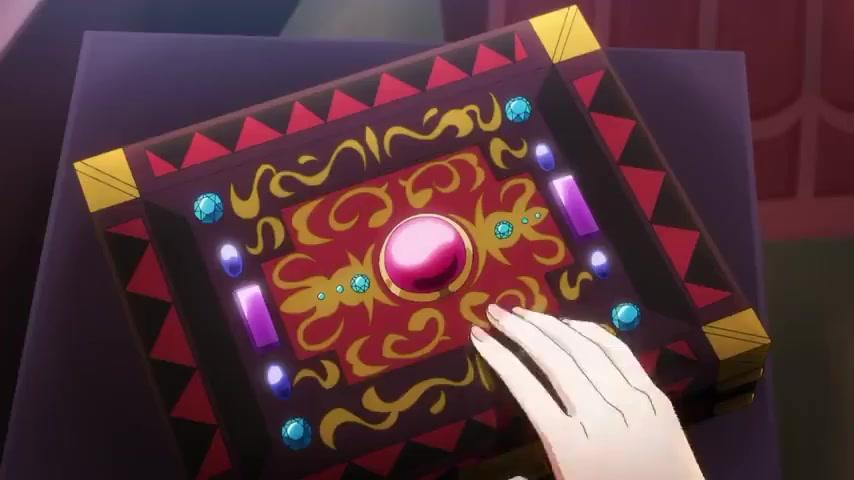
A hand touches a red box with gold designs and shiny gems, and a big pink gem in the middle catches the eye first. Red and gold show richness and value, so a secret or treasure is suggested inside the story.
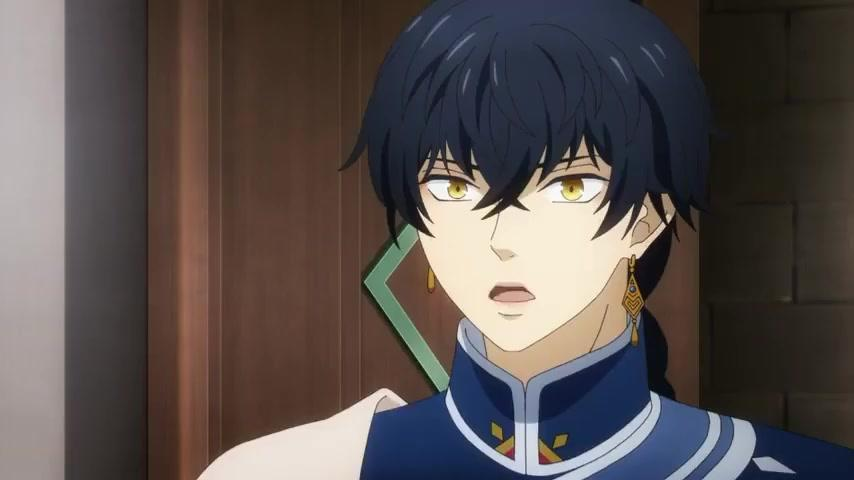
A young man with black hair and golden eyes looks surprised, with his mouth a little open. His dark blue high-collar jacket shows he is serious and calm, and the gold earring shows high position. His face says something unexpected just happened.
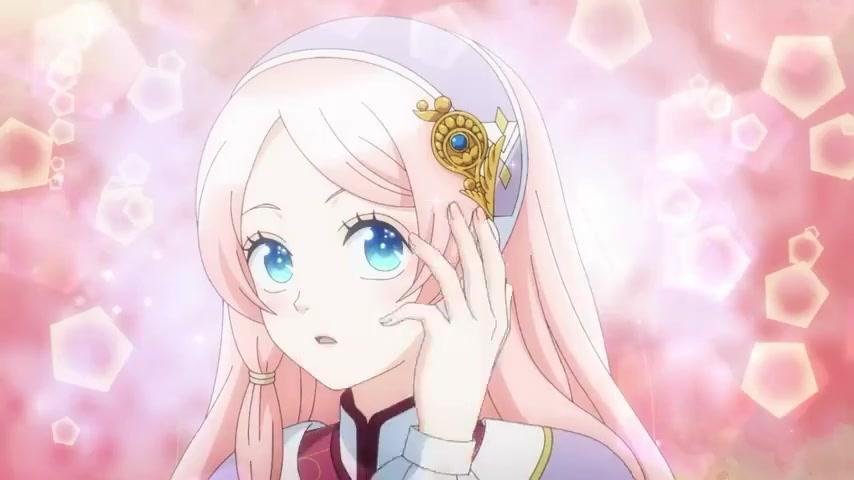
Nina has long pink hair and big blue eyes and softly touches her cheek, against a sparkly pink background that feels like a sweet dream. Pink stands for innocence and love, her blue eyes for being pure and honest, and the gold hair ornament for her special place in the story.
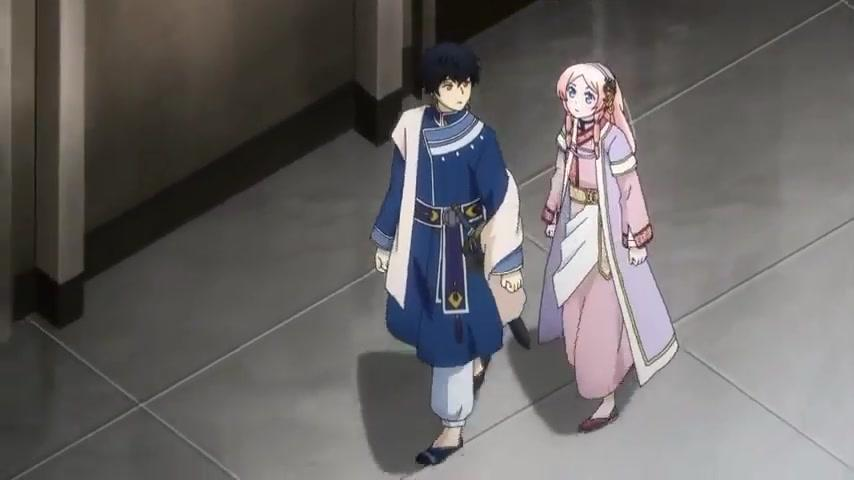
A man and a girl walk side by side in a plain grey corridor. He wears a dark blue coat and she wears soft pink, so their colours look very different. The grey place makes their clothes stand out, and walking close together shows trust.

A big white star letter sits on a dark blue sky with small stars hanging down. The star is the main theme of the story, and stars stand for wishes and fate. Here they also look like wedding decorations, and the night blue feels magical and calm.
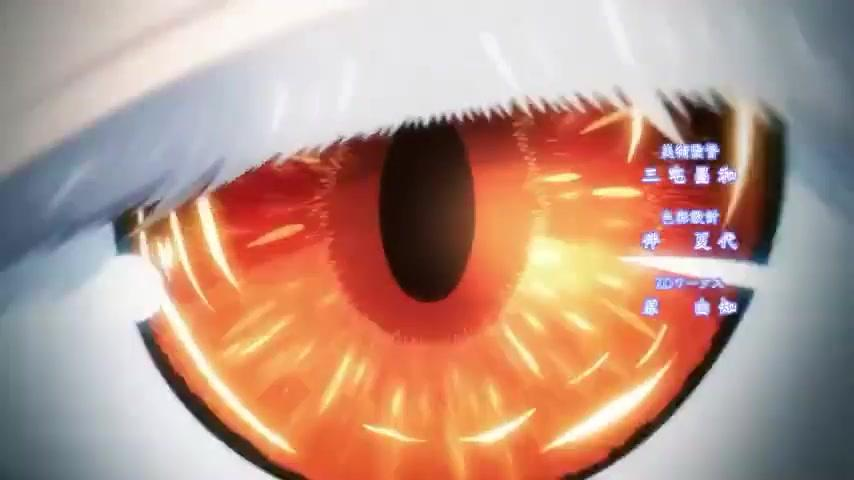
A close-up of a glowing red-orange eye with a thin black pupil that looks like a snake or dragon eye. The light lines show power and energy. Red and orange are the colours of fire and anger, so fear and a sense of being watched are evoked.

Nina’s pink hair and braid blow in the wind while glowing lanterns float in a purple and blue sky. The lanterns look like wishes going up to the stars, and the wind brings a feeling of freedom, like a new journey is starting.
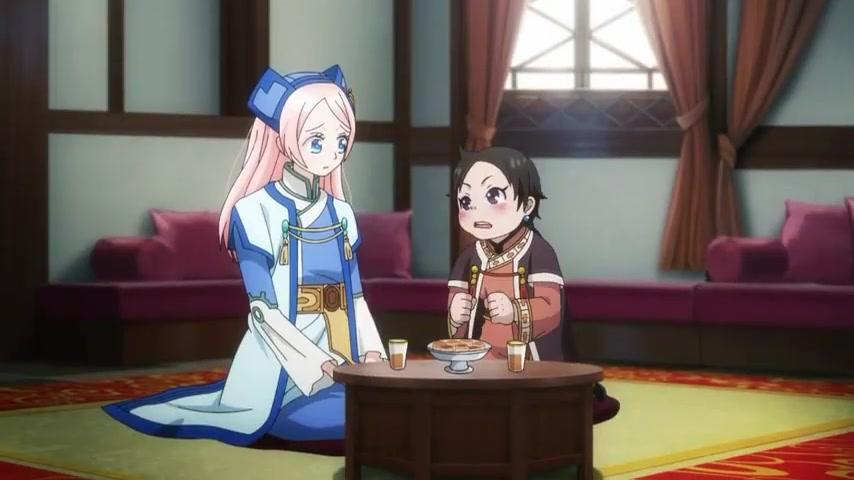
Nina and another girl sit at a low table with tea and sweets on a red carpet. Red and gold make the room warm and rich. Sharing tea shows friendship and kindness, and Nina’s blue and white dress stands out against the red, so the eye is drawn to her.
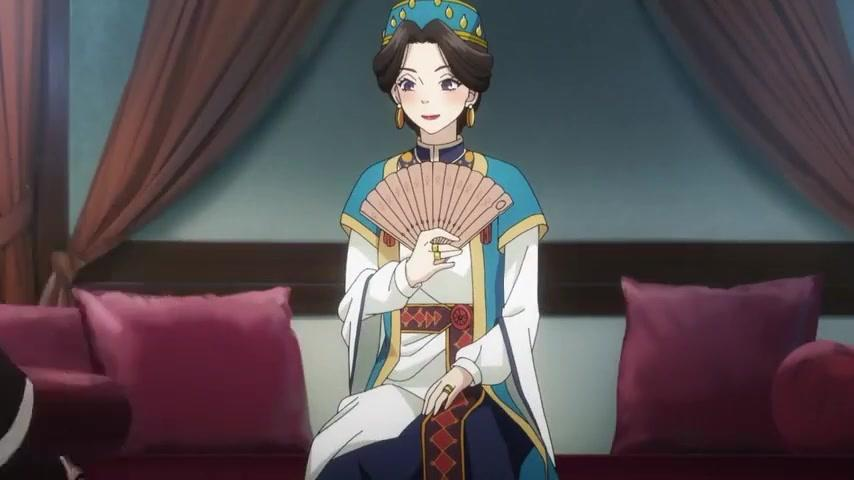
A lady sits straight on a cushion with a fan in front of her face. She wears a teal hat, a blue jacket with gold edges and a red sash. The fan hides part of her face, so she seems to hide her thoughts, and the purple and maroon colours show she is rich and important.
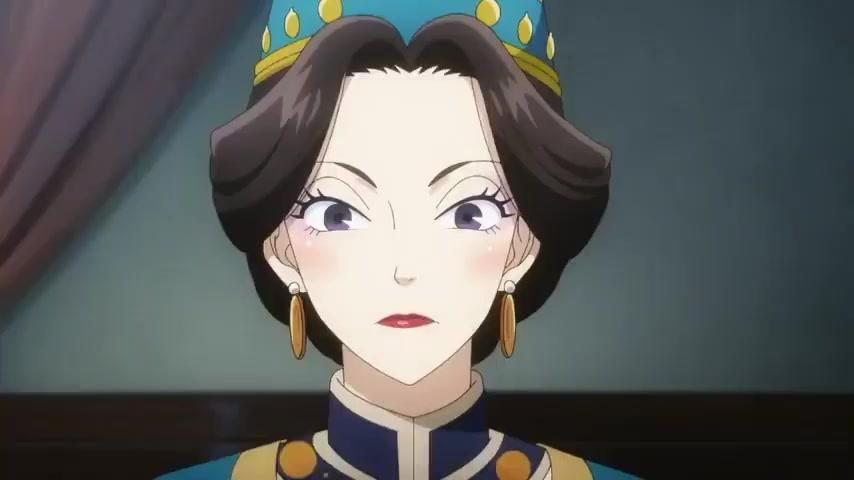
A close-up of the same lady with sharp eyebrows, red lips and gold earrings. Her cold look says she is strict and watching carefully. Red lips and gold show power and pride, and the plain background keeps all attention on her face.
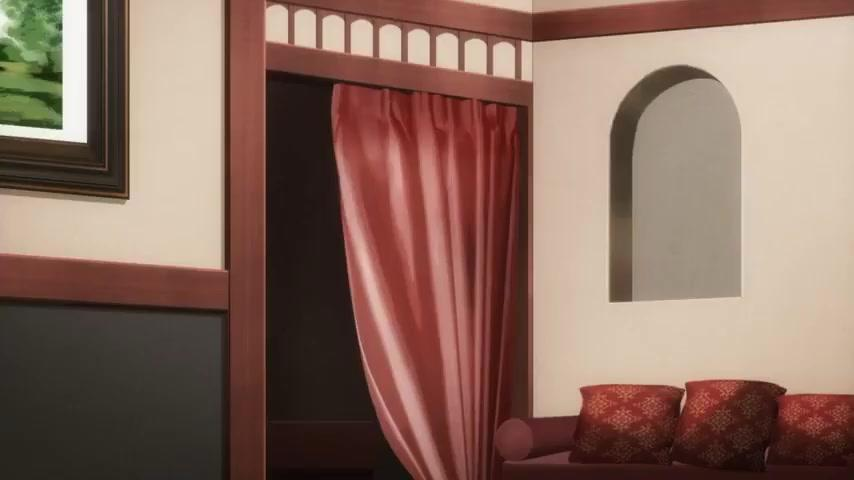
An empty room with red curtains, an arched window and red cushions. With no one there, it feels as though someone may walk in at any moment. The curtains and arches show an old, traditional world, and the warm cream and red feel rich and calm.
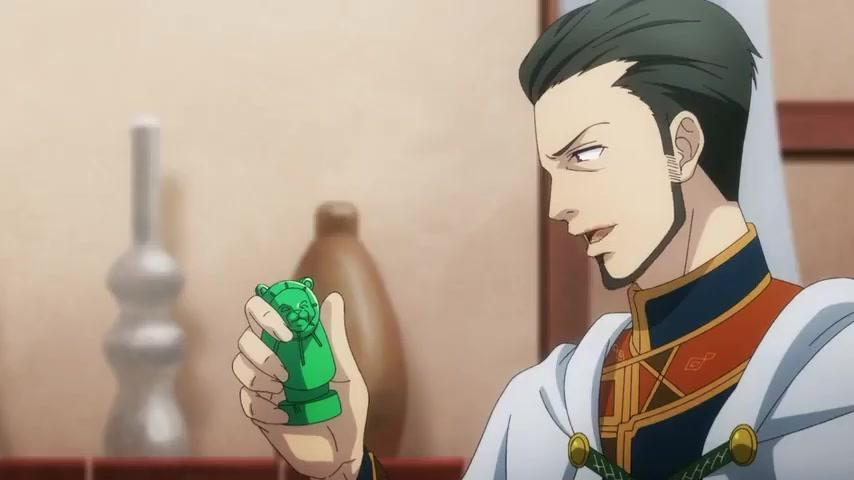
A bearded man holds a small green lion statue between his fingers. The lion means strength and royalty. Green is the only bright colour in a brown room, so it is noticed at once, and his serious face shows that the statue matters to the story.
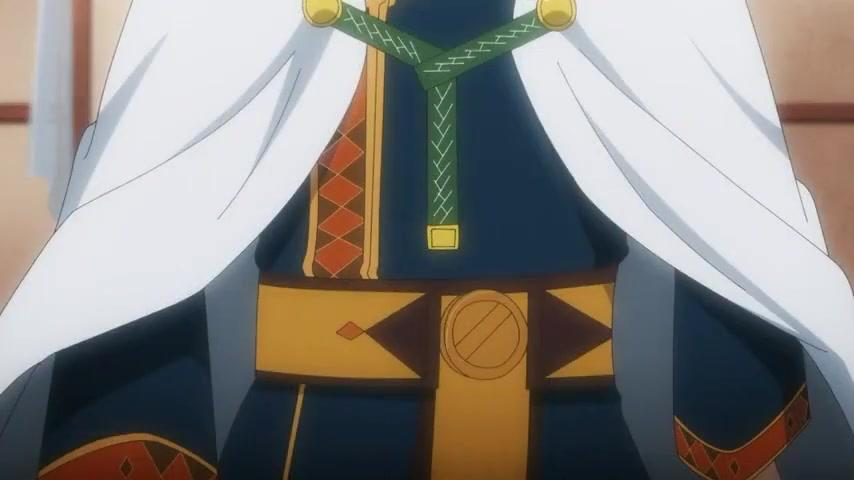
A close-up of a man’s white cloak, dark blue tunic and wide gold belt, with no face in view. The clothes show who he is. The gold cord and belt badge show high rank, and white and gold give a feeling of power and honour.

Nina looks up at a glowing blue light with floating shapes around her. Looking up shows hope and wonder, the blue glow feels like a wish coming true, and the empty background suggests that the viewer is inside her feelings.
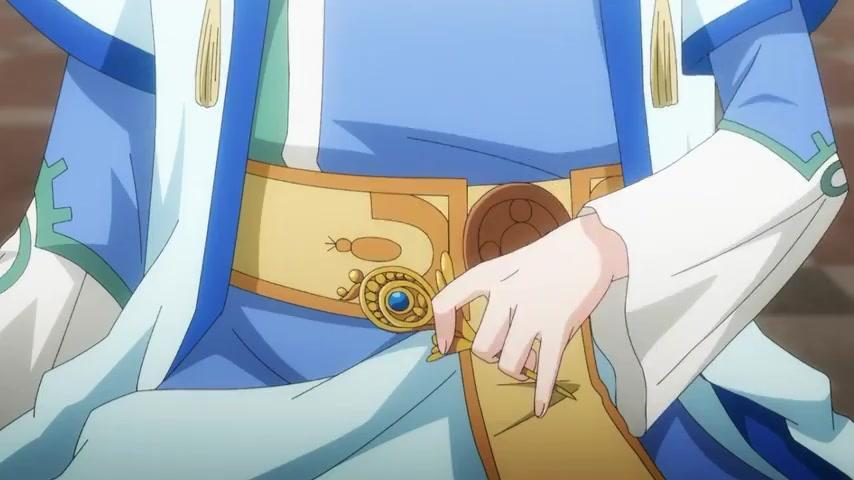
A hand pulls a gold strip from a belt on a blue and white dress. The close-up suggests that something hidden or important is happening. Blue and gold feel royal and pure, and the small action shows nervousness.
4.4Findings
RQ1. Across the scenes, looks and personality are shown together. Nina is pink, soft and wide-eyed (Figure 3), which signals innocence and honesty, while the men are dark blue, white and gold (Figures 2 and 13), which signals calm, rank and honour. Earlier studies found that looks go with sexual attraction and that personality and similarity go with emotional connection (Leshner et al., 2025), and fictional and real-life ideals can be linked (Wang & Teoh, 2026). Following McCloud (1993) and Lamarre (2009), simple, expressive designs like Nina’s big eyes and the close-up red eye in Figure 6 make traits easy to read and remember, so they may stand out as parts of an ideal. What nobody has tested is whether specific design signs, and not characters in general, relate to ideas about an ideal partner.
RQ2. The scenes keep repeating the same ideas: trust (Figure 4), kindness (Figure 8), calm seriousness and rank (Figures 2 and 13) and nervousness hidden in small actions (Figure 15). One small interview study found that people looked in real people for qualities their favourite characters showed (Kakarla & Aiswarya, 2024), and Social Cognitive Theory says identification with admired models can turn their traits into standards (Bandura, 1986, 2001). However, it should not be claimed that character traits shape expectations. It could go the other way, with viewers picking characters who already match what they want. A figure reading can show what signs are there, not which way the link runs.
RQ3. No study has directly analysed the expectations about communication, loyalty or emotional support in relation to anime. The closest evidence is that romantic-genre TV is linked to idealistic marriage expectations (Segrin & Nabi, 2002) and that fictional-crush traits are linked to ideal-partner traits (Wang & Teoh, 2026). Cultivation Theory would predict that heavy, repeated viewing of romantic anime matches expectations that mirror its usual pictures (Gerbner et al., 1980, 2002), but that is the theory’s prediction, not a result for anime. Table 6 shows which expectation area the figures seem to speak to most.
| Expectation area | Figures | What they seem to say |
|---|---|---|
| Attraction and looks | 3, 7 | Soft, shy, pure looks; pink hair and braid moving in the wind |
| Behaviour and personality | 2, 10, 12 | Calm and serious men; strictness and pride; a serious face that guards something important |
| Communication | 4, 9, 15 | Walking close; a fan that hides thoughts; small hidden actions |
| Loyalty and emotional support | 4, 8, 13 | Trust when walking close; kindness through sharing tea; rank and honour |
4.5Implications and limitations
Three things follow for any later study. First, exposure should be measured by genre and by character, not total viewing time. Second, the study should allow that viewers can separate fiction from reality, as Wang and Teoh (2026) suggest, so being attached to a character does not mean expecting real partners to match. Third, it should be clear about not showing cause and treat people choosing characters they already like as a rival explanation all the way through.
This paper has its own limits. The review is not systematic, so some studies may be missing. Many of the newest studies are one-time, self-reported and use young, highly engaged groups. Some details of the studies were taken from published abstracts, summaries and secondary descriptions and should be checked against the full texts before use in a formal submission. The figure readings, produced through Visual Semiotics Analysis and Content Analysis, come from only 15 figures of Nina the Starry Bride anime and one reader, so another person might read some signs differently. Finally, no viewers were surveyed, so every link to relationship expectations is a proposed idea, not a result.
5Conclusion
This paper used Visual Semiotics Analysis and Content Analysis to look at how character design in Nina the Starry Bride anime might be linked to what viewers expect from real relationships, using 15 scenes sampled from 12 episodes from the anime Nina The Starry Bride (2024). The scenes show a clear pattern. Pink, soft light and big blue eyes mark the heroine as innocent and gentle. Dark blue, white and gold mark the men as calm and high in rank. Red and gold rooms, hidden faces, a cold look and small hidden actions point to wealth, power and secrets. The earlier studies show that viewers can form real bonds with anime characters, that looks and personality are linked to different kinds of attraction, and that fictional ideals and real-life ideals can be connected. They also show that no study has yet tested whether specific design features are linked to expectations about attraction, communication, loyalty and emotional support, and that most evidence is one-time, self-reported and from young, highly engaged groups.
This Visual Semiotics Analysis and Content Analysis does not claim that Nina the Starry Bride anime changes how people act in relationships, and the evidence would not support that. It also does not claim to know what viewers feel, because it reads the signs in the figures and does not survey anyone.
References
- [1]Archana V, Arora A, Saha PKR, Pandey V, Jyothiswarup G (2026). Factors influencing anime-generated parasocial relationships: A systematic review. BMC Psychology, 14(1), Article 918. https://doi.org/10.1186/s40359-026-04471-z
- [2]Bandura A (1986). Social foundations of thought and action: A social cognitive theory. Prentice-Hall.
- [3]Bandura A (2001). Social cognitive theory of mass communication. Media Psychology, 3(3), 265–299. https://doi.org/10.1207/S1532785XMEP0303_03
- [4]Braun V, Clarke V (2006). Using thematic analysis in psychology. Qualitative Research in Psychology, 3(2), 77–101. https://doi.org/10.1191/1478088706qp063oa
- [5]Cohen J (2001). Defining identification: A theoretical look at the identification of audiences with media characters. Mass Communication and Society, 4(3), 245–264. https://doi.org/10.1207/S15327825MCS0403_01
- [6]Gerbner G, Gross L, Morgan M, Signorielli N (1980). The “mainstreaming” of America: Violence profile no. 11. Journal of Communication, 30(3), 10–29.
- [7]Gerbner G, Gross L, Morgan M, Signorielli N, Shanahan J (2002). Growing up with television: Cultivation processes. In J. Bryant & D. Zillmann (Eds.), Media effects: Advances in theory and research (2nd ed., pp. 43–67). Lawrence Erlbaum Associates.
- [8]Horton D, Wohl RR (1956). Mass communication and para-social interaction: Observations on intimacy at a distance. Psychiatry, 19(3), 215–229. https://doi.org/10.1080/00332747.1956.11023049
- [9]Kakarla S, Aiswarya VR (2024). Going beyond the screen: Exploring para-social relationships with anime characters amongst the anime community. International Journal for Multidisciplinary Research, 6(2). https://doi.org/10.36948/ijfmr.2024.v06i02.15255
- [10]Karhulahti VM, Välisalo T (2021). Fictosexuality, fictoromance, and fictophilia: A qualitative study of love and desire for fictional characters. Frontiers in Psychology, 11, Article 575427. https://doi.org/10.3389/fpsyg.2020.575427
- [11]Lamarre T (2009). The anime machine: A media theory of animation. University of Minnesota Press.
- [12]Leshner C, Reysen S, Plante CN, Roberts SE, Gerbasi KC (2025). You would not download a soulmate: Attributes of fictional characters that inspire intimate connection. Psychology of Popular Media. Advance online publication. https://doi.org/10.1037/ppm0000590
- [13]McCloud S (1993). Understanding comics: The invisible art. Tundra Publishing.
- [14]Morgan M, Shanahan J, Signorielli N (Eds.) (2012). Living with television now: Advances in cultivation theory and research. Peter Lang.
- [15]Napier SJ (2005). Anime from Akira to Howl’s Moving Castle: Experiencing contemporary Japanese animation. Palgrave Macmillan.
- [16]Ramasubramanian S, Kornfield S (2012). Japanese anime heroines as role models for U.S. youth: Wishful identification, parasocial interaction, and intercultural entertainment effects. Journal of International and Intercultural Communication, 5(3), 189–207. https://doi.org/10.1080/17513057.2012.679291
- [17]Schramm H, Liebers N, Biniak L, Dettmar F (2024). Research trends on parasocial interactions and relationships with media characters: A review of 281 English and German-language studies from 2016 to 2020. Frontiers in Psychology, 15, Article 1418564. https://doi.org/10.3389/fpsyg.2024.1418564
- [18]Segrin C, Nabi RL (2002). Does television viewing cultivate unrealistic expectations about marriage? Journal of Communication, 52(2), 247–263. https://doi.org/10.1111/j.1460-2466.2002.tb02543.x
- [19]Tan WK, Chung MH (2023). Problematic online anime (animation) use: Its relationship with viewers’ satisfaction with life, emotions, and emotion regulation. Acta Psychologica, 240, Article 104049. https://doi.org/10.1016/j.actpsy.2023.104049
- [20]Wang NZM, Teoh AN (2026). Do the traits of fictional crushes and real-life ideals align? An investigation into ideal standards based on fictional fandoms. Psychology of Popular Media, 15(3), 389–397.