Construction Quality Governance
Enhancing Construction Quality Governance and Technical Compliance in Multi-Site Regional Development Projects in Saudi Arabia
Published November 2026
Abstract
Multi-site regional development programmes in Saudi Arabia are routinely plagued by a quality issue in that the technical requirements may be formally documented, but the interpretation of those requirements, the inspection of the work and the closure of non-conformities can vary dramatically from one site to another, from one contractor to another and from one stage of delivery to another. This paper looks at how construction quality governance can be linked to traceable technical compliance without simply reducing the level of assurance to a matter of paperwork or automated inspection. It draws on a range of peer-reviewed research (2020-2025) in the areas of Saudi construction quality management, project rework, digital inspection, information management and infrastructure monitoring. The evidence is grouped under the themes of governance authority, requirement translation, verification integrity, learning from non-conformities and portfolio oversight. The core proposition is that consistent compliance will only be achieved if there is an accountable chain of evidence from an approved requirement to the relevant asset, to the inspection record, to the decision maker and to the verified corrective action. Digital tools can only enhance that chain if the rules around evidence, the role of professional judgement and the responsibilities for escalation are all in place upfront. A three tier governance model is proposed (portfolio standards, project assurance and work package control) and two implementation routes are identified to suit either a very technically sophisticated project or a smaller regional contractor. Performance indicators are also developed which are able to differentiate between the completeness of documentation and the actual demonstration of technical conformity. The paper provides a practical synthesis for owners, consultants, project managers and regulators who are responsible for the governance of geographically dispersed development portfolios. The model is at a conceptual stage and will require prospective validation across a number of project types in Saudi Arabia prior to any performance benefits being quantified.
Keywords: construction quality governance; technical compliance; multi-site programmes; inspection; regional development; Saudi Arabia
1Introduction
Regional development in Saudi Arabia is increasingly about the concurrent delivery of transport infrastructure, public facilities, housing and the associated utilities across sites which vary enormously in terms of their geography, supplier capacity and technical complexity. The real challenge is not just about getting the work right at each site. The owner has to be able to demonstrate that the common requirements are being interpreted in a consistent manner, that they are being properly inspected by competent people, that any deviations are properly escalated and that there is a reliable record of this throughout the commissioning and handover process. A formal quality system will not do this automatically. Research in the Saudi environment has identified a number of deficiencies in organisational alignment, supervisory capability, design documentation and contractor performance which are not isolated problems but which interact [1–4]. It is entirely possible for a site to have all of its inspection forms approved and yet to have a hidden installation failure, to have released incomplete work or to have accepted an ambiguous concession.
Coordination becomes far more complex when you have multiple delivery partners administering a project. A regional programme might well be running to centrally approved specifications but with a completely separate set of designers, labs, resident engineers and subcontractors. The reporting formats are different, the interpretation of tolerances will vary and the lessons learned at one site won't be passed on to another until the same failure occurs again at another site. Saudi evidence has linked poor communication directly to delay and poor quality and studies of project risk have shown how the fragmentation of decision making leads to wider performance problems [5,6]. Quality governance therefore has to be viewed as a system of decision rights and evidence integrity rather than as a standalone quality control department. Safety and quality have different regulatory objectives of course but the research into proactive management provides a very useful analogy in that effective assurance is about monitoring the leading indicators rather than just reacting to the negative outcomes [7].
The review looks at three questions. Which organisational and information systems account for the variation in compliance that we see across sites? How should the responsibilities, inspection evidence and change control be managed between the portfolio, project and work package levels? What digital interventions are there which can improve verification without in any way undermining the professional judgement of the competent person? The intent is to build a governance architecture that is defensible on the basis of current evidence rather than to assert that any particular technology will in itself produce compliant work. The analysis is structured around four objectives: to separate out governance from technical verification; to map the recurring failure mechanisms; to synthesise the effective controls into an operational framework; and to define the measurable conditions for evaluation across the range of sites. This is particularly relevant to regional programmes where there is a need for site level autonomy and where uncontrolled variation is costly.
2Conceptual foundations
Quality governance is about who sets the requirements, who authorises the exceptions, who reviews the evidence and who is ultimately accountable for the outcome. Quality assurance is about the planned processes which make it more likely that conforming delivery will occur; quality control is about the inspection and testing of the work or materials against the established acceptance criteria. Technical compliance is even more narrow in scope: it is the demonstrable satisfaction of the particular contractual, engineering and applicable statutory requirements that apply to the asset or process in question. The three categories overlap but to treat them as being the same is to miss the point entirely. An audit may conclude that a procedure exists without in any way proving that reinforcement was actually installed at the required spacing. An acceptable laboratory result in no way establishes that the batch in question was in fact traceable to the relevant location. The Saudi construction assessment frameworks therefore encourage the integration of management practices with project specific technical evidence rather than simply relying on one or the other [1,2].
2.1Governance authority and quality culture
A credible assurance arrangement will require a separation between the pressure of production and the critical decisions of acceptance. Project teams will of course be focused on the programme milestones, and milestones in themselves create an incentive to close observations too early or to re-interpret the acceptance criteria post installation. Research into contractor quality performance and housing infrastructure has shown that managerial behaviour, supervisory capability, communication and design completeness are all key drivers of quality outcomes [3,4]. Similar evidence from other construction contexts has shown that documented systems are undermined when senior management don't allocate the necessary resources or have the discipline to enforce escalation [8]. That implies that governance should be setting approval rights in accordance with risk: the routine checks can be close to delivery but any departure which has a bearing on structural integrity, durability or public safety needs to be approved by an independent and clearly defined technical authority.
2.2Defect causation and organisational learning
Inspection failure is rarely properly explained as simply the fault of an individual worker. Analyses of reported construction defects link poor workmanship to poor supervision, poor training, poor information, poor materials and poor organisational priorities [9]. Research into rework points to the need for an error management culture in which problems are brought to light early and dealt with appropriately, without the underlying causes being hidden [10]. At the programme level there is a further dimension: an alliance can use the experience of one project to improve the way things are done at other sites, rather than just keep the knowledge within a single contractor [11]. For a distributed portfolio the appropriate unit of learning is therefore the recurrent defect mechanism across sites rather than the number of non-conformance reports closed each month. Learning is about having the right codes, the right preserved root cause narratives and the authority to change standards.
2.3Technical compliance as a controlled evidence chain
Compliance commences when a requirement is linked to a specific asset (with the relevant revision, test method and acceptance criteria). It then continues through work preparation, witnessed inspection, the corrective decision and controlled release. A centralised register can be used to support this, but it must be clear as to which revision is the governing one and who is the individual empowered to accept or reject the evidence. Without that, the availability of data is not equivalent to assurance. Work in the area of construction quality digitisation has demonstrated improved visibility for visible defects, with the same work showing that there remain significant weaknesses in the area of concealed works and on site behavioural compliance [12]. Work on modelling technologies has also identified a number of adoption barriers relating to skills, interoperability and management support [13,14]. The practical takeaway is that the evidence architecture must come first and the digital image or model flag is only of value when its scope and verification status are clear.
3Review methodology
This is a structured critical narrative review, suitable for the integration of qualitative governance findings, construction management surveys, technical monitoring demonstrations and technology reviews which do not all have the same outcome measures. The search was limited to work published between 2020 and 2025. The search strategy involved targeted searches of the records and listings of scholarly publishers, looking for work on construction quality in Saudi Arabia, governance, compliance checking, inspection, defects, rework, BIM and infrastructure monitoring. Preference was given to peer reviewed work with a DOI, a clear research aim and which was relevant to at least one of the four analytical objectives. The three supplied papers were all assessed on the basis of academic presentation, sectioning and citation practice. They were not used as evidence for any construction claims outside of the scope of the work or to support any material published outside of the period under consideration.
The synthesis was undertaken by separating out the Saudi-specific evidence from the more transferable international methods. The findings were then coded into five domains: organisational authority, interpretation of requirements, verification records, defect response and cross site learning. Empirical studies were differentiated from reviews, prototypes and proposed frameworks. Findings were interpreted in the context of the environments in which they were studied; a demonstration of point cloud accuracy was not taken as evidence of programme wide compliance and a survey association was not presented as evidence of causation. The publications included form a deliberately focused evidence base rather than a complete database census. It is therefore not a claim of a complete systematic search, of formal pooled effect sizes or of a reproducible number of excluded records. The resulting framework is an analytical synthesis which will require empirical validation rather than a tested intervention.
4Evidence synthesis and critical discussion
The literature reviewed is consistent with a multi-layered explanation of quality variation. Requirements can be incomplete at the time of design release, can be interpreted differently by different organisations, can be checked against out-of-date drawings and can be accepted without any independent evidence at all. A failure in one place may seem to be a local issue, but the same mechanism will tend to propagate through a portfolio via the reuse of templates, the use of common suppliers and common decision making. Digital systems can expose these types of issues, though much of the technology focused research will be concerned with the detection of the physical defect rather than with explaining who was actually authorised to release the work in question. The evidence presented below is therefore considered in the context of the full chain from instruction to final verification, with an appropriate allowance for uncertainty and transferability.
4.1Requirement definition and change control
A technical requirement should be able to answer the five questions of: what is it governing, where does it apply, what revision controls are in place, what is acceptance and who is responsible for resolving ambiguity. Model enabled regulatory checks can of course parse and reconcile parts of a very complex set of rules but semantic ambiguity and the problem of incomplete representation are still very real limitations [15]. For regional portfolios the centrally authored technical standards will therefore need a controlled process for project adaptation. That process must record the local ground conditions, the comments of the local authority, any approved design deviations and the relationship between the programme wide requirements and each individual contractual work package. Uncontrolled amendments are particularly dangerous where different sites are using the same drawing numbers or have inherited the same inspection templates. There should be a review gate at design release which will check buildability, inspection access, identification and acceptance criteria before procurement or installation commences.
A requirement to evidence matrix makes the control operational. Each critical acceptance point is assigned a unique ID which is linked to the asset breakdown, specification clause, inspection plan, approved drawing and required record. Any change would trigger a documented impact assessment which would identify the work that had already been completed and determine whether re-inspection was required. The responsible engineer must be able to distinguish between a technical concession (a formal acceptance of a departure under defined conditions) and a corrective action (an action which brings the work back into compliance). Neither of these can be inferred from an unannotated site photo. This distinction in turn reduces the potential for retrospective rationalisation and enables a later reviewer to reconstruct exactly why acceptance was given.
4.2Inspection execution and traceability
Standard field inspections can result in a range of disparate records including handwritten checklists, individual photos and lab certificates which are very difficult to tie together. BIM-linked identification and RF systems are one way of linking the installed components to the digital records but again the success of such an approach is predicated on having good identifiers and consistent field practice [16]. NLP can be used to classify large volumes of inspection narrative which in turn reduces the amount of manual work required to identify the common observations [17]. Interpretable classification and methods for dealing with imbalanced incident records both help in the structuring of the defect data [18,19]. The problem with automated classification is that it can't tell you whether an inspection actually took place, whether the calibration was current or whether the correct acceptance criteria were in fact applied. That kind of judgement requires provenance and professional assessment.
Quality hold points should be based on consequence rather than applied uniformly to all activities. Concealed reinforcement, embedded services, waterproofing interfaces, pressure testing and material provenance all warrant special attention as it can be very difficult or very expensive to verify the quality of these items after closure. There is some research into automated precast inspection which looks at the potential for dimensional checks and work on modular construction which identifies a number of opportunities across the fabrication, transport and assembly phases [20,21]. There is also work which looks at the application of laser scanning to assess the geometry and quantities of reinforcement in certain bridge situations [22]. All of these are to be seen as complementary sources of evidence. The calibrated physical test, the signed inspection, the visual record and the model are all to be brought together and reconciled rather than one being used to replace the others.
4.3Regional infrastructure and data reliability
Roads, utilities, structures and public buildings all have different inspection signatures. Sensor based compaction systems can provide continuous spatial measurements whereas conventional testing provides discrete samples and independent material characterisation [23]. Quality risk warning models can be constructed to combine multiple data sources but the quality of the model output is contingent upon the completeness of the data, the calibration and the representativeness of the training conditions [24]. Structural digital twin approaches show how geometry, state estimation and construction sequence can be used to support deviation control in a particular experimental or project context [25,26]. Bridge inspection research has also shown that mapped geometric evidence can be used to support repeatable assessment [27]. The above work all supports the view that there is a case for greater evidence coverage rather than simply eschewing statutory inspection, specialist engineering review or independent witness.
For sites that are geographically dispersed the issue of data comparability is even greater. The defect rate can go up for a number of reasons: the quality of work can decline, inspection coverage can improve or one of the contractors may simply change the way they report. Comparing raw counts in that situation is a recipe for penalising transparency. The governance reports should be able to break down the data by inspection opportunity, completion, first pass acceptance, severity, repeat and overdue corrective action. The site conditions, the mix of contractors, the complexity of the work package and the stage of delivery all need to be included in any comparison. Where connectivity is poor then signed offline records with synchronisation controls are far preferable to the alternative of transcribing data retrospectively without an audit trail. A portfolio dashboard is only as credible as the ability of the site managers to trace every one of the indicators back to the underlying evidence.
4.4Oversight, independence and prevention
Remote monitoring provides a useful separation between observation and decision. Drone based progress monitoring can provide documentation of the changing site conditions but progress classification is not in itself a determination of technical acceptance [28]. Material quality algorithms can provide further diagnostic information without in any way constituting a determination of compliance [29]. Unmanned inspection routes can provide improved access to exposed or dangerous areas, subject to the appropriate restrictions on access, weather, survey accuracy and safety [30]. A technically mature assurance system will require the integration of such observational tools with professional certification, competent witnessing and the escalation of any findings of uncertainty. The most valuable contribution of the digital tools may be an early warning that a required check is missing rather than some purportedly autonomous statement that the works are compliant.
Independent assurance should be risk based. The central audit team should be sampling the key work packages, looking at the evidence gaps that persist and checking that the approved corrective actions are in fact preventing recurrence. They should be looking at the incentive effects too (a contractor for instance who is only rewarded on the basis of nominal closure speed may classify defects as minor and may well transfer the risk of unresolved issues to handover). Escalation thresholds need to be defined in advance and applied in a consistent manner with appropriate stop work and release with holding authority where that is contractually available. Independence of assurance doesn't mean you have to exclude the local engineers. It means you have a clear process for challenging decisions that are made under delivery pressure. That principle is underpinned by the literature which shows that rework can be reduced through learning and through an explicit error management orientation [10,11].
4.5Managing exceptions and competing assurance objectives
A tough governance call arises when a non-conformity is technically fixable but the fix would break an interdependent sequence of regional works. You can't legitimately use schedule impact to re-define the acceptance criteria. Equally you don't want to just go up the chain of command for every little deviation as that can in itself stop delivery. The answer is clear risk differentiation. The level of engineering significance, the reversibility, the inspectability, the level of public exposure and the level of uncertainty should all be the factors that determine the path to approval. A minor documentary non-conformity may be rectified administratively if the underlying engineering evidence is still valid. A dimensional or material non-conformity which has potential implications for service life will require a documented engineering assessment, appropriate design authority and confirmation that the proposed course of action meets both the contractual and regulatory obligations. The decision must state the residual risk, the verification conditions and whether or not a similar installation exists elsewhere. They should never be treated as precedent without a separate technical assessment. That is the essence of a reasoned allocation of scrutiny rather than a paper exercise. It also maintains the distinction between a formally authorised concession and an unrecorded waiver which is being granted to protect a milestone.
5Integrated governance framework for multi-site programmes
Figure 1 shows a three tiered operating model. The portfolio tier owns the policy, the common technical taxonomies, the delegation limits, the data standards and the risk based assurance strategy. The project tier takes those controls and turns them into project quality plans, coordinated design reviews, inspection resources and independent verification schedules. The work package tier then carries out the approved procedures, captures the evidence, segregates the non conforming work and requests release of the hold points. Authority flows down through the controlled requirements and evidence and exceptions flow up through the traceable records. Neither of those flows on their own is sufficient. A requirement without a verifier assigned to it is just aspiration. An inspection result without a governing requirement is meaningless.
One accountable owner is assigned to each critical decision, with multiple contributors being permitted. The design consultants will define the technical intent and deal with any approved design changes. The contractor will be responsible for production and will propose any corrective work. The supervising engineers will be responsible for verifying the work has been carried out and will record the objective evidence of acceptance. The client representative will provide the programme level challenge, resource and escalation. External authorities will of course retain their own statutory responsibilities. This separation of responsibility should be captured in a responsibility matrix and a contractual information protocol rather than simply be inferred from job title. Where a contractor is also carrying out the routine internal checks then the risk significant hold points will still require the level of independent witness as specified by the relevant assurance arrangement.
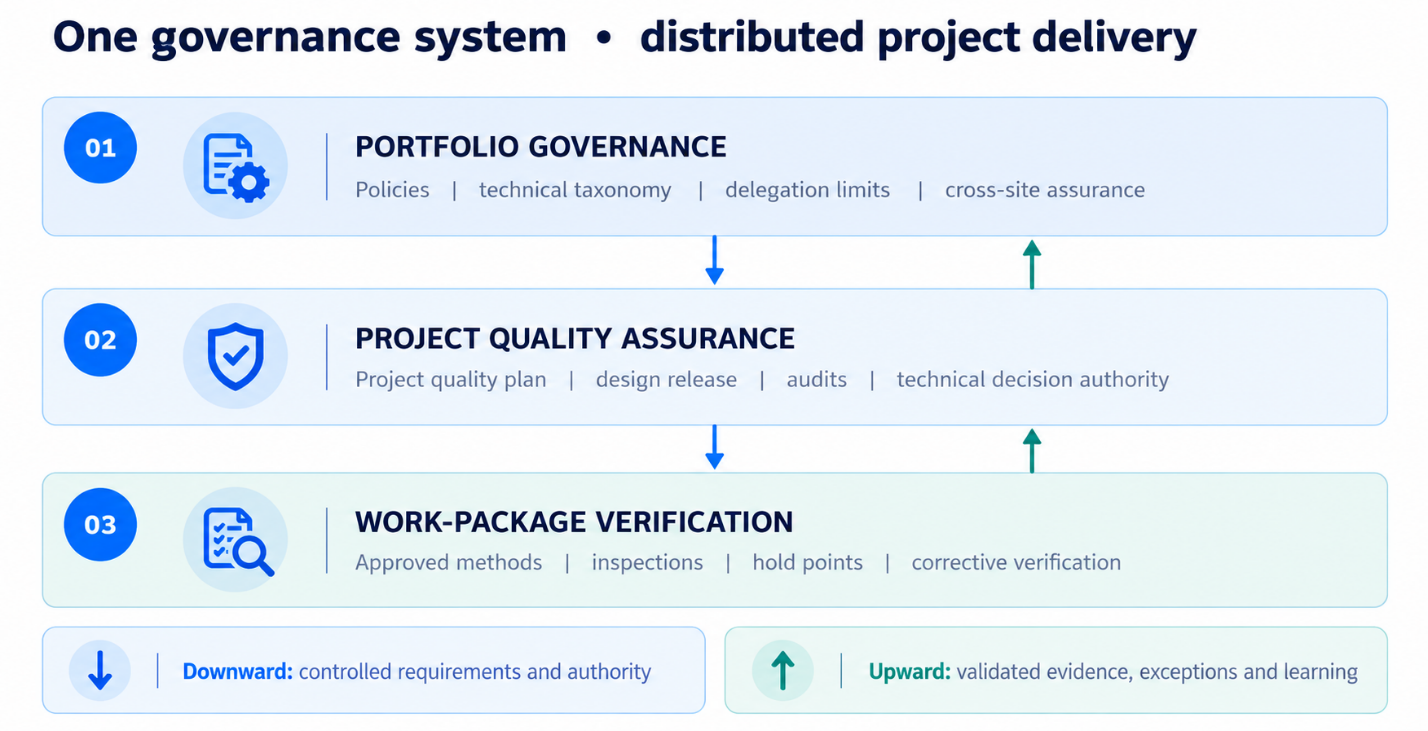
Figure 2 takes governance and expresses it as an evidence chain that runs from before construction right through to after closure of nonconformity. It requires a unique record of the governing clause, the approved inspection method, the asset identifier and the authorised acceptance decision. A failed check results in a bounded nonconformity with disposition and root cause analysis (where appropriate) and then follow-up verification and feedback to other sites. The key point is the difference between an action being marked complete and a risk being genuinely resolved. An installation may have been repaired but the specification ambiguity which led to the nonconformity may still be there. Programme feedback should therefore lead to the updating of standard details, method statements and training where there are recurring mechanisms, particularly in the case of interfaces between several contractors.
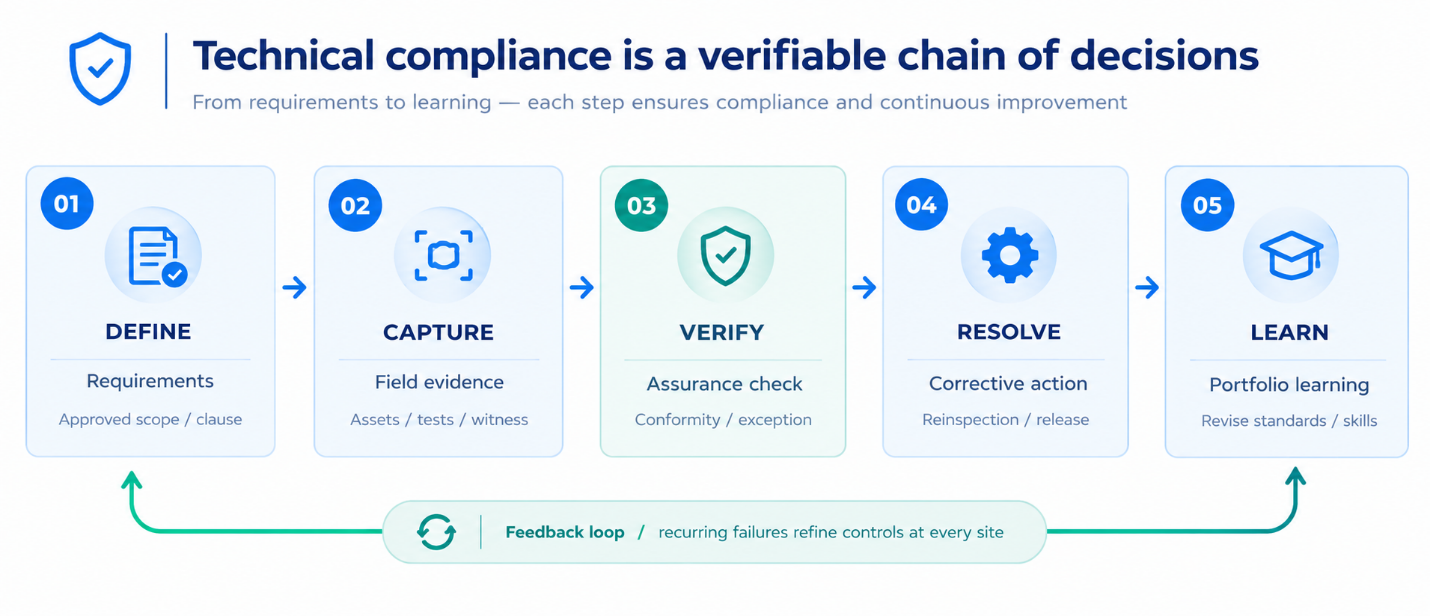
Table 1 links the root failure modes to the control responses and the evidence required. It's not intended as another checklist really, it's to show which interface fails when compliance breaks down. The same defect can be the result of a number of different mechanisms so the categories should be treated as diagnostic hypotheses rather than as causal labels. Table 2 then puts forward a measurement system which incorporates leading indicators, process indicators and technical outcomes. A balanced portfolio scorecard is absolutely essential in this context: a very high percentage of documents uploaded or NCRS closed will not in any way offset the fact that you have a recurring problem with structural deviations, untested concealed works or a persistent number of high severity exceptions.
| Failure interface | Likely technical consequence | Preventive governance control | Required auditable evidence |
|---|---|---|---|
| Design-to-site interpretation | Use of superseded tolerances or omitted interface requirements | Revision-controlled requirement and change-impact review | Approved clause, drawing revision and adaptation record |
| Supply-to-installation provenance | Unverified batches or mismatched test certificates | Traceable material and asset identifiers | Delivery batch, certificate, location and release |
| Concealed-work verification | Work closed before witness or required testing | Risk-ranked hold points and independent witness | Timestamped inspection, photographs and sign-off |
| Nonconformity disposition | Premature acceptance or repeated latent defect | Authorised concession and follow-up verification | NCR, cause, disposition and reinspection |
| Site-to-portfolio reporting | Incomparable statistics and hidden high-risk exceptions | Common taxonomy and severity-based escalation | Reconciled dashboards linked to original records |
| Programme learning | Same failure mechanism repeated at other sites | Cross-site corrective alerts and standards update | Action owner, impacted sites and effectiveness check |
| Indicator | Operational definition | Governance tier | Interpretive safeguard |
|---|---|---|---|
| Requirement traceability | Critical requirements linked to current revision and asset | Portfolio / project | Independently sample the underlying record |
| Hold-point evidence coverage | Required hold points with valid witness and test evidence | Work package | Differentiate missing checks from failures |
| First-pass conformity | Accepted checks divided by completed valid checks | Project | Adjust for scope, risk and inspection intensity |
| Critical recurrence | Repeat severe defect mechanisms after corrective action | Portfolio | Group by root cause, not wording alone |
| Verified closure latency | Time to independently verified resolution of NCR | Project | Exclude merely administrative closure |
| Exception escalation compliance | High-severity cases elevated within authorised timeframe | Portfolio | Audit decision rights and recorded dates |
| Cross-site learning completion | Issued practice changes verified across impacted locations | Portfolio | Require evidence of field implementation |
6Staged implementation for Saudi regional development
Implementation should start with a baseline assessment rather than a technology roll-out straight away. The owner needs to map the contracts, the participating agencies, the technical codes, the inspection plans, the sample reporting records and the existing approval routes. A representative set of critical work packages should be traced backwards from the acceptance certificate to the governing requirement and then back to the physical asset. The gaps in that chain will reveal missing identifiers, revision inconsistencies and unclear authority. A short pilot should then be used to establish a standardised requirement register, a standardised set of high risk hold points, a standardised non-conformity terminology and a standardised set of minimum digital record fields. The metrics to be used should be on the completeness of traceability and verified closure rather than simply the number of users on the platform.
A 'mature' digital programme can link the controlled asset register to BIM models, structured lab evidence, field inspection software and risk analytics. The interfaces must retain the original record timestamps, reviewer ID, attachments and superseded versions. Pilot acceptance will need to include failure tests to ensure that duplicates of asset IDs, conflicting drawings, rejected measurements and offline entries are all caught rather than just silently reconciled. Where automated classification is introduced it will be necessary to sample the outputs and have them reviewed by trained people to assess for false negatives (a missed high severity defect can be far more important than a large number of correctly classified low severity defects). Data governance will need to define retention, authorised access, cyber security ownership and the process for escalation if the systems become unavailable.
Regional and smaller contractors may well be looking for a lighter touch. A simple spreadsheet or a basic mobile form can go a long way in terms of benefits if they're used to enforce work package IDs, revision fields, responsible signatures and closure evidence. Scanning paper certs into a searchable store is perfectly acceptable provided you can still trace the provenance of the document. Training should be on what constitutes valid inspection evidence rather than just how to use the interface. In a multi-lingual workforce you need a common set of terms for acceptance, rejection and escalation. A phased approach enables you to maintain common governance without the need to impose the same hardware, network and software requirements on every site.
Ownership of the improvement must be explicit. There should be a monthly cross site review looking at recurring mechanisms, overdue high risk cases, changes in interpretation and disputes around technical approval. Programme assurance can issue controlled practice notes and the technical specialists will then decide whether there is a case for a wider design or testing change. Every change should identify the live projects it affects and have a verification deadline. This makes the learning of the organisation visible. As research into alliance programmes has shown, the ability to learn and pass on that learning may be as important as the ability to detect a defect in the first instance [11].
6.1Information ownership and contractual interfaces
The effectiveness of the common records will be dependent on who owns the data and who has the ability to change the interpretation of it. The owner will need access to the full compliance history but the contractor may well own the proprietary fabrication information and the external labs will have their own reports. The information protocol will need to specify the minimum metadata to be shared, the authorship of the records, the rules for supersession of records, audit rights and the export obligations at completion. An inspection photograph must not lose its original location, date and link to the element it was taken of when it is moved from one platform to another. A lab result must not lose its link to the particular sample and batch it was generated for, it must be possible to track any changes and any revisions must be recorded rather than the original being overwritten. Where a subcontractor changes the successor will need to receive all the outstanding exceptions and all the relevant acceptance obligations via a formal transfer review. That will of course provide for continuity of record when the organisation changes and will also act to prevent the creation of parallel unauthorised registers which would in turn obscure which version of the record is the one that is the authoritative project record.
7Evaluation design and research agenda
The framework should be evaluated prospectively across a range of projects of differing geographical location, asset type and contractor capability. A stepped implementation approach could be used to compare the same work packages before and after the introduction of a common requirement register and a risk-based assurance approach. Outcome definitions should be pre-determined. Appropriate primary measures would be independently verified first pass conformity, recurrence of critical defects and the proportion of required hold points which are supported by valid evidence. Secondary measures could be median exception resolution time, rework due to design/instruction errors and the proportion of deviations which are escalated within contractual limits. All comparisons should be adjusted for project stage, inspection intensity and work package risk.
Quantitative process measures should be supplemented by interviews and record audits to explain why outcomes change. A fall in nonconformance reports may be due to real improvement, or it may simply be due to less inspection or suppressed reporting. Independent sample re-inspection and interviews with site staff can go some way to distinguishing between these. Future work should also look at the cost of governance standardisation, the cost of evidence collection, the difference between public and private delivery and the reliability of automated classification across languages and project types. Multisite validation is required before we can make any claims about specific cost savings or defect reductions.
7.1Interpreting trade-offs and unintended effects
Evaluation must take into account the potential for unintended consequences of tighter controls. A longer hold point schedule could lead to longer inspection queues. Mandatory evidence fields could in fact see supervisors spending time on forms rather than actually looking at the work if the forms are too detailed. Automated alerts may initially generate a lot of low value notifications and could in time lead to a desensitisation to the real critical deviations. All of these effects should be tracked alongside the defect outcomes. The evaluation should report on effort per inspection, the proportion of alerts that actually required action, the time to independent release and the number of instances where site teams went around the formal process. The interviews should be specifically designed to elicit stories of workarounds and of disagreement (including where the formal process simply wasn't workable in the circumstances on site). The comparative findings should be reported with a clear statement of uncertainty as it is entirely possible that the pilot sites will receive more management attention than the sites which are not being treated. The aim is to arrive at a proportionate assurance model that improves the technical outcome without creating an administrative system which in fact undermines the field judgement on which compliance is ultimately based.
8Limitations
This is all very much constrained by the heterogeneity of the studies in terms of objective, country, project setting and outcome definitions. The Saudi surveys provide some useful context but won't tell you the reasons why a particular programme will or won't work in any given location. International demonstrations of scanning, sensor systems and digital twins are typically focused on technical feasibility rather than the organisational conditions that would be required for a credible acceptance decision. The review doesn't include any of the unpublished contractual records, regulator inspection reports or original field data and the literature selection was purposive rather than a complete systematic census. The proposed roles and indicators should therefore be adjusted to reflect the actual contractual allocations and the actual Saudi requirements. It's an analytical framework not a replacement for engineering judgement, independent certification or statutory interpretation.
9Conclusions
Construction quality in the various distributed regional development programmes in Saudi Arabia is really a governance and evidence integrity issue with technical implications. The literature makes it clear that performance is the outcome of the interaction between organisational authority, communication, supervisory capability, design information, inspection integrity and the learning process. The review therefore suggests an accountable three tier arrangement linking portfolio standards, project assurance and work package verification via a controlled requirement to evidence chain. Digital inspection, digital modelling, sensors and analysis tools can extend the scope of observation and can highlight inconsistencies, but they cannot in themselves lead to technical acceptance. The actual improvement in practice will be dependent on clear decision rights, risk based hold points, traceable records, disciplined disposition of non-conformities and the cross site correction of the root causes of recurring problems. Testing these propositions across the various asset classes in Saudi Arabia will tell us which of the controls actually have a material effect on verified conformity rather than just generate a more complete set of dashboards.
References
- [1]Trigunarsyah B, Moohialdin A, Islam MS. Quality management system framework for construction companies in the Kingdom of Saudi Arabia. International Journal of Productivity and Quality Management. 2023;39(3):302–329. https://doi.org/10.1504/IJPQM.2023.132262
- [2]Alfalah G, Alasaibia A, Alshamrani O, Al-Sakkaf A. A holistic framework for assessing the quality of building construction in Saudi Arabia. Buildings. 2023;13(7):1666. https://doi.org/10.3390/buildings13071666
- [3]Aljarallah N, Alsugair AM, Almohsen AS, Al-Gahtani KS. Significant factors affecting the quality of housing infrastructure project construction in Saudi Arabia using PLS-SEM. Sustainability. 2023;15(20):14998. https://doi.org/10.3390/su152014998
- [4]Shaawat ME, Alqahtani SMS, Qasem A, Jamil R, Almohassen AS, Bongwirnso UM. A performance quality index to assess professional conduct of contractors at sustainable construction projects in Saudi Arabia. Sustainability. 2023;15(9):7500. https://doi.org/10.3390/su15097500
- [5]Abdallah AA, Shaawat ME, Almohassen AS. Causes of miscommunication leading to project delays and low work quality in the construction industry of Saudi Arabia. Ain Shams Engineering Journal. 2024;15(3):102447. https://doi.org/10.1016/j.asej.2023.102447
- [6]Alshihri S, Al-Gahtani K, Almohsen A. Risk factors that lead to time and cost overruns of building projects in Saudi Arabia. Buildings. 2022;12(7):902. https://doi.org/10.3390/buildings12070902
- [7]Choudhry RM, Zafar I, Almatawa MS. Proactive approach to measure safety management on building projects in Saudi Arabia. Advances in Civil Engineering. 2023;2023:6306157. https://doi.org/10.1155/2023/6306157
- [8]Okonta ED, Okeke FO, Ojelabi ET, et al. Exploring the role of quality management practices (QMS) in mitigating construction failures and building collapse. Discover Civil Engineering. 2024;1:111. https://doi.org/10.1007/s44290-024-00115-6
- [9]Lambers R, Lamari F, Skitmore M, Rajendra D. Key residential construction defects: a framework for their identification and correlated causes. Construction Innovation. 2024;24(6):1425–1459. https://doi.org/10.1108/CI-05-2022-0103
- [10]Love PED, Matthews J, Sing MCP, Porter SR, Fang W. State of science: Why does rework occur in construction? What are its consequences? And what can be done to mitigate its occurrence?. Engineering. 2022;18:246–258. https://doi.org/10.1016/j.eng.2022.05.010
- [11]Love PED, Matthews J, Walker DHT, Ika LA. Building absorptive capacity in a mega-project program alliance: Learning to mitigate rework. Developments in the Built Environment. 2024;18:100402. https://doi.org/10.1016/j.dibe.2024.100402
- [12]Luo H, Lin L, Chen K, Antwi-Afari MF, Chen L. Digital technology for quality management in construction: A review and future research directions. Developments in the Built Environment. 2022;12:100087. https://doi.org/10.1016/j.dibe.2022.100087
- [13]Biswas HK, Sim TY, Lau SL. Impact of building information modelling and advanced technologies in the AEC industry: A contemporary review and future directions. Journal of Building Engineering. 2024;82:108165. https://doi.org/10.1016/j.jobe.2023.108165
- [14]Cassandro J, Mirarchi C, Gholamzadehmir M, Pavan A. Advancements and prospects in building information modeling (BIM) for construction: a review. Engineering, Construction and Architectural Management. 2025;32(9):6006–6026. https://doi.org/10.1108/ECAM-04-2024-0435
- [15]Zheng Z, Zhou YC, Lu XZ, Lin JR. Knowledge-informed semantic alignment and rule interpretation for automated compliance checking. Automation in Construction. 2022;142:104524. https://doi.org/10.1016/j.autcon.2022.104524
- [16]Huo H, Ji Y, Xie K, Lu Y. Design and application of intelligent construction quality inspection system based on BIM-RFID. Advances in Civil Engineering. 2023;2023:5638265. https://doi.org/10.1155/2023/5638265
- [17]Zhang D, Li M, Tian D, Song L, Shen Y. Intelligent text recognition based on multi-feature channels network for construction quality control. Advanced Engineering Informatics. 2022;53:101669. https://doi.org/10.1016/j.aei.2022.101669
- [18]Wang Y, Zhang Z, Wang Z, Wang C, Wu C. Interpretable machine learning-based text classification method for construction quality defect reports. Journal of Building Engineering. 2024;89:109330. https://doi.org/10.1016/j.jobe.2024.109330
- [19]Wang D, Yin K, Wang H. Intelligent classification of construction quality problems based on unbalanced short text data mining. Ain Shams Engineering Journal. 2024;15(10):102983. https://doi.org/10.1016/j.asej.2024.102983
- [20]Ma Z, Liu Y, Li J. Review on automated quality inspection of precast concrete components. Automation in Construction. 2023;150:104828. https://doi.org/10.1016/j.autcon.2023.104828
- [21]Li CZ, Li S, Ya Y, Tam VWY. Digital inspection techniques of modular integrated construction. Heliyon. 2023;9(11):e21399. https://doi.org/10.1016/j.heliyon.2023.e21399
- [22]Yuan X, Smith A, Moreu F, Sarlo R, Lippitt CD, et al. Automatic evaluation of rebar spacing and quality using LiDAR data: Field application for bridge structural assessment. Automation in Construction. 2023;146:104708. https://doi.org/10.1016/j.autcon.2022.104708
- [23]Han T, Ma T, Fang Z, Zhang Y, Han C. A BIM-IoT and intelligent compaction integrated framework for advanced road compaction quality monitoring and management. Computers and Electrical Engineering. 2022;100:107981. https://doi.org/10.1016/j.compeleceng.2022.107981
- [24]Gao B, Ma Z, Gu J, Han X, Xiang P, Lv X. Fusing multi-source quality statistical data for construction risk assessment and warning based on deep learning. Knowledge-Based Systems. 2024;284:111223. https://doi.org/10.1016/j.knosys.2023.111223
- [25]Shi G, Liu Z, Lu D, Wang Z, Jiao Z, et al. Construction error control method of large-span spatial structures based on digital twin. Journal of Building Engineering. 2024;98:111311. https://doi.org/10.1016/j.jobe.2024.111311
- [26]Fan JS, Xu MN, Li YC, Ding YF, Liu YF, et al. Mechanics-based digital twin model for structural construction using 3D scanning and FE model updating. Automation in Construction. 2025;173:106109. https://doi.org/10.1016/j.autcon.2025.106109
- [27]Yan J, Zhang H, Ai Q, Xu Y, Yang J, et al. Digital twin-based bridge geometric quality inspection using knowledge mapping and data-driven method. Automation in Construction. 2025;178:106383. https://doi.org/10.1016/j.autcon.2025.106383
- [28]Han JY, Hsu CR, Huang CJ. Automated progress monitoring of land development projects using unmanned aerial vehicles and machine learning. Automation in Construction. 2024;168:105827. https://doi.org/10.1016/j.autcon.2024.105827
- [29]Zeng Z, Wei Y, Wei Z, Yao W, Wang C, et al. Deep learning enabled particle analysis for quality assurance of construction materials. Automation in Construction. 2022;140:104374. https://doi.org/10.1016/j.autcon.2022.104374
- [30]Yu L, Huang MM, Jiang S, Wang C, Wu M. Unmanned aircraft path planning for construction safety inspections. Automation in Construction. 2023;154:105005. https://doi.org/10.1016/j.autcon.2023.105005